Cajeput Oil Questions: What First-Time Buyers Ask
Opening a first bottle of cajeput oil tends to raise the same handful of questions, from what exactly is in it to how long it keeps. These are the ones we would expect to hear, answered plainly.
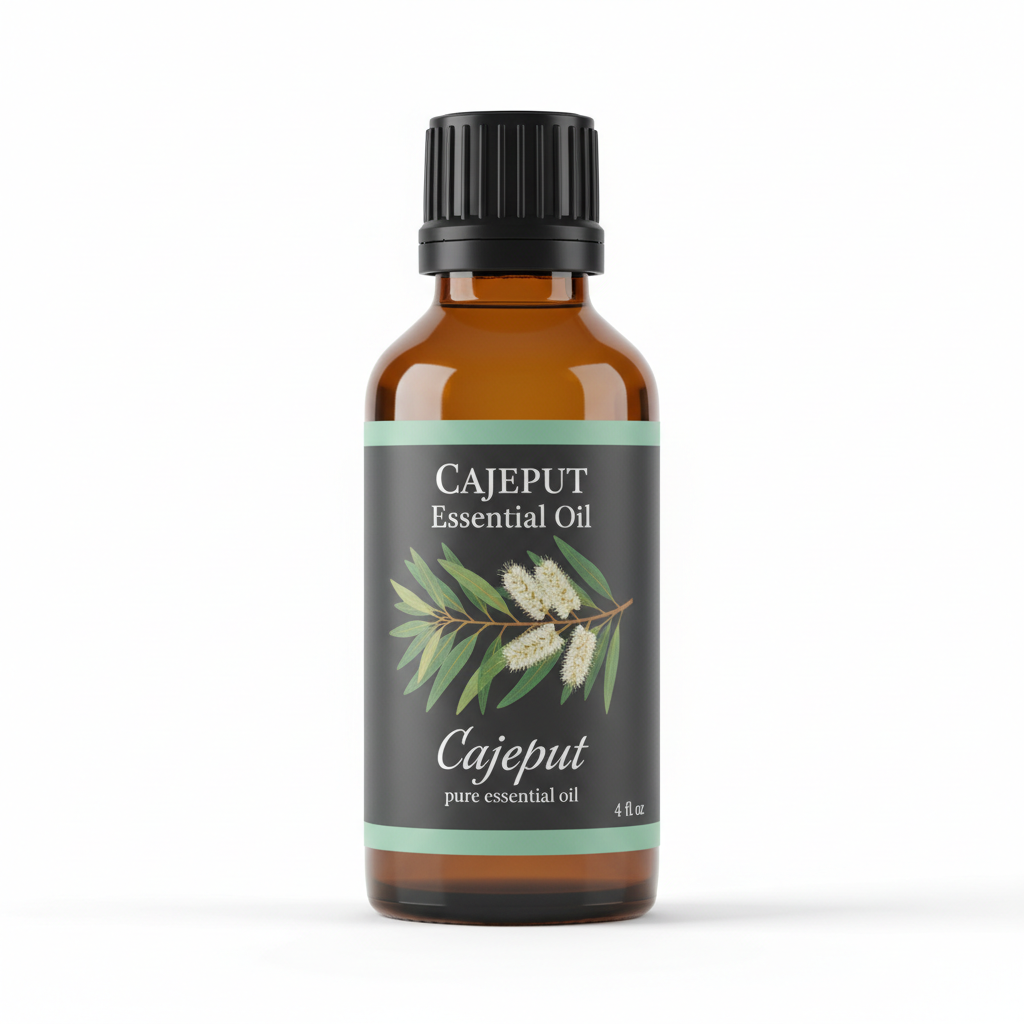
Cajeput Essential Oil
Our own Cajeput Essential Oil, in sizes from 0.5 oz to bulk.
From $10.99
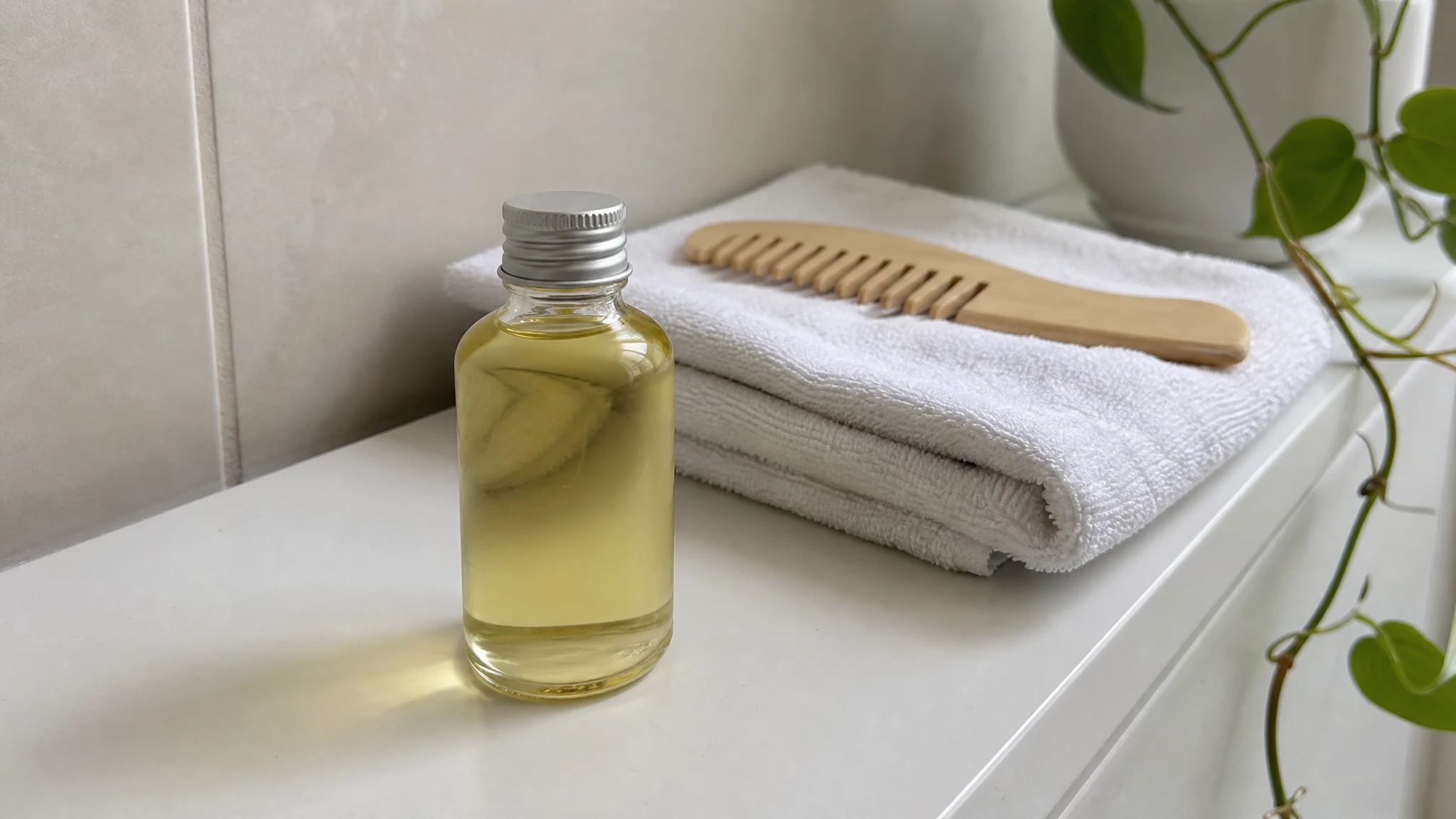
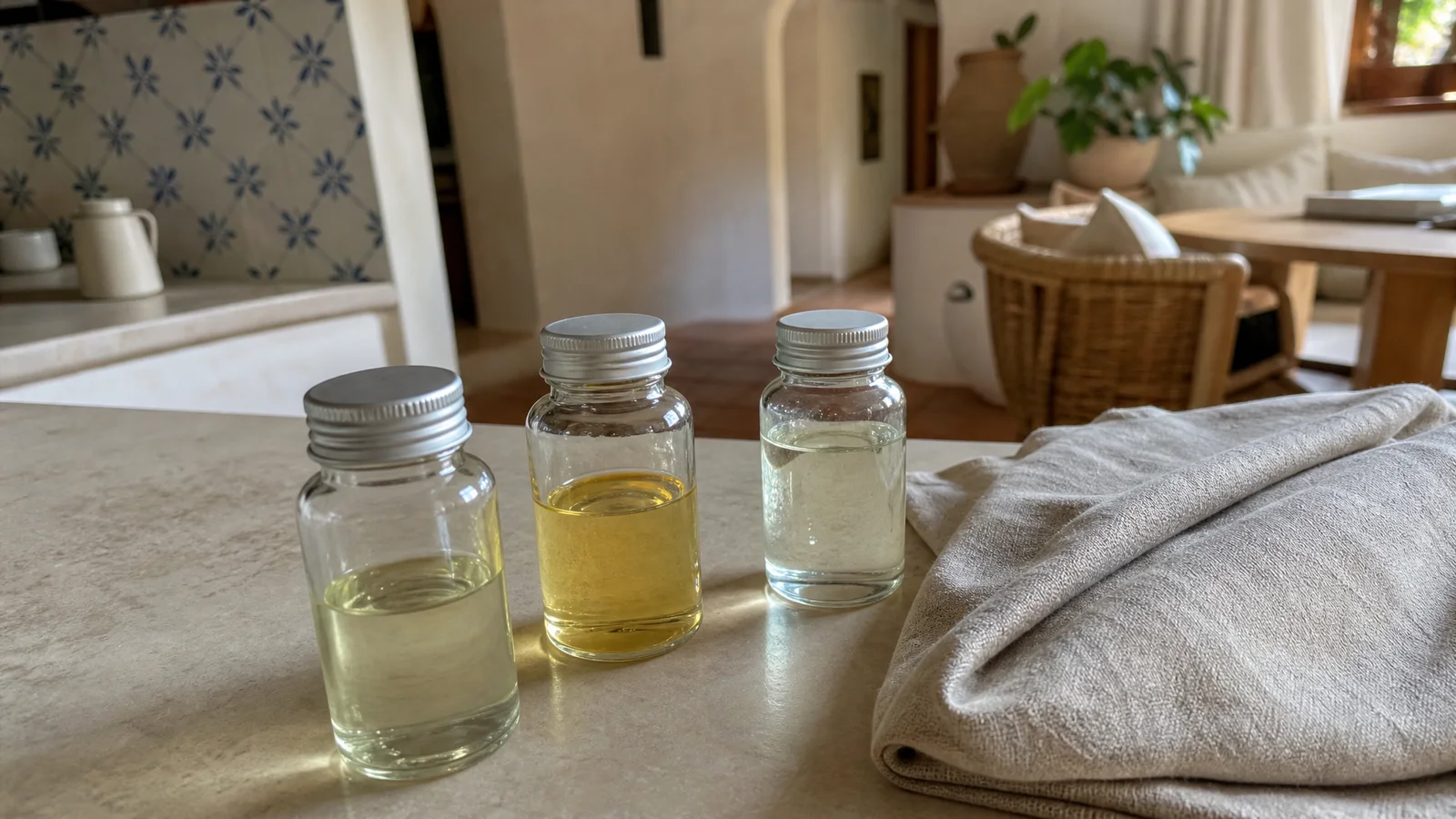
Shop Now →If you have never smelled cajeput before, it can help to know what to expect. Think of a cool, bright opening with a hint of camphor, then something softer and slightly fruity underneath. It looks like water with a faint yellow tint, so do not be surprised if the bottle seems unremarkable. The surprise comes when you open it.
What are you actually getting?
One product: Melaleuca cajuputi essential oil, steam-distilled and sold neat, with no additives or fillers, from Indonesia. We describe the aroma as fresh, cool and fruity-camphorous, brighter and sweeter than many leaf oils, and a top note. The longer story is in What Is Cajeput Oil?
What does the Certificate of Analysis show?
For the batch it covers, it lists appearance, smell, relative density at 20 C (0.906), refractive index (1.469) and optical rotation (+2.32 degrees), each within the stated range. If you need a GC-MS report or a cineole figure for your lot, ask us in writing through the contact page before you order. For general context, the European Food Safety Authority reported 1,8-cineole averaging about 61% across five batches of cajuput oil, against a proposed specification of 50 to 70% (EFSA FEEDAP Panel, 2024).
Is cajeput the same as tea tree or eucalyptus?
No. All three belong to the myrtle family, and cineole features strongly in cajeput and eucalyptus, but they are different plants with different profiles. Our head-to-head pieces on tea tree and eucalyptus show how the scents differ.
Is the oil sold in Indonesian shops the same thing?
Not necessarily. A 2026 study reported that cajuput oil finished products on the Indonesian market did not meet the national standard even when sold as 100% cajuput, and appeared to be blends including eucalyptus, anise and turpentine oils (Tjengal et al., 2026). The household product and a raw essential oil are different categories; see Minyak Kayu Putih vs Cajeput.
Can I put it straight on skin?
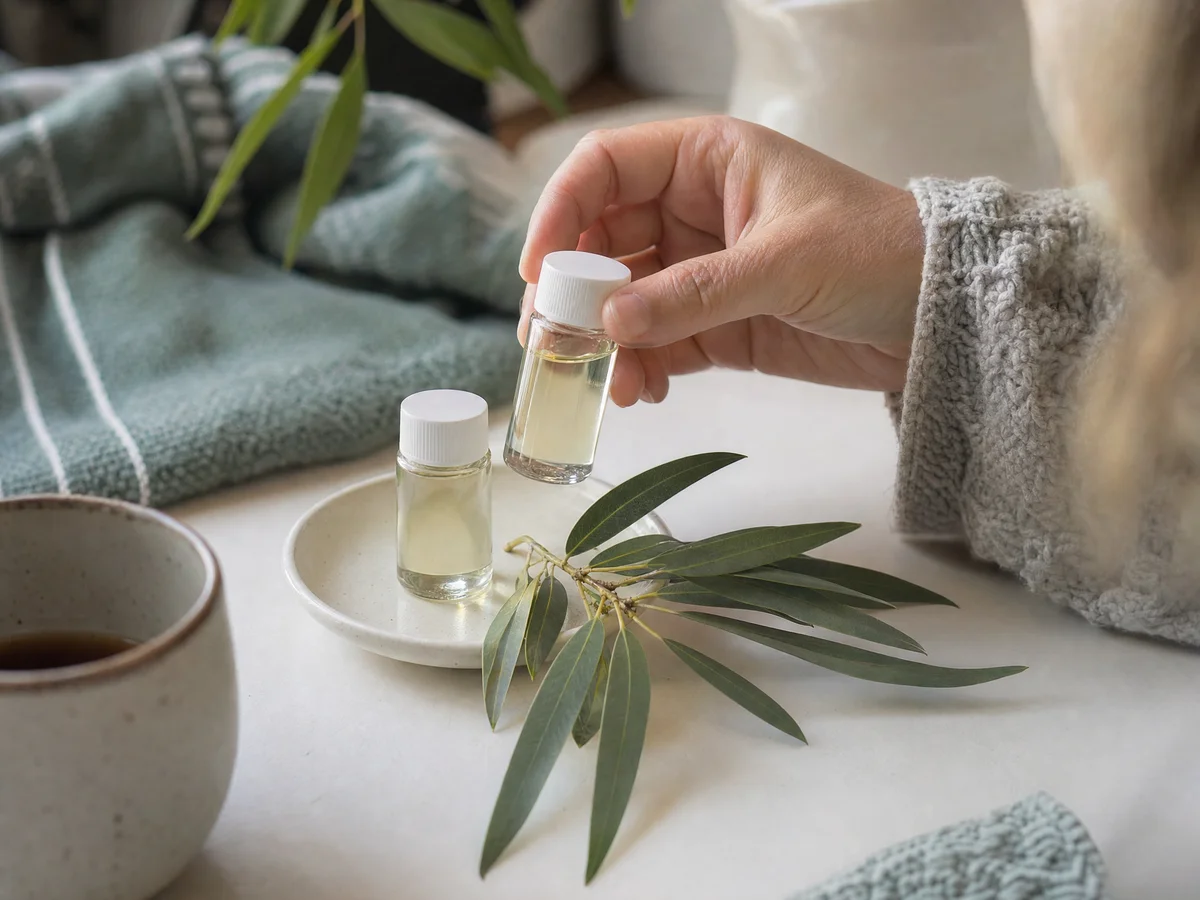
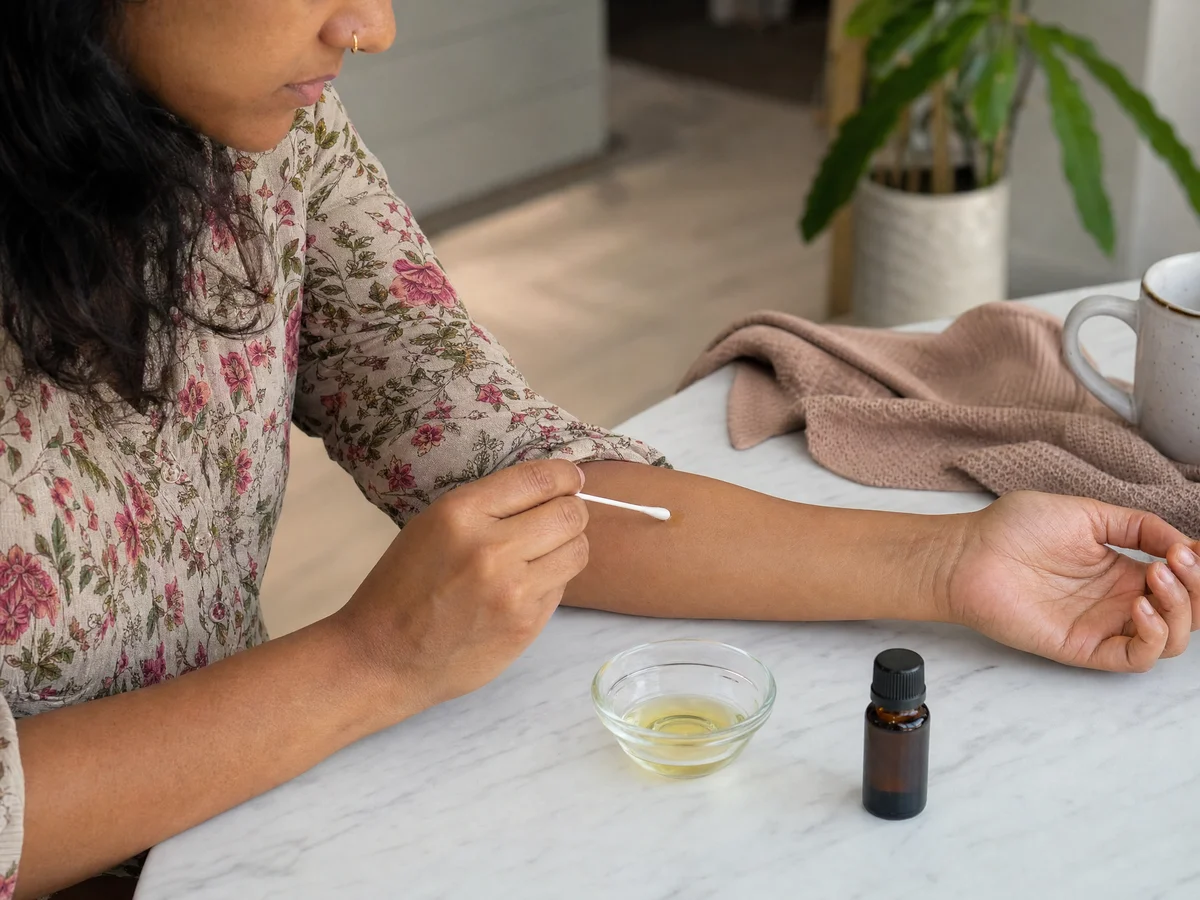
No. We recommend diluting to 0.5% to 2% in a carrier such as jojoba or sweet almond (roughly 3 to 12 drops per ounce of carrier) and patch testing first. The EFSA panel treats the oil as an irritant to skin and eyes and a dermal and respiratory sensitiser, and Tisserand gives 0.5% to 1.2% for facial products (Tisserand Institute), so on the face stay at the low end. Our dilution guide shows how to do it. For a rash that lingers, see a dermatologist.
How long does a patch test take to mean anything?
Longer than a quick dab. Allergic reactions usually take 48 to 96 hours to appear, and clinic patches stay on for 48 hours and are read at 96 (DermNet NZ). A short wait only checks for immediate irritation.
Can I swallow it or use it in food?
No, our oil is for aromatic and cosmetic use only. France's ANSES said in 2020 that the data on 1,8-cineole do not allow a safe exposure dose to be set and recommended against oral cineole-rich cajeput and niaouli oils for children under 30 months and for people with epilepsy or febrile seizures (ANSES). If anyone has swallowed oil, call your poison centre or emergency number at once; Healthy WA notes symptoms can begin within 30 minutes and sometimes up to four hours later (Healthy WA).
What about babies, children, pregnancy and pets?
Cajeput is high in cineole, so we do not recommend it for babies and young children, and we advise keeping it away from a small child's face and from pets. ANSES also advised against these oils during pregnancy and breastfeeding because specific data are lacking. Our pages on children and pregnancy and breastfeeding cover it, and a pediatrician, OB-GYN, midwife or veterinarian is the right person for your own situation.
Can I use it in a diffuser?
Yes, for fragrance. We suggest short sessions in a ventilated room, light diffusion where children sleep, and stopping if you cough or your eyes water. Keep it away from pets.
What is the best way to try it for the first time?
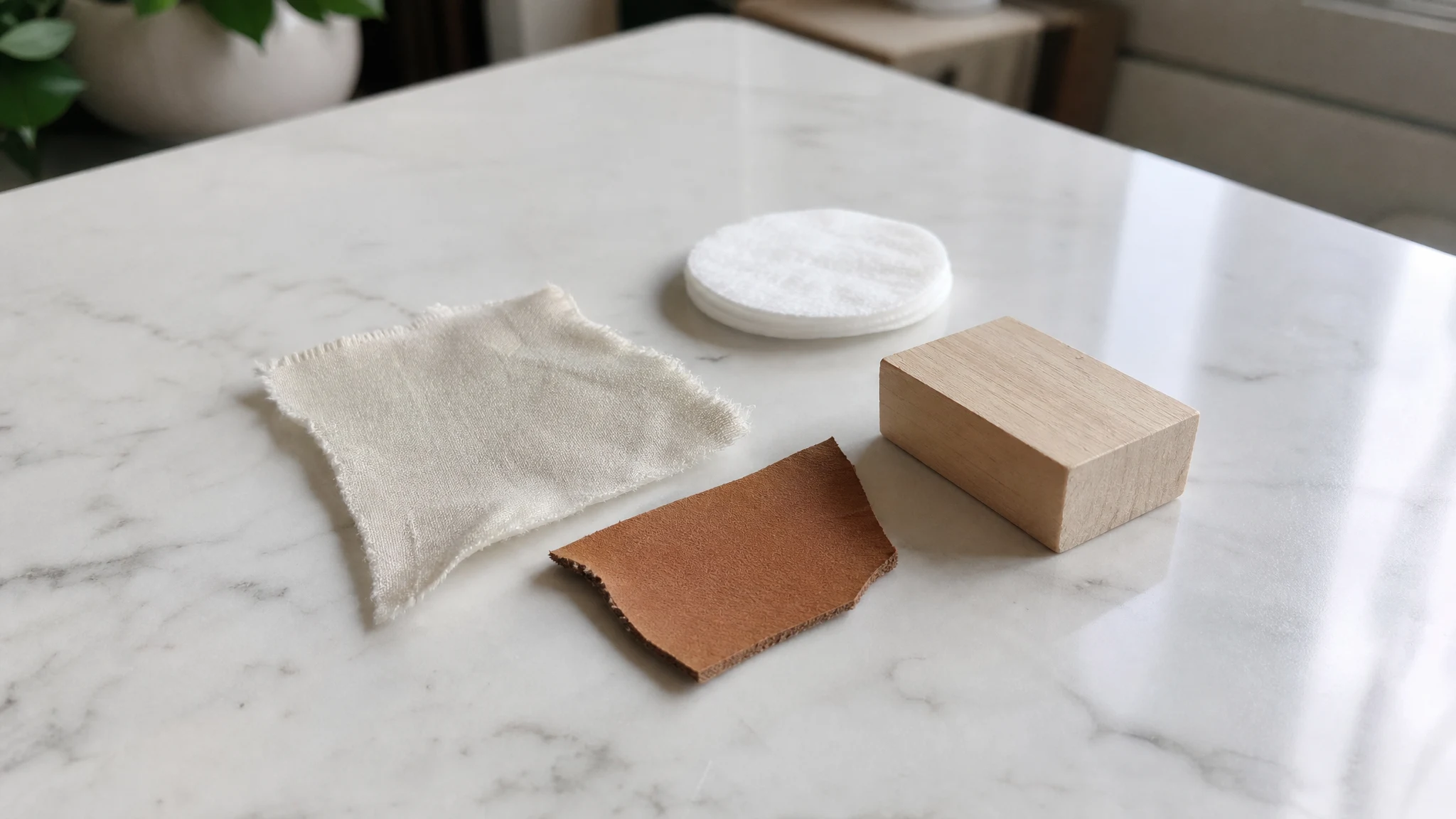
Keep it simple. Put a drop on a paper strip or a cotton pad and smell it from a short distance, rather than from the bottle. Smelling straight from the neck is much stronger than it needs to be. Come back to it after a few minutes and notice how the scent changes as it dries. Once you know what you like, a very small amount in a diffuser, in a well-ventilated room, is an easy next step.
How should I store it?
Tightly capped, in a cool, dark place away from direct sunlight. We say the oil typically keeps 2 to 3 years that way. Our storage article has the details.
Does it help with congestion, headaches, sleep or pain?
We sell cajeput as an external aroma and cosmetic oil and make no claims like that. What research exists is mostly on cineole, on other oils or in the lab, and our benefits article summarises it. For a health concern, a physician or pharmacist is the right first call.
If your question is not here, write to us through the contact page and we will do our best to help.
Cajeput Essential Oil
Cajeput Essential Oil from our own shop, in sizes from 0.5 oz to bulk.
From $10.99
Shop Now →Sources & Further Reading
- EFSA FEEDAP Panel, 2024. Safety and efficacy of cajuput oil as a feed additive. EFSA Journal 22(4):e8732. PMC11004901
- Tjengal B et al., 2026. Reverse engineering of cajuput oil finished product by principal component analysis. Indonesian Journal of Pharmacy (in press). journal.ugm.ac.id
- Tisserand Institute. Essential oil dilution. tisserandinstitute.org/safety/dilution
- DermNet NZ. Patch tests. dermnetnz.org
- ANSES, 2020. Food supplements containing tea tree, niaouli and cajeput essential oils: their misuse can be dangerous. anses.fr
- Healthy WA. Essential oils. healthywa.health.wa.gov.au