Minyak Kayu Putih vs Cajeput Essential Oil
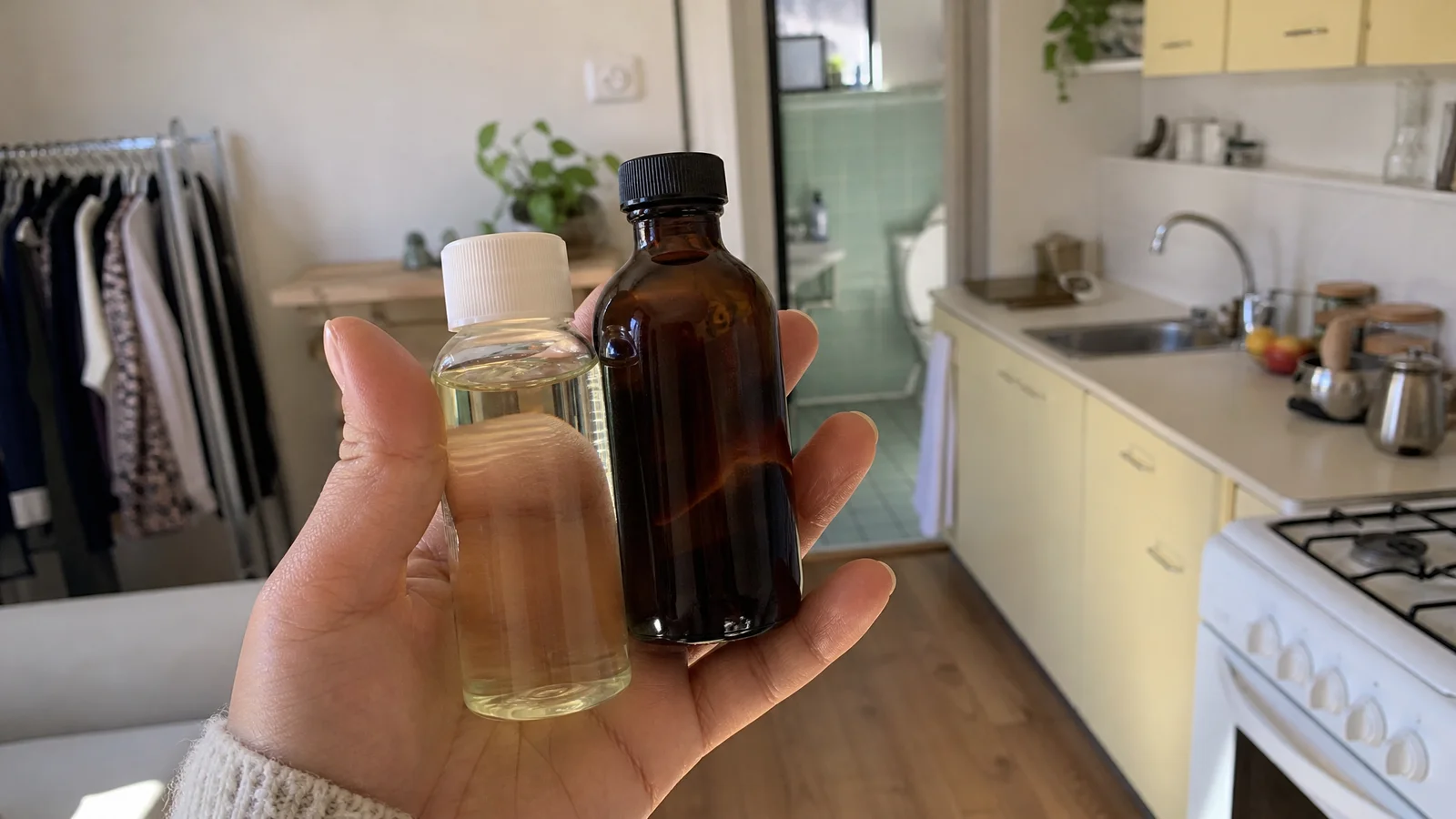
Walk into an Indonesian pharmacy and you will find shelves of minyak kayu putih, a household staple that many families have known all their lives. Our Cajeput Essential Oil comes from the same plant, and the two bottles can both say "cajuput" on them. They are still different kinds of product, and the difference matters if you want to follow a recipe or compare one with the other.
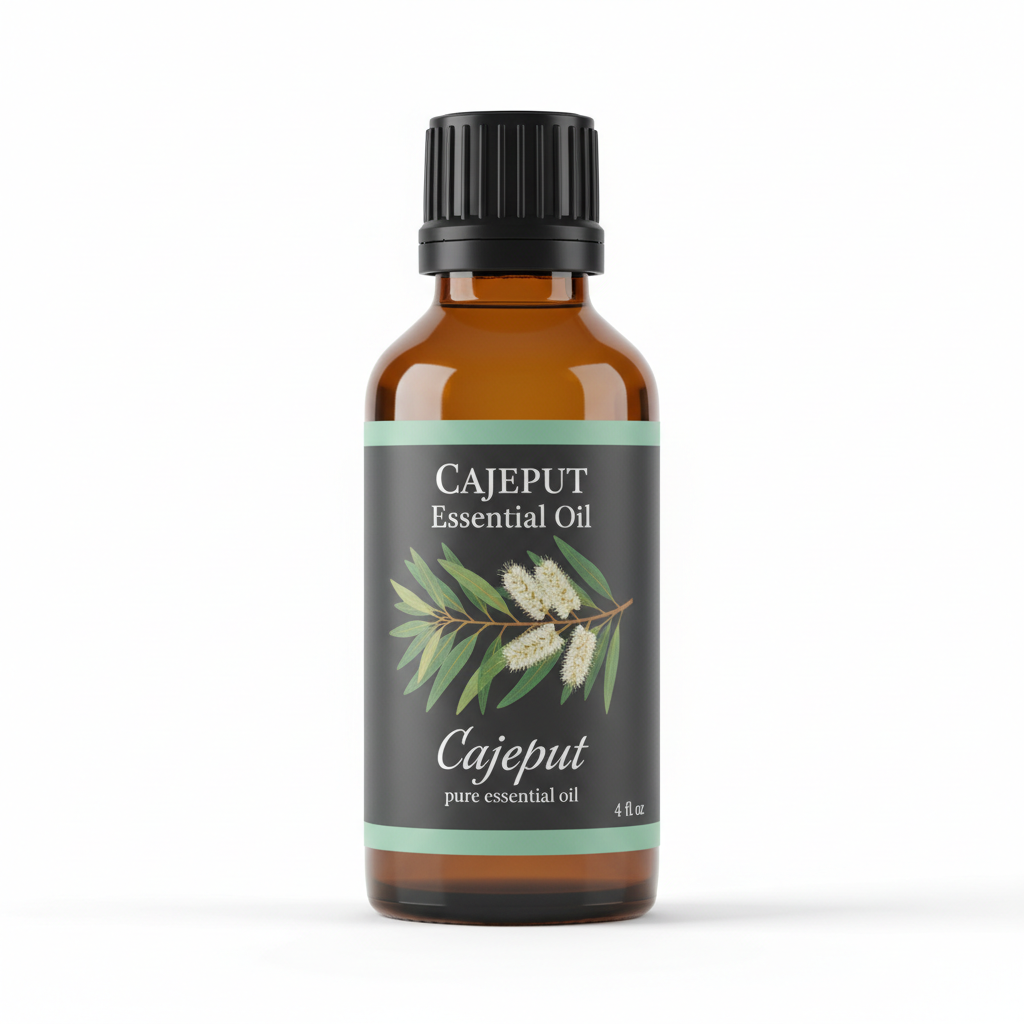
Cajeput Essential Oil
Our own Cajeput Essential Oil, in sizes from 0.5 oz to bulk.
From $10.99
Shop Now →A finished product and a raw material
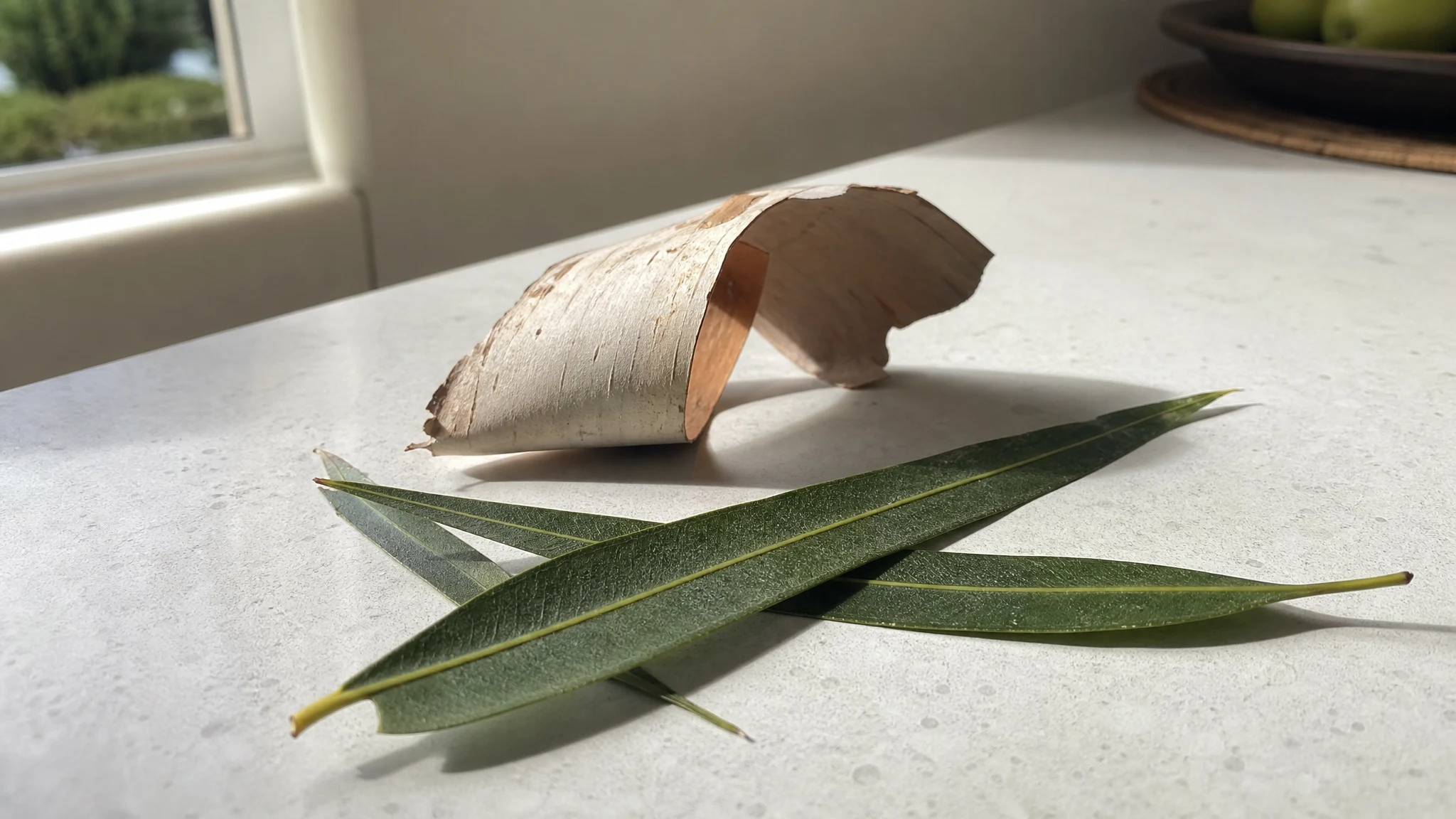
Minyak kayu putih simply means "white tree oil" in Indonesian, named for the paperbark that cajeput comes from (see our paperbark tree article). Household bottles are finished products, made for a specific everyday use under local rules. Cajeput essential oil is a single raw material, bottled to be diluted and used in whatever you are making. That is the key distinction, and it is why a label is worth reading before a bottle is used.
A 2026 study in the Indonesian Journal of Pharmacy compared cajuput oil finished products with reference samples of cajuput oil, eucalyptus oil and turpentine oil, using refractometry, polarimetry and GC-MS. The abstract reports that the finished products contained combinations of oils, such as cajuput, eucalyptus, anise and turpentine, and that the marketed samples did not comply with SNI 3954:2014, the Indonesian national standard for cajuput oil (Tjengal et al., 2026). It is an article in press, and the abstract does not say which brands or how many products were tested, so it does not tell you about any particular bottle. What it does show is that a "cajuput" household product and a single-ingredient essential oil are different categories in practice.
Why supply may play a part
Indonesian researchers put national cajuput oil production at about 650 tonnes a year against domestic demand above 3,500 tonnes (Rimbawanto et al., 2021). It is reasonable to suppose a market with that gap leaves room for blending, though neither paper says so, so take it as inference and not as a finding.
Read the composition line first
The composition line sorts things out better than the name does. A household bottle may list one ingredient, or it may list several oils or added ingredients with percentages. A bottle that lists "cajuput oil" and a percentage below 100 is a formulated product, and whatever makes up the rest is something else. We sell a single ingredient: Melaleuca cajuputi, steam-distilled, bottled undiluted. We do not sell a household-style oil, a balm or any blend; if you want minyak kayu putih as it is used in an Indonesian home, buy it from a registered maker and read the carton.
Why recipes do not carry across
Dilution maths assumes you know what is in the bottle. Our recommendation of 0.5% to 2% in a carrier oil, with a patch test first, is built on an undiluted oil. If you add a formulated product to a recipe written for neat oil, you may be adding less cajeput than you think and, depending on the product, other ingredients as well. Our dilution guide sets out the arithmetic.
Uses differ too. Household products come with the maker's own directions, and we make none of those claims for our oil. We sell cajeput for aromatic and cosmetic use and advise against internal use. It is high in cineole, which is why we say it is not for babies and young children and should be kept away from a small child's face. A household label and our label are separate documents, so for questions about children ask a pediatrician, and for pregnancy or nursing ask an OB-GYN, midwife or pharmacist.
If you are comparing scents
We have real respect for minyak kayu putih as a household tradition, and nothing here is meant to put it down. It is simply a different kind of product with its own purpose. If you are curious how a household bottle smells next to cajeput, put a drop of each on its own paper strip and smell them at arm's length. Your nose will pick up differences in sharpness and sweetness that no description captures, and you will be better able to read a recipe that says "cajeput" and decide which bottle it means.
It also helps to keep the carton or label with the bottle. A finished product's carton tells you the ingredients and directions, and the information is easy to lose once it is on the shelf.
Four quick checks for the bottle in your hand
- Composition line: one ingredient, or a list with percentages?
- Registration number: it tells you a product is registered, not what is inside. Check it on the carton.
- Batch document: a lot number that matches an analysis is the best evidence of what is in that lot. If you want to know more about ours, ask us in writing through the contact page.
- Intended use: a label with directions for a person is a finished product, while a Latin name and a size is a raw material.
Our quality checklist goes into the same ideas, and our look at traditional balms shows what cajuput appears alongside in finished products.
The household bottle and the essential oil share a tree and a scent family, and each has its own job, so it is worth knowing which one you are reaching for.
Cajeput Essential Oil
Cajeput Essential Oil from our own shop, in sizes from 0.5 oz to bulk.
From $10.99
Shop Now →Sources & Further Reading
- Tjengal B, Cahayani D, Febryanto HD, Lathifa Y, 2026. Reverse engineering of cajuput oil finished product using the characteristics of various essential oil raw materials by principal component analysis. Indonesian Journal of Pharmacy (in press). journal.ugm.ac.id/IJP/17467
- Rimbawanto A, Kartikawati NK, Latumahina F, 2021. Conservation and utilization of Melaleuca cajuputi subsp. cajuputi in Moluccas Island, Indonesia. IOP Conf Ser Earth Environ Sci 800:012040. doi 10.1088/1755-1315/800/1/012040