Cajeput Oil and Children: Why We Keep It Out of Reach
One short line on our bottle gets more questions than any other: cajeput oil is not for babies and young children. It reads like boilerplate, but it rests on something specific. Cajeput is rich in 1,8-cineole, the same compound that gives eucalyptus its sharp, cool character, and cineole is the reason health agencies draw a firm line around small children.
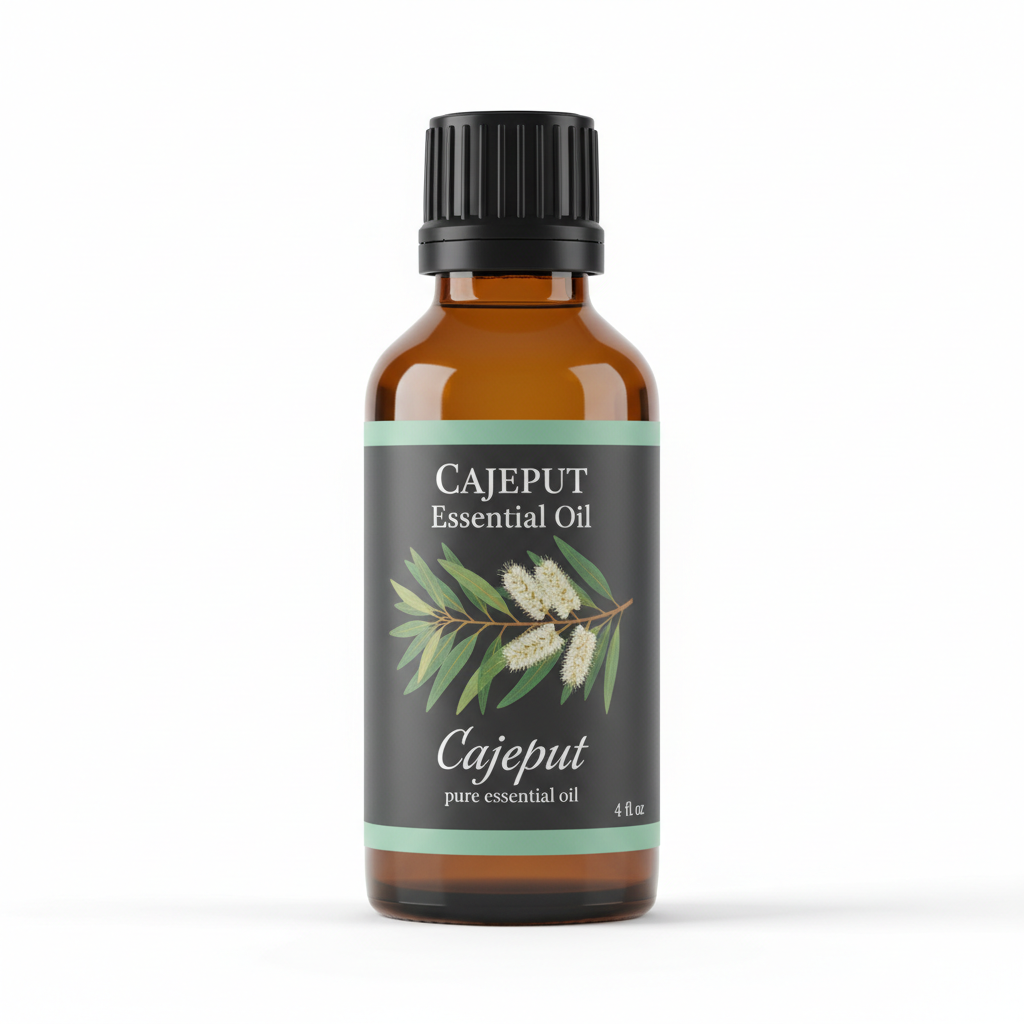
Cajeput Essential Oil
Our own Cajeput Essential Oil, in sizes from 0.5 oz to bulk.
From $10.99
Shop Now →What cineole has to do with it
The oil assessed by the European Food Safety Authority in 2024 was specified at 50 to 70% 1,8-cineole, which tells you how much of cajeput's profile this one molecule carries (EFSA FEEDAP Panel, 2024). That crisp, camphor-like freshness is the appeal. It is also why the guidance around cineole-rich oils is so consistent.
The European Medicines Agency says eucalyptus oil, another cineole-rich oil, should not be given to children under 30 months because of the risk of laryngeal spasm, and allows its licensed inhaled and skin products from age 4 (EMA, eucalyptus oil). France's food safety agency went further for cajeput by name: in 2020 it advised against oral supplements containing cajeput or niaouli oil for young children, noting that 1,8-cineole has been linked to neurological complications in children, and advised pregnant and breastfeeding women against them too (ANSES, 2020). Those two sources cover different exposures, one licensed products and one swallowed supplements, and neither tested a diffuser. Still, they agree on the direction: the younger the child, the more cautious the advice.
How small children actually meet essential oils
Most of the pediatric literature is about accidents, and the pattern is instructive. In a Victorian survey of 109 parents of children under five who had a suspected eucalyptus oil ingestion, 74% of the children got to the oil through a home vaporiser unit, most often one placed at ground level (Day et al., 1997). The Tisserand Institute notes that even two-year-olds have unscrewed oil bottle caps (Tisserand Institute).
The outcomes vary widely, which is part of the lesson. A Queensland review of 42 children who swallowed eucalyptus oil found that 33 had no symptoms at all and that the amount swallowed did not predict who became unwell (Webb and Pitt, 1993). Western Australia's health department, meanwhile, says as little as 2 mL can seriously poison an infant, with symptoms starting within half an hour and sometimes taking up to four hours (Healthy WA). When the same oil can do nothing to one child and a great deal to another, nobody can sort out in advance which child is which. That is the real reason for a blanket rule.
The face rule
Keeping oil away from a small child's face has its own footing. A pediatric report described a toddler who developed severe breathing distress after a chest rub was applied directly under her nose, and follow-up work on ferret tissue found the product changed mucus secretion and ciliary movement (Abanses, Arima and Rubin, 2009). It was one multi-ingredient product, not cajeput, so we read it as a sensible reason for caution rather than a measurement. A small airway is simply a poor place to experiment.
What we recommend at home
Our guidance is practical. Store the bottle high and out of reach, in a place a child cannot get to even by climbing, and keep it tightly capped (our storage guide covers the bottle itself). If you use a diffuser, keep it on a high surface in a room a child does not sleep in, keep sessions light, and wipe up drips straight away. Our 0.5% to 2% dilution guidance is written for adult skin and is not a children's dilution; the dilution and patch test guide walks through the adult routine. If you share your home with animals, the notes on cats and dogs follow the same logic.
We deliberately do not put a number on "young child" ourselves, because the agencies above do not agree on one. If a child in your home has asthma, a history of seizures or recurrent croup, your pediatrician is the right person to ask. If a child has swallowed any amount, call poison control in the US at 1-800-222-1222 straight away, and read what to do after swallowed cajeput oil.
A quick walk through your home
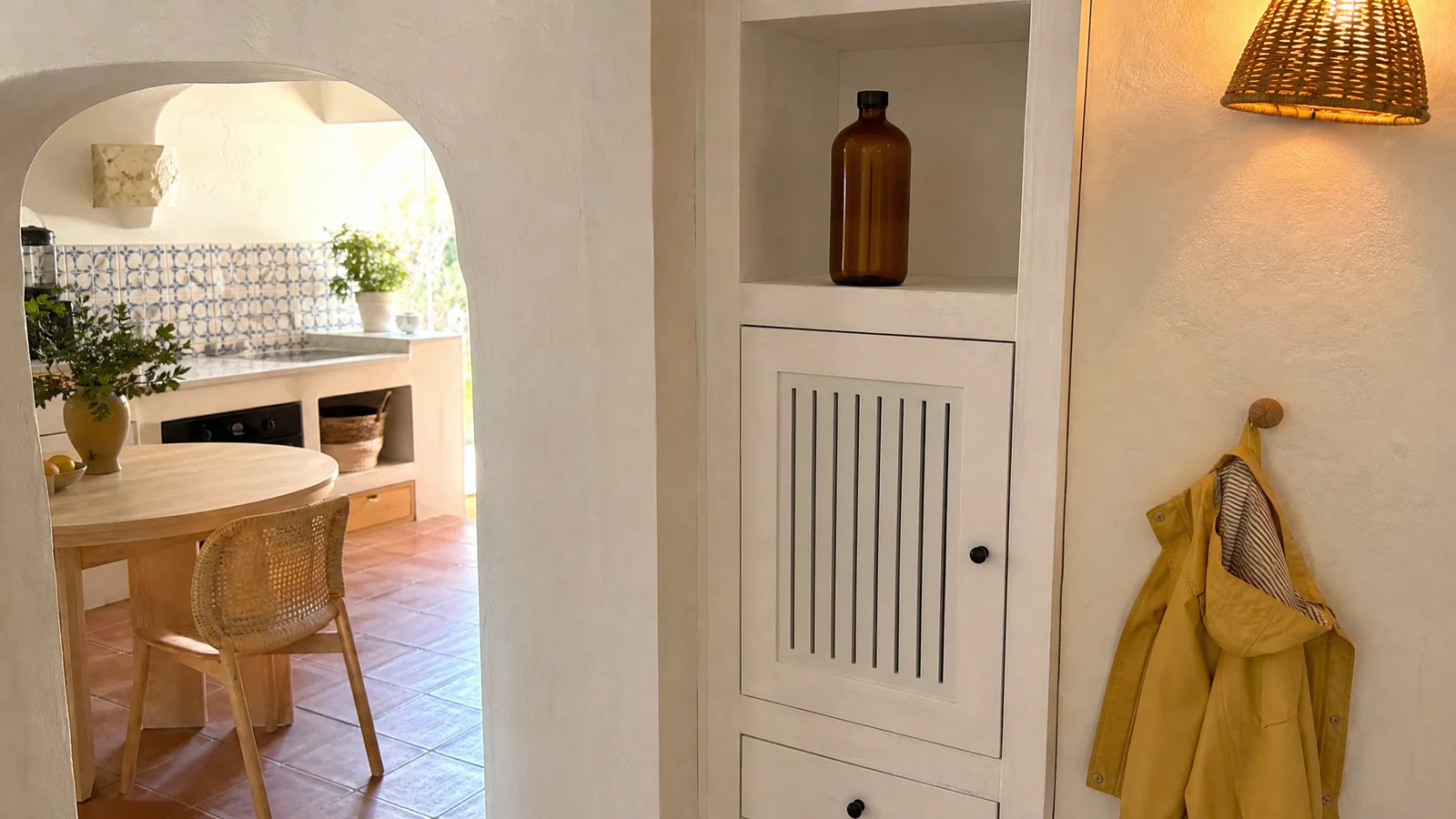
The easiest way to apply all this is to walk through your house once with the bottle in your hand. The bathroom cabinet is low and often unlatched. The nightstand is handy for you and handy for a toddler. A handbag or gym bag is forgotten on the floor. The kitchen drawer is easy to reach from a step stool. The best spot is somewhere high, closed and boring, ideally a cupboard with a latch, and the bottle goes straight back there every time you finish.
Visitors count too. A guest's handbag or tote can carry a small bottle into a house where nobody is thinking about it, so it is worth a mention when a visitor with a child is around.
The simplest household habit is also the best one: treat the bottle like medicine, high up and shut, and the rest of the rule takes care of itself.
Cajeput Essential Oil
Cajeput Essential Oil from our own shop, in sizes from 0.5 oz to bulk.
From $10.99
Shop Now →Sources & Further Reading
- European Medicines Agency. Eucalypti aetheroleum, herbal medicine summary
- ANSES, 2020. Food supplements containing tea tree, niaouli and cajeput essential oils
- EFSA FEEDAP Panel, 2024. Safety and efficacy of cajuput oil as a feed additive. EFSA Journal 22(4):e8732
- Day LM et al., 1997. Eucalyptus oil poisoning among young children. Aust N Z J Public Health
- Webb NJ, Pitt WR, 1993. Eucalyptus oil poisoning in childhood. J Paediatr Child Health
- Healthy WA. Essential oils
- Abanses JC, Arima S, Rubin BK, 2009. Vicks VapoRub and the ferret trachea. Chest
- Tisserand Institute. Safety guidelines