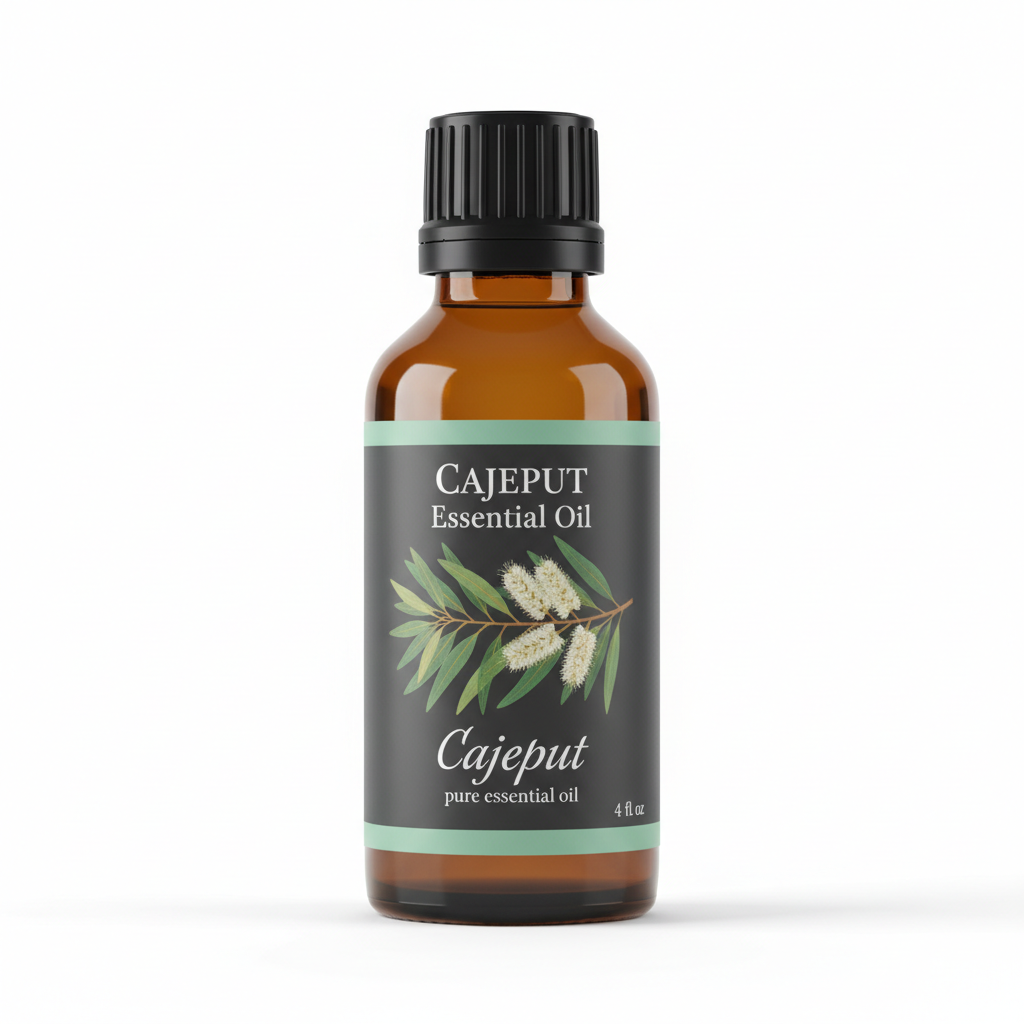
Island distillers have made cajeput for centuries. We buy the leaf from organic growers in that same wetland country and run it through our own still.
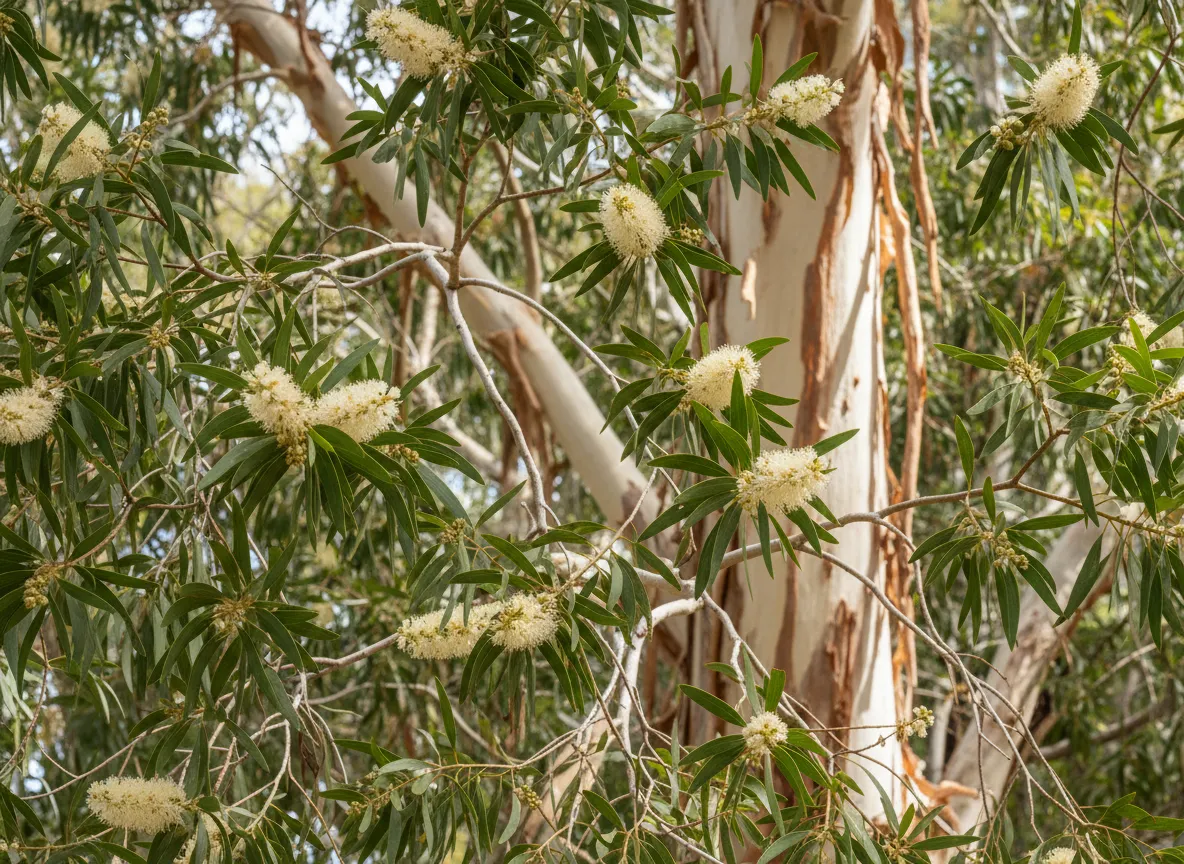
Melaleuca cajuputi is a tall paperbark that thrives where the ground stays wet, and it regrows readily after cutting.
Both leaf and the thin twigs go into the charge. Separating them out would add cost and take away from the oil rather than improve it.
Cut material is distilled fresh. The wetlands where it grows are not places you can hold a crop for long, which has shaped how this oil has always been made.
Cajeput is repeatedly sold as a cheap stand-in for eucalyptus, which misses what is good about it.
The two share a cool, cineole-driven lift, so substitution is easy. What that trade ignores is the fruity sweetness underneath cajeput, a softness that eucalyptus simply does not have and that makes cajeput far pleasanter in a blend.
Its name comes from the Malay for white wood, and the tree has been distilled in the wetlands of Indonesia and Vietnam for centuries. We buy from organic growers in that country and distil here, rather than buying a drum labelled as whatever the market wants it to be.
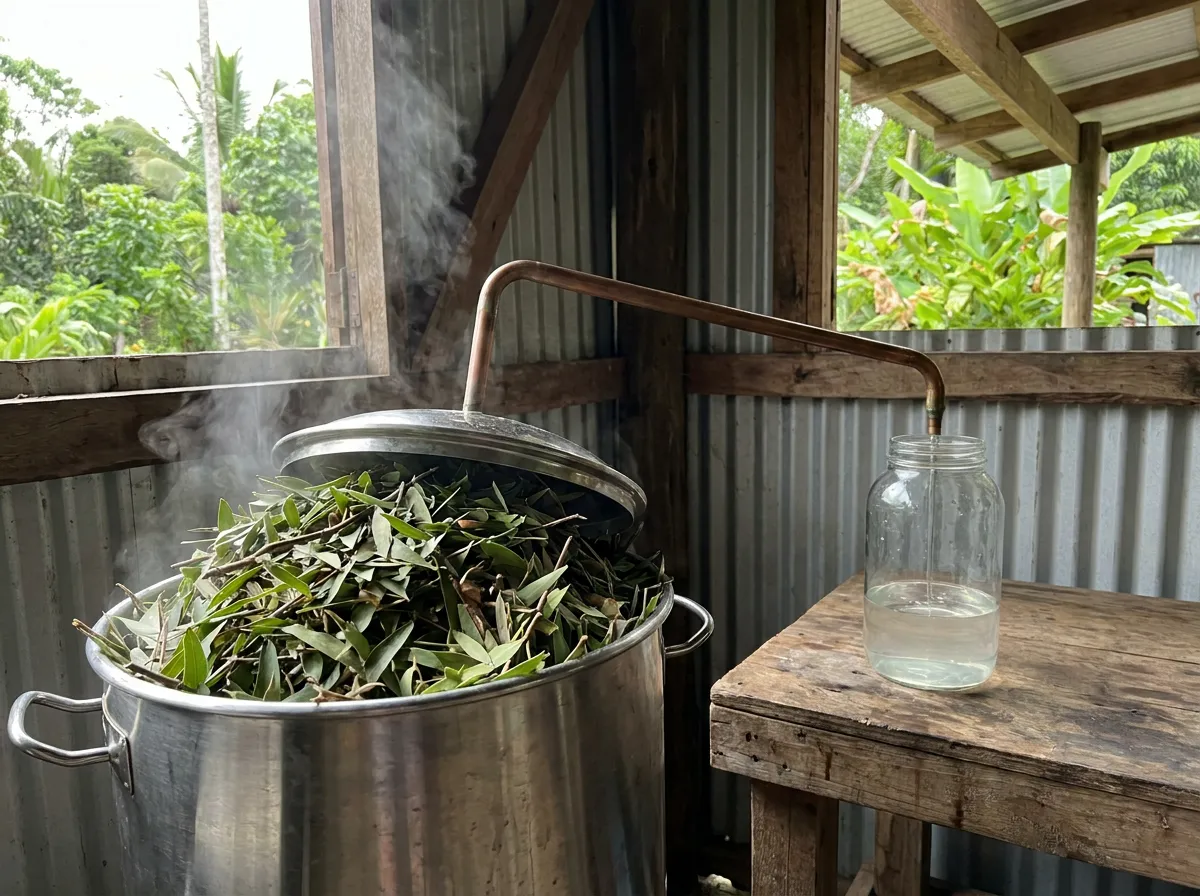
We do not take delivery of finished cajeput. What arrives is plant material, and the still work is ours.
Steam is drawn through the packed leaf and twig until they are spent, and the oil separates pale and mobile with that characteristic cool, fruity smell.
There is no time target on the run. It ends when the material has given up what it has.
Six points that do not shift between batches.
Leaf and twig distilled soon after cutting, as island practice has always done.
Bulk purchase arranged directly with the farms in Indonesia.
We pack the still and we run it, start to finish.
Independent analysis every batch, not an estimate from the aroma.
Never relabelled as eucalyptus, and never blended toward it.
Retail bottles and bulk drums, filled from one distillation.
Both appear with the lot number, so nothing about the oil's age is left to inference.
An independent third-party laboratory analyses each batch, with no interest in what the numbers say.
The cooling constituent that dominates cajeput, quantified for every batch.
The supporting profile, and where cajeput's fruity softness comes from.
Confirms this is cajuputi rather than eucalyptus or niaouli bottled under the cajeput name.
Send the lot reference from your label and we will return its analysis, or use the contact page.
No health claims from us. Cajeput is a bracing aromatic and we will describe it as one.
It is high in cineole, which makes it unsuitable for babies and young children. Do not use it near a small child's face, and keep diffusion light where children sleep. Cut it hard with a base oil before skin work, and trial one small spot beforehand.
It is potent enough to sting on contact with eyes or broken skin. If a batch does not analyse as cajuputi should, it stays unbottled and we go out of stock instead.
Organic Indonesian leaf and twig, distilled in our own still, cineole measured independently, and both dates printed on the bottle.
Try it where you would reach for eucalyptus.
Shop Cajeput Oil