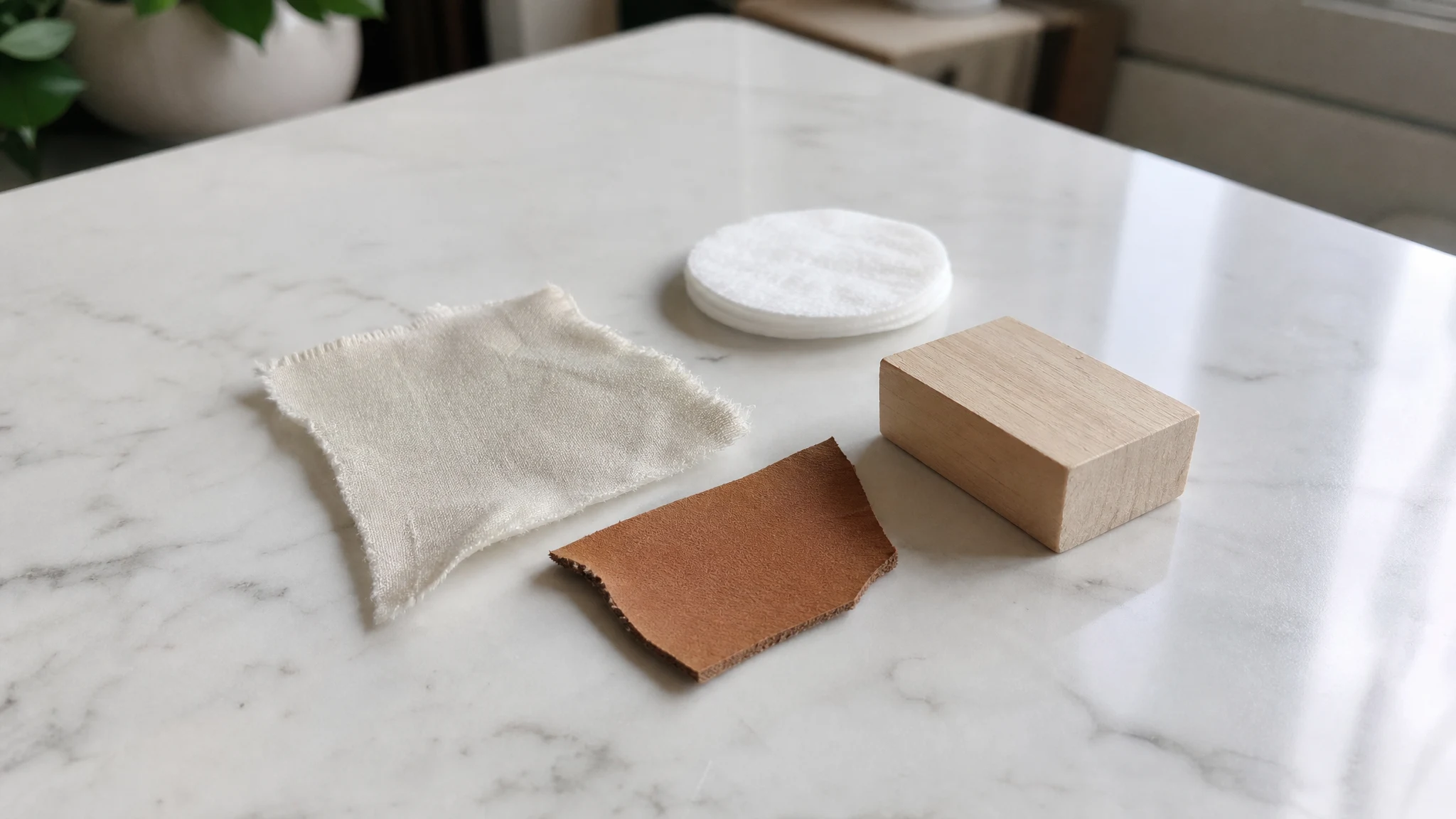
Cajeput Oil on Fabric, Wood and Leather: Will It Stain?
Cajeput oil looks like water with a slight yellow tint, which is exactly why people underestimate it. A tipped bottle or a splash from a diffuser refill does not stay a drop for long, and what it leaves behind depends far more on the surface than on the oil. Here is how to think about fabric, wood and leather, and how to find out in a day what your own pieces will tolerate.
Cajeput Essential Oil
Our own Cajeput Essential Oil, in sizes from 0.5 oz to bulk.
From $10.99
Shop Now →Fabric: expect a ring on anything porous
Our cajeput is a thin liquid, typically clear to pale yellow. Like any essential oil, it spreads outward through porous cloth and leaves a translucent ring where it settles. Cotton and linen will show a patch, and silk, rayon, velvet and dark fabrics tend to show it more. That is simple physics rather than a cajeput quirk, and it is the reason we never suggest spraying a mix that delivers beads of oil. Our linen and room spray piece explains how to avoid exactly that.
If something valuable is marked, the care label and a professional cleaner are better guides than a home remedy. Blot rather than rub, skip the heat, and tell the cleaner exactly what spilled: a thin, clear to pale yellow essential oil.
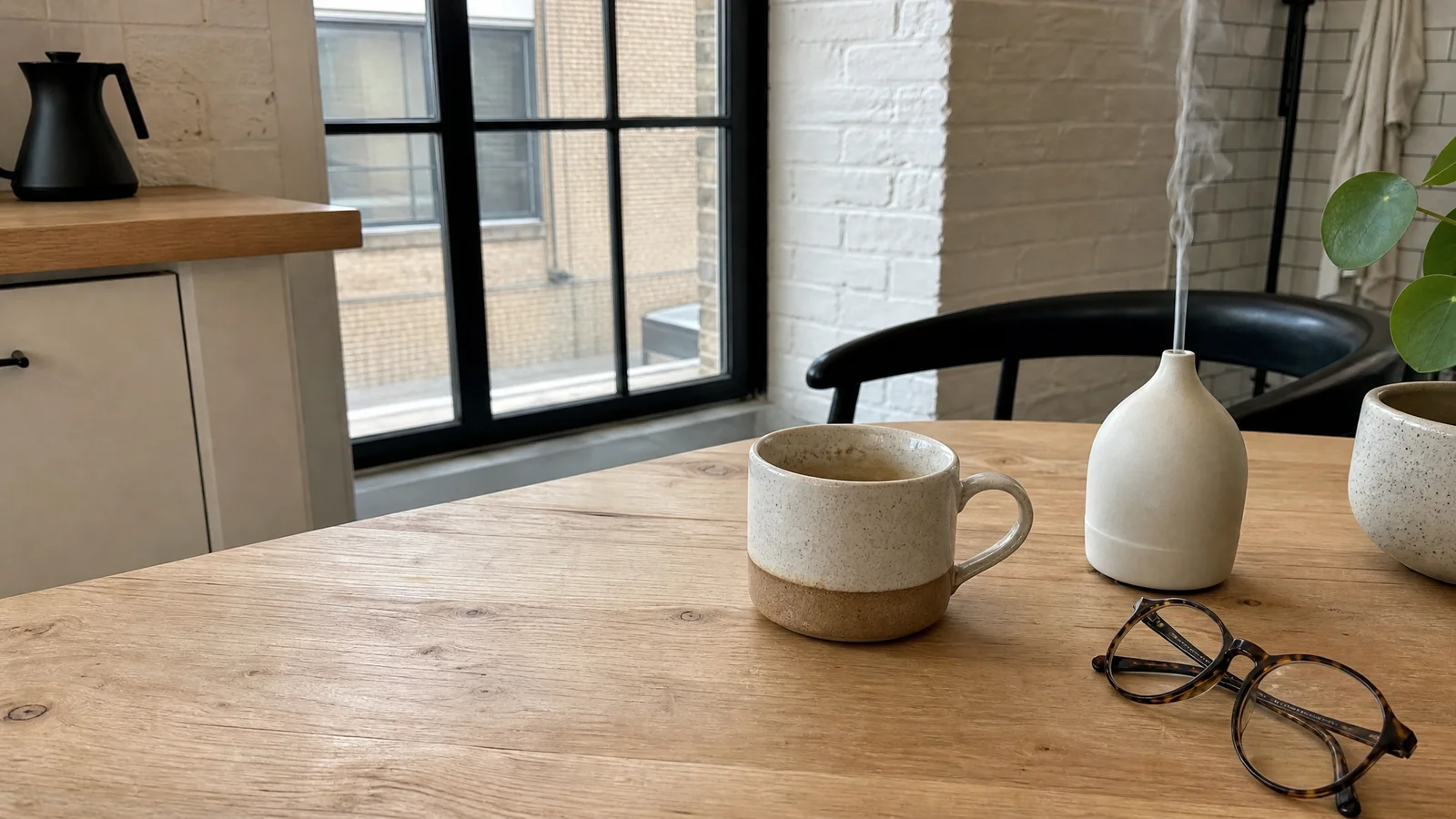
Diffusers deserve a thought too. A fine mist mostly stays airborne, but some settles. Putting the diffuser on a hard, wipeable tray rather than beside curtains or upholstery is a free habit that removes the question.
Why it catches people out
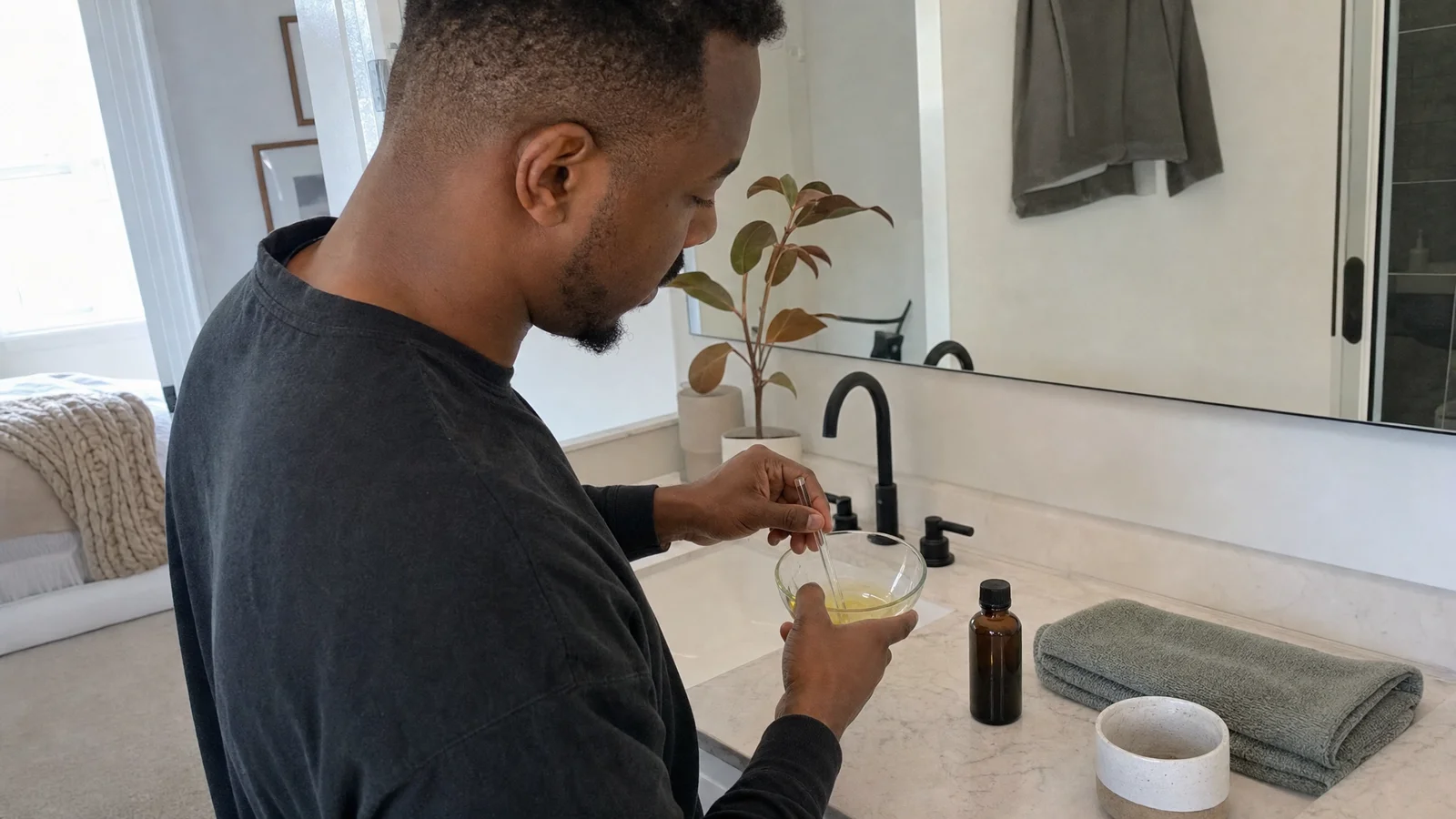
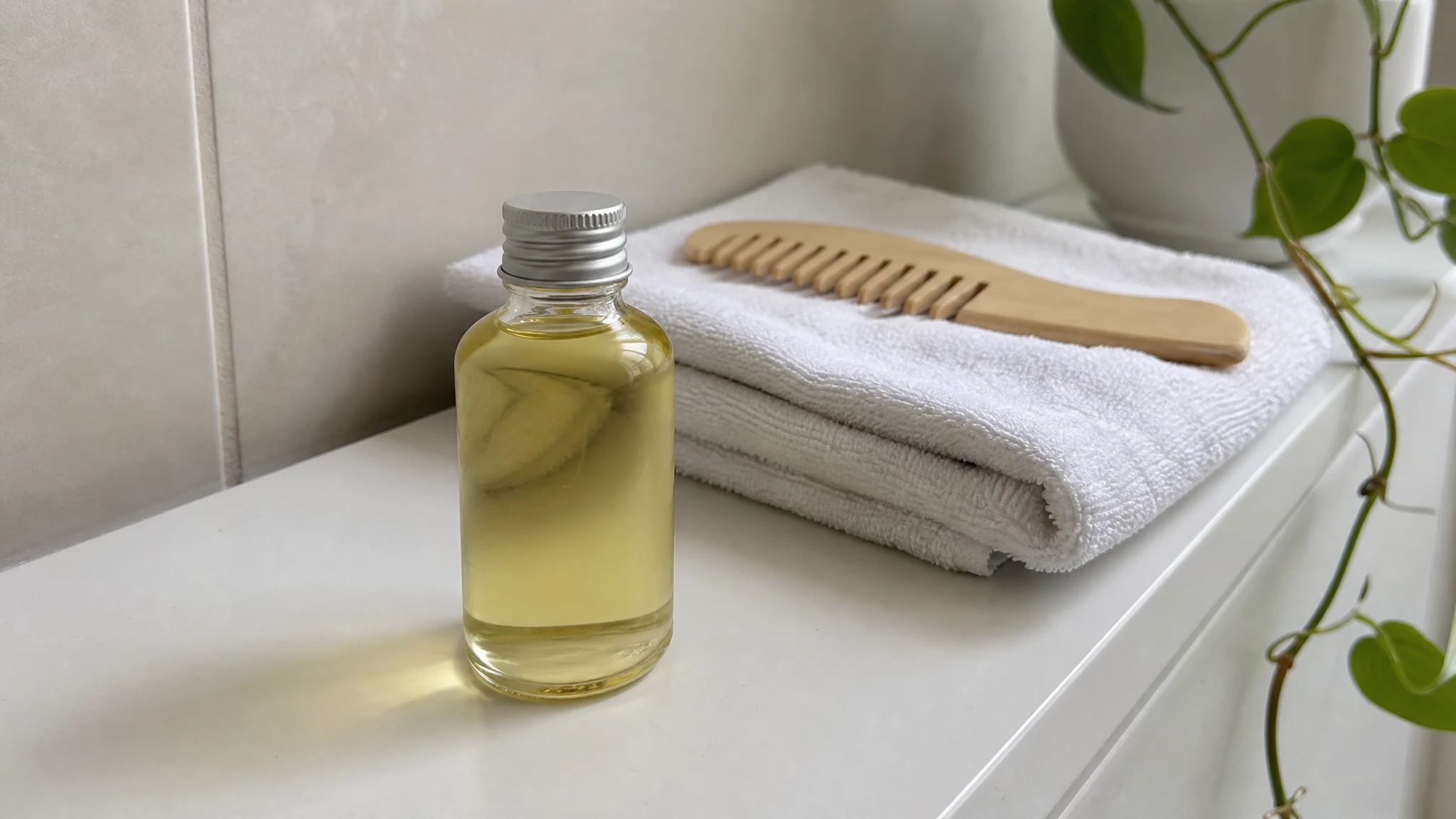
Open a bottle of cajeput and the first thing you notice is how light it looks. It pours like water, with a faint yellow cast, and it does not feel oily the way a carrier does when you rub it between your fingers. That is the trap: a thin liquid spreads further than you expect, so a single drip on a bedside table can become a patch the size of a coin before you spot it. Work over a tray or a folded old towel whenever you open a bottle, and you will rarely have to think about any of this again.
Wood: the finish matters more than the wood
Oil soaks into bare, oiled or worn wood and is hard to reverse. On a continuous, sealed finish it tends to sit on the surface until you wipe it, though a ring can still form where a bottle sat. The U.S. National Park Service's conservators give the habit that applies here: test a product "in an inconspicuous area to determine if the solvent in the wax softens the finish" (NPS Conserve O Gram 7/2). That leaflet is about paste wax, not essential oils, but the principle carries over: when a liquid meets a finish, you look for softening or dulling before you trust it.
A practical rule is to keep the bottle on a saucer or tray, never straight on a lacquered or French-polished surface, and never stored on wood where a drip could sit unnoticed.
Leather: a clear no
For leather, we would simply keep cajeput away. The Park Service explains that oils and fats in leather dressings can darken and stain leather and cannot be fully removed once applied (NPS Conserve O Gram 9/1). That document concerns animal-fat dressings rather than essential oils, but the lesson is easy to apply: leather absorbs oils, and the result is rarely reversible. Seats, bags, shoes and jackets are best left out of any plan involving neat or poorly dispersed oil. If you want to scent a leather item at all, ask its maker or a leather specialist first.
A one-day spot test
- Pick a hidden spot of the same material and finish: the underside of a table, the inside of a hem, the back of a cushion.
- Use what you will actually use. If you plan a diluted spray, test that spray, not a drop of neat oil.
- Wait a full day, then check in daylight for a ring, darkening, a tacky or softened finish, or colour lifting onto a white cloth pressed against it.
- Decide. Any change at all means the answer for that surface is no.
Dilution reduces the oil per touch, but a carrier oil is also an oil and can mark porous material, so a dilute mix still needs the test. Our 0.5% to 2% dilution guidance is written for skin, not for furniture.
Habits that cost nothing
- Keep the cap on and the bottle upright, on a tray, away from table edges.
- Refill diffusers on a hard surface, never over fabric.
- Wash your hands after a spill. The European Food Safety Authority's 2024 opinion on cajuput oil describes it as an irritant to skin and eyes (EFSA FEEDAP Panel, 2024), so keep it away from your eyes too.
- Store it where children and pets cannot reach it, tightly capped in a cool, dark place.
Small habits that keep the bottle out of trouble
- Cap it before you move it. Most spills happen between the shelf and the table, with the cap still in your other hand.
- Keep a scrap of cloth nearby that you do not mind scenting, for wiping the neck of the bottle after each use.
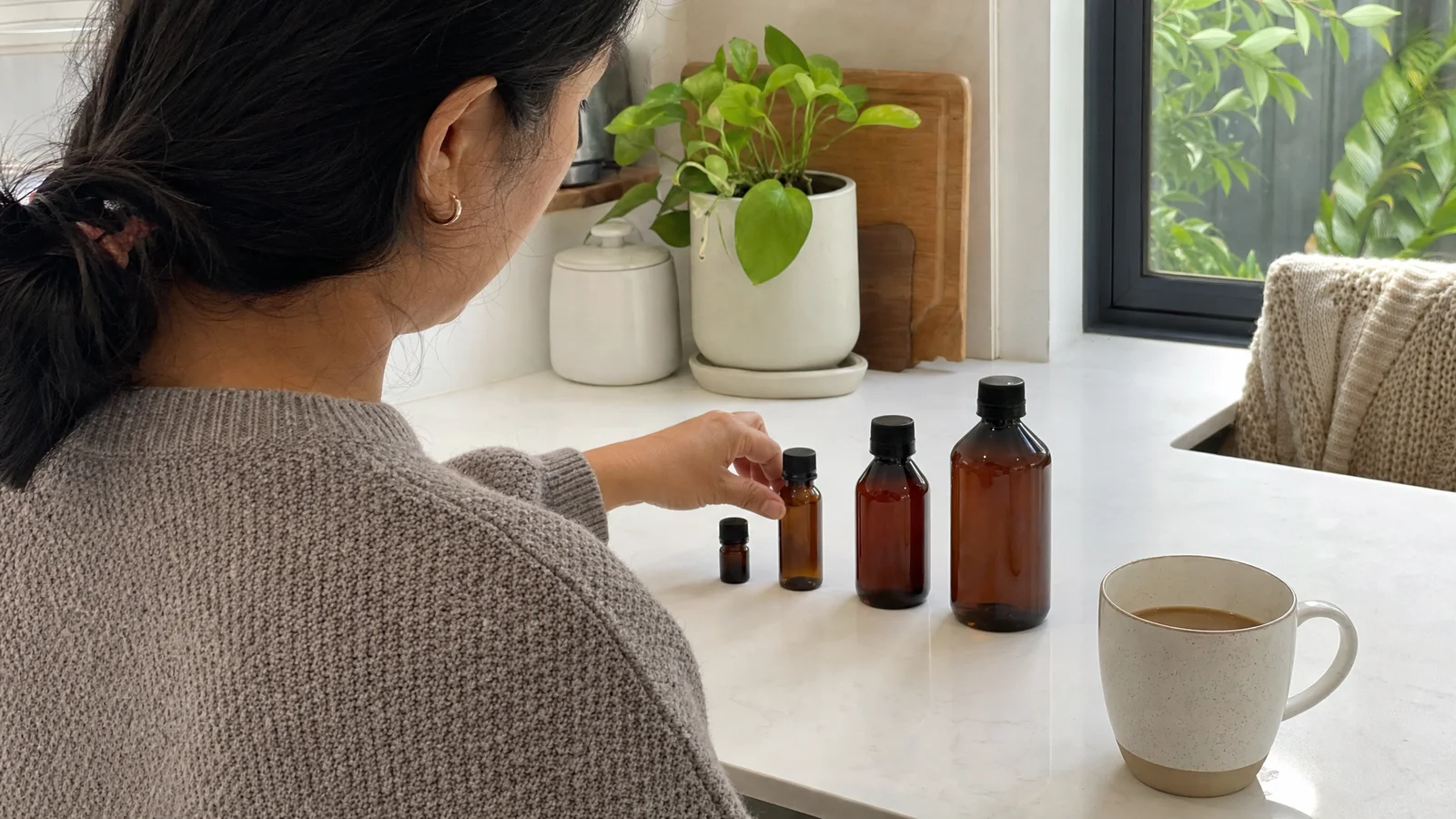
- Stand the bottle upright in a small dish when you are blending, so a drip lands on glazed ceramic and not on your furniture.
- Think about the room, not only the bottle. A diffuser on a windowsill drips onto the sill, and a spray bottle on a sofa arm leaves a ring you will find tomorrow.
None of it is fussy once it becomes habit, and it lets you enjoy that crisp, cool scent without worrying about what is underneath.
Where cajeput does belong is covered in our guide to fresh home scenting, and if you are thinking about shoe cupboards, see cajeput for closets, shoes and gym bags. Test small, wait a day, and when a piece matters to you, let the scent live in another room.
Cajeput Essential Oil
Cajeput Essential Oil from our own shop, in sizes from 0.5 oz to bulk.
From $10.99
Shop Now →Sources & Further Reading
- U.S. National Park Service. Conserve O Gram 7/2, Waxing Furniture and Wooden Objects. nps.gov
- U.S. National Park Service. Conserve O Gram 9/1, Leather Dressings. nps.gov
- EFSA FEEDAP Panel, 2024. Safety and efficacy of cajuput oil for use in all animal species, EFSA Journal. PubMed 38601874