How to Store Cajeput Oil So It Stays Fresh
The first time you open a bottle of cajeput oil, the scent is at its sharpest: cool, fresh and a little fruity. Everything about storage comes down to keeping that first impression going for as long as you can. The good news is that the habits that do it are small and cheap.
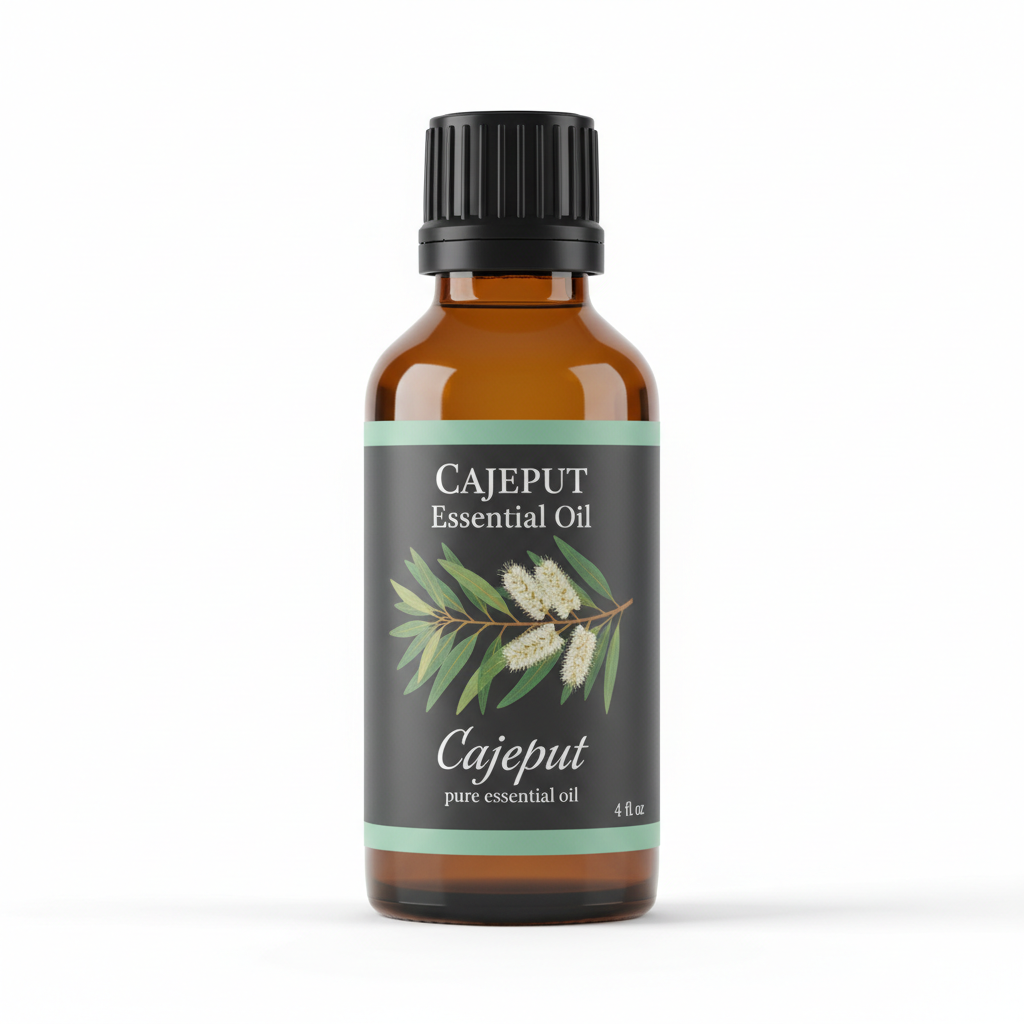
Cajeput Essential Oil
Our own Cajeput Essential Oil, in sizes from 0.5 oz to bulk.
From $10.99
Shop Now →Air is the thing to keep out
Essential oils are mixtures of volatile molecules, and volatile molecules do two things you would rather they did not: they drift off into the air, and they react with oxygen. Cajeput oil contains limonene, which the EFSA animal-feed opinion on cajuput oil lists at roughly 3% to 9% of the oil (EFSA FEEDAP Panel, 2024). Limonene is one of the best-studied fragrance molecules for air oxidation: a 2024 review of fragrance contact allergy describes how it changes on exposure to air into oxidation products that skin can react to (Sukakul et al., 2024). That review is about fragrance materials in general, so we read it as a sensible reason to treat any bottle with care rather than a statement about one particular shelf.
In practice, that means the more air, light and warmth a bottle sees, the faster the scent flattens. Keep all three low and you have done most of the work.
Five habits that earn their keep
- Cap it firmly every time. Wipe the neck first so the cap seats all the way down.
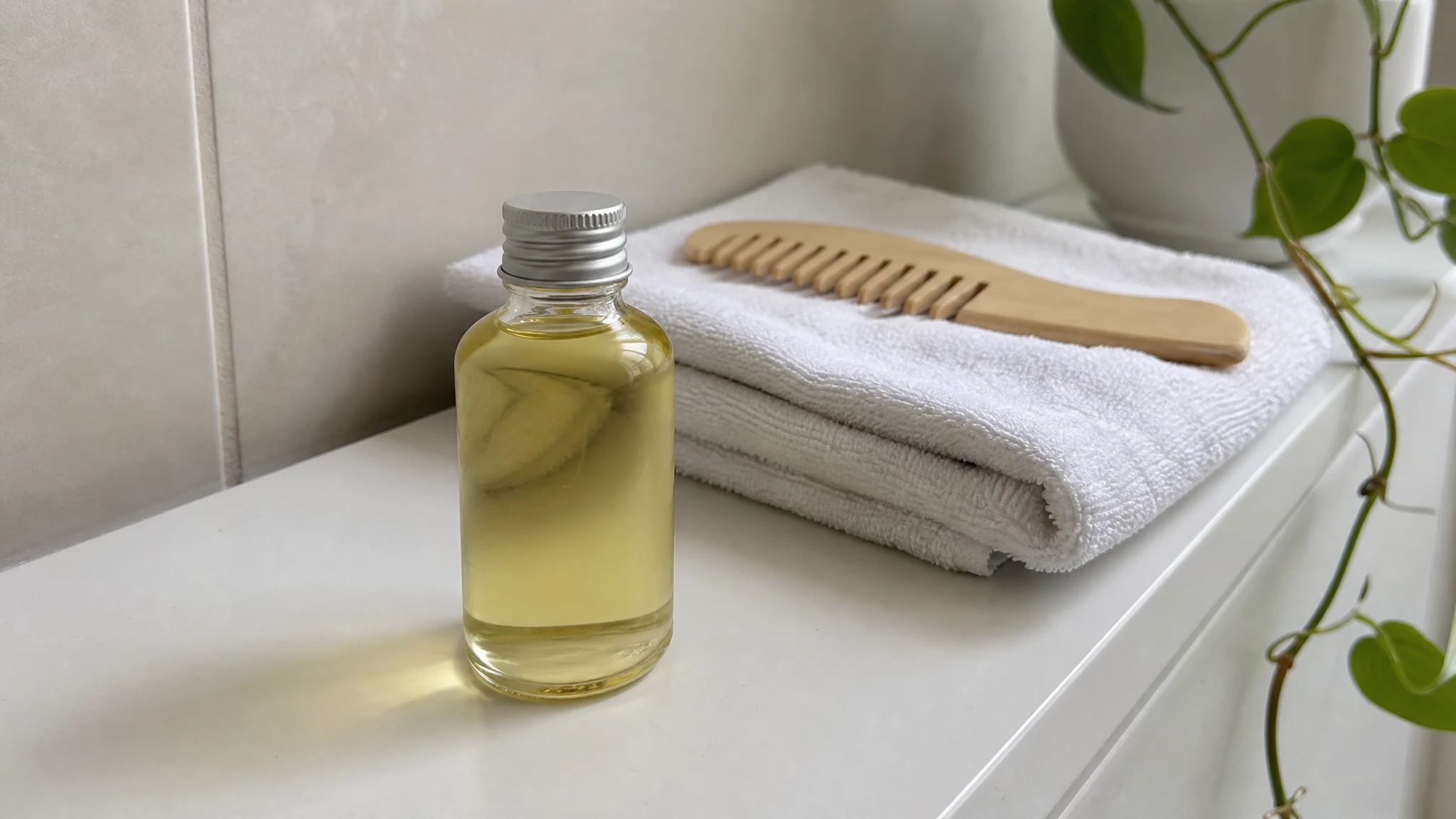
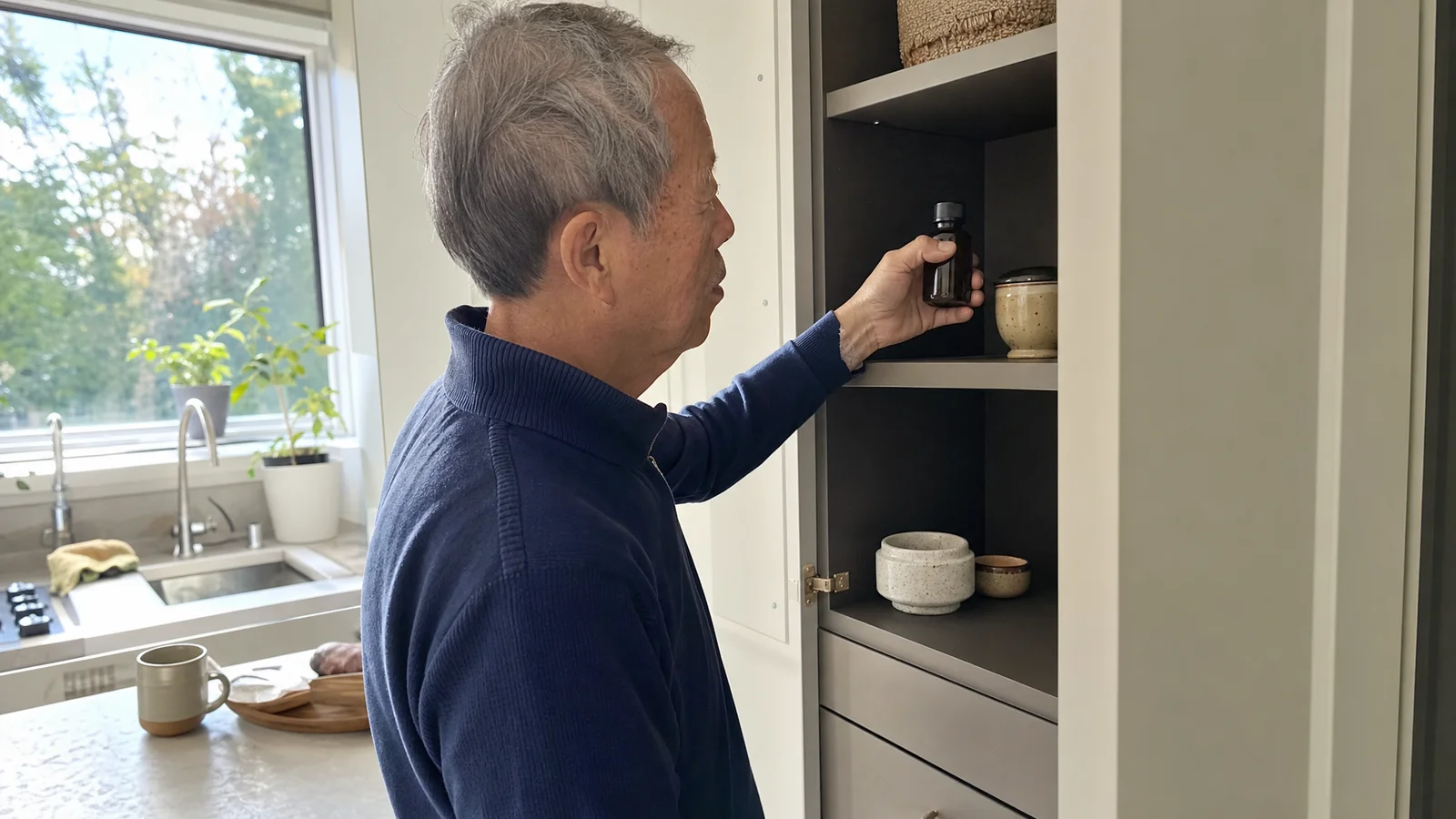
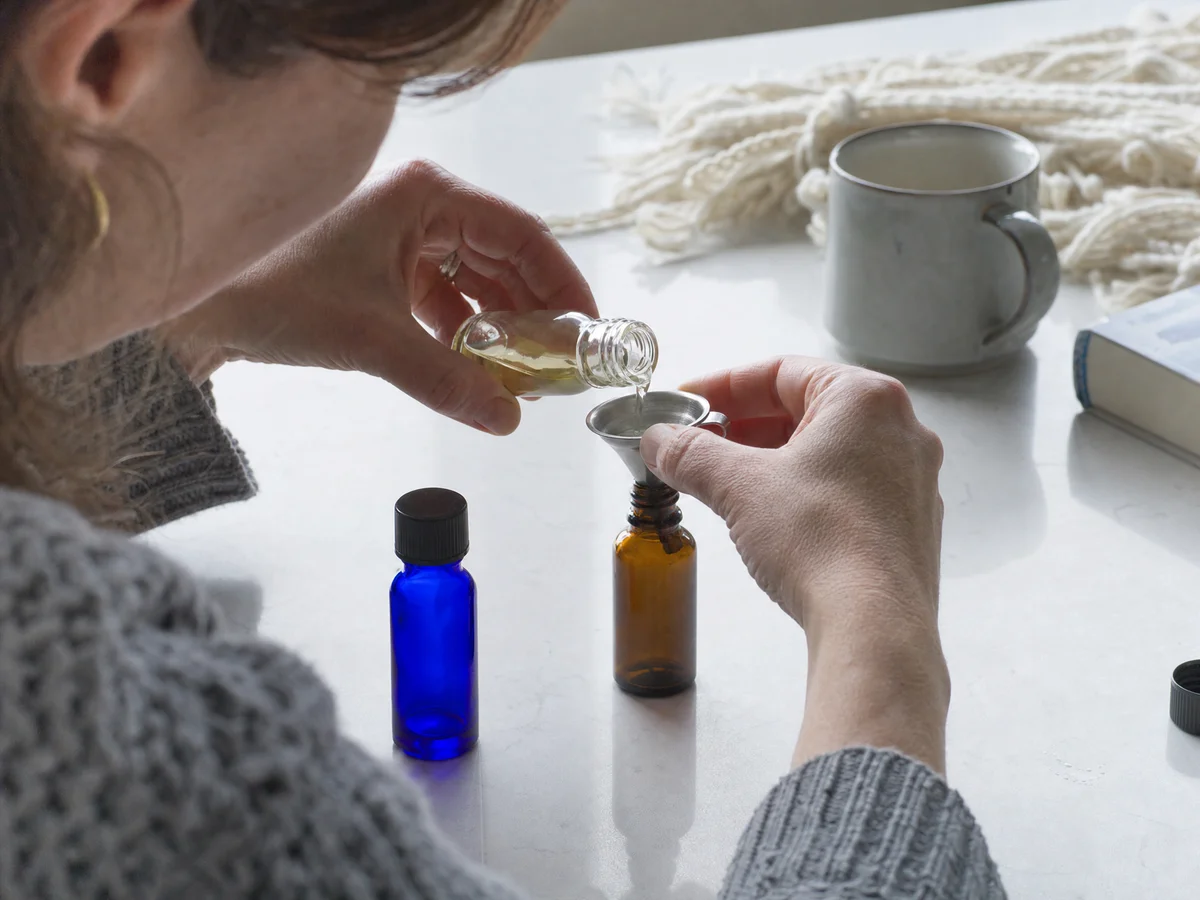
- Give the oil less headspace. The air above the oil is the oxygen supply. When a large bottle is half empty, moving the oil into a smaller, clean, fully dry glass bottle that it nearly fills leaves less air in contact. Keep the lot number with it.
- Choose a cool, dark spot. We recommend a cupboard at ordinary room temperature, away from direct sunlight. A windowsill, a parked car, a shelf above a radiator or a bathroom shelf in the path of shower steam all work against you. Our post on cajeput in the shower and sauna has ideas for scenting a steamy room without leaving the bottle in it.
- Write the date you opened it. Our amber bottles carry a date and lot number on the label, and an opening date beside it tells you how long air has had access.
- Buy what you will use. A bottle that empties in good time has less chance to go stale. Our bottle-size guide does the arithmetic.
How long it keeps
We say cajeput oil typically keeps for 2 to 3 years when it is tightly capped and stored cool and dark. Treat that as a working estimate, because aging depends on how a bottle is handled. The EFSA opinion cited above quotes a more cautious stated shelf life of at least 12 months in tightly closed containers, cool, dry and away from light. Your nose is the best judge in between.
Trusting your nose
A simple trick: keep a few drops from a fresh bottle on a glass vial or blotter, in the dark, as a reference. If the bottle in use smells flatter, sharper or odd next to it, it has moved on. Colour is a weaker guide. Cajeput oil is typically a thin, watery liquid from clear to pale yellow, and slight shade differences from batch to batch are normal.
Where it lives in a real house
The best spot is usually the dullest one. A hall cupboard, a drawer in a spare room or a lidded box on a closet shelf all fit the cool, dark, ordinary-temperature brief. A small tin or box with a lid keeps bottles together, keeps light off them and makes it obvious where they are when you need them. Kitchens are tempting because that is where we use things, but the warm air near the stove works against a top note like cajeput. Put the bottle back after every use, the way you would put back a pair of scissors.
If you are taking a bottle on a trip, see our post on flying with cajeput oil.
Diluted blends keep on a different clock
Once cajeput is in a carrier oil, the mixture is only as long-lived as the carrier, so follow the carrier supplier's date, and label the blend with the day you made it and the percentage. Carrier oils are not something we sell, so a pharmacy, craft supplier or grocery is the place to look. Our post on choosing a carrier compares the usual options.
An older bottle
If an oil is destined for a room diffuser, an older bottle usually just smells duller, and you can use it up there. For skin, we would start with a fresh bottle. Our dilution guidance is 0.5% to 2% in a carrier with a patch test first, and the dilution and patch-test guide explains how. Do not pour larger amounts down a drain; your local household hazardous-waste service can advise.
Out of reach
Cajeput oil is a concentrated aromatic oil meant for aromatic and cosmetic use. Keep the bottle away from eyes, children and pets, and do not take it internally. If a child or pet has swallowed some, call a poison control centre, physician or veterinarian straight away. Our posts on children, pets and swallowed oil cover the details.
Tight cap, small headspace, cool shelf, dated bottle. Four habits, and the oil you open next spring smells a lot like the oil you opened today.
Cajeput Essential Oil
Cajeput Essential Oil from our own shop, in sizes from 0.5 oz to bulk.
From $10.99
Shop Now →Sources & Further Reading
- EFSA FEEDAP Panel, 2024. Safety and efficacy of cajuput oil for use in all animal species. EFSA Journal 22(4):e8732. PMC11004901
- Sukakul T, Bruze M, Svedman C, 2024. Fragrance contact allergy: a review focusing on patch testing. Acta Derm Venereol. PMC11334351