Cajeput Oil Dilution Chart: Mixing and Patch Testing
Cajeput is a lively, camphor-bright oil, and a little goes a long way, which is exactly why the arithmetic matters. Between a dropper that delivers big drops and a small bottle that magnifies every mistake, it is easy to end up with a blend twice as strong as you meant. Here is how we would work it out, step by step.
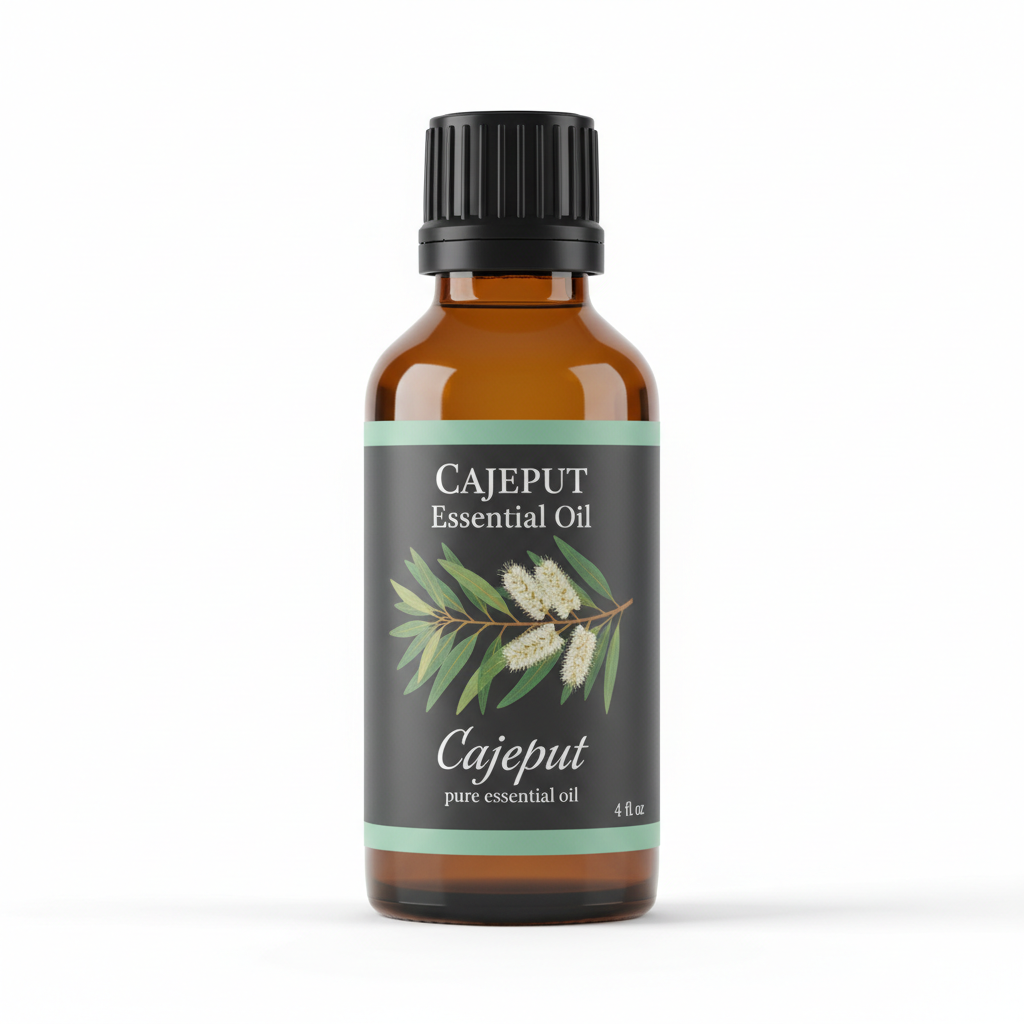
Cajeput Essential Oil
Our own Cajeput Essential Oil, in sizes from 0.5 oz to bulk.
From $10.99
Shop Now →Start with the percentage, then count drops
Our dilution guidance for cajeput is 0.5% to 2% in a carrier oil, with a patch test first. Think of that as a range with a bottom and a top, not a target. The bottom suits most purposes, and you only move up when you have a reason to.
For the math, we use a common convention: 1 oz of carrier is 29.57 ml, and 1 ml of essential oil is about 20 drops. Drop size really does vary with the dropper and the oil (the Tisserand Institute found anything from about 20 to 40 drops per ml), so treat the table as a close guide and let a small scale or a graduated pipette settle it for anything you will use often.
| Dilution | Per 10 ml carrier | Per 1 oz (29.57 ml) | Per 100 ml |
|---|---|---|---|
| 0.5% | 1 drop | 3 drops | 10 drops |
| 1% | 2 drops | 6 drops | 20 drops |
| 1.2% | 2 to 3 drops | 7 drops | 24 drops |
| 2% | 4 drops | 12 drops | 40 drops |
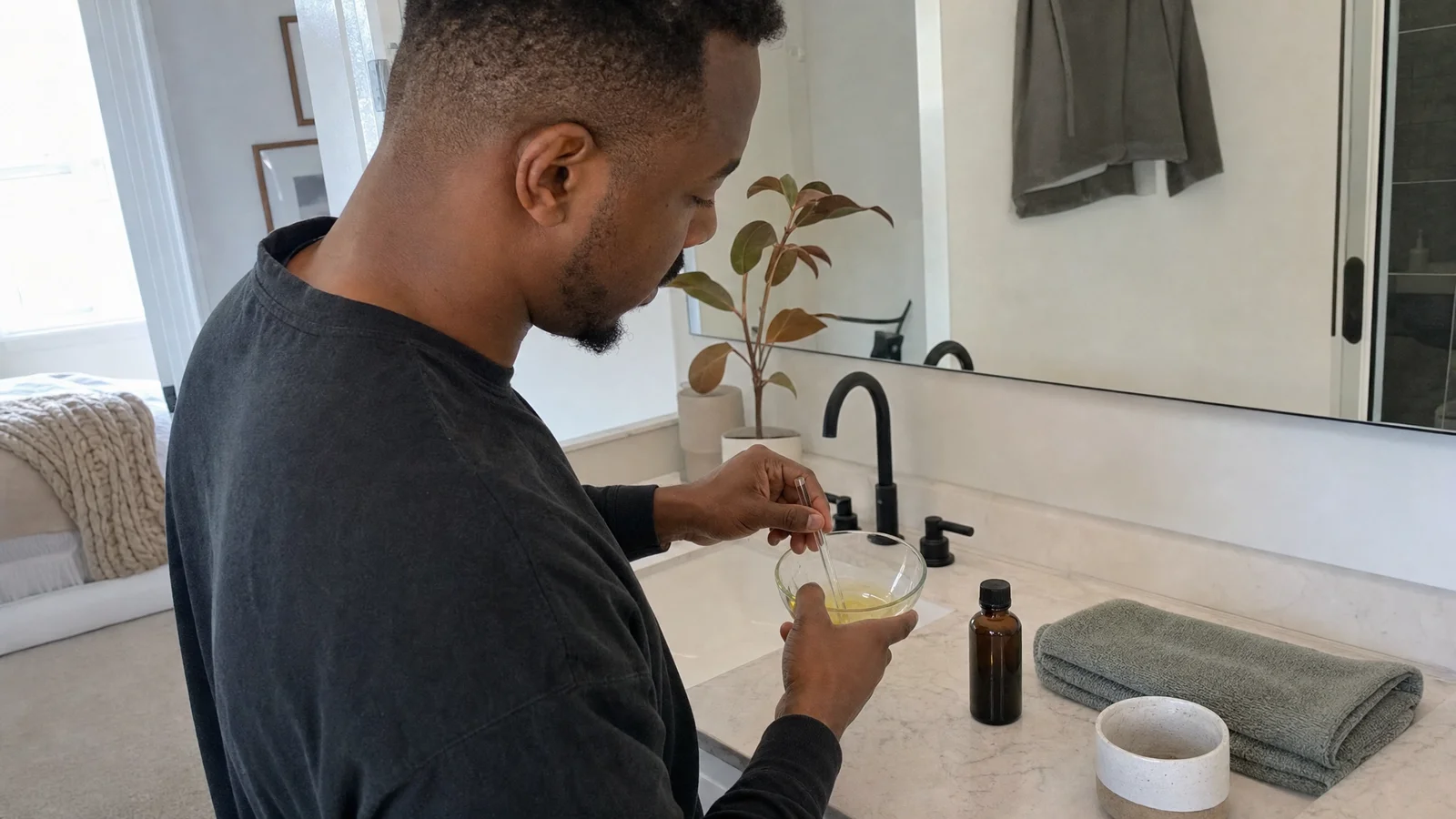
Those 3 to 12 drops per ounce are the same figures as in our FAQ. In a 10 ml roller bottle, one extra drop moves the mix by half a percentage point, so small bottles reward patience. Measure the carrier first, add the oil last, and write the percentage and the date on the label. Our roller bottle article works through those small sizes.
Where on the range to land
For the face, the Tisserand Institute's dilution guidance gives 0.5% to 1.2% for facial products, and 0.2% to 1% for sensitive or compromised skin. That is general advice for essential oils, not a cajeput-specific figure, but it fits our own view: for the face, underarms or skin that reacts easily, we would stay at the lower end of our range. Body oils can sit higher, and 2% is the ceiling of what we suggest, not the place to begin. If you plan to use a blend daily and leave it on, start at 0.5% and only raise it if the scent is too faint.
Cajeput is rich in 1,8-cineole, and the European Food Safety Authority's 2024 opinion on the oil describes it as an irritant to skin and eyes and as a skin and respiratory sensitiser (EFSA FEEDAP Panel). That is a hazard classification, not a reaction rate, and it is the reason dilution and patch testing are worth the small effort. Carrier choice is its own pleasant rabbit hole; our carrier oil guide compares jojoba, sweet almond and others, including the nut-allergy point. We do not sell carriers, so look to a carrier-oil supplier or a well-stocked grocery.
A patch test with patience
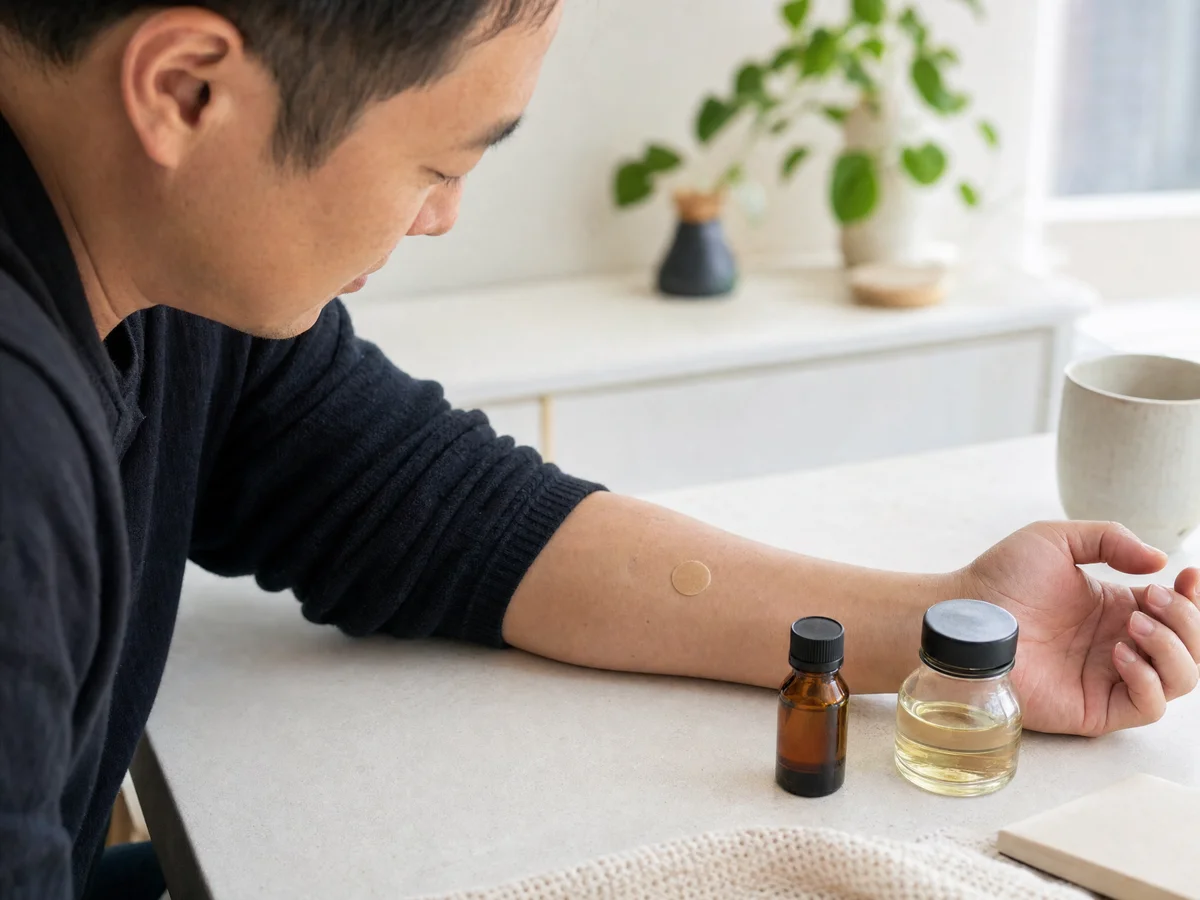
A dab on the wrist that looks fine after ten minutes tells you about immediate irritation and very little else. DermNet NZ explains that allergic reactions usually take 48 to 96 hours to show, which is why clinic patches stay on for 48 hours and are read at 96. It also describes a repeat open application test: twice a day on a 5 cm patch of forearm for 5 to 10 days, where no redness or swelling makes an allergy unlikely.
A sensible home version, reasoned from that description, is to put the diluted oil on the inner forearm, leave it alone, and wait at least two days before using it more widely, longer if it will be a daily leave-on. A new percentage counts as a new test. If a rash, itching or swelling appears, stop and ask a dermatologist about formal patch testing rather than retrying at home.
Check the bottle, not just the blend
Oxidised oil is a quiet cause of skin reactions. The same limonene that many citrus oils carry is a known example: in a European study of 2,411 dermatitis patients, 2.6% reacted to oxidised limonene (Matura et al., 2006). Cajeput contains limonene too, at roughly 3 to 9% in the EFSA specification. Nobody has measured oxidation in cajeput specifically, so this is reasoning, but it points to simple habits: keep the cap tight, keep the bottle cool and dark (we say typically 2 to 3 years that way), and do not put an oil on skin if it smells sour or has thickened. Our storage article has the details.
A worked example
Say you want a leg and forearm oil from 100 ml of carrier. At 0.5%, that is 0.5 ml of cajeput, about 10 drops. Mix it, label it "0.5% cajeput" with the date, and patch test on the inner forearm for two days. If the skin stays calm, go ahead. If you later want a stronger scent, make a fresh 1% batch (about 20 drops) and test that too. Make small quantities and use them within a few weeks, since the carrier itself can turn rancid.
One last habit: keep a small notebook of every blend you make, with the percentage, the carrier, the date and how it smelled. When you find a batch you love, you will be able to make it again.
Where the oil does not belong
- Eyes and broken skin. The oil stings on contact. If it gets in an eye, rinse with plenty of water and call a poison centre or doctor.
- Swallowing. Never. Our article on swallowed cajeput oil explains what to do if it happens by accident.
- Babies, young children, pets, pregnancy, seizure history or skin disease. Ask a pediatrician, veterinarian, midwife or physician first. We sell an external cosmetic oil and make no health claims for it.
Choose the lowest percentage that gives you the scent you like, give the patch its full two days, and keep the bottle fresh. If your skin disagrees at any point, a dermatologist is the right person to ask.
Cajeput Essential Oil
Cajeput Essential Oil from our own shop, in sizes from 0.5 oz to bulk.
From $10.99
Shop Now →Sources & Further Reading
- EFSA FEEDAP Panel, 2024. Safety and efficacy of cajuput oil for use in all animal species, EFSA Journal 22(4):e8732. pmc.ncbi.nlm.nih.gov/articles/PMC11004901
- Tisserand Institute. Dilution. tisserandinstitute.org/safety/dilution
- Tisserand Institute. Drop size. tisserandinstitute.org/learn-more/drop-size
- DermNet NZ. Patch tests. dermnetnz.org/topics/patch-tests
- Matura M et al., 2006. Not only oxidized R-(+)- but also S-(-)-limonene is a common cause of contact allergy in dermatitis patients in Europe, Contact Dermatitis 55(5):274-279. lup.lub.lu.se/record/685974