Cajeput Oil Around Cats and Dogs: What to Know
Pet owners tend to ask a very practical question: can I keep cajeput in the house? The short version is that it depends on the animal. Cats call for real care, dogs have a wider margin, and in both cases the biggest lever is simply where the bottle sits and how the scent reaches the air.
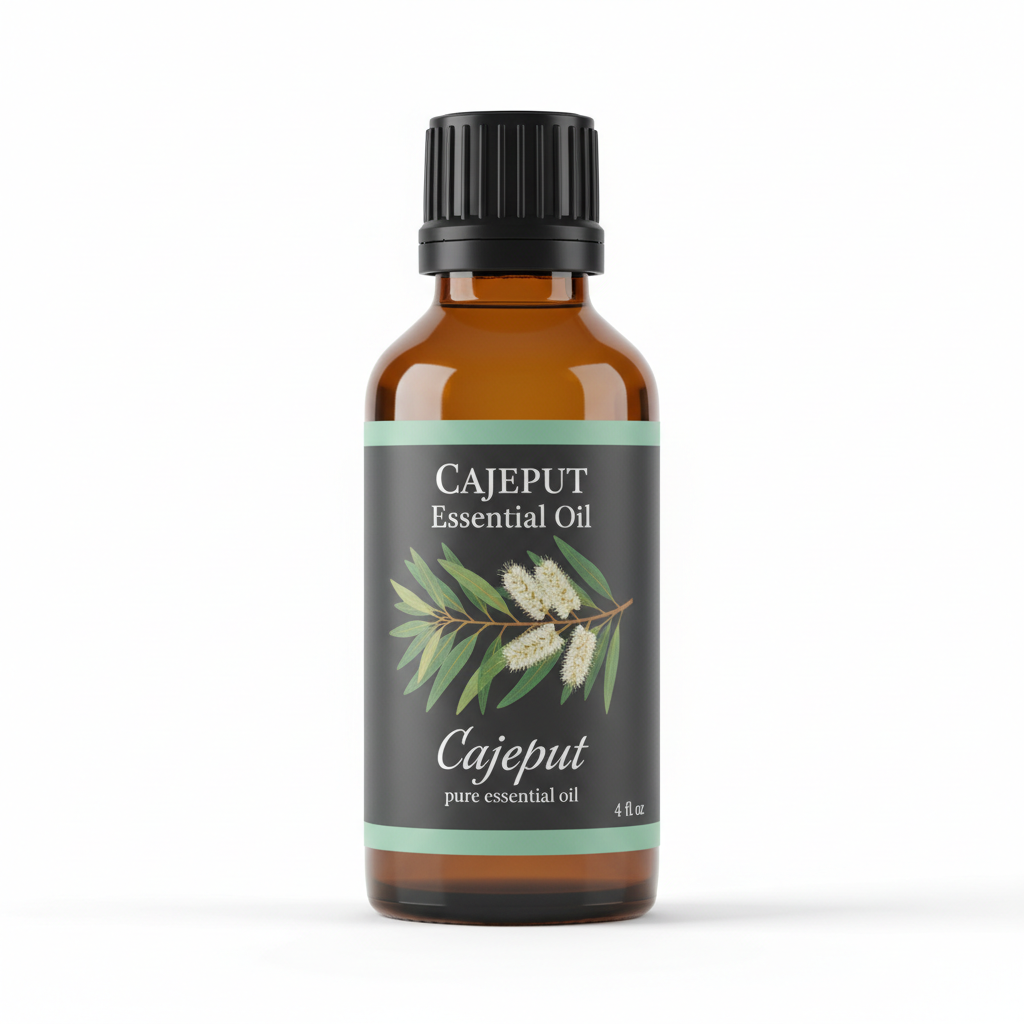
Cajeput Essential Oil
Our own Cajeput Essential Oil, in sizes from 0.5 oz to bulk.
From $10.99
Shop Now →What the one cajeput review says
In 2024 the European Food Safety Authority assessed cajuput oil as a feed additive for all animal species. Its maximum levels in complete feed were 30 mg per kg for dogs and 5 mg per kg for cats. The panel gave cats a wider safety margin because cats have an unusually low capacity for glucuronidation, one of the body's routes for clearing oil components (EFSA FEEDAP Panel, 2024). The same opinion treats the oil as an irritant to skin and eyes and as a skin and respiratory sensitiser, which matters for any animal that rubs against a treated surface.
These are daily dietary ceilings for feed, not poisoning thresholds, and no one has run a cat-and-diffuser study. But they show how the regulators view the gap between species, and why we treat the cat as the animal to protect first.
Why a licked paw is the real exposure
The best large veterinary dataset in this oil family concerns tea tree, a different Melaleuca. The ASPCA Animal Poison Control Center reviewed 443 cases of concentrated tea tree oil in 337 dogs and 106 cats. Skin contact alone accounted for half the cases and skin plus swallowing for another 30%. Signs began within 2 to 12 hours and lasted up to 72 hours, mostly drooling, lethargy, weakness and tremors, and younger, smaller cats were at higher risk of serious illness. In 89% of cases the oil had been applied on purpose (Khan et al., 2014).
Three things follow, reasoning from that study. Skin contact counts, so keeping the oil off a cat's drinking water is not the whole boundary. Signs can arrive hours later, so an animal that seems fine after a spill is not necessarily in the clear. And the avoidable harm sits with applying oil to animals, which is something we would never suggest. That is a different oil, so we read it as a pattern, not a measurement for cajeput.
Cats and dogs differ
Cats cannot make a working version of one of the main enzymes that clears phenols from the body, which is why veterinary guidance is more cautious for them (Merck Veterinary Manual). Cajeput's main compound, cineole, is not a phenol, so the cat caution is a precaution rather than a proven mechanism, but with an animal that cannot tell you how it feels, precaution is the right choice. Dogs are described as still at risk, and the ASPCA lists eucalyptus, which shares cineole with cajeput, as toxic to both dogs and cats (ASPCA, eucalyptus). For dogs the practical risk is curiosity: a chewed bottle, a licked spill or a tipped diffuser.
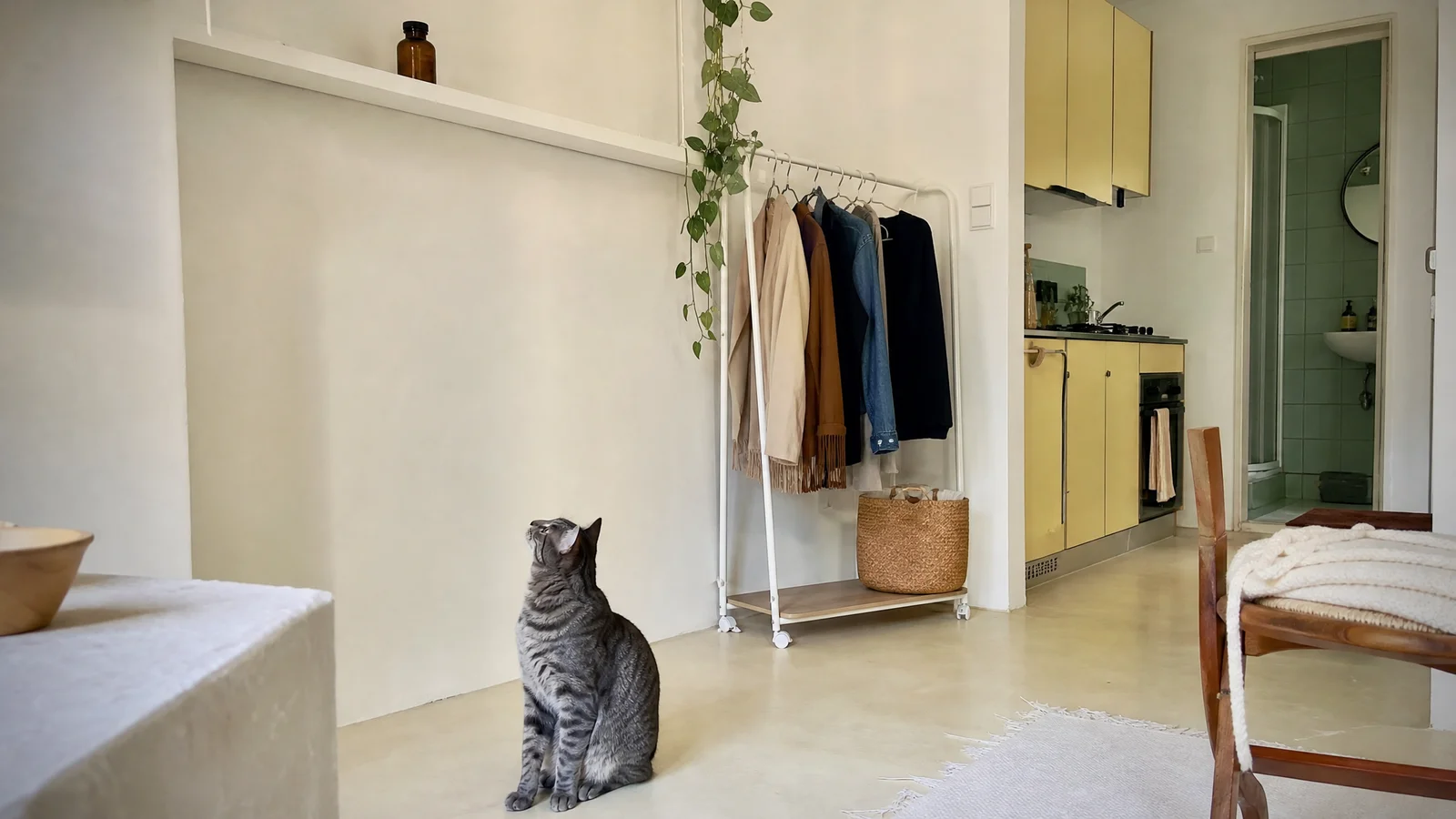
Anyone who shares a home with a cat knows how cats treat a new smell. They investigate it. A cat will walk across a countertop, nose a cap, or sit in the one patch of sun where a bottle was left. Dogs are less subtle: they chew, lick and tip things over. The most useful way to think about pets and essential oils is that animals do not know to keep away, so the bottle has to be somewhere they cannot get to.
Scenting a room with animals around
Pet Poison Helpline distinguishes passive diffusers from active ones that release fine droplets, which can settle on fur and be swallowed during grooming (Pet Poison Helpline). With that in mind, here is what we would do:
- Keep the bottle capped in a cabinet the animal cannot open, and wipe any drip at once.
- Prefer a passive scent method, in a room the animal can leave, with the door open.
- Keep sessions short, and avoid closed rooms, carriers and anywhere a caged bird lives (ask an avian vet about birds).
- Never put oil on an animal, diluted or not.
Our own guidance is to keep cajeput away from eyes, children and pets. The storage guide covers the bottle, the children article covers the human side of the same rule, and the diffuser blends are best saved for rooms animals do not use.
Habits that make a pet-friendly home easier
- Pick one storage spot that is high, closed and out of reach, and always return the bottle there.
- Close the door of the room where you are working with oils, so a curious nose cannot wander in.
- Wash your hands before you pet or pick up an animal after handling oil.
- Air the room when you finish, and clear any pads or cloths you scented.
- Tell visitors and house sitters where the bottle lives.
If an animal has been exposed
Move the animal to fresh air and call a veterinarian or a poison line straight away. The Merck manual cautions against inducing vomiting because of the risk of aspiration. The ASPCA Animal Poison Control Center is at (888) 426-4435 and Pet Poison Helpline at (855) 764-7661, and a consultation fee may apply (ASPCA). If a person swallowed the oil, read swallowed cajeput oil instead.
For a home with a cat, the simplest version is a sealed bottle on a high shelf and scent that never puts droplets in the air.
Cajeput Essential Oil
Cajeput Essential Oil from our own shop, in sizes from 0.5 oz to bulk.
From $10.99
Shop Now →Sources & Further Reading
- EFSA FEEDAP Panel, 2024. Cajuput oil as a feed additive. EFSA Journal 22(4):e8732
- Khan SA et al., 2014. Concentrated tea tree oil toxicosis in dogs and cats: 443 cases (2002 to 2012). J Am Vet Med Assoc
- Merck Veterinary Manual. Toxicoses from essential oils in animals
- ASPCA. Eucalyptus
- Pet Poison Helpline. Updates on essential oils
- ASPCA Animal Poison Control Center