Cajeput Chest Balm Recipe: Easy to Weigh Out
The best cajeput balm is the one you can describe in grams. Wax, a carrier oil and a fixed percentage of cajeput come together on a kitchen scale in about two minutes, and when you are done you know exactly how strong the tin is. Counting drops cannot promise that, and the one step where most recipes go astray is not the counting at all but when the oil goes in.
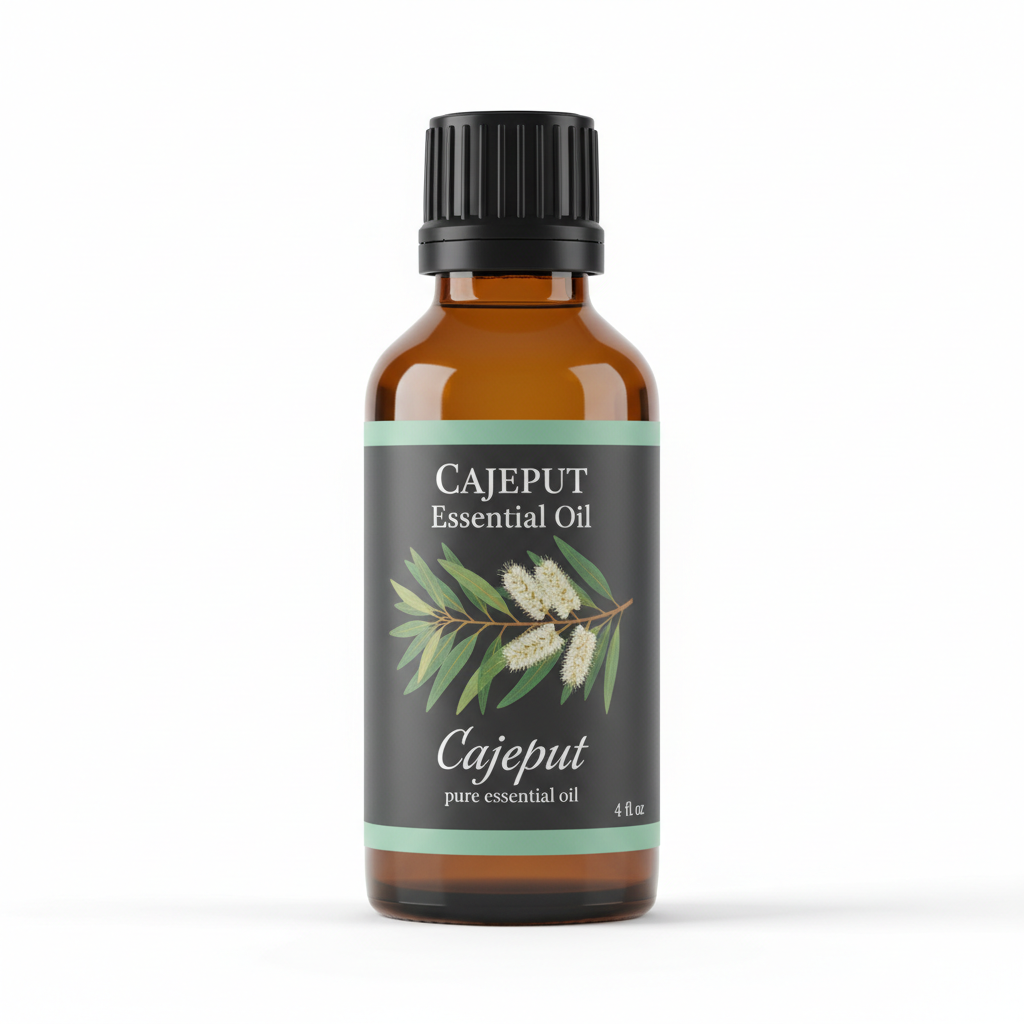
Cajeput Essential Oil
Our own Cajeput Essential Oil, in sizes from 0.5 oz to bulk.
From $10.99
Shop Now →Start with the grams
We recommend diluting cajeput to between 0.5% and 2% in a carrier before it goes on skin. In a balm the carrier is the wax and oil together, so the percentage is of the whole finished tin. For a 30 g tin:
| Strength | Cajeput by weight | Drops, if you must count |
|---|---|---|
| 0.5% | 0.15 g | 3 to 7 |
| 1% | 0.30 g | 7 to 13 |
| 1.5% | 0.45 g | 10 to 20 |
| 2% | 0.60 g | 13 to 26 |
The drop column is wide on purpose. The Tisserand Institute reports that drops per ml run from about 20 to 40, so a drop is never a precise measure. The batch on our Certificate of Analysis has a specific gravity of 0.906, so 1 ml weighs a little under a gram. Someone who counts "about 10 drops" and lands on 13 is already nearer 1.3% than 1%. That is still inside our range, but it is the reason we weigh. A 0.01 g jewellery scale reads 0.30 g without any trouble.
The base
As a starting formula for one 30 g tin:
- 5.0 g beeswax (about 17% of the tin)
- 24.7 g carrier oil
- 0.3 g cajeput, which is 1%
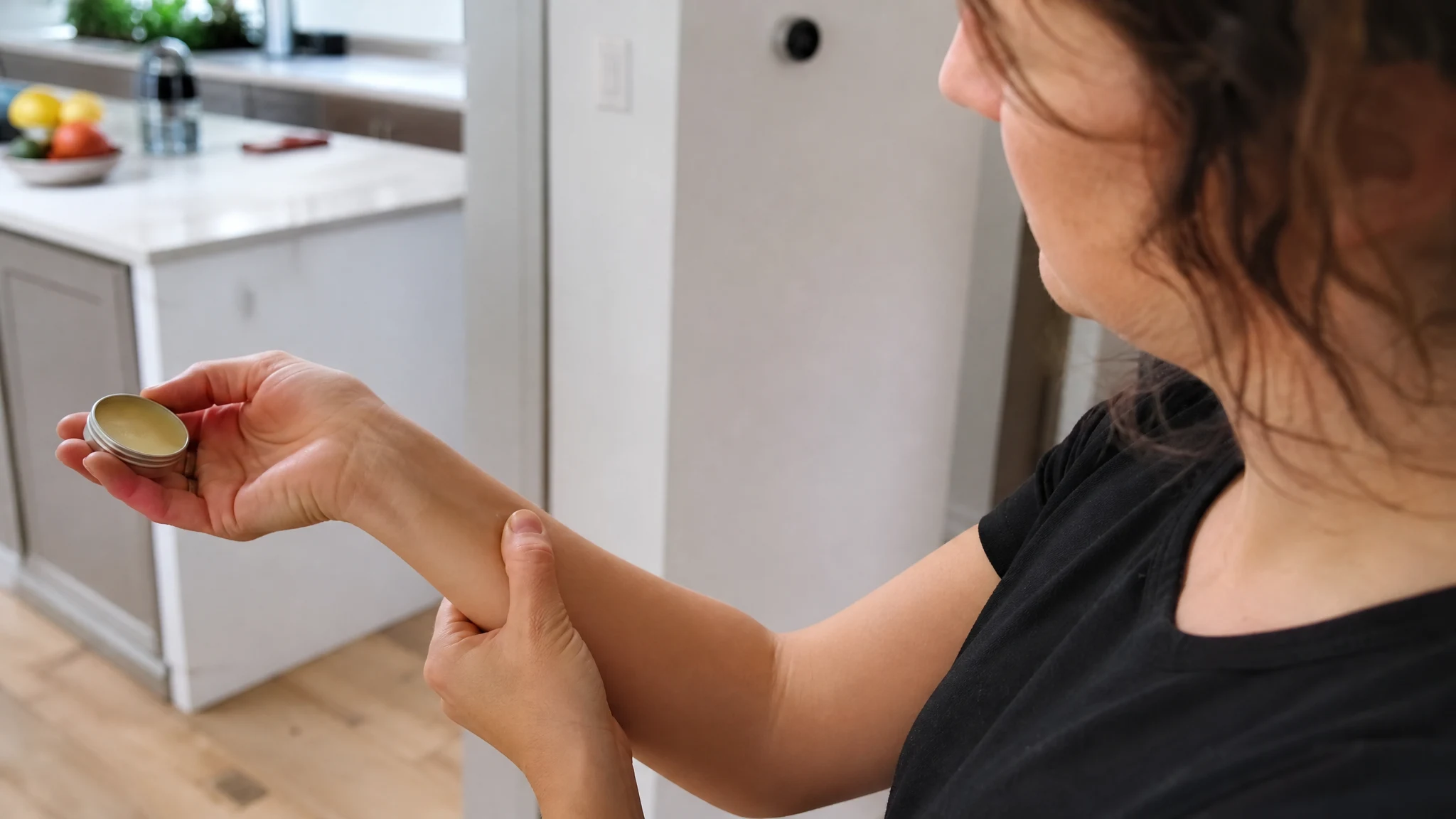
That is roughly one part wax to five parts oil, a soft, scoopable balm that spreads with a fingertip. For a firmer stick, move toward one part wax to three parts oil (7.5 g of wax and 22.5 g of oil) and keep the cajeput at 0.3 g. Adjust the wax a gram at a time until the texture suits you. Beeswax, carrier oil and tins come from a craft or soap-making supplier, and our carrier oil guide walks through the options and how they differ in shelf life.
Add the cajeput last
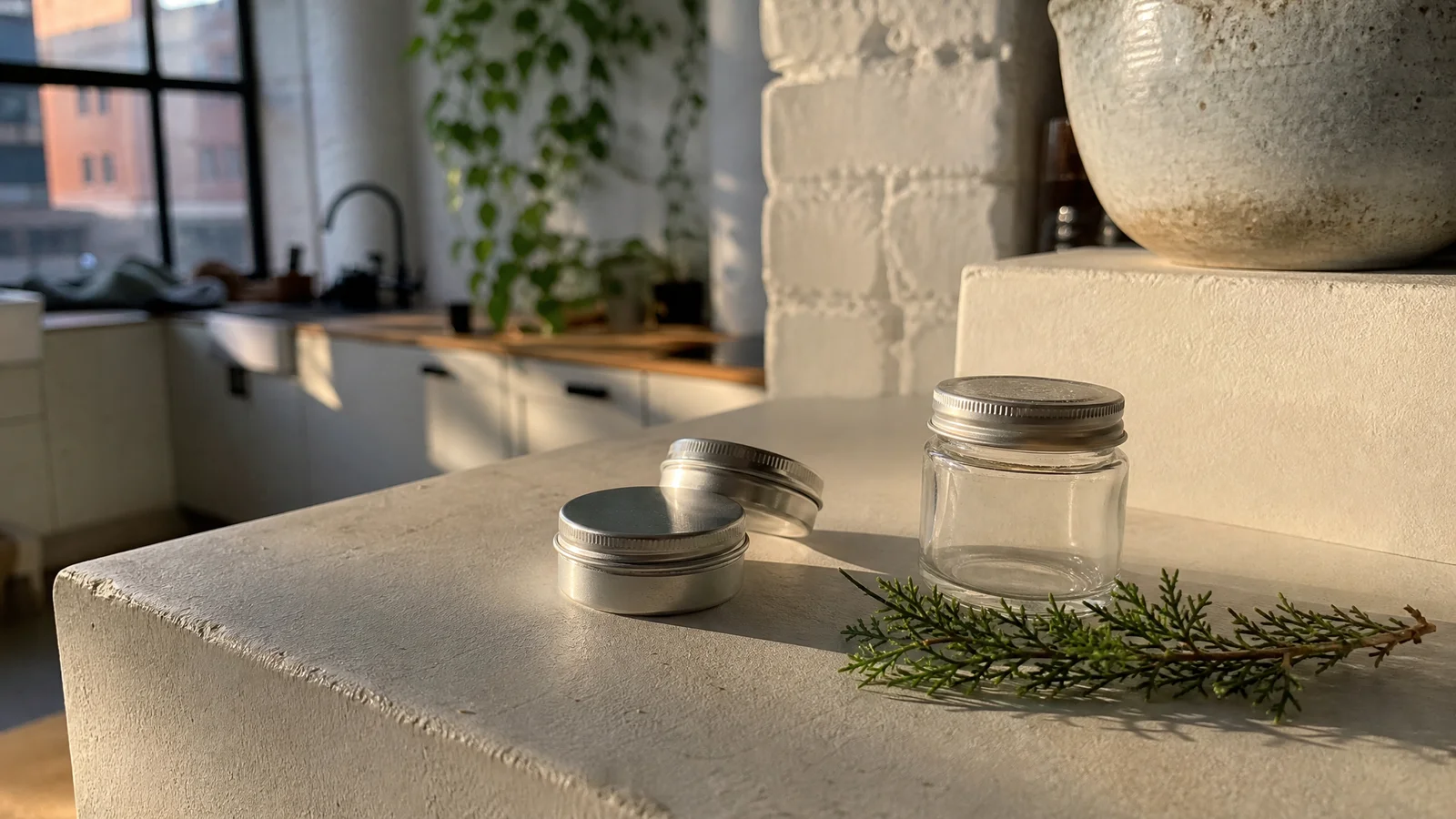
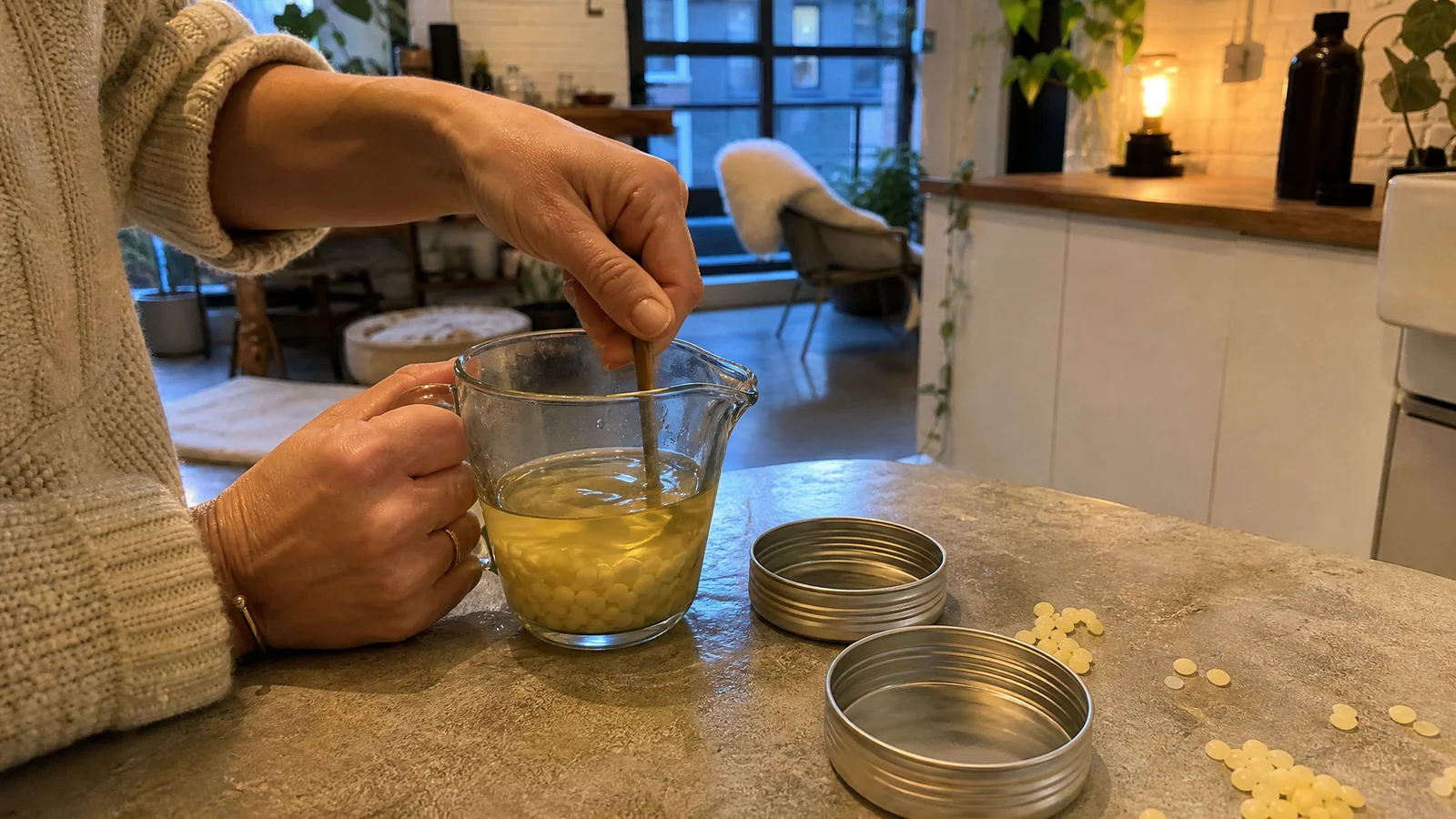
This is the step that makes a balm smell like the bottle. Cajeput is a top note, which in perfumery terms means its lightest, brightest part leaves first, and hot wax encourages it to leave. So melt the wax and carrier in a heatproof jar standing in hot water, never over a direct flame, then lift the jar out as soon as the wax has just melted. Let it cool until a thin skin begins to form at the edge, stir in the cajeput, pour straight into the tin and leave it uncovered until it sets.
Keep flames away from the open bottle while you work. Essential oils are flammable, and the Tisserand Institute says as much in its safety guidelines. Put the date on the lid when you cap the tin; a balm that has begun to smell like old crayons has outlived its carrier, and it belongs in the bin.
What to expect from the finished tin
Once the balm has set, press a fingertip into it. A well-made soft balm gives way easily and melts as it warms against your skin, leaving a thin, glossy layer. If it feels like a rock, remelt it with another gram or two of oil. If it slumps into a puddle in the tin, remelt it with a gram of wax. Small corrections like that are why we like to work by weight: you can see exactly what you changed.
Open the tin and breathe in. You should notice cajeput's cool, fruity-camphorous top note over the soft, waxy smell of the base. It will be gentler than the bottle, because the oil is a small fraction of the whole, and that is exactly how it should be.
An adult balm, and why
We make this a balm for adults only. Cajeput is high in 1,8-cineole, and we do not recommend it for babies or young children or near a small child's face. For context, the European Medicines Agency says eucalyptus oil medicines must not be given to children under 30 months, and lists skin, inhaled and bath-additive forms for ages four and up (EMA). That is eucalyptus, not cajeput, so it is a parallel and not a rule for our oil, but the constituent is the same one. Our children and cineole article goes into it. A balm is also a tempting little tin, so keep it up high and out of reach of children and pets.
If you give a tin to a friend, label it with the ingredients, the percentage of cajeput and the date. A friend who is pregnant, or has small children or a pet at home, deserves to know what is in it before they open it.
Patch test before you commit; the method is in our dilution and patch test guide. Keep the balm away from the face, nostrils and eyes, and off broken skin. If you use prescription creams or medicated patches, ask your pharmacist before layering anything over them. We sell an external cosmetic oil, so questions about a cough, breathing or a chest that feels wrong belong with a physician, and if you are pregnant or breastfeeding, ask your OB-GYN or midwife first (what is actually known covers the thin evidence).
If you would rather carry the same dilution as a liquid, the roller bottle maths uses the same arithmetic in millilitres. Either way, it comes down to three weighed ingredients, a cool pour and a date on the lid.
Cajeput Essential Oil
Cajeput Essential Oil from our own shop, in sizes from 0.5 oz to bulk.
From $10.99
Shop Now →Sources & Further Reading
- Tisserand Institute. How big is a drop? tisserandinstitute.org/learn-more/drop-size
- Tisserand Institute. Safety guidelines. tisserandinstitute.org/safety-guidelines
- European Medicines Agency. Eucalypti aetheroleum (herbal medicine summary page). ema.europa.eu