How Cajeput Oil Is Made: From Leaf to Bottle
It takes somewhere between 80 and 250 kilograms of fresh paperbark leaf to make one kilogram of cajeput oil. That single number explains a lot about why the oil is precious, why a bottle is small, and why it matters who made it and how. The process itself is simple: cut, strip, pack, steam. But almost every step leaves a fingerprint in the finished oil.
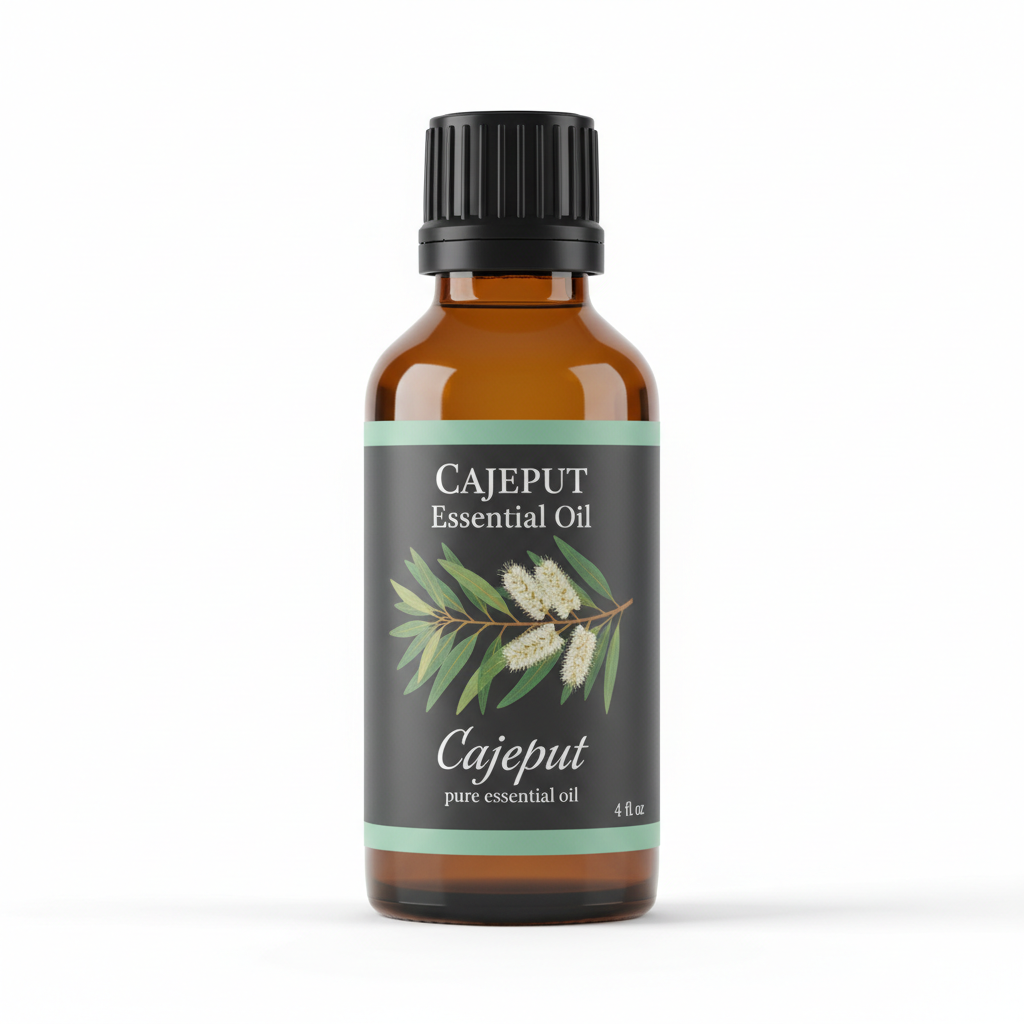
Cajeput Essential Oil
Our own Cajeput Essential Oil, in sizes from 0.5 oz to bulk.
From $10.99
Shop Now →The cut
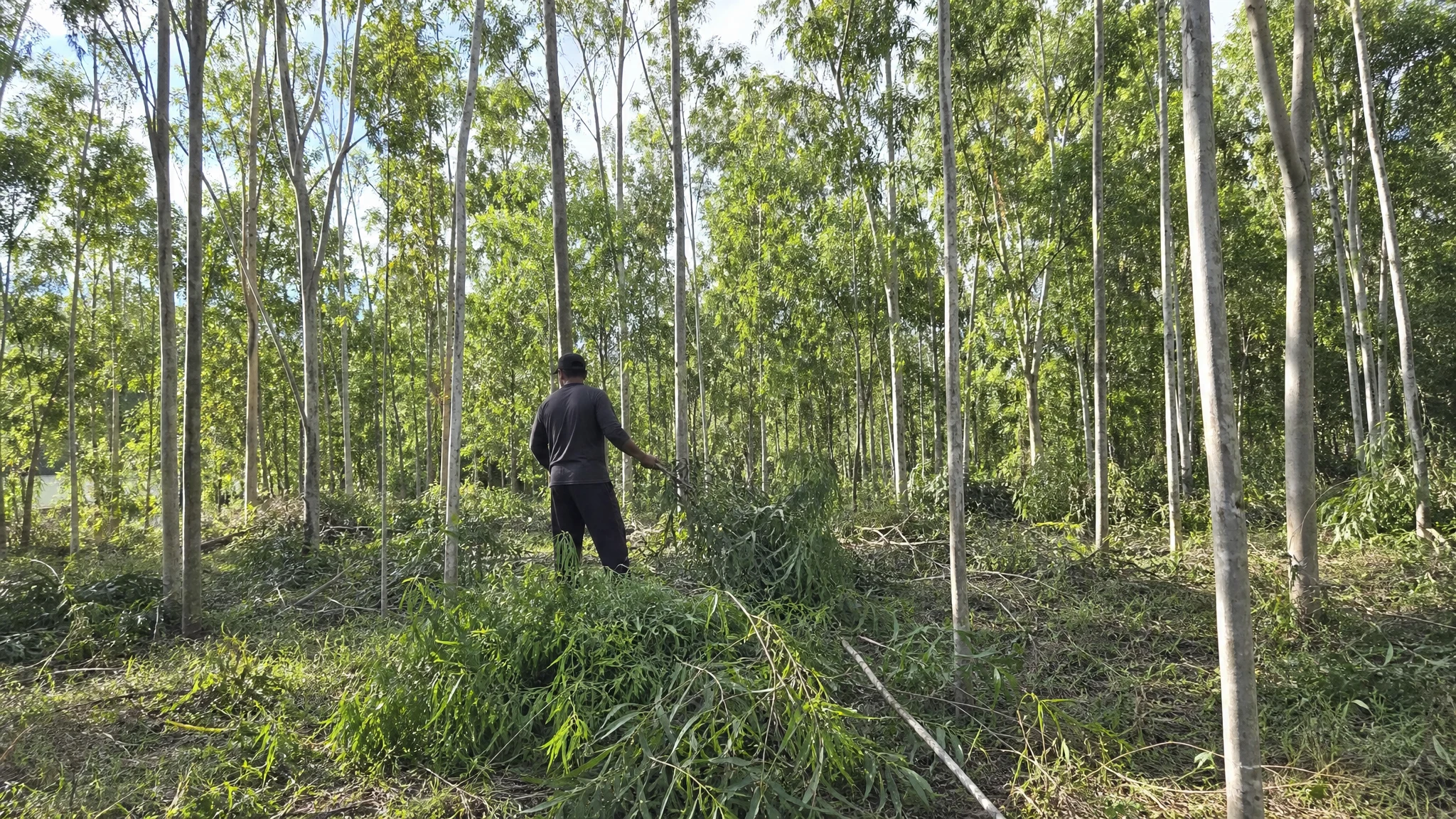
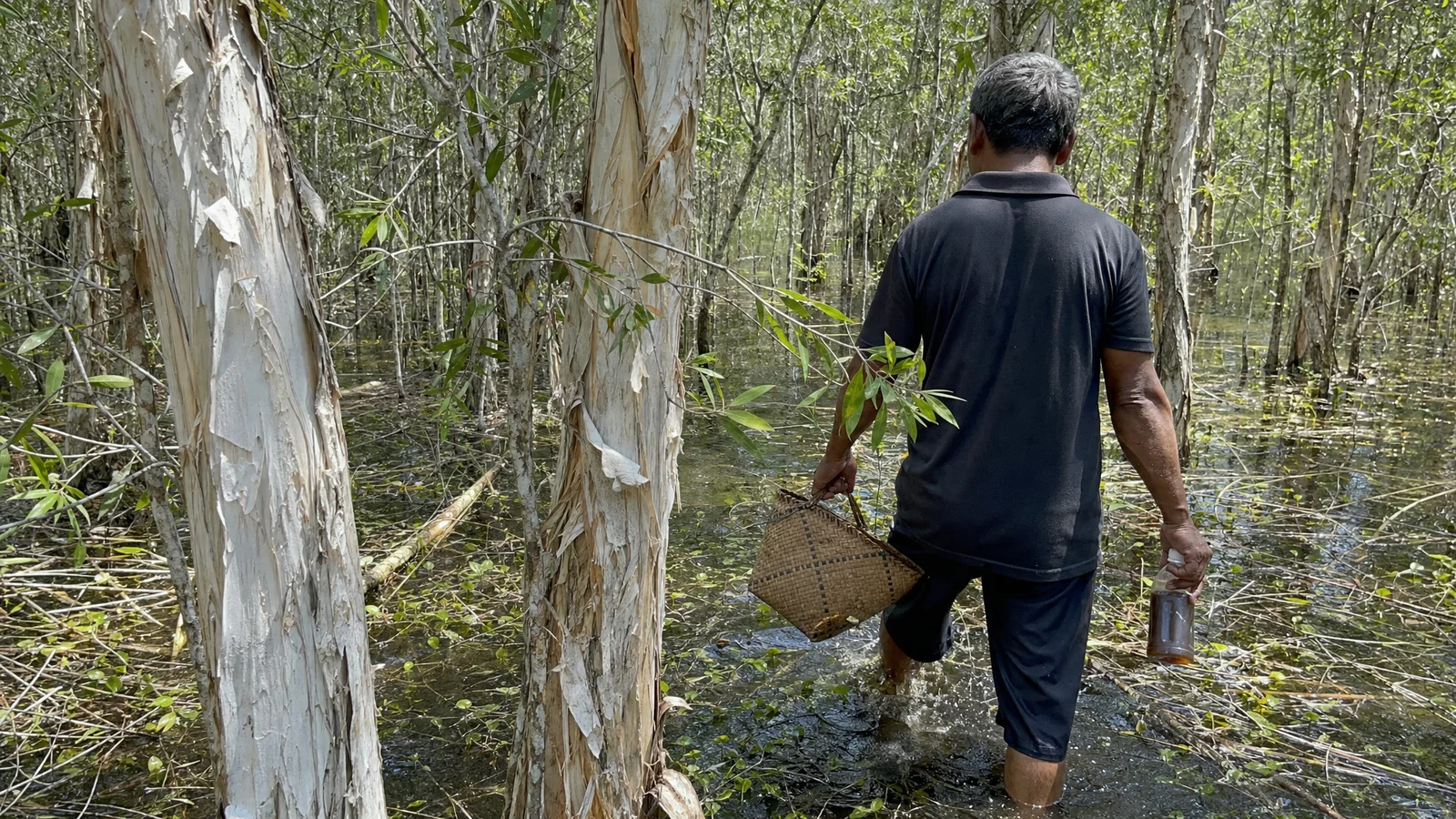
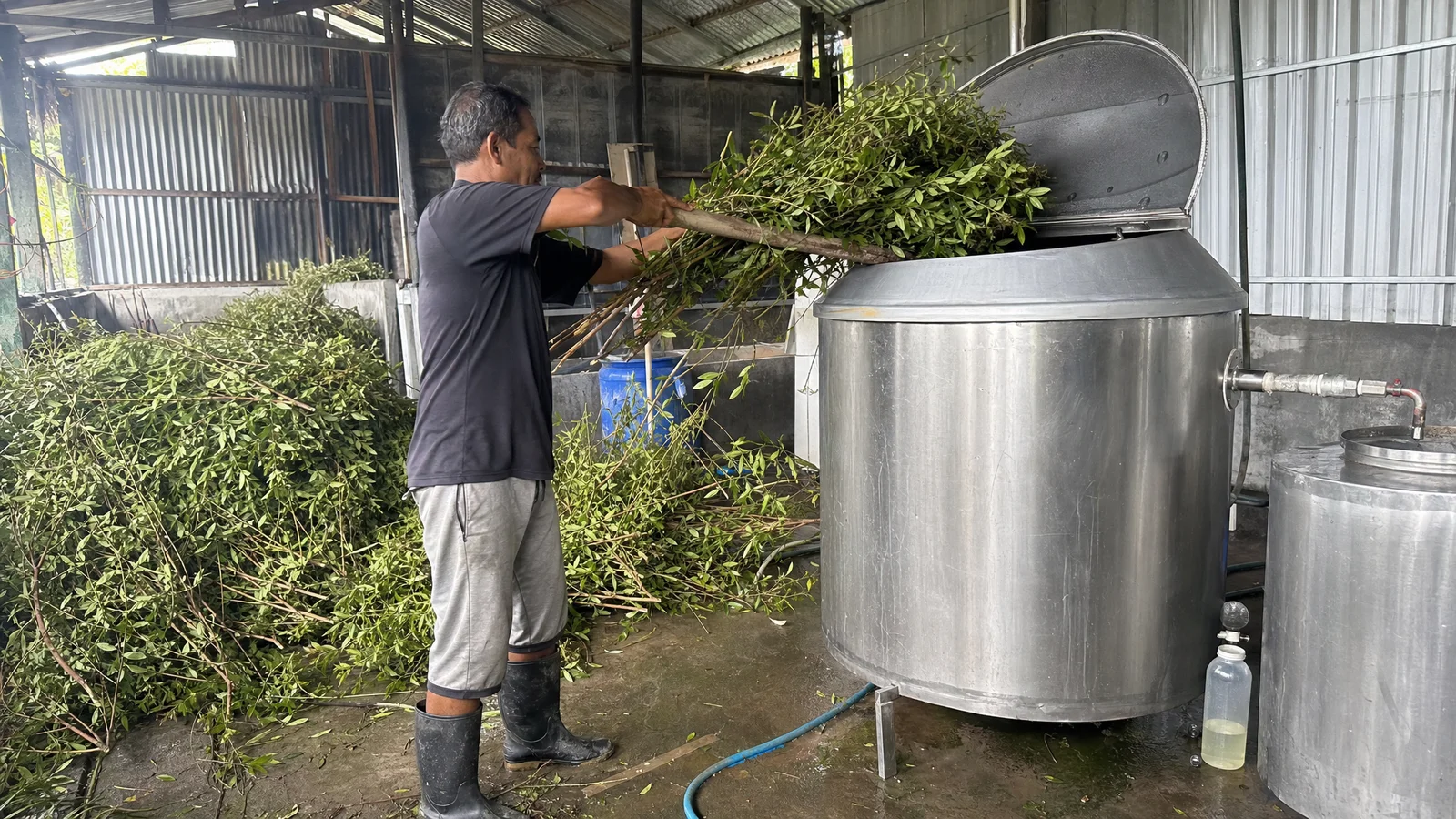
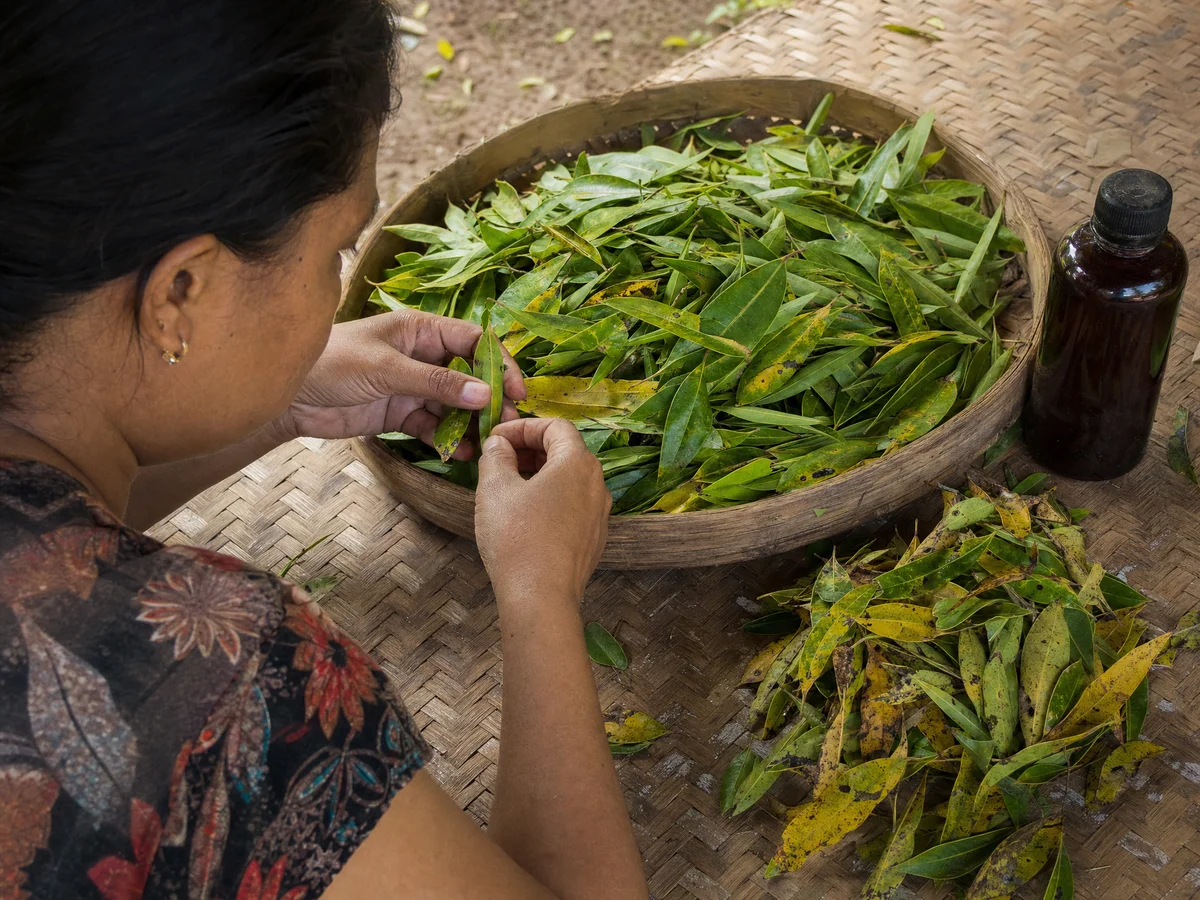
The handbook entry from PROSEA (Plant Resources of South-East Asia) describes two very different harvests. In the natural Moluccan stands, families work holdings by hand, cutting young coppice shoots, stripping the leaves into baskets and carrying them to the still. In the Java plantations, trees are cut back about a metre above the ground and the regrowth is harvested year after year. Either way, what goes into the still is a mix of young leaf and thin shoots, which is why the label on the oil can say leaf and twig. Paperbark is a tree that regrows readily after cutting, which is part of what makes this a renewable crop.
The still
The principle is wonderfully old-fashioned. Steam passes through the packed plant material, picks up the volatile aroma compounds, and carries them to a condenser. There, steam and oil turn back to liquid, and because essential oils do not mix with water, the oil floats as a separate layer that can simply be drawn off (Wikipedia, steam distillation). The oil never has to reach its own boiling point, only to have enough vapour pressure at the temperature of the steam. That is how limonene, which boils at 176 degrees C, comes over at close to 100.
Our own oil is steam-distilled from Melaleuca cajuputi, with steam drawn through the packed leaf and twig until the plant material is spent, with no time target on the run. The sizes of stills and the length of runs vary enormously from place to place. PROSEA describes a small family still in the Moluccas taking about 160 kilograms of dried leaf, running for around eight hours and returning about 3 kilograms of oil. The industrial Java operation it describes uses a boiler run of roughly 3.5 hours. We know of no head-to-head comparison of the oils those two methods give, so we will not tell you one smells better. What we can say, reasoning from the chemistry of distillation, is that longer or harsher runs change which compounds come over and in what balance, so any lot is the product of its still as well as its tree.
The yield
Fresh leaf gives 0.4 to 1.2 percent oil by weight. On the most productive central Java sites, a hectare produces roughly 7.5 tonnes of leaf and 60 to 65 kilograms of oil. Put simply, a kilo of oil represents a very large pile of leaf, which is also why adulteration is tempting. PROSEA lists dilution with kerosene or fatty oils and substitution with other paperbark or eucalypt oils as known practices, and notes that no internationally accepted quality standard exists for cajeput. That gap is the reason we think it is worth asking any supplier what species they sell and what documents back it up.
The grade starts with the tree
The Moluccan grading described by PROSEA is set by where the leaf grew, not by the still alone. Grade 1 oil, from hillside trees, runs 55 to 65 percent 1,8-cineole, grade 2 from lower sites runs 20 to 55 percent, and grade 3 is very low. The European Food Safety Authority's 2024 opinion on cajuput oil describes a specification of 50 to 70 percent cineole, and notes that oil can come from plants of different geographical origins and that M. cajuputi and M. leucadendra leaf are commonly mixed before distillation (EFSA FEEDAP Panel, 2024). Our oil is sold as Melaleuca cajuputi, from Indonesia, never relabelled as eucalyptus and never blended toward it.
What "steam distilled" tells you
Trade writing uses the phrase loosely. In the strict sense, steam is generated separately and passed through the leaf, while in hydrodistillation the leaf sits in the boiling water. For a buyer, the label mostly tells you that the oil was not solvent-extracted or cold-pressed. The finer points of still design are worth asking about when they matter to you. The Certificate of Analysis we publish for one batch (batch CAJQGAMCAUC001A) says steam distilled, and lists a relative density of 0.906, a refractive index of 1.469 and an optical rotation of +2.32 degrees, all within the ranges it gives for genuine cajeput.
Questions worth asking any supplier
- Which species and plant part? Ours is Melaleuca cajuputi, steam-distilled from leaf and twig.
- Is there an analysis that includes cineole? The certificate above does not show a cineole figure. If you need GC/MS or a cineole percentage, ask us in writing through our contact page for the report for your lot before ordering.
- Is the oil dated? Our amber bottle label carries a lot number and dates. Whatever supplier you choose, ask what each date means before you compare.
One habit makes every bottle more interesting: when it arrives, read the label before you open it. Note the Latin name, the lot number and the dates, and write the date you open it on the side. Then uncap it and take one slow sniff at arm's length. A few weeks later, when the bottle is half empty, you will be glad you wrote it down, and you will be able to tell how the scent has held up.
For the tree itself, see our post on the paperbark behind cajeput oil; the cineole figures are in the chemistry post, and storage covers what happens once the bottle is filled.
Next time you open a bottle, it is worth remembering how much leaf, and how many patient hours of steam, are in that clear, cool-smelling liquid.
Cajeput Essential Oil
Cajeput Essential Oil from our own shop, in sizes from 0.5 oz to bulk.
From $10.99
Shop Now →Sources & Further Reading
- PROSEA (Plant Resources of South-East Asia). Melaleuca cajuputi. prosea.prota4u.org/view.aspx?id=666
- Wikipedia contributors. Steam distillation. en.wikipedia.org/wiki/Steam_distillation
- EFSA FEEDAP Panel, 2024. Safety and efficacy of cajuput oil for use in all animal species, EFSA Journal 22(4):e8732. pmc.ncbi.nlm.nih.gov/articles/PMC11004901