How to Scent a Cleaning Spray With Cajeput Oil
Cajeput has one job in a cleaning spray, and it is a pleasant one: it makes a freshly wiped counter smell cool and bright. The cleaning itself is done by the cleaner. Once you see the oil as the finishing touch and not the active ingredient, the rest of this recipe falls into place.
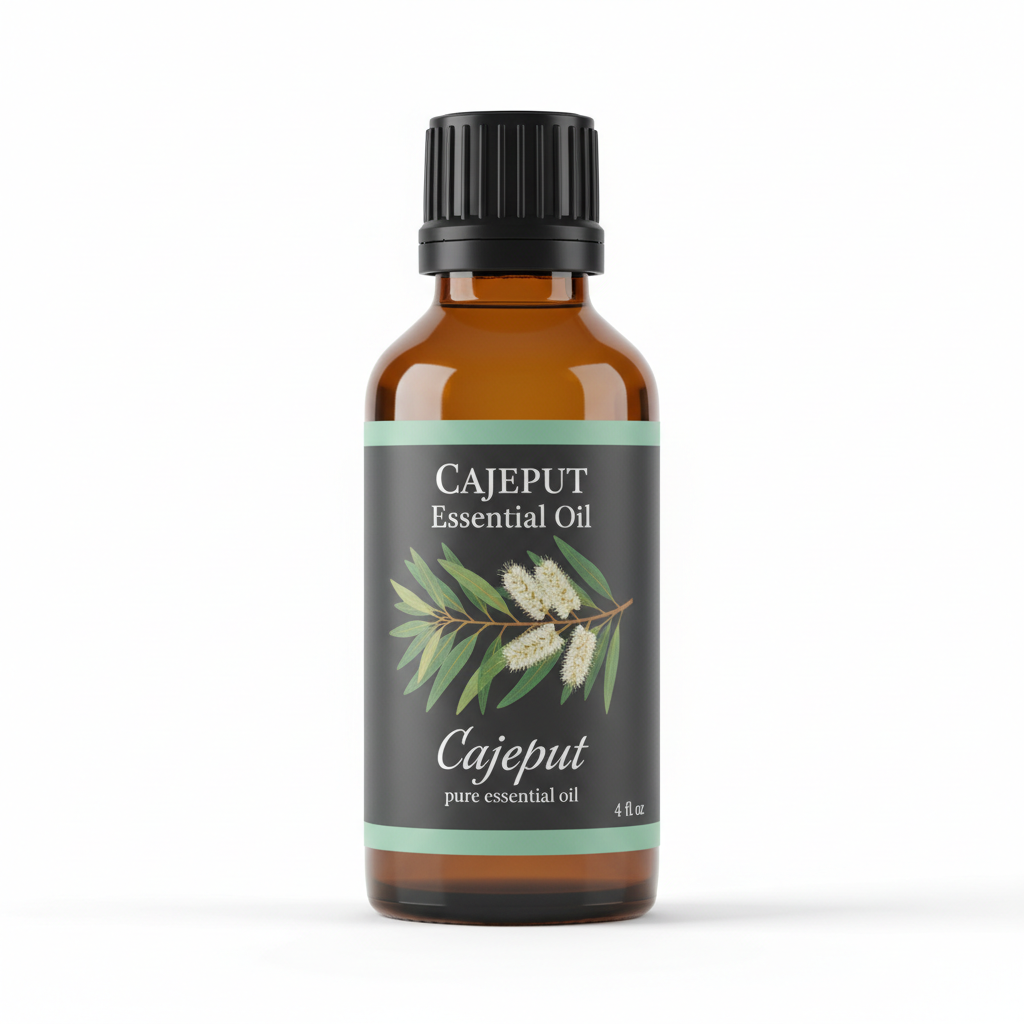
Cajeput Essential Oil
Our own Cajeput Essential Oil, in sizes from 0.5 oz to bulk.
From $10.99
Shop Now →Let the cleaner clean
Plenty of DIY recipes dress up essential oils in germ-fighting language. The U.S. EPA describes a disinfectant as something that destroys or irreversibly inactivates bacteria, fungi and viruses on surfaces, and each registered product lists the organisms it is effective against (EPA). Products that skip registration under the agency's minimum-risk rules may not use words such as sterilize, disinfect or sanitize on the label (EPA). We sell our cajeput as an aroma and cosmetic oil and make no health claims for it, so we leave germ talk out of the picture altogether.
In practice that means starting from a cleaner you already trust: dish soap, an all-purpose cleaner, or a registered disinfectant used as its label directs when disinfection matters, such as after raw meat. Then scent it. Never mix bleach or ammonia products with anything, whatever the oil.
A scented spray, step by step
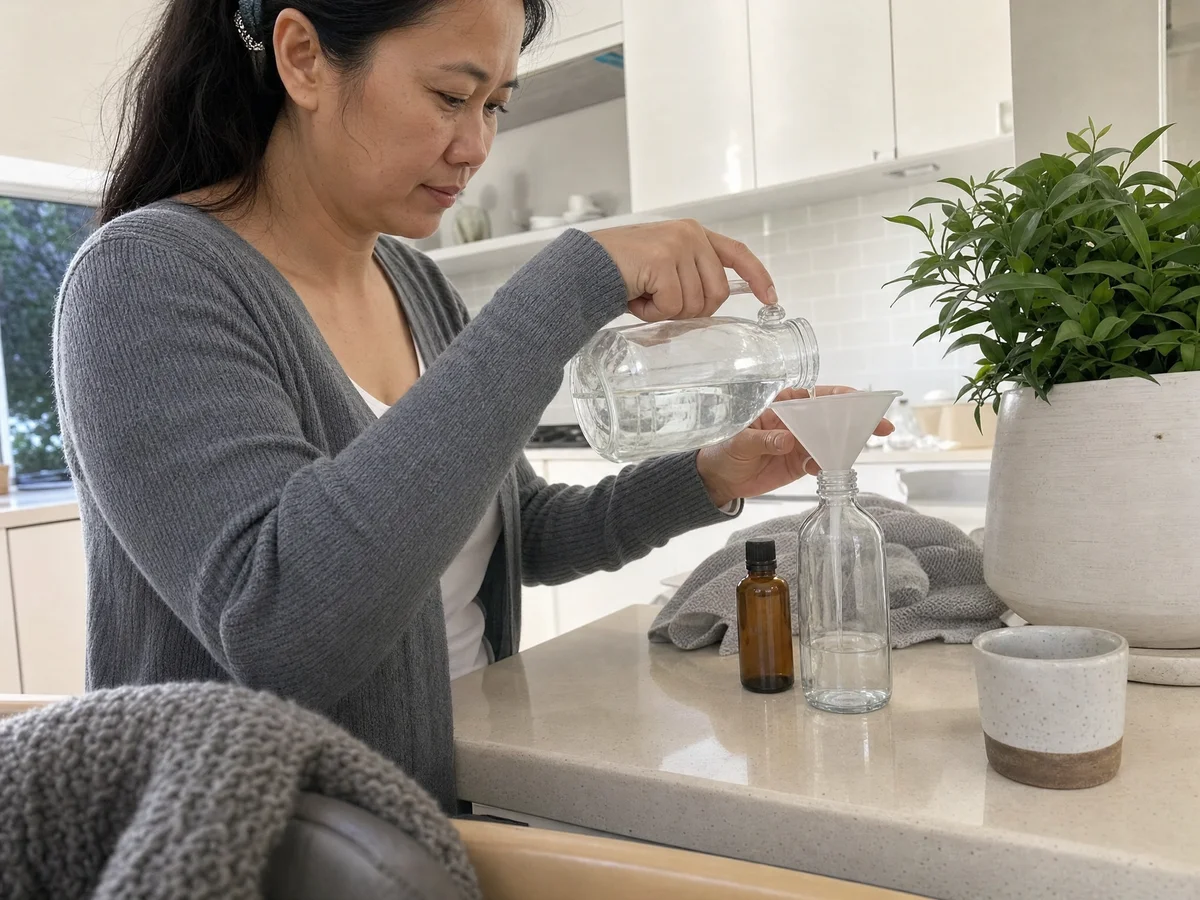
- Choose a small bottle. A water-based spray can turn cloudy or smell off over time, so make a little, write the date on the bottle and toss it at the first sign of change.
- Add the cajeput modestly. Our skin guidance runs from 0.5% to 2%, and for a spray we would start at the bottom or below. A 16 fl oz bottle holds about 473 ml, so 0.5% is about 2.4 ml of oil. At 20 to 40 drops per ml (Tisserand Institute), that is somewhere between about 50 and 95 drops, so measure it in a small syringe or by weight if you can. That is unit conversion, not a safety limit: if the smell is strong in a small room, use less.
- Help it mix. Cajeput will not dissolve in water, and oil and vinegar separate. Shake before every spray, or pick a cleaner that already contains a surfactant. If oil beads or floats, you are leaving oil spots rather than fragrance.
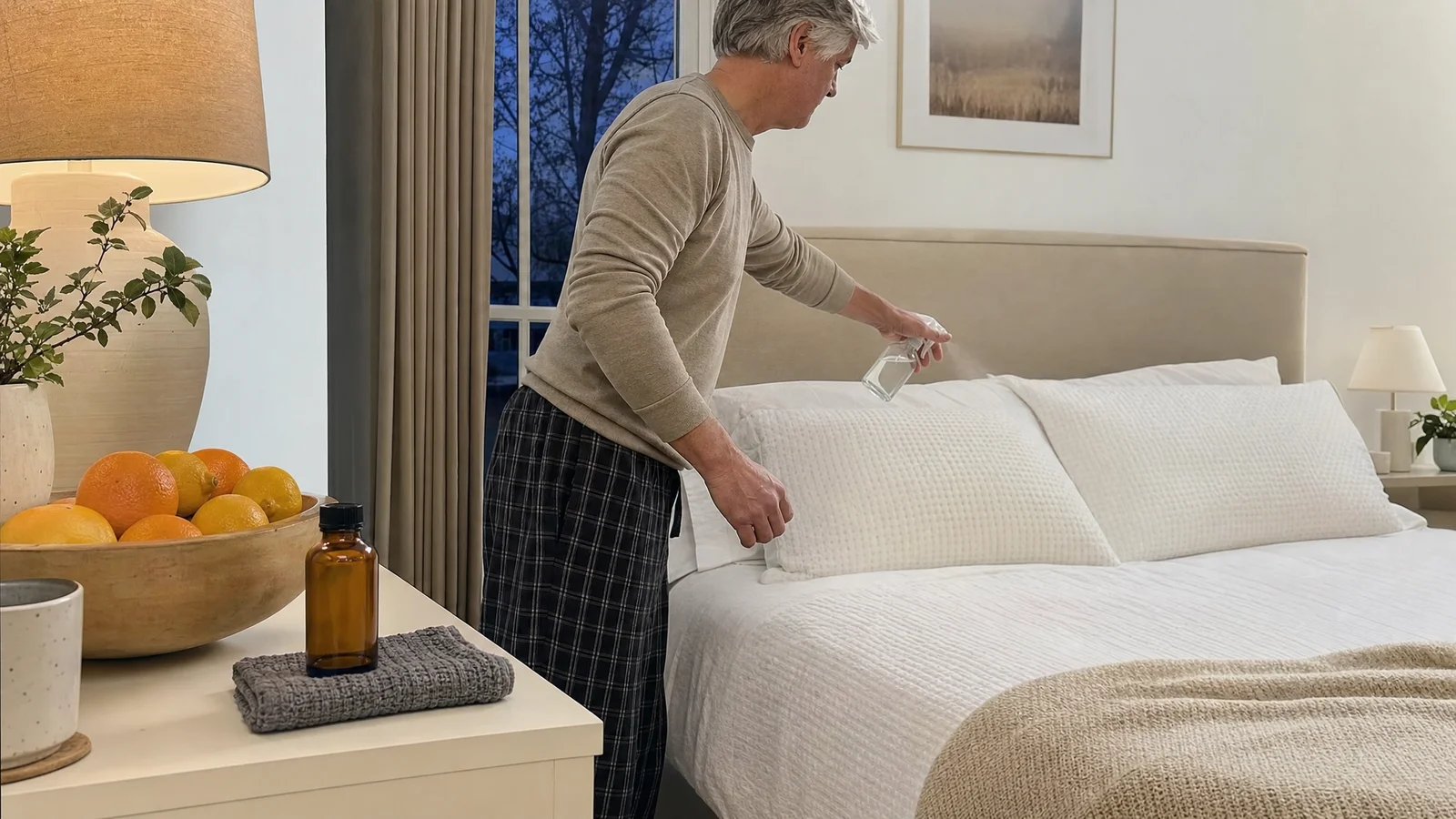
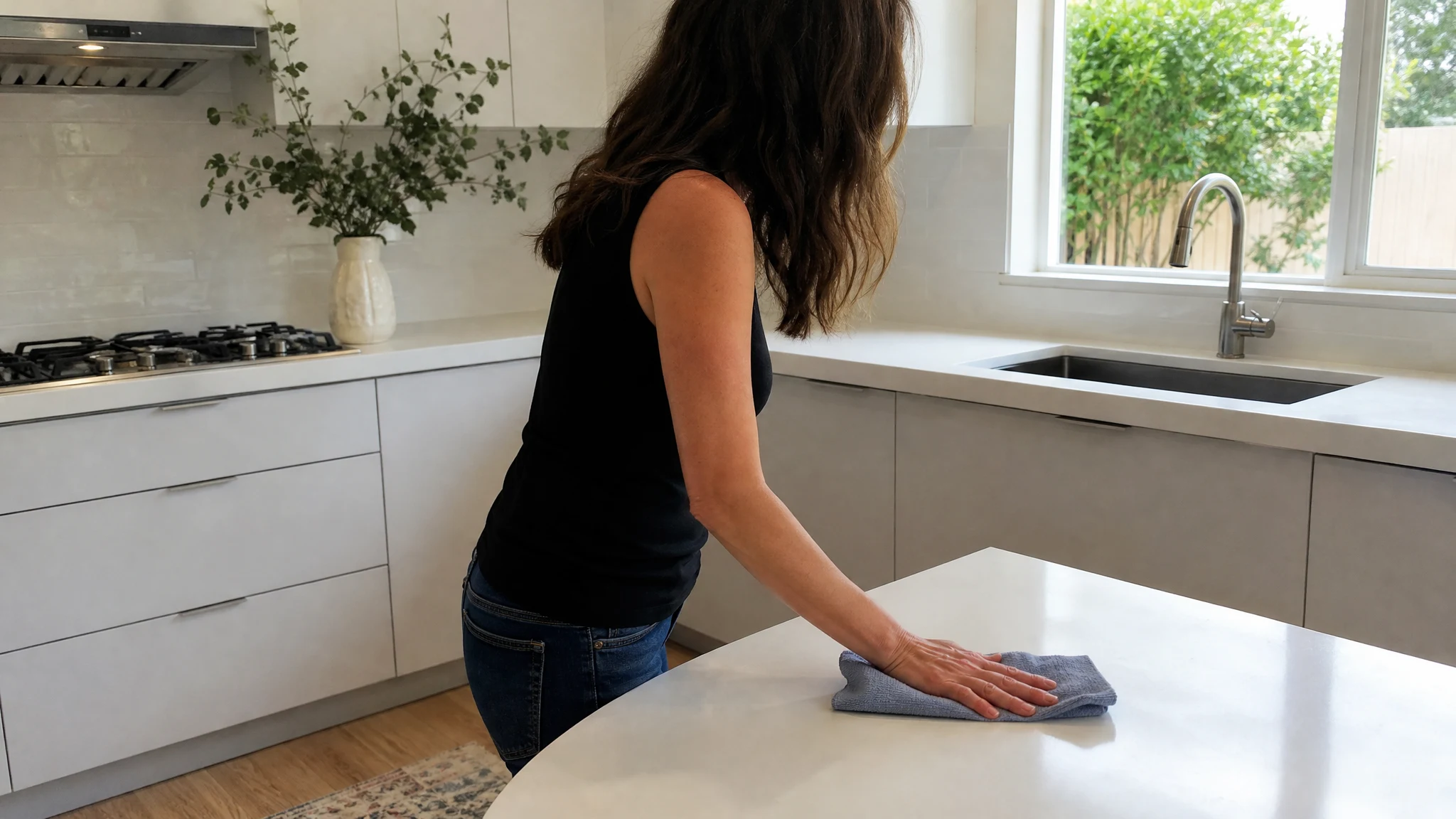
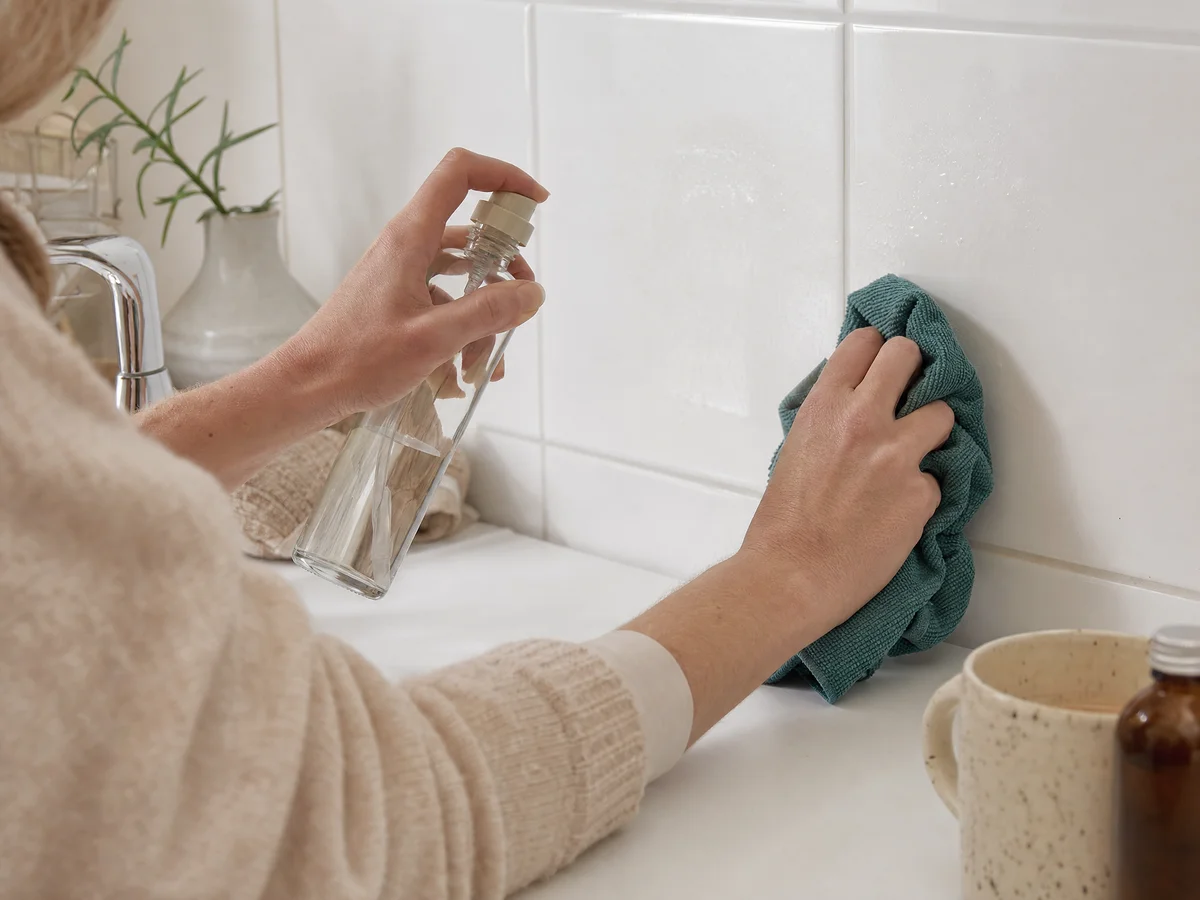
- Spray the cloth, not the air. That keeps the mist off your eyes and out of the room.
- Wipe, then open a window. If a scent arrives as a film, you used too much.
Know your surface
Our oil is a thin liquid, clear to pale yellow, and on sealed tile, glass and glazed ceramic a stray drop wipes right off. Raw wood, waxed or lacquered furniture and some fabrics are different. National Park Service conservators advise trying any new product with a solvent somewhere out of sight to see whether it softens the finish (NPS Conserve O Gram 7/2). The advice is about wax, but the test is a good habit for any new liquid: spray a cloth, wipe a hidden patch, wait a day and look. Our fabric, wood and leather guide goes through the finishes in detail.
Leather deserves its own mention. The NPS says that oils and fats can darken and stain it (NPS Conserve O Gram 9/1). That page is about animal-fat dressings, so for cajeput it is a reason for caution rather than a measured result. We would also keep sprays away from food-prep surfaces, high chairs, baby toys and pet feeding areas.
The kitchen moment
The nicest time to appreciate a scented spray is the moment after you finish. The counter is wiped and dry, a window is open, and there is a faint, cool, fruity-camphorous trace in the air that tells you the job is done. That is all the oil is for. If the scent is still shouting an hour later, you used too much, and next time you can halve it.
Label the bottle with what is in it and the date, and keep it with your other cleaning supplies, away from children and pets and never in a spare drink bottle.
Who is in the room
A fine mist puts a little oil in the air, and cajeput is classed as a skin and eye irritant and a dermal and respiratory sensitiser (EFSA FEEDAP Panel, 2024). That opinion concerned its use as an animal feed additive and the handling of the oil, not household sprays, so how it applies to a spray bottle is our reasoning. It is another reason to spray on a cloth and to be thoughtful if anyone at home has asthma or reactive airways. We do not recommend cajeput for babies and young children or near a small child's face; see children and cineole and cats and dogs for the fuller picture.
Why cajeput is worth the trouble
We describe our oil as fresh, cool and fruity-camphorous, brighter and sweeter than many leaf oils, with a crisp top-note lift. If a plain cleaner smell feels flat to you, a trace of it is an easy way to change the mood of a kitchen. Eucalyptus, pine, lavender, citrus, rosemary and peppermint all blend well with it if you want to build something fuller; our cajeput and eucalyptus comparison and the fresh home scenting guide are good places to compare.
Put your effort into the cleaning and the drying, and let the scent be the last note. A little cajeput on a cloth is a lovely way to finish a room.
Cajeput Essential Oil
Cajeput Essential Oil from our own shop, in sizes from 0.5 oz to bulk.
From $10.99
Shop Now →Sources & Further Reading
- U.S. EPA. Selected EPA-Registered Disinfectants. epa.gov
- U.S. EPA. Conditions for Minimum Risk Pesticides. epa.gov/minimum-risk-pesticides
- Tisserand Institute. How big is a drop? tisserandinstitute.org/learn-more/drop-size
- U.S. National Park Service. Conserve O Gram 7/2, Waxing Furniture and Wooden Objects. nps.gov
- U.S. National Park Service. Conserve O Gram 9/1, Fatty Acid Spew on Leather Objects. nps.gov
- EFSA FEEDAP Panel, 2024. Safety and efficacy of cajuput oil as a feed additive. EFSA Journal. PubMed 38601874