Cajeput Linen Spray: Pairing With Citrus Oils
Cool, crisp cajeput and a bright citrus oil make a lovely pair, and a mist of the two over a freshly made bed is an appealing idea. The detail that makes or breaks it is not the recipe but the base, because oil and water do not stay mixed. Get that right and the rest is easy.
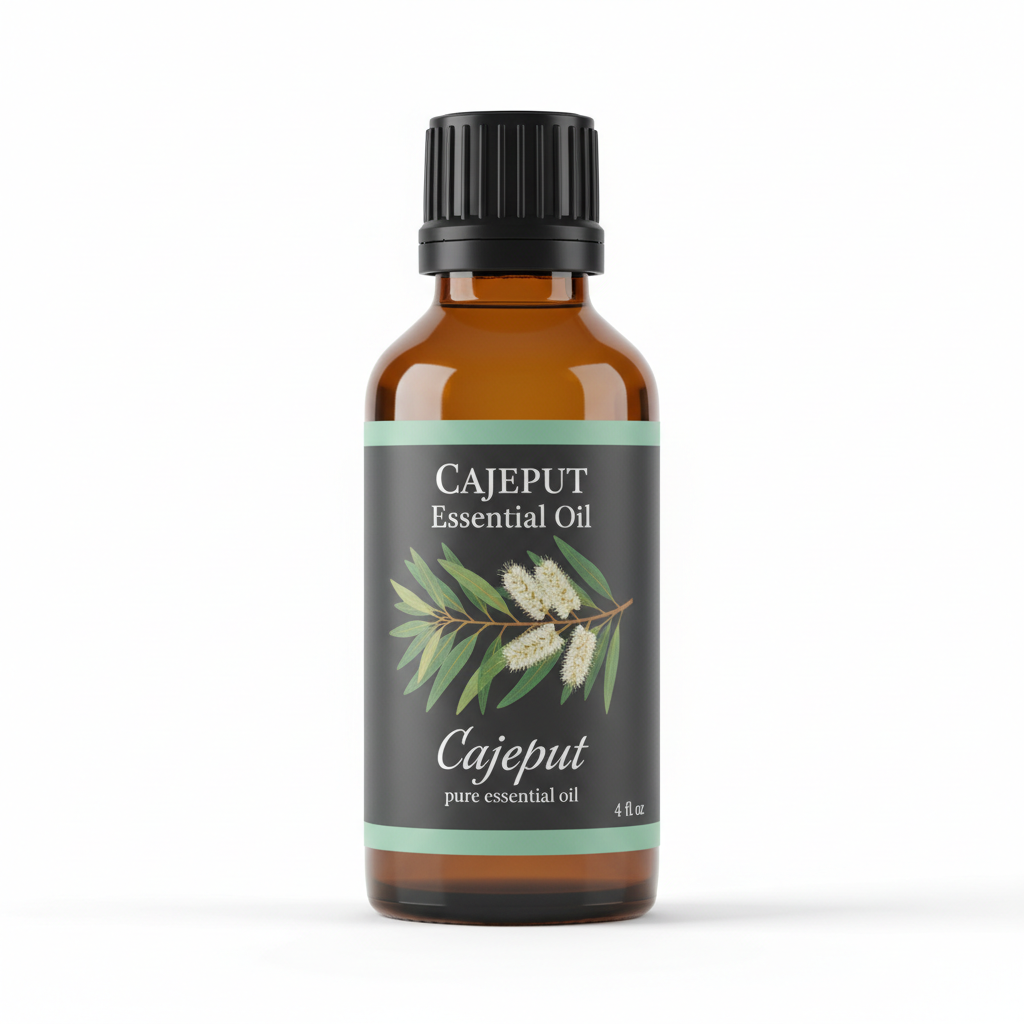
Cajeput Essential Oil
Our own Cajeput Essential Oil, in sizes from 0.5 oz to bulk.
From $10.99
Shop Now →What is in the bottle after a minute
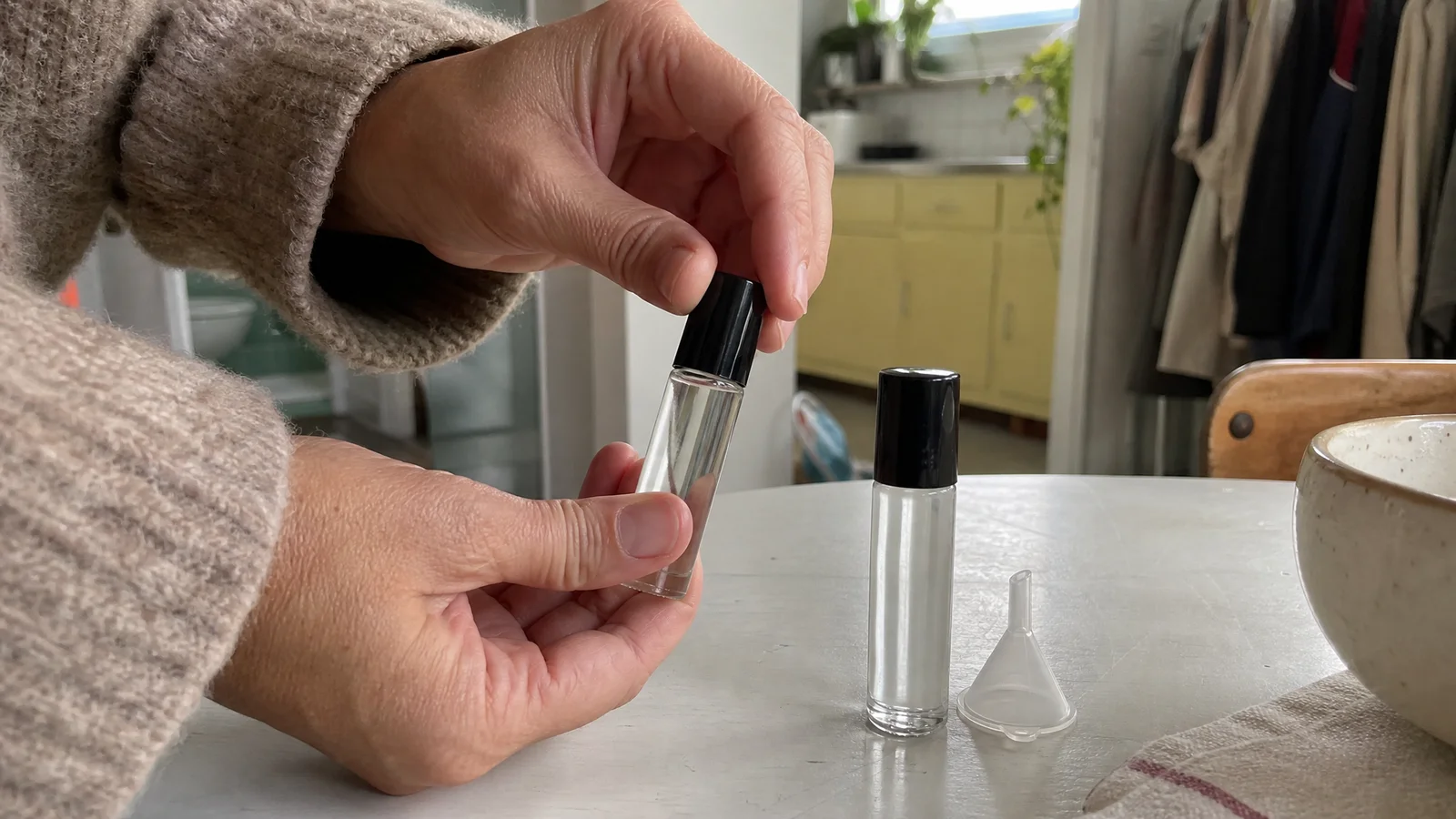
Cajeput is a thin liquid, clear to pale yellow, and like all essential oils it does not dissolve in water. Left alone in a plain water bottle it rises into a film on top, so the first pump gives you mostly water and the last gives you mostly oil. That is why recipes add alcohol or a dispersant, and why nearly all of them say "shake well." If you can see beads or a sheen in the bottle, the spray is delivering concentrated drops, and concentrated drops are what leave rings on cloth.
The simple answers are to buy a ready-made linen spray base from a supplier that tells you what is in it and how much oil it will hold, or to work from a published formulation by a cosmetic chemist. Either way, the supplier's directions beat guesswork.
What a mist does on cotton
A fine spray dries to leave the oil on the fibre. On white cotton that can be a faint translucent patch, and on dark or delicate cloth such as silk or rayon it can show as a spot. So spray a hidden hem first, let it dry completely and check it in daylight before you do anything that matters. It also helps to spray from a distance, onto the cloth only, and let it dry before the fabric touches skin. Our fabric, wood and leather guide covers the test in more detail.
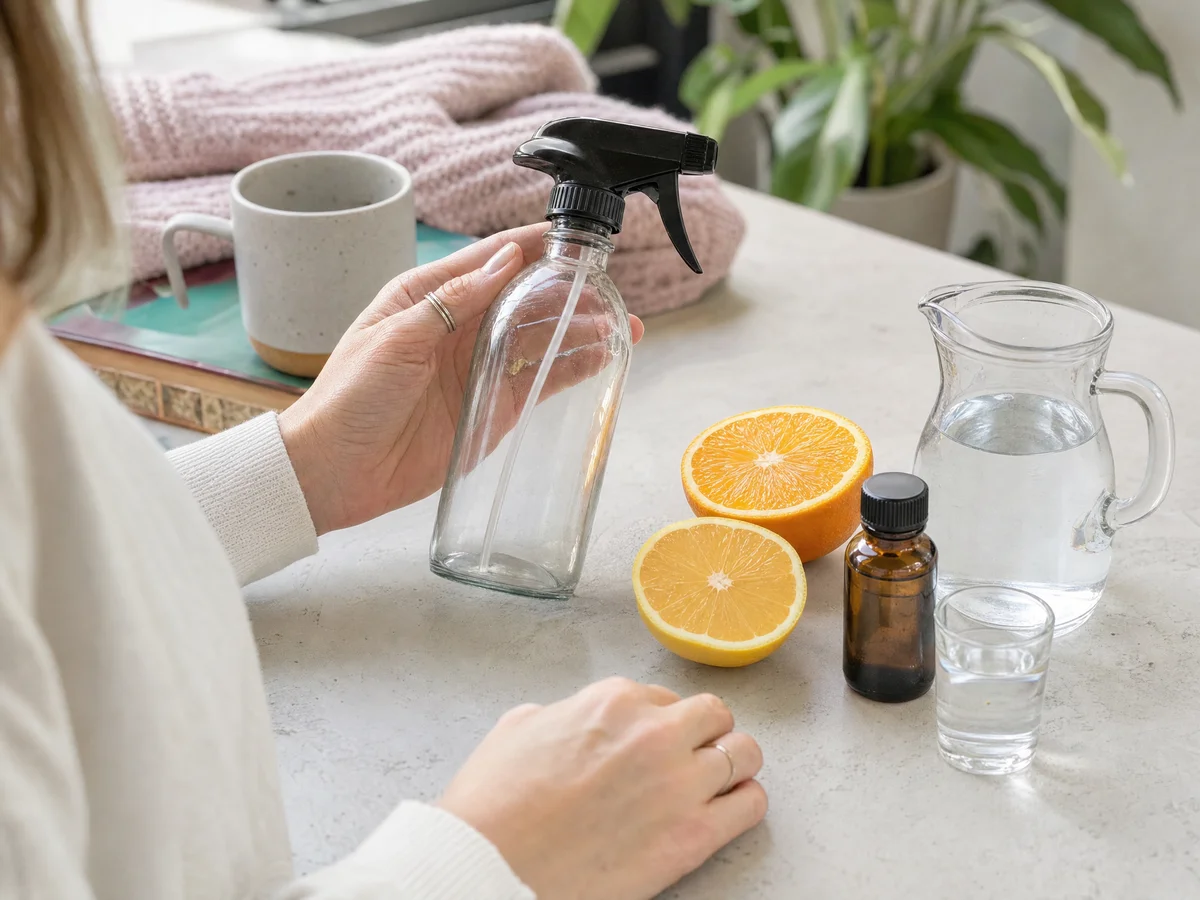
Choosing the moment to spray
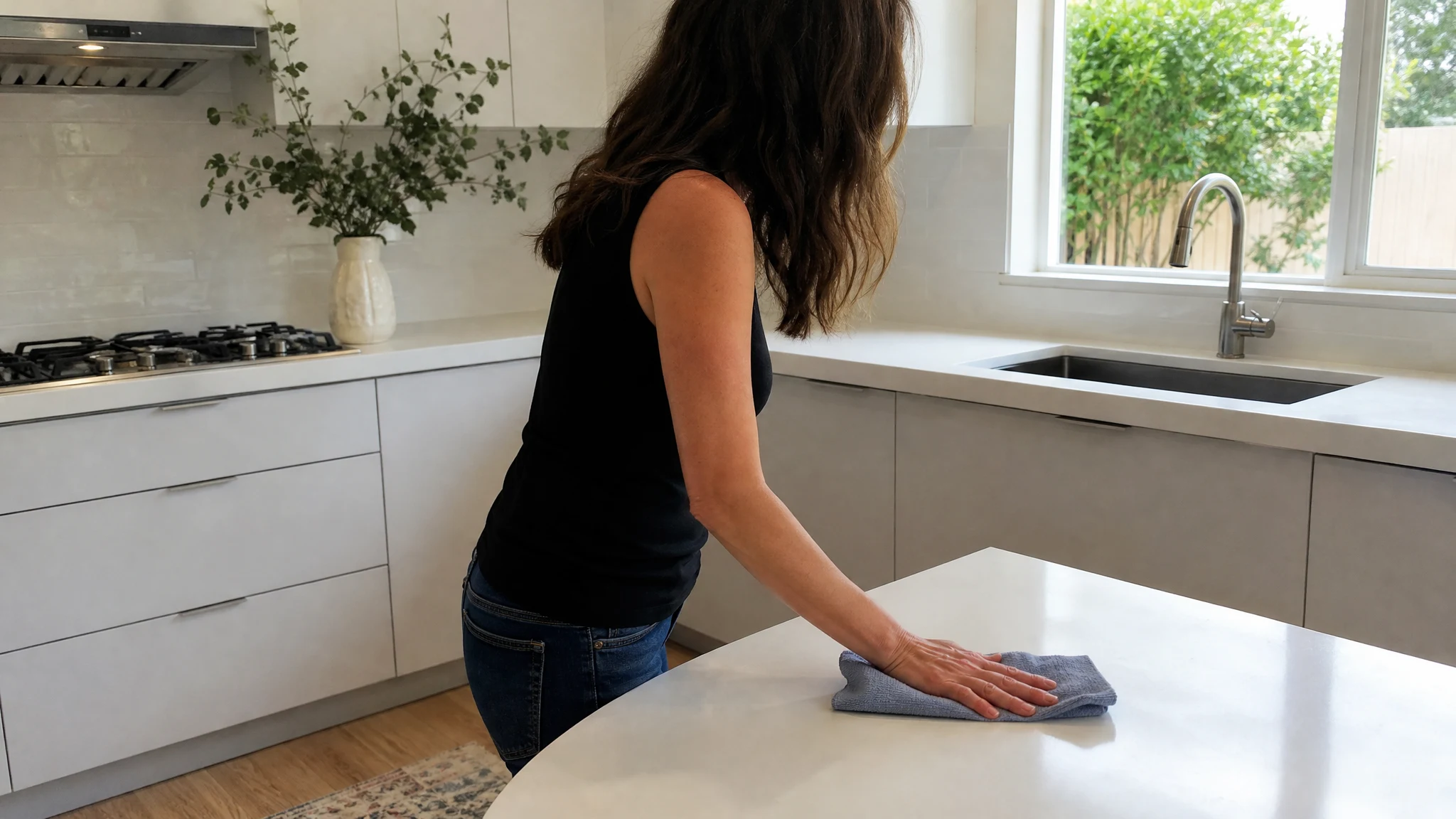
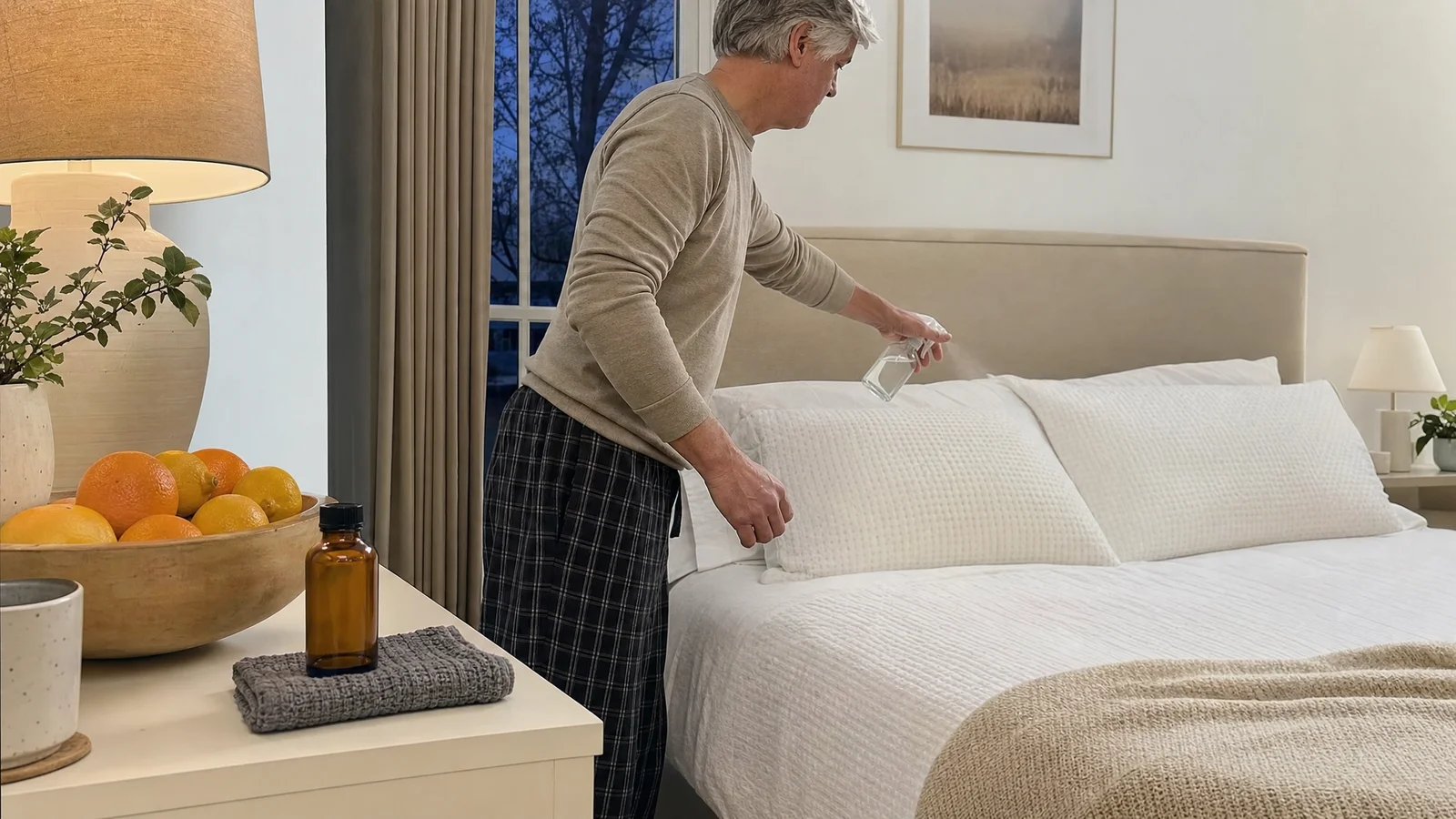
Mist the linen while you are making the bed, then give it a few minutes to dry before anything touches it. A light hand matters. Hold the bottle at arm's length and pass over the cloth once, rather than soaking one spot. When you come back to the room you should notice a faint, cool scent with a bright citrus edge. If you have to look for it, that is about right for bedding.
A word about pillows
A pillow is held against your face for hours, which makes it a closer, longer exposure than a room mist. We make no claim that cajeput helps you sleep. Cajeput oil is classed as a skin and eye irritant and a dermal and respiratory sensitiser (EFSA FEEDAP Panel, 2024). That opinion concerns animal feed and handling the concentrated oil, so applying it to bedding is our reasoning, and a modest one. If you have reacted to scented products before, have asthma or have facial eczema, you have more reason than most to keep scented oil out of your bedding, and a pharmacist, allergist or dermatologist is the person to ask.
Cajeput is high in cineole, and we do not recommend it for babies and young children or near a small child's face. So no cajeput spray on a cot sheet, a baby's blanket, a toddler's pillow or a nursery; our children article explains why. Pets sleep on bedding too, and our pets article covers the details.
Where citrus fits
We describe cajeput as fresh, cool and fruity-camphorous with a crisp top note, and citrus is one of the oils we list as blending well with it. Both live in the same bright register, so neither fights the other. We sell only cajeput, so you will find the citrus oil at a supplier of fragrance ingredients, and it is worth asking how it is made. Tisserand explains that most phototoxic oils are expressed (cold-pressed) citrus oils, while distilled citrus oils carry virtually no furanocoumarins (Tisserand Institute), and a good supplier will also tell you about skin-contact limits. For more pairing ideas, see our blending guide and the diffuser blends.
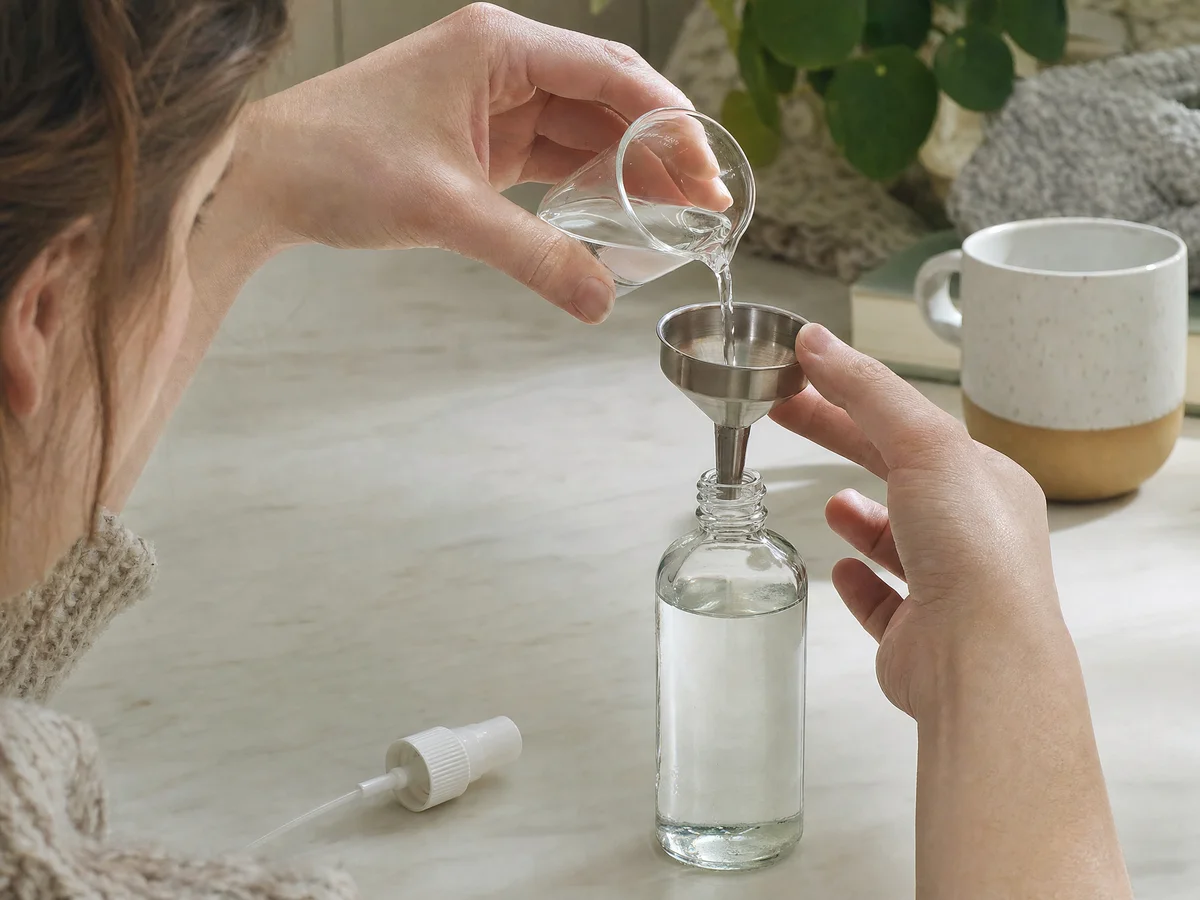
Numbers, so nobody guesses
Our dilution guidance of 0.5% to 2% is for skin, and for a fabric spray we would go lower. As a conversion only: 4 fl oz is about 118 ml, and 0.5% of that, counting cajeput and citrus together, is about 0.6 ml. At 20 to 40 drops per ml (Tisserand Institute), that is somewhere between 12 and 24 drops in total. Treat that as a ceiling for a first small bottle, not a target.
A drier option
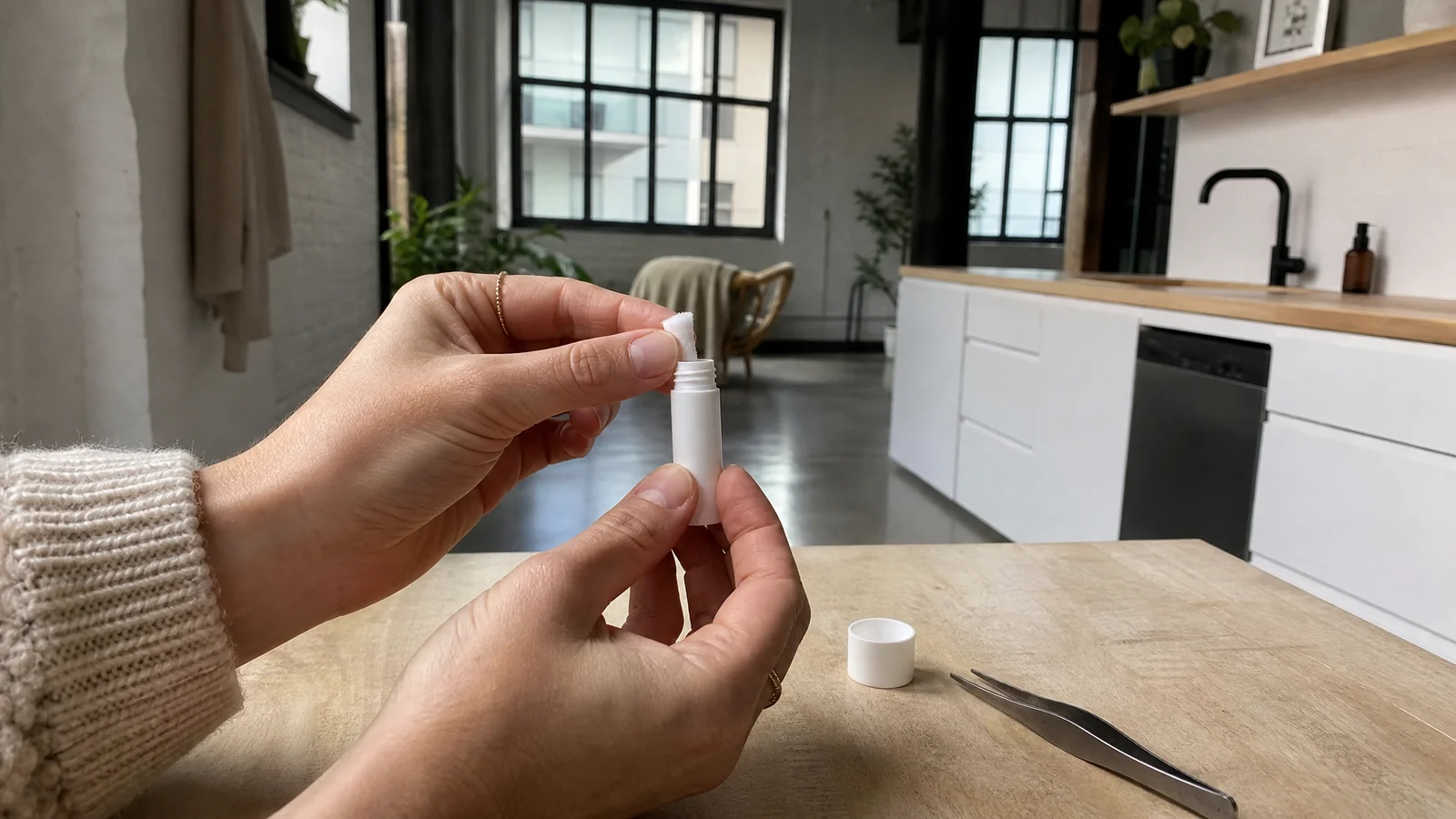
If all you want is a scent on the pillow or in a drawer, you can skip the water and the ring entirely. Put one or two drops on a bit of cotton wool or inside a small cloth sachet and tuck it near the fabric, not on it. The oil never touches the linen, and you control how much there is. The scent is strongest right beside the sachet, so keep it out of reach of children and pets.

Keeping it fresh
Anything that mixes water with oil and has no preservative can grow microbes, and the signs are cloudiness, a changed smell or visible growth. Make less than you need, date the bottle and discard it at the first hint of change. The 2 to 3 years we give for our oil applies to the neat oil in a tightly capped bottle, not to a spray made from it.
Cajeput earns its place in a linen spray when you want a cool, crisp note and you have a base that holds the oil evenly. When in doubt about the base, ask the person who sells it, and in a home with small children or pets, a sachet in the drawer may be the nicer answer.
Cajeput Essential Oil
Cajeput Essential Oil from our own shop, in sizes from 0.5 oz to bulk.
From $10.99
Shop Now →Sources & Further Reading
- EFSA FEEDAP Panel, 2024. Safety and efficacy of cajuput oil as a feed additive. EFSA Journal. PubMed 38601874
- Tisserand Institute. Phototoxicity. tisserandinstitute.org/safety/phototoxicity
- Tisserand Institute. How big is a drop? tisserandinstitute.org/learn-more/drop-size