The Paperbark Tree Behind Cajeput Oil: Melaleuca cajuputi
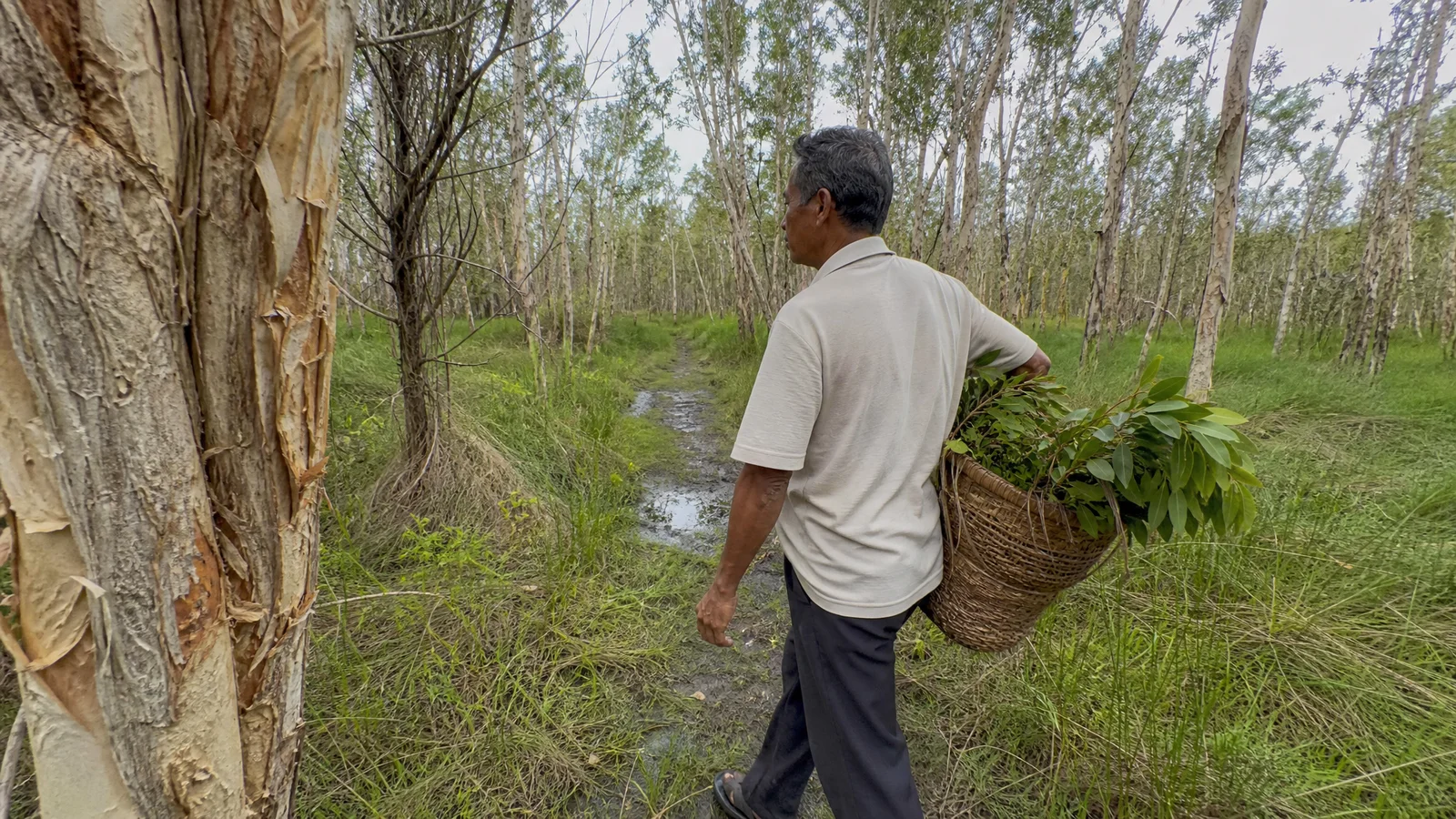
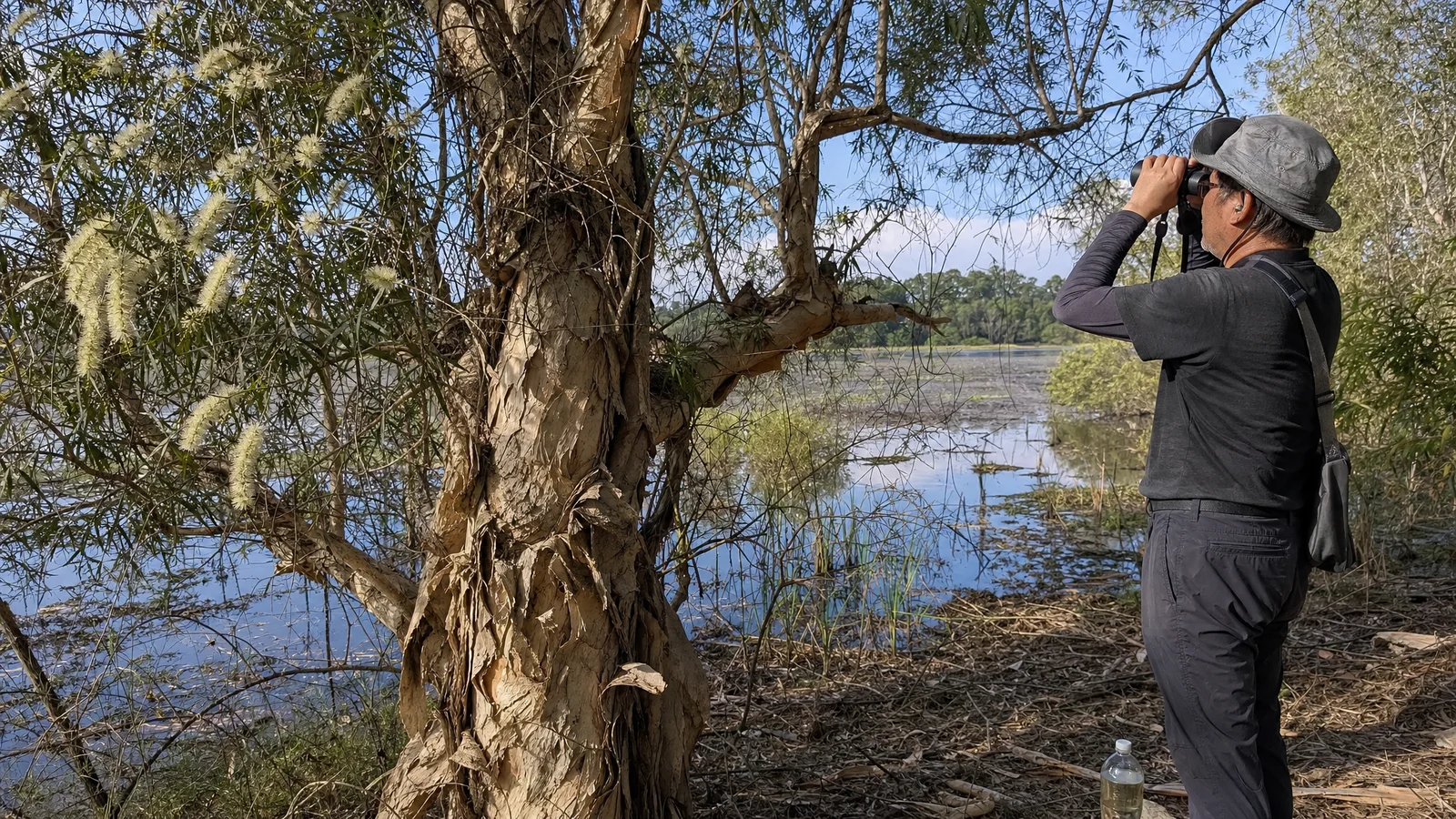
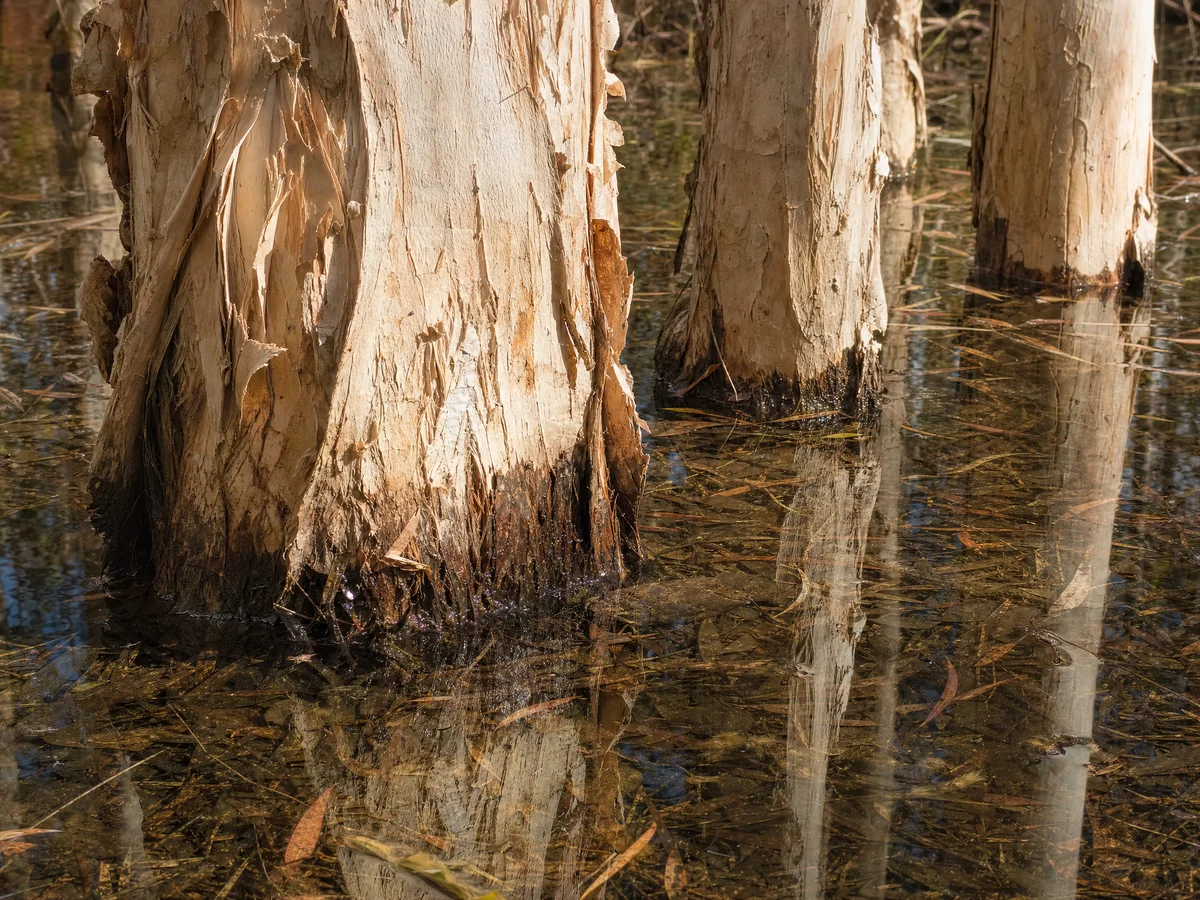
Imagine a tree whose bark peels away in thin, papery layers, grey fading to white, standing in a swampy coastal plain behind the mangroves. That is Melaleuca cajuputi, the paperbark behind cajeput oil. Its Malay name, kayu putih, means "white tree," and once you have seen the bark the name makes sense.
Cajeput Essential Oil
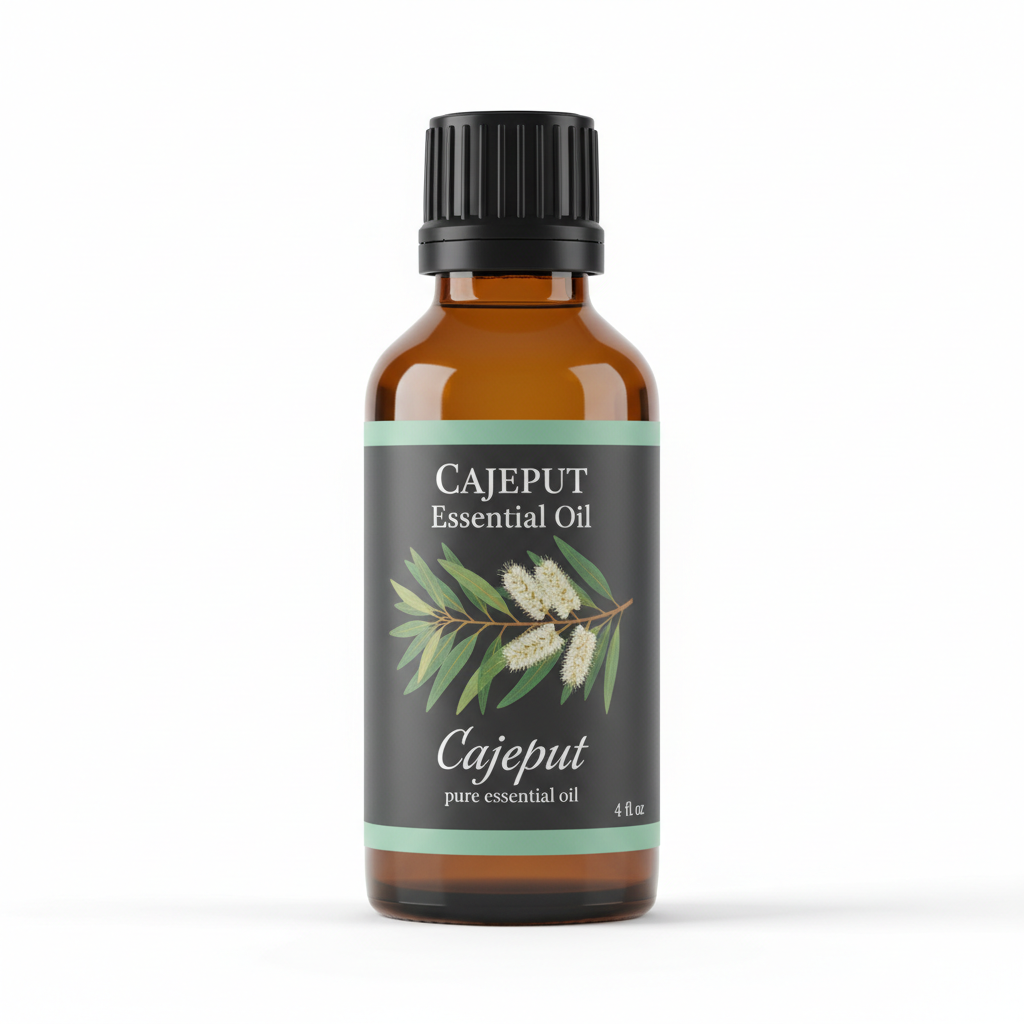
Our own Cajeput Essential Oil, in sizes from 0.5 oz to bulk.
From $10.99
Shop Now →It is easy to forget, when you hold a small amber bottle, that the oil began as green leaves on a tree. We like to remind ourselves of that. The scent in the bottle, the cool lift and the faint fruitiness, is the smell of those leaves, concentrated by steam.
A tree of wet coasts
The PROSEA plant resources handbook describes an evergreen shrub or, more often, a single-stemmed tree up to 25 metres tall. It grows on low, poorly drained coastal clay in the hot, humid tropics, with roughly 1,300 to 1,750 mm of rain a year and a strong monsoon. It copes with fire and salt-laden wind, though not with saline waterlogging. PROSEA also notes that, of around 250 Melaleuca species, it is the only one that occurs naturally west of Wallace's Line, the biological boundary running through the Indonesian archipelago (PROSEA).
It is also a tree that comes back. After cutting it resprouts, so the leaf harvest works like coppicing, which we look at in our article on the tree's regrowth.
Three subspecies
PROSEA recognises three subspecies. Subspecies cajuputi is the main source of commercial oil, recorded from the Indonesian islands of Buru, Ceram, Tanimbar and Timor and from Australia. Subspecies cumingiana grows across Burma, Thailand, Vietnam, Peninsular Malaysia and parts of Sumatra, western Java and south-western Kalimantan. Subspecies platyphylla is found in southern Irian Jaya, southern Papua New Guinea and Queensland. Sources differ a little on exactly where each one belongs, which is not surprising for a tree people have moved around for centuries.
From leaf to a few drops
Cajeput oil comes from the leaf, and it takes a lot of leaf. PROSEA gives fresh-leaf oil yields of 0.4 to 1.2 percent. It describes small family stills in the Moluccas that take about 160 kg of dried leaf, run for eight hours, and return roughly 3 kg of oil. That scale is why the oil arrives in small, variable lots, and our distillation article follows the process step by step.
One name, a range of oils
Here is something many buyers do not expect: where the tree grows changes the oil. PROSEA says the oil of subspecies cajuputi holds anywhere from 3 to 60 percent 1,8-cineole, and it describes Moluccan grades by cineole content, from a 55 to 65 percent grade from hillside trees to a very low grade. It also notes that no internationally accepted quality standard exists. The European Food Safety Authority's 2024 opinion on cajuput oil for feed, which covers oil from M. cajuputi and M. leucadendra leaf, specified 50 to 70 percent cineole (EFSA FEEDAP Panel, 2024). Our cineole chemistry article explains how to read numbers like these.

Crushing a leaf in your imagination
If you ever meet a cajeput or other paperbark leaf in person, a garden or botanical collection perhaps, rub it between your fingers and smell it. Leaves of this family often give up a fresh, sharp, slightly resinous aroma in a second or two, and it is a nice way to understand what the distillers are capturing. You do not need to know anything else about the tree to enjoy it. A leaf, a thumb, and a deep breath will do.
Reading the name on a bottle
Three quick checks are worth making. First, is the full Latin name written out? "Cajeput" alone could be a leaf oil from M. cajuputi or from a close relative, and PROSEA notes that older references naming M. leucadendra as the source often meant M. cajuputi. Second, does the label say which part of the plant it came from? Third, is there a document you can check? Density, refractive index and optical rotation show that a lot sits in a plausible range, and they are not a composition report. Only gas chromatography shows cineole.

We sell one product, Cajeput Essential Oil, steam-distilled from Melaleuca cajuputi, with Indonesia as the origin on our shop pages. The Certificate of Analysis we publish for one batch lists the botanical name, leaf as the part used, appearance, smell, relative density (0.906), refractive index (1.469) and optical rotation (+2.32 degrees). If you would like a cineole figure for your lot, or have questions about subspecies or origin, ask us in writing through our contact page. Our buying checklist goes further, and if you have met "minyak kayu putih" at an Indonesian pharmacy, our comparison explains the difference. As with any concentrated essential oil, we recommend diluting ours to 0.5% to 2% in a carrier.
Next time you open a bottle of cajeput, picture those pale, peeling trunks standing in the wet, and the aroma may feel a little more connected to its place.
Cajeput Essential Oil
Cajeput Essential Oil from our own shop, in sizes from 0.5 oz to bulk.
From $10.99
Shop Now →Sources & Further Reading
- PROSEA (Plant Resources of South-East Asia). Melaleuca cajuputi. prosea.prota4u.org/view.aspx?id=666
- EFSA FEEDAP Panel, 2024. Safety and efficacy of cajuput oil for use in all animal species. EFSA Journal 22(4):e8732. PMC11004901
- Wikipedia. Melaleuca cajuputi (for the origin of the name kayu putih). en.wikipedia.org/wiki/Melaleuca_cajuputi