What Is Cineole? Why Cajeput Smells Crisp and Cool
Open a bottle of cajeput oil and the first thing you notice is a cool, almost camphor-like lift, followed by something softer and fruitier underneath. That one-two punch is chemistry, and a single compound called 1,8-cineole is responsible for most of the first half.
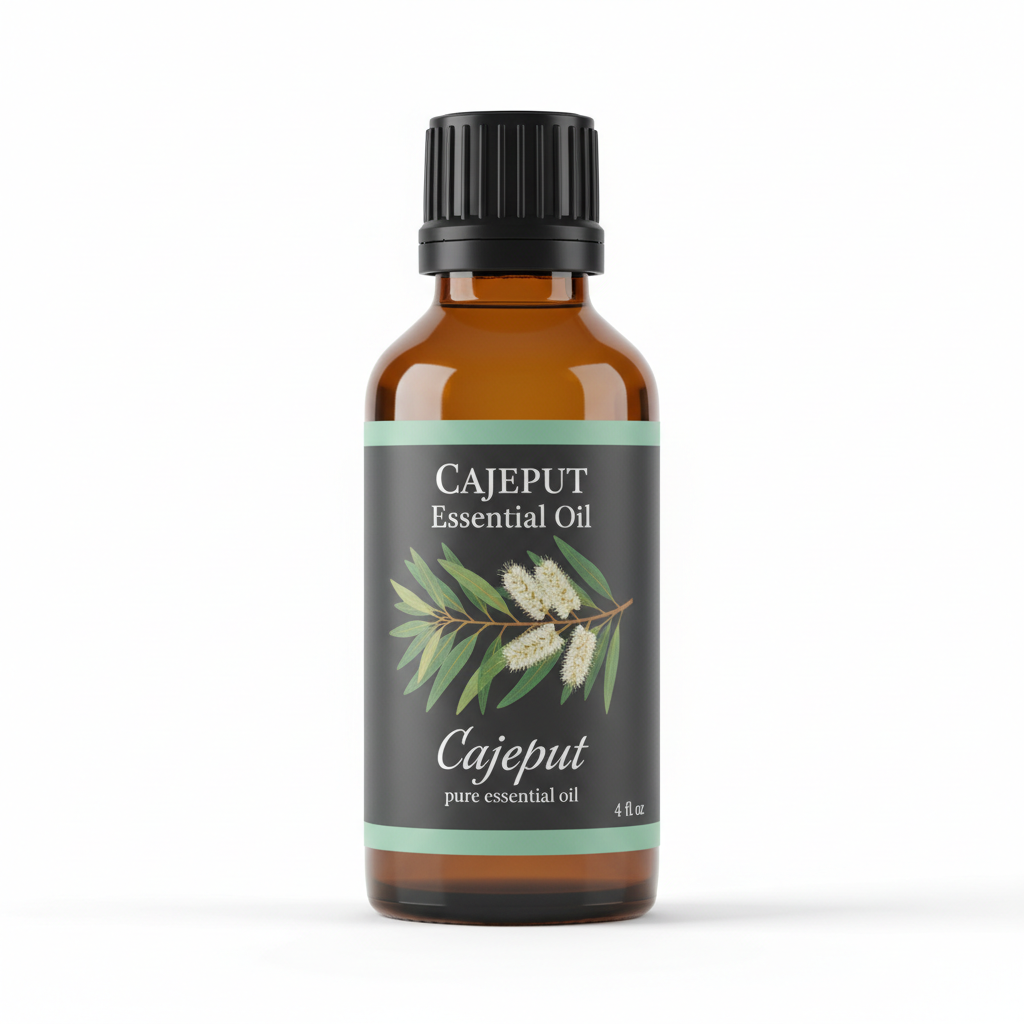
Cajeput Essential Oil
Our own Cajeput Essential Oil, in sizes from 0.5 oz to bulk.
From $10.99
Shop Now →The main player
1,8-cineole, also called eucalyptol, is the main constituent of most commercial cajeput oil. Its odour is recorded as camphor-like in the Hazardous Substances Data Bank entry that PubChem reproduces for eucalyptol, citing Hawley's Condensed Chemical Dictionary. That is why cajeput leads with a crisp, cool note, the quality we describe as fresh, cool and fruity-camphorous.
The supporting cast
Cineole does not work alone. The EFSA characterisation of cajuput oil lists alpha-terpineol (a specification of 4% to 12%) and d-limonene (3% to 9%) as the other major compounds (EFSA FEEDAP Panel, 2024). PubChem's odour records describe alpha-terpineol as floral, with a lilac note and limonene as pleasant and lemon-like. Reasoning from those descriptions, the soft floral and citrus side of cajeput comes from compounds present at single-digit percentages. It is also why two lots with the same cineole figure can smell a little different. Our scent profile goes deeper on the aroma.
Smelling the layers yourself
You do not need a laboratory to appreciate the layers. Put a drop on a paper strip, hold it a few inches from your nose and breathe in. The first impression is the cool, camphor-like lift. Wait a minute and you will likely notice a softer, fruitier note step forward. Come back after ten minutes and the sharp edge has mostly gone, leaving a faint, clean trace. That journey from sharp to soft is what a top-note oil does, and it is a pleasure to follow.
If you have a second oil nearby, a citrus or a lavender say, smell it the same way. Comparing them on adjacent strips teaches your nose more than any description can.
Why one number is never the whole story
Ask for the cineole percentage of cajeput oil and the answer depends on whose number you ask for. PROSEA reports 3% to 60% across oils of Melaleuca cajuputi subsp. cajuputi, with Moluccan grade 1 oil from hillside trees at 55% to 65% (PROSEA). EFSA's specification is 50% to 70%, and its five batches averaged 61.46%. One commercial M. cajuputi oil measured by GC-MS came in at 64.63% (Vázquez et al., 2023).
These numbers measured different things: trees on different sites, a regulatory specification, and a single commercial sample. Reports like these are almost always area percent from gas chromatography, meaning the share of the detector signal for that peak, rather than a strength rating. So a cineole figure describes one lot measured one way.
What it means for blending
This is simple arithmetic, not a study result. The cineole in a blend is the oil's cineole fraction multiplied by the oil's share of the blend. At 2% cajeput in a carrier, an oil that is 60% cineole puts 1.2% cineole in the bottle, while one at 20% puts in 0.4%. Both are labelled "2% cajeput", yet the amount of the dominant compound differs threefold, which is one reason we suggest working from the lot's actual figure when you have it.
Density and refractive index: useful, but a different job
The Certificate of Analysis we publish for one batch lists relative density (0.906 at 20 C), refractive index (1.469) and optical rotation (+2.32 degrees), each against a stated range. They are quick physical checks on whether a sample behaves like cajeput. The ranges on that certificate are wide, so on their own they cannot tell you the cineole level, and that is where a GC report earns its place. If you need that figure for your lot, ask us in writing through the contact page before ordering.
Reading a composition report
- Look for the method. A GC-MS or GC-FID run with a stated date is a result; a bare "cineole 60%" in a spec sheet is a claim.
- Match the lot. The lot number on the report should be the one on your bottle.
- Look at the balance. Cineole alongside a plausible share of terpineol and limonene looks like a leaf oil.
- Check the species line. EFSA's opinion covers oil from both M. cajuputi and M. leucadendra, so a cineole range alone does not say which was distilled.
PROSEA also notes that no internationally accepted quality standard exists for cajeput oil, so "complies with the standard" should name the standard. Our buying checklist covers the rest of the paperwork.
A note on handling
Cineole content matters for safety as well as scent. EFSA's panel concluded cajuput oil should be considered an irritant to skin and eyes and a dermal and respiratory sensitiser. We recommend diluting to 0.5% to 2% in a carrier, patch testing first, and keeping the oil away from eyes, children and pets. It is high in cineole, which makes it unsuitable for babies and young children, so read why the cineole rule exists and our skin post. A pharmacist or physician is the right person for any question about pregnancy, a medical condition or a small child.
So the next time someone quotes you a cineole percentage, you will know what it describes: one lot, one method, and the compound that gives cajeput its cool signature.
Cajeput Essential Oil
Cajeput Essential Oil from our own shop, in sizes from 0.5 oz to bulk.
From $10.99
Shop Now →Sources & Further Reading
- PROSEA (Plant Resources of South-East Asia). Melaleuca cajuputi. prosea.prota4u.org/view.aspx?id=666
- EFSA FEEDAP Panel, 2024. Safety and efficacy of cajuput oil for use in all animal species. EFSA Journal 22(4):e8732. PMC11004901
- Vázquez A, Tabanca N, Kendra PE, 2023. HPTLC analysis and chemical composition of selected Melaleuca essential oils. Molecules 28(9):3925. PMID 37175338
- PubChem. 1,8-Cineole (odor). compound/2758; alpha-Terpineol. compound/17100; Limonene. compound/22311