Buru Island Cajeput Oil: What the Name Tells You
Some cajeput labels print "Buru" as if it were a grade, a little like a vineyard name on wine. The island deserves its fame: it is home to one of the great natural stands of the tree. The origin we name for our own oil is Indonesia, so this post is about the island's documented story and what it can and cannot tell a buyer.
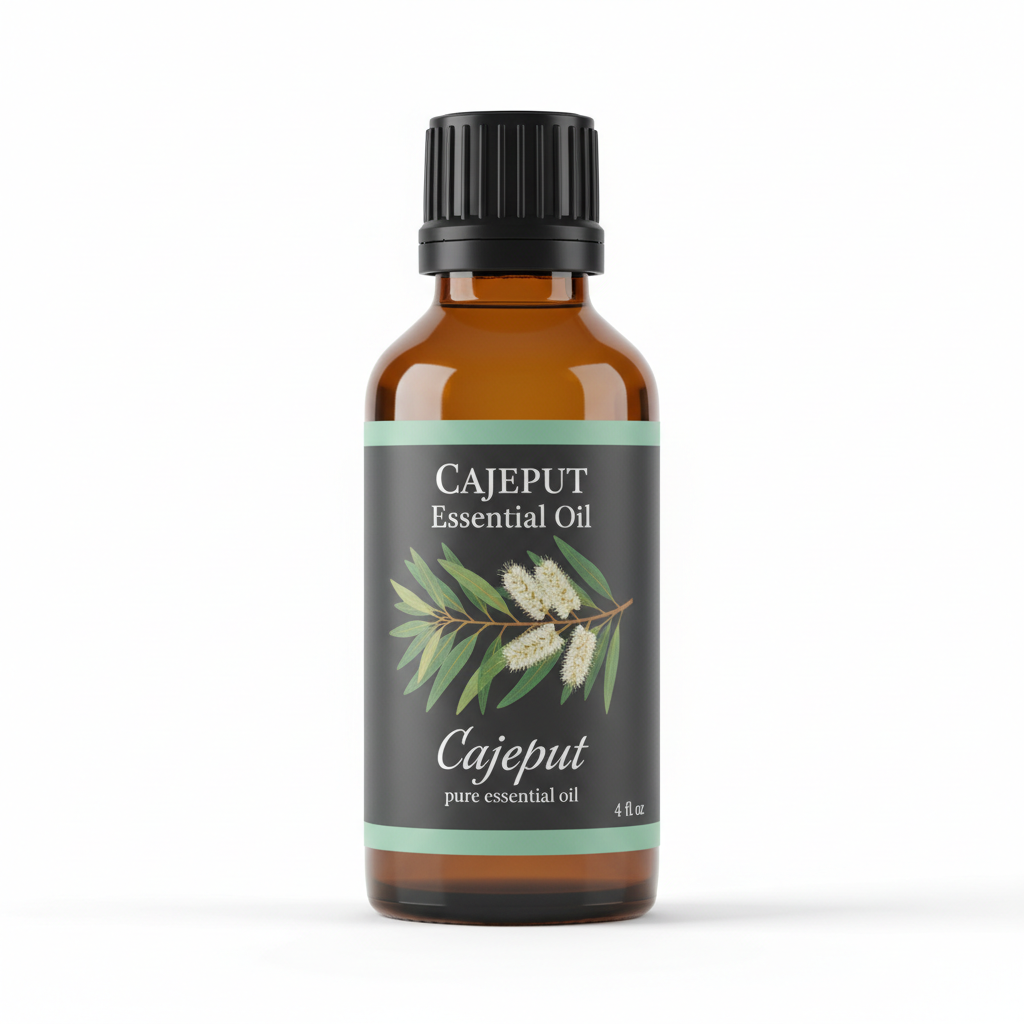
Cajeput Essential Oil
Our own Cajeput Essential Oil, in sizes from 0.5 oz to bulk.
From $10.99
Shop Now →A wild stand, and the seed behind the plantations
The PROSEA handbook says natural populations of Melaleuca cajuputi in eastern Indonesia occur on three Moluccan islands: Buru, Seram and Ambon. Buru's stand is sparse open woodland and low shrubland between 30 and 400 m. Seram has an almost pure stand on the Hoamoal Peninsula, and Ambon has a few scattered stands (PROSEA, Melaleuca cajuputi). For the natural stands overall, PROSEA estimates about 90 tonnes of oil a year.
The same entry shows how much Java changed the picture. Plantations there began in 1926 with seed from Buru, and about 9,000 ha of government plantations produced roughly 280 tonnes of oil in 1993. Buru is the genetic source of that whole system, a fine story even though the island is not necessarily where most of today's volume is made. These are 1990s figures from a handbook, so think of them as a snapshot.
How the leaf comes off the hill
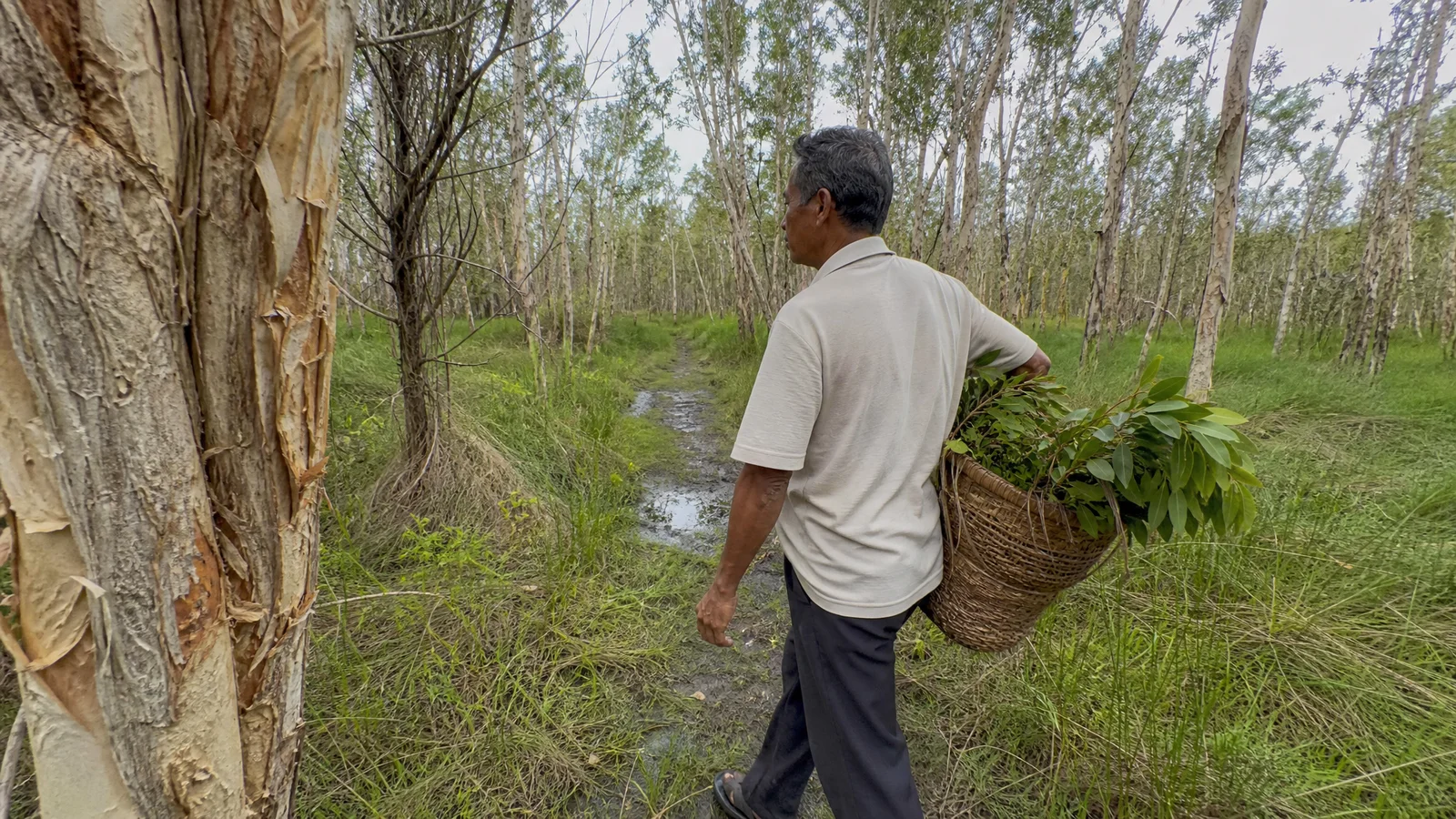
PROSEA describes the Moluccan harvest as a family affair. Groups of two to six people work holdings of about 200 ha, cut coppice shoots 1 to 2 m tall with a machete, and strip the leaves into 20 kg baskets. A skilled cutter manages about seven baskets a day, May to August is the preferred dry-season window, and the small family stills take about 160 kg of dried leaf for an 8-hour run that yields about 3 kg of oil. A 2023 study of Basalalae village in Buru's Waelata district interviewed 15 people who distil there and found a single production cycle gives about 4 to 5 litres (Dawan, Lasaiba and Leuwol, 2023). It is a hand-cut, small-batch craft, which is part of its charm and also why two oils from the same island can differ.
What a place name does not tell you
PROSEA reports that oil of subspecies cajuputi, the main commercial source, ranges from 3% to 60% 1,8-cineole. It records a Moluccan grading by site: grade 1 oil (55% to 65% cineole) from hillside trees and grade 2 (20% to 55%) from lower sites. So the island name does not tell you which one is in the bottle. Our explainer on what gives cajeput its crisp scent unpacks that number.
A 2026 study from neighbouring Seram shows how much can sit behind one regional name. Kapelle, Souhoka and Renur distilled leaf from two villages and analysed it by GC-MS. Their M. leucadendra oil was mostly eucalyptol (about 56.6% to 58.5%), while their M. cajuputi sample was dominated by methyleugenol (about 81.6%) and gave only about 0.12% oil. Fresh leaf out-yielded dried (Kapelle et al., 2026). That is Seram and not Buru, so it does not describe Buru oil. It does show that species, site and leaf handling can move the chemistry more than a map pin does.
"Wild" deserves a follow-up question
Rimbawanto and colleagues write that intensive use and poor management threaten the genetic diversity of the natural stands. They collected more than 160 genotypes in 1995 and 1998, screened them for oil yield and cineole content, and planted selected material as seed orchards in Java (Rimbawanto et al., 2021). The same paper puts national output at about 650 tonnes a year against domestic demand above 3,500 tonnes. The wild trees are the gene pool the plantations draw on, so a "wild-harvested" label tells you where the leaf was cut and leaves the harvest question open. Our sustainability article says what we can and cannot claim.
A place name on a label is a lovely thing: it conjures hills, hand-cut branches and a small family still. Enjoy the picture, but keep it separate from the question of what is actually in your bottle. The best way to do that is to ask for the lot document, which is why the questions below matter more than any map.
Our own bottle
Our cajeput oil is steam-distilled Melaleuca cajuputi, and the origin we name is Indonesia. We do not name an island, so we are not borrowing Buru's reputation. The Certificate of Analysis we publish for one batch lists appearance, smell, density, refractive index and optical rotation, and our labels carry a lot number. If you need a cineole figure or GC-MS for a lot, ask us in writing through the contact page.
When you open our bottle, expect the scent the way we describe it: fresh, cool and fruity-camphorous, a crisp top note. That is what your nose will tell you, and it is a good first test of whether a cajeput suits you.
Three questions for any seller who prints Buru
- Which species, and what is the main constituent of this lot? A lot analysis naming the dominant compound answers it.
- Fresh or dried leaf, wild or planted, and who distilled it? Both PROSEA and the Seram study tie yield and quality to harvest and handling.
- Does the document match the bottle? A lot number that matches the analysis is a better credential than a place name. Our buying guide walks through the check.
To see how a leaf becomes oil anywhere in the region, read how cajeput oil is made, and for the tree itself, Melaleuca cajuputi.
Buru has a real wild population and a real role in cajeput history, and that is a richer story than any label can hold.
Cajeput Essential Oil
Cajeput Essential Oil from our own shop, in sizes from 0.5 oz to bulk.
From $10.99
Shop Now →Sources & Further Reading
- PROSEA (Plant Resources of South-East Asia). Melaleuca cajuputi. prosea.prota4u.org/view.aspx?id=666
- Rimbawanto A, Kartikawati NK, Latumahina F, 2021. Conservation and utilization of Melaleuca cajuputi subsp. cajuputi in Moluccas Island, Indonesia. IOP Conf Ser Earth Environ Sci 800. doi 10.1088/1755-1315/800/1/012040
- Kapelle IBD, Souhoka FA, Renur NM, 2026. Influence of species, growing site, and postharvest leaf handling on the yield and chemical composition of cajuput oil from Seram Island, Indonesia. Eksakta 27(3). eksakta.ppj.unp.ac.id
- Dawan F, Lasaiba MA, Leuwol FS, 2023. Kajian pengolahan dan pemasaran minyak kayu putih di Desa Basalalae, Kecamatan Waelata, Kabupaten Buru. Jurnal Pendidikan Geografi Unpatti 2(1). ojs3.unpatti.ac.id