Is Cajeput in Tiger Balm? Reading Medicated Balm Labels
Pick up a jar of Tiger Balm in the United States and cajuput oil is on the label, but not where most people look. It sits under inactive ingredients, while camphor and menthol hold the active slots. Seven published labels tell the story of how cajeput shows up in balms, and why.
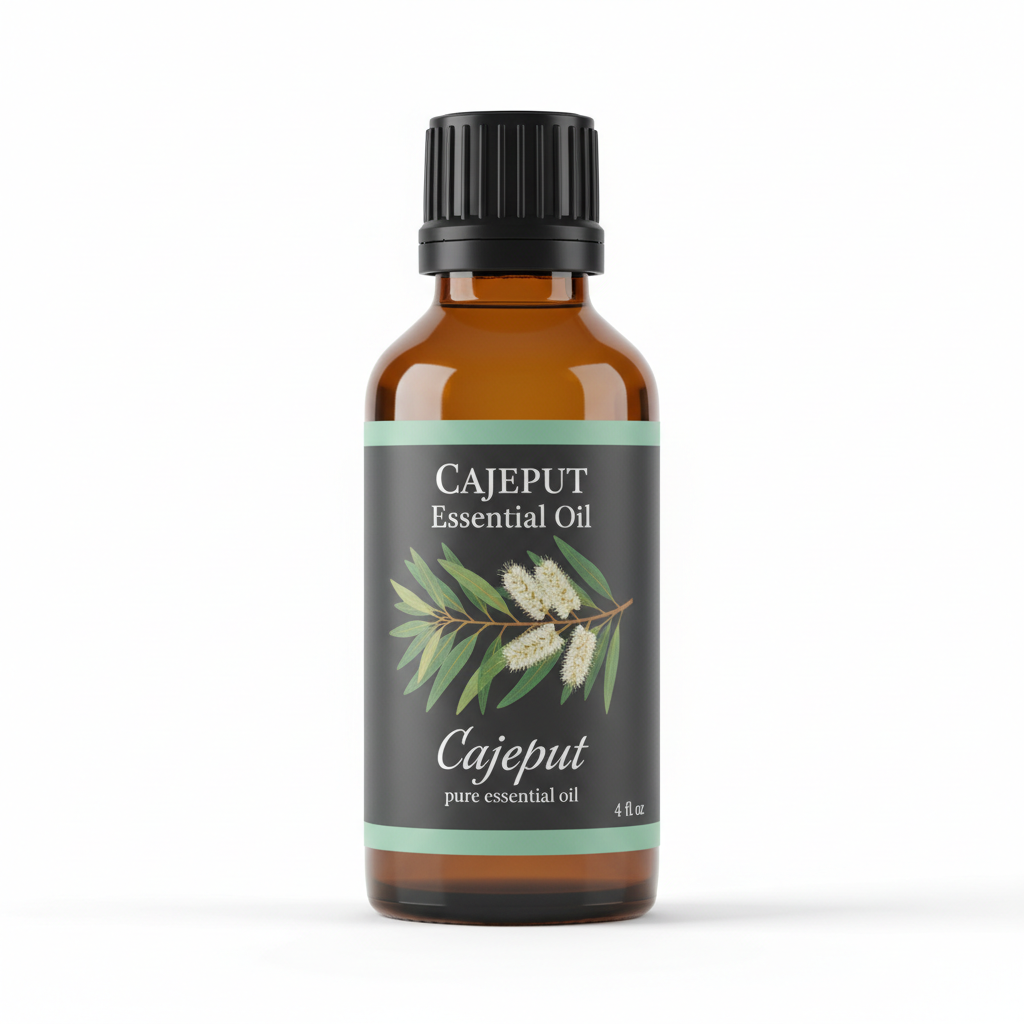
Cajeput Essential Oil
Our own Cajeput Essential Oil, in sizes from 0.5 oz to bulk.
From $10.99
Shop Now →Seven labels, side by side
These are US drug labels from DailyMed, the National Library of Medicine's label database, plus two Indonesian retailer listings.
- Tiger Balm Red Extra Strength (Haw Par Healthcare, updated December 2025): actives camphor 11% and menthol 10%. Cajuput oil is listed as inactive, with cassia oil, clove oil, dementholised mint oil and petrolatum.
- Tiger Balm White Regular Strength (December 2025): camphor 11%, menthol 8%. Cajuput oil again inactive, alongside clove oil, dementholised mint oil and petrolatum.
- Tiger Balm Red, export-only label (December 2024): the same two actives, with "Melaleuca cajuputi leaf oil" among eleven inactives that also include eugenol, cinnamaldehyde, limonene, coumarin and linalool.
- Eagle Brand Medicated Oil Aromatic (PT Eagle Indo Pharma, April 2026): camphor 7%, menthol 16%, methyl salicylate 35%. No cajuput; eucalyptus oil, light mineral oil and spike lavender oil are inactive.
- Eagle Brand Medicated Oil Refresh (April 2026): camphor 2.2%, menthol 14%. Clove oil and peppermint oil inactive, and no cajuput.
- Cap Lang Minyak Kayu Putih (Indonesian pharmacy listing): composition given as "Oleum cajuputi (minyak kayu putih) 100%". Cajuput is the whole product.
- Cap Lang Minyak Kayu Putih Plus (Indonesian retailer listing): cajuput oil 63% and natural rhodinol 3%.
The Cap Lang rows come from retailer pages, so read the figures off the carton if they matter to you. Links to every label are in the sources below.
Why camphor and menthol take the active slots
The reason is regulatory. The FDA's over-the-counter monograph for external analgesic products (M017, posted 2 May 2023) lists the active ingredients allowed in that category and their permitted concentrations, including camphor and menthol within set ranges, and methyl salicylate and turpentine oil among others (FDA, 2023). Cajuput, eucalyptus and clove oils do not appear in that document, so a product making a drug statement on a US label has to list them as inactive. Tiger Balm's 11% camphor sits at the top of the monograph's range, and the Eagle percentages fall inside it too.
Two readings follow. Inactive ingredients carry no percentage, so a jar's cajuput content cannot be sized from the label. And since the label rests its statement on camphor and menthol, it offers no way to credit or discount cajuput's role. Why a maker adds it is not stated on any label; scent is a plausible reason, but that is our reasoning.
Cautions on the labels
The monograph tells adults and children 2 and older to apply no more than three to four times daily, and for children under 2 to consult a doctor. The Eagle labels follow that. The Tiger Balm labels are stricter, suggesting a doctor for children 12 or younger, advising a health professional first if pregnant, breast-feeding or sensitive-skinned, and adding "may cause allergic reaction in some people, so test a small area first".
The export Tiger Balm label names eugenol, cinnamaldehyde, limonene, coumarin and linalool individually. If scented products give you trouble, that kind of component list is worth seeking out, because labels that say just "clove oil" leave the question open. Our own dilution and patch-test guide covers how we suggest handling skin.
The Indonesian household oil is a different thing
Cap Lang's listings carry BPOM registration numbers (TR142679841 for the plain oil, TR172698811 for the Plus), and the plain oil names a single ingredient. Its listed cautions include avoiding the face, wounded or burned skin, and inhaling the oil (Alodokter listing); the Plus listing adds that it is for external use only and to stop if irritation occurs (Medicastore listing). The structural point is what matters here. In the US system cajuput is a supporting ingredient on a camphor-and-menthol label, while in the Indonesian household oil it is the product itself. Our post on minyak kayu putih and cajeput essential oil explores what else can be in that bottle.
Where our oil fits
Our cajeput is an essential oil for aromatic and cosmetic use, steam-distilled and sold neat, not a balm and not a drug. Anyone shopping for a product with a pain statement should read the camphor and menthol line and ask a pharmacist. If you want to scent a homemade balm, the label strengths are no guide: camphor and menthol run from 7% to 16% on these products, while a scent oil sits at a fraction of that. We recommend 0.5% to 2% in a carrier after a patch test. Our balm formula and dilution maths has the arithmetic, and our muscle rubs post covers the mechanism side. Keep balms off children under 2 and off broken skin, and ask a pharmacist or physician about pregnancy and nursing.
Reading the next label
- Find the actives box first, since that is where a US label puts its percentages.
- Look below it for cajuput or eucalyptus. No percentage means no way to size it.
- Read the age line against the monograph's under-2 rule.
- Scan for named allergen-type components such as eugenol, limonene and linalool.
Next time you are in a pharmacy aisle, pick up two jars and read them side by side. It takes a minute, and the difference between an actives box and a one-ingredient oil becomes obvious. Labels are small and the print is tight, so your phone's camera zoom is a real help.
Knowing whether you hold a formulated balm or a single oil, and where its label puts the weight, is most of the skill.
Cajeput Essential Oil
Cajeput Essential Oil from our own shop, in sizes from 0.5 oz to bulk.
From $10.99
Shop Now →Sources & Further Reading
- U.S. Food and Drug Administration, 2023. OTC Monograph M017: External Analgesic Drug Products for OTC Human Use. accessdata.fda.gov, M017
- Haw Par Healthcare, 2025. Tiger Balm Red Extra Strength label. DailyMed. dailymed ce703715
- Haw Par Healthcare, 2025. Tiger Balm White Regular Strength label. DailyMed. dailymed f406161e
- Haw Par Healthcare, 2024. Tiger Balm Red (export only) label. DailyMed. dailymed a1504483
- PT Eagle Indo Pharma, 2026. Eagle Brand Medicated Oil Aromatic label. DailyMed. dailymed 0ef7c3aa
- PT Eagle Indo Pharma, 2026. Eagle Brand Medicated Oil Refresh label. DailyMed. dailymed 09260c31
- Alodokter. Cap Lang Minyak Kayu Putih 60 ml listing. alodokter.com
- Medicastore. Minyak Kayu Putih Plus Cap Lang 60 ml listing. medicastore.com