Does the Cajeput Tree Grow Back? What It Means for Oil
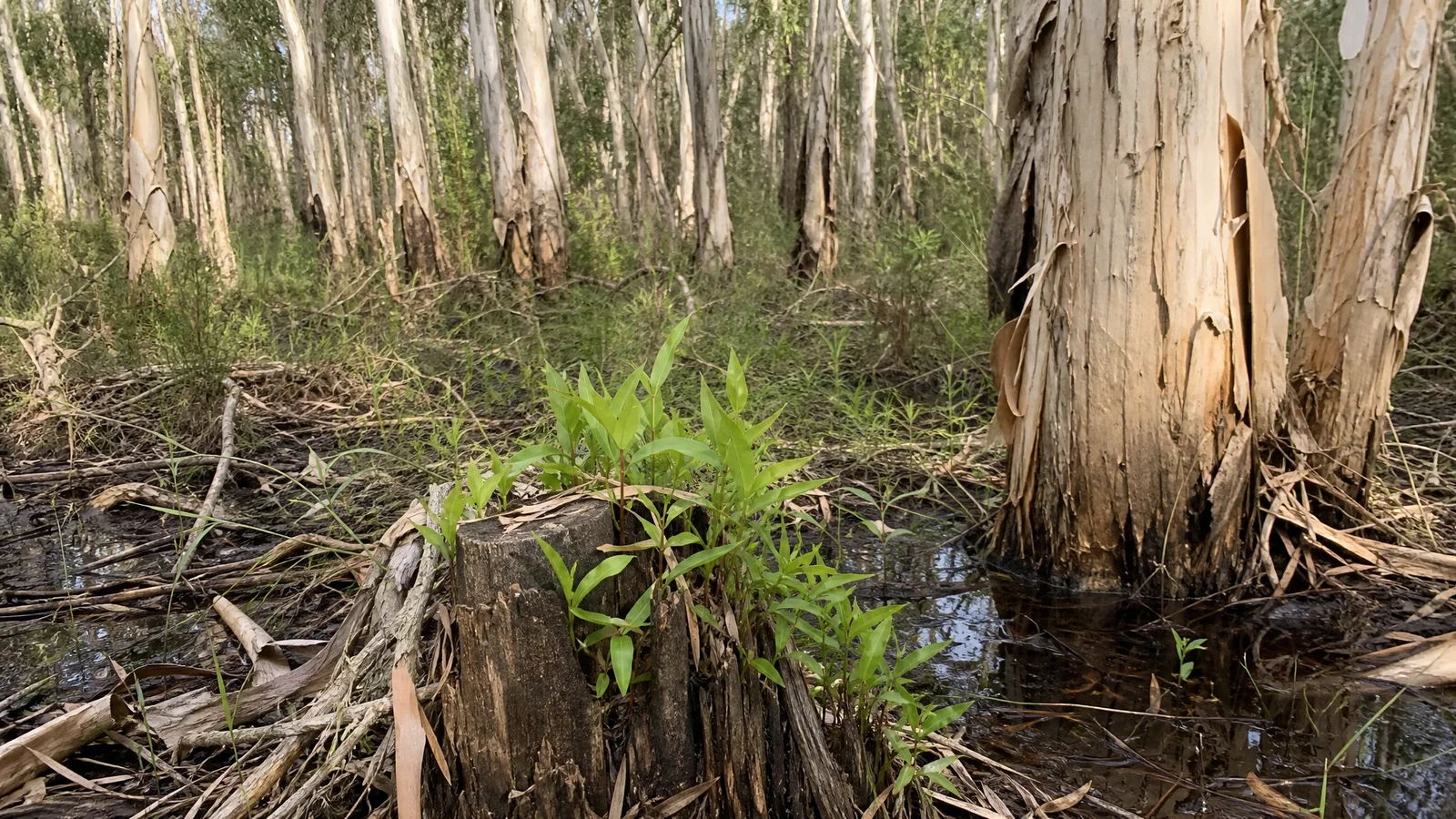
Cut a cajeput tree back to a stump and, given the chance, it sends up new shoots. That one habit is the best thing to know about where the oil comes from, and it explains why cajeput is made from leaf instead of from felled trees. It is also a good place to start thinking about what "sustainable" can honestly mean for an essential oil.
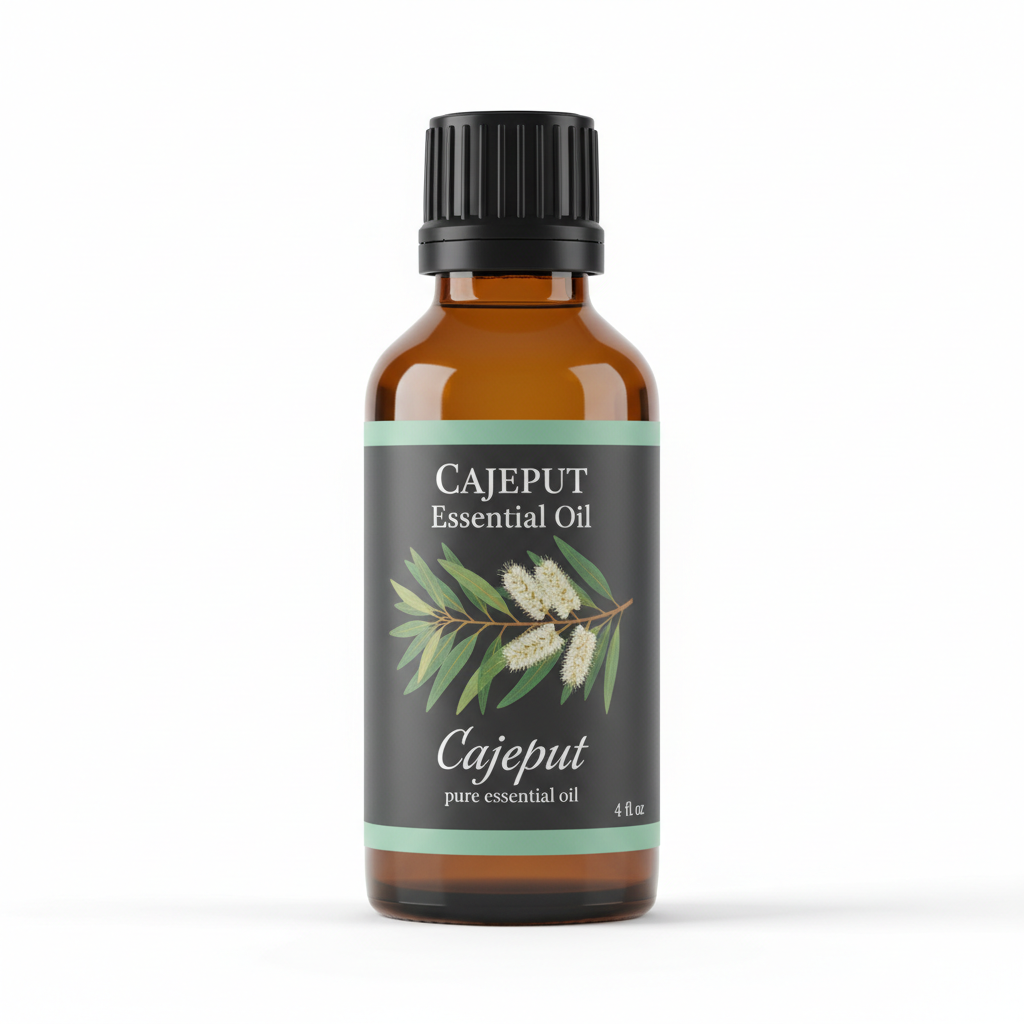
Cajeput Essential Oil
Our own Cajeput Essential Oil, in sizes from 0.5 oz to bulk.
From $10.99
Shop Now →A tree built to regrow
The PROSEA plant resources handbook describes Melaleuca cajuputi as a species that regenerates after fire from seed, coppice and root suckers, and notes it can establish on exposed brackish and acid sulphate soils where little else grows (PROSEA). In the wild Moluccan stands, workers cut coppice shoots a metre or two tall and strip the leaf. In plantations, trees are cut back to about a metre after four years, then visited yearly so that shoots thicker than a centimetre can be taken. PROSEA estimates that oil can be produced economically from a plantation for around 25 years.
Those are a handbook's descriptions of typical practice, not a measurement of any one harvest, but they explain why leaf-and-shoot harvesting suits this tree so well.
Why a regrowing tree is nice to think about
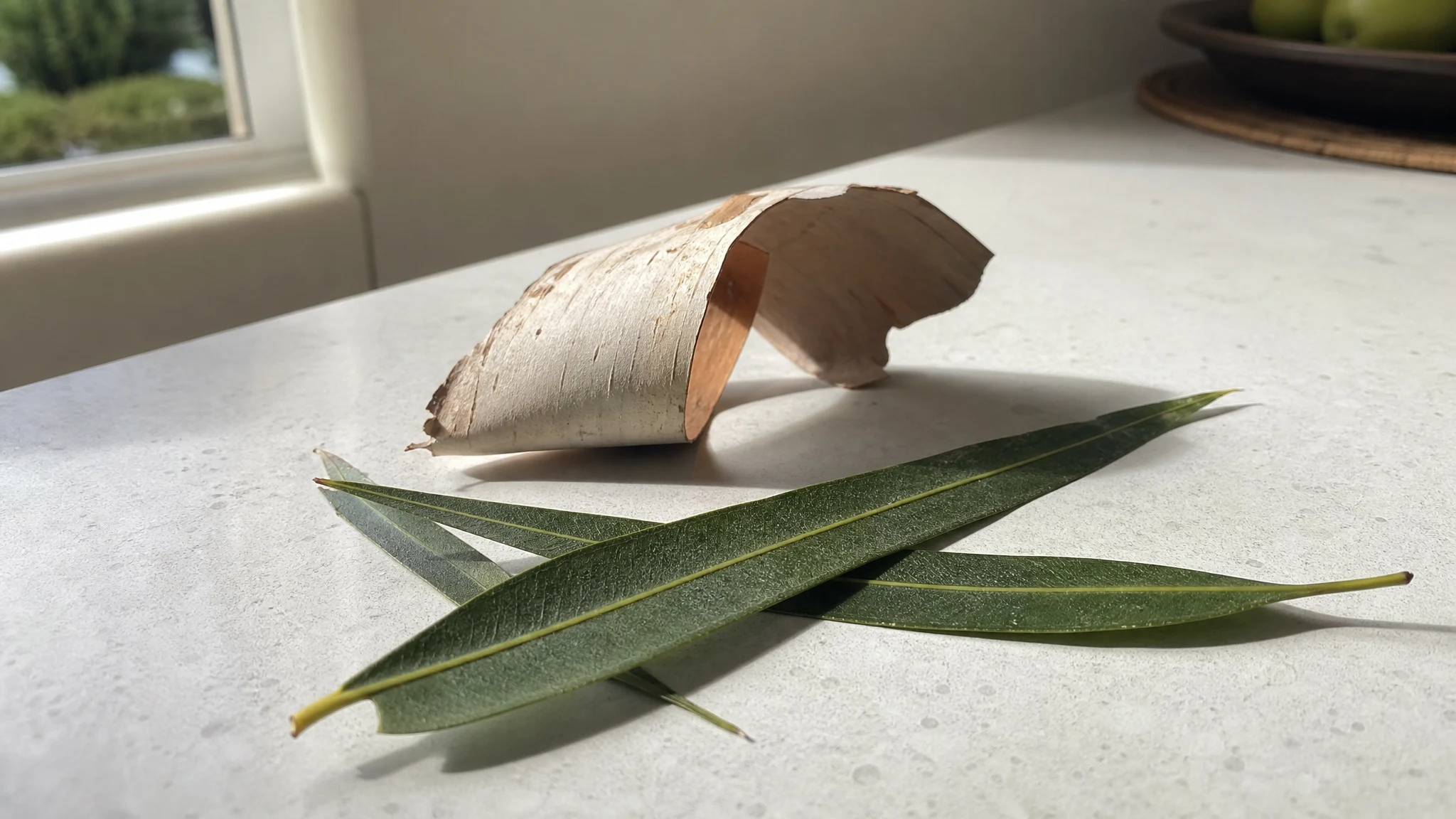
There is something quietly encouraging about a crop that answers the cut with new shoots. The paperbark is a tree you can picture: layered, papery bark that peels in thin sheets, a habit of regrowing after the cut, and a willingness to come back. When you hold a bottle of cajeput, it is pleasant to know that the oil starts with a leaf and not a felled trunk.
The pressure on wild stands
The wider picture is more mixed, and worth knowing. Indonesian forestry researchers writing in 2021 say that intensive use and inappropriate management are putting the genetic diversity of the natural Moluccan stands under threat. They put national production at about 650 tonnes of oil a year against domestic demand above 3,500 tonnes (Rimbawanto et al., 2021). Demand outrunning supply puts pressure on someone's trees, although the paper does not trace it to any one source or measure the effect of leaf cutting stand by stand. Our Buru island article looks at the island most often named.
Why we keep the word off our label
"Sustainable" is a big word. The US Federal Trade Commission's Green Guides say marketers should not make unqualified general environmental benefit claims, because it is highly unlikely they can substantiate every reasonable interpretation, and that a claim should be qualified to a specific benefit that can be supported (16 CFR 260.4). That reads to us as a call for specifics, and we prefer to stick with what we can describe plainly. Our oil is steam-distilled from Melaleuca cajuputi, with Indonesia as the origin named on our shop pages, and the plant itself is one that grows back. Stand-level claims, like exactly where leaf is cut or how often, belong to the people who cut it, so we leave them out rather than guess. For how the oil is made once the leaf arrives, see how cajeput oil is made, and for the paperwork side of buying, our buying checklist and organic article are good companions.
Little habits that respect the oil
A lot of leaf goes into a small bottle, so waste feels worse with essential oils than with most things. A few habits help. Measure with a scale or a marked dropper instead of pouring. Cap the bottle firmly every time so none of it drifts off. Use a paper strip to test a scent before committing a whole batch of spray or cologne. And keep a note of what worked, so the next batch does not need three rounds of guessing. None of this is complicated, and all of it means the oil goes where you wanted it.
Questions worth asking any seller
- Is the leaf wild-cut or from planted stands? PROSEA describes both, and they work differently.
- Is it leaf and shoots from regrowth, or whole trees? Only the first matches the handbook description.
- How long is the gap between cuts on the same stand? A figure is a sign of a process behind the claim.
- What document backs the claim? A certificate names a body and a scope; a slogan does not.
If you want to meet the tree itself, our paperbark tree article is the place to begin.
A tree that keeps sprouting back through fire, salt wind and the machete is a hopeful thing to build a craft around, and it is why we think cajeput is worth being curious about.
Cajeput Essential Oil
Cajeput Essential Oil from our own shop, in sizes from 0.5 oz to bulk.
From $10.99
Shop Now →Sources & Further Reading
- PROSEA (Plant Resources of South-East Asia). Melaleuca cajuputi. prosea.prota4u.org/view.aspx?id=666
- Rimbawanto A, Kartikawati NK, Latumahina F, 2021. Conservation and utilization of Melaleuca cajuputi subsp. cajuputi, an indigenous species in Moluccas Island, Indonesia. IOP Conf Ser Earth Environ Sci 800:012040. doi 10.1088/1755-1315/800/1/012040
- U.S. Federal Trade Commission. Guides for the Use of Environmental Marketing Claims, 16 CFR 260.4. law.cornell.edu/cfr/text/16/260.4