Cajeput Oil and Headaches: What the Studies Actually Say
Search for essential oils and headaches and you will find plenty of confident claims. Look at the studies behind them and a quieter story appears: most are about peppermint in ethanol, none are about cajeput, and the results are more modest than the headlines. Here is how to read them, and what we would keep in mind if you love a crisp scent.
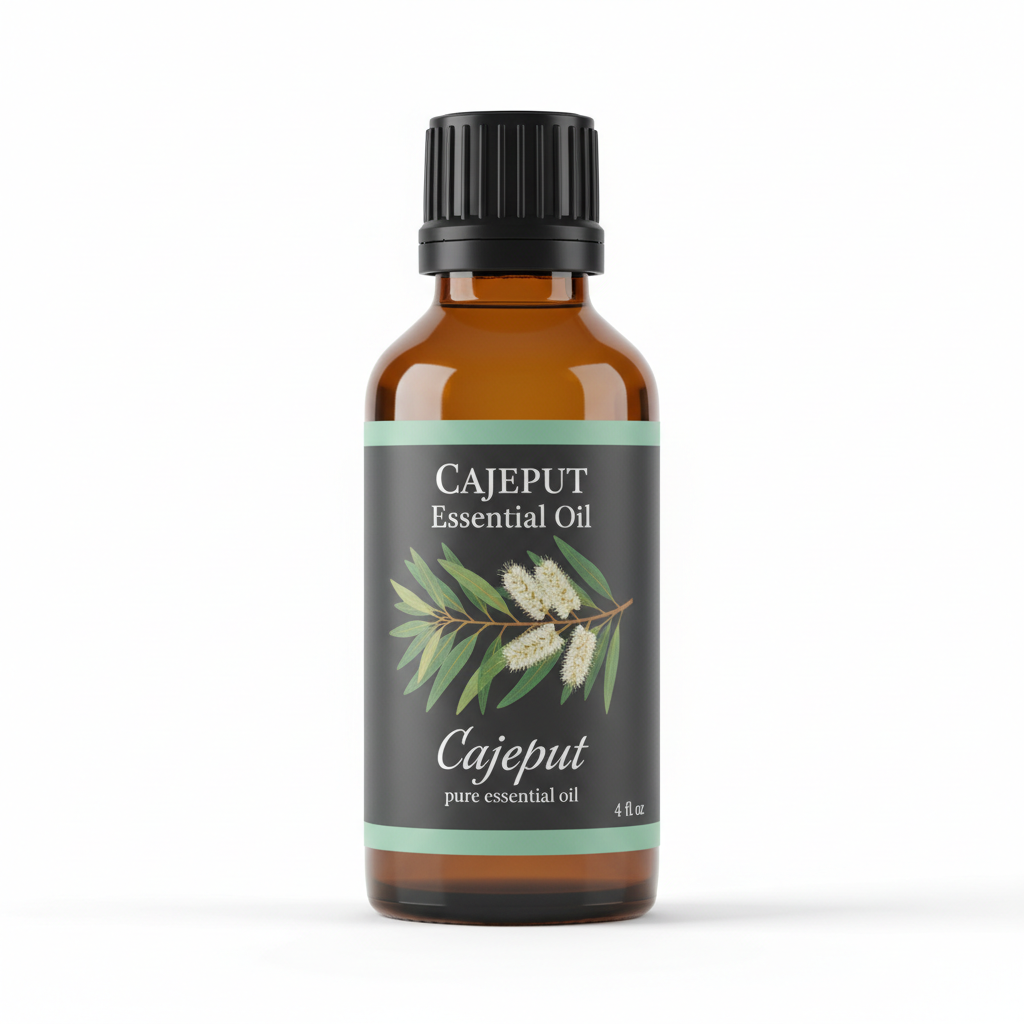
Cajeput Essential Oil
Our own Cajeput Essential Oil, in sizes from 0.5 oz to bulk.
From $10.99
Shop Now →Some headaches are not for a bottle
Before any oil, the NHS and MedlinePlus both list headaches that need a clinician: a sudden, severe onset, a headache after a head injury, one with a stiff neck and fever, one with vision changes, confusion, weakness or difficulty speaking, and a child's headache that is getting worse or waking them at night (NHS, Headaches and MedlinePlus, Headache). For headaches that keep coming back, a GP or neurologist can say whether they are tension-type, migraine or something else, and that distinction shapes everything after.
What the oil studies did
The study quoted most often was a laboratory experiment in 32 healthy volunteers. Preparations were applied to the forehead and temples. A peppermint oil and ethanol mix showed a significant effect on experimentally measured sensitivity to headache pain. A mix containing peppermint, eucalyptus and ethanol improved cognitive performance and had a relaxing effect, but had little influence on pain sensitivity (Göbel, Schmidt and Soyka, 1994).
The same group later ran a trial in 41 people with tension-type headache, treating 164 attacks. A solution of 10% peppermint oil in ethanol, spread over the forehead and temples, reduced headache intensity compared with placebo, with results recorded in a diary over the first hour (Göbel et al., 1996). It is a modest signal from a small trial, and it is specific to that product.
For migraine the picture is less encouraging. A 2024 meta-analysis pooled seven randomised trials of essential oils against placebo (558 participants) and found no significant difference in the number of attacks (Murtey et al., 2024).
Why that does not carry over to cajeput
A 10% solution in ethanol is a different product from a 1% blend in a carrier oil. It is five times the top of the 0.5% to 2% range we suggest for any skin use, and ethanol and carrier oils behave differently on skin, so the result belongs to its own formula. Add that the eucalyptus-containing mix, the one nearest cajeput's cineole-rich character, showed little effect on pain sensitivity, and there is no good reason to borrow a peppermint result for our oil. We would rather say that plainly than let one oil stand in for another.
A word on how we read claims like these
When we first meet a bold claim about an oil we love, the instinct is to wish it were true. It helps to slow down and ask three plain questions: which oil was it, how was it applied, and how many people were involved? Most headlines drop all three. Once you start asking, you will notice how often the answer is a different oil, a very different strength, or a handful of volunteers. That is not a reason to be gloomy about essential oils. It simply keeps the pleasure of a scent separate from promises nobody has tested for it.
When a strong scent is the trigger
For some people the scent itself is the problem. In a clinic series of 113 migraine patients, about three in ten reported attacks triggered by odours (Gossrau et al., 2022). Cajeput is a sharp, penetrating aroma, much like the eucalyptus oil we compare it with in our cajeput versus eucalyptus piece. If you notice headaches around perfume, cleaning products or strong candles, a strong oil in a diffuser is worth approaching cautiously, and keeping a note of when it affects you is wise.
The European Food Safety Authority also classes cajuput oil as an irritant to skin and eyes and as a skin and respiratory sensitiser (EFSA FEEDAP Panel, 2024), which is one more reason to keep it diluted and away from the temples and eyes, where headache preparations are usually applied.
If you enjoy it as a scent
We sell cajeput as an aromatic oil and make no claim about headaches. If you diffuse it, keep sessions short, ventilate the room, switch off if your head hurts more, and keep it away from children and pets. We advise against it around babies and young children, and the children article explains why. For a wider look at how much cajeput research exists, see our overview of the evidence.
Keeping a scent diary
If you like to use a diffuser, a small notebook can be surprisingly useful. Jot down the date, how long the diffuser ran, how many drops you used, and anything you noticed in the room, such as a scent that felt too sharp or a window left shut. After a few weeks you will know your own preferences far better than any article could tell you. Many people find that less oil and shorter sessions are simply more pleasant, and that a cool, bright scent like cajeput reads best in small amounts.
If your headaches are frequent, a simple diary of dates, triggers and what you took is the most useful thing you can bring to your doctor, far more useful than any oil.
Cajeput Essential Oil
Cajeput Essential Oil from our own shop, in sizes from 0.5 oz to bulk.
From $10.99
Shop Now →Sources & Further Reading
- NHS. Headaches
- MedlinePlus. Headache
- Göbel H, Schmidt G, Soyka D, 1994. Effect of peppermint and eucalyptus oil preparations on headache parameters. Cephalalgia
- Göbel H et al., 1996. Peppermint oil and paracetamol in tension-type headache. Nervenarzt
- Murtey et al., 2024. Essential oils for migraine headache: a systematic review and meta-analysis
- Gossrau et al., 2022. Odour-triggered migraine attacks
- EFSA FEEDAP Panel, 2024. Cajuput oil as a feed additive. EFSA Journal 22(4):e8732