The History of Cajeput: From Ambon to Today
The cajeput story has some of the best raw ingredients a history could ask for: a Malay name, a blind Dutch botanist, a London pharmacopoeia, and a plantation started with seed carried across the islands. What follows sticks to the parts we can point to on the page.
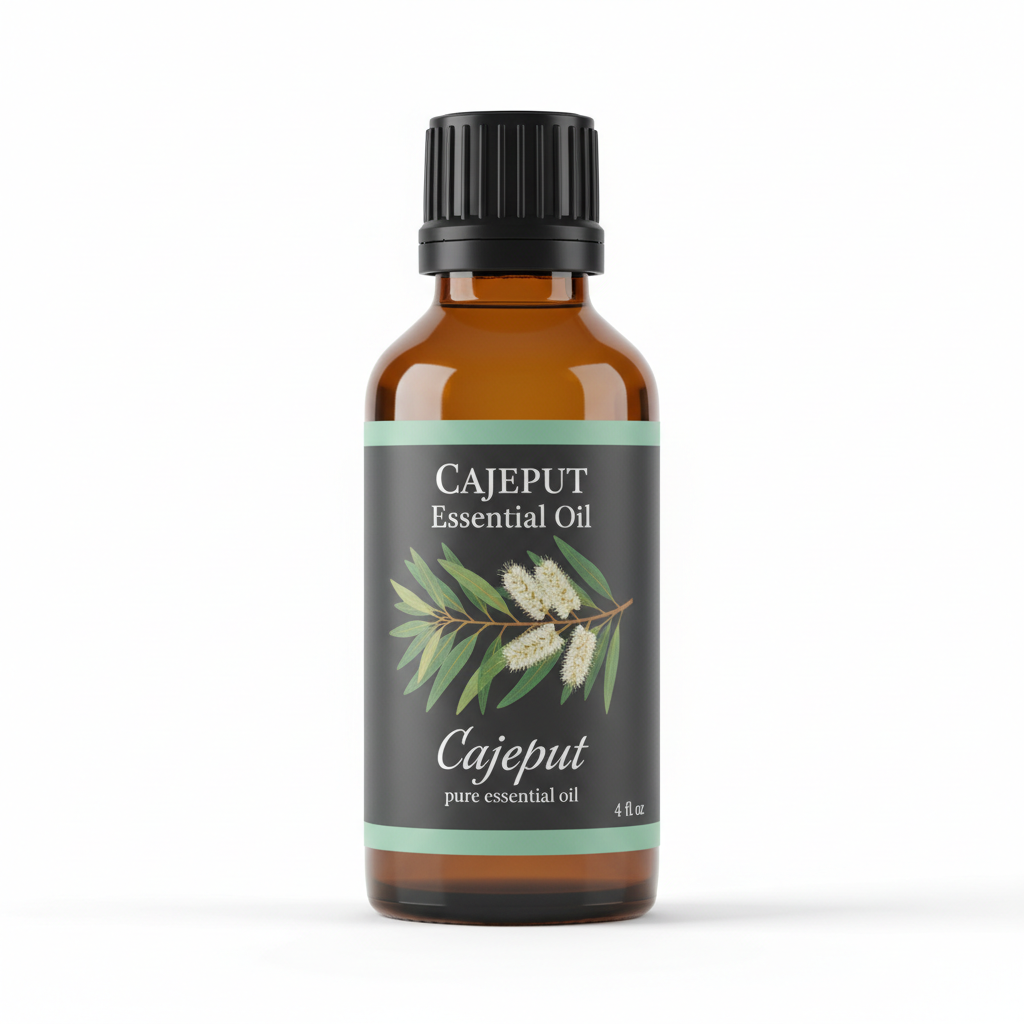
Cajeput Essential Oil
Our own Cajeput Essential Oil, in sizes from 0.5 oz to bulk.
From $10.99
Shop Now →It starts with the name
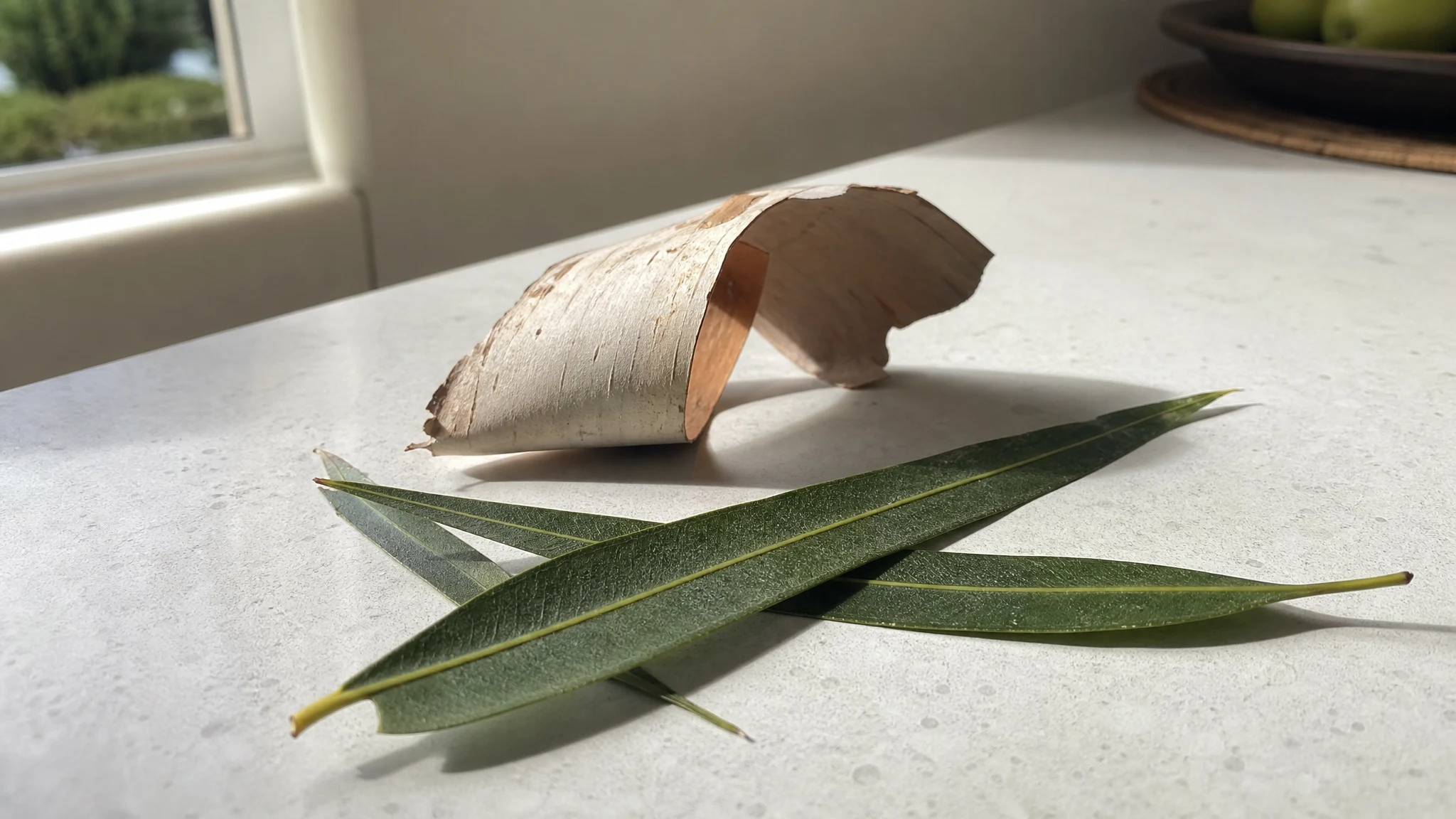
The species name cajuputi comes from the Malay kayu putih, "white tree", and the English "cajeput" is a spelling of the same words (Wikipedia, Melaleuca cajuputi). The pale, papery bark that earned it that name is also why it is called a paperbark. It was named by the people who lived alongside the tree, long before a European collector wrote it down.
A Dutch botanist on Ambon
The European paper trail runs through Georg Eberhard Rumphius, who reached Ambon in 1654 as an employee of the Dutch East India Company. According to his biography, he went blind in 1670 and carried on his plant catalogue with assistants. The manuscript was lost at sea once and redone, and the finished Herbarium Amboinense was published in six volumes between 1741 and 1750.
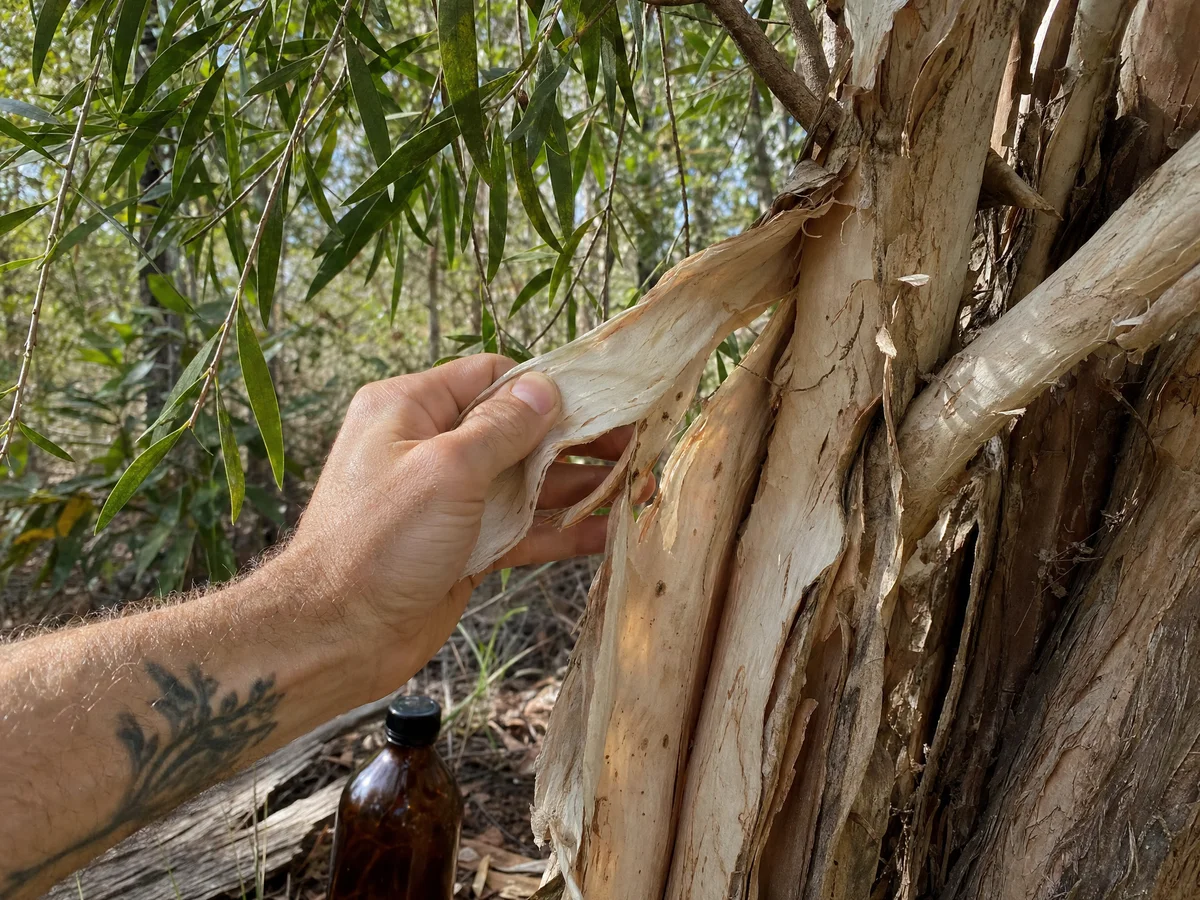
The link back to cajeput is the tree's formal name. Thomas Powell described the species in 1809 in the Pharmacopoeia of the Royal College of Physicians of London, referring to an earlier 1747 description by Rumphius. A Dutch collector wrote the tree up on Ambon, and an English medical text gave it a Latin name about sixty years later.
A household oil across Southeast Asia
PROSEA, the Plant Resources of South-East Asia handbook, calls the oil a common household product across the region, and notes it is also used as a flavouring and as a fragrance in soaps, cosmetics, detergents and perfumes (PROSEA). Traditional medicinal uses are described there too, and we report them as history, not as a claim about our oil. We sell ours for aromatic and cosmetic use. For a closer look at modern products, our post on cajeput in traditional balms reads the labels.
How the industry was organised
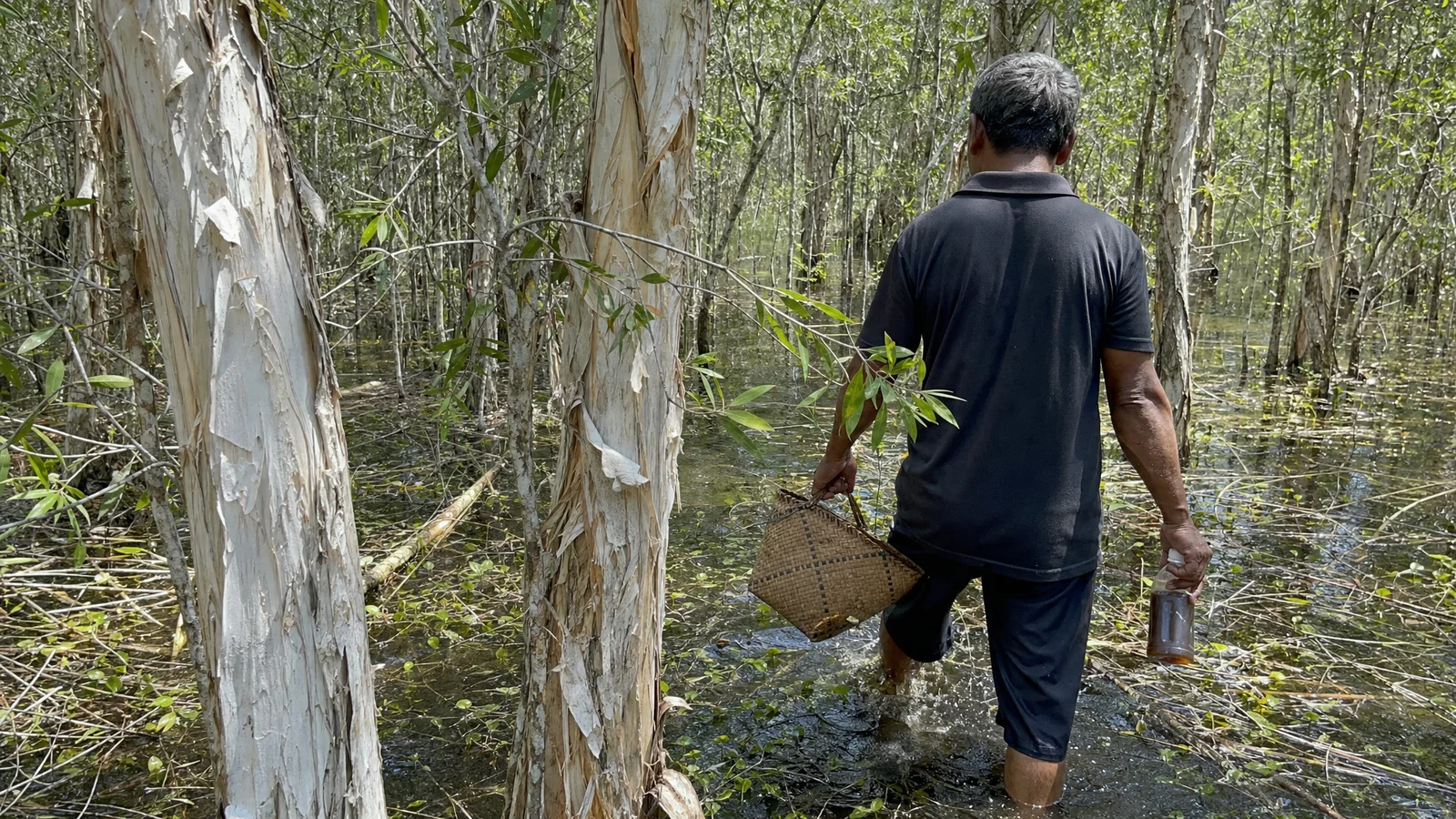
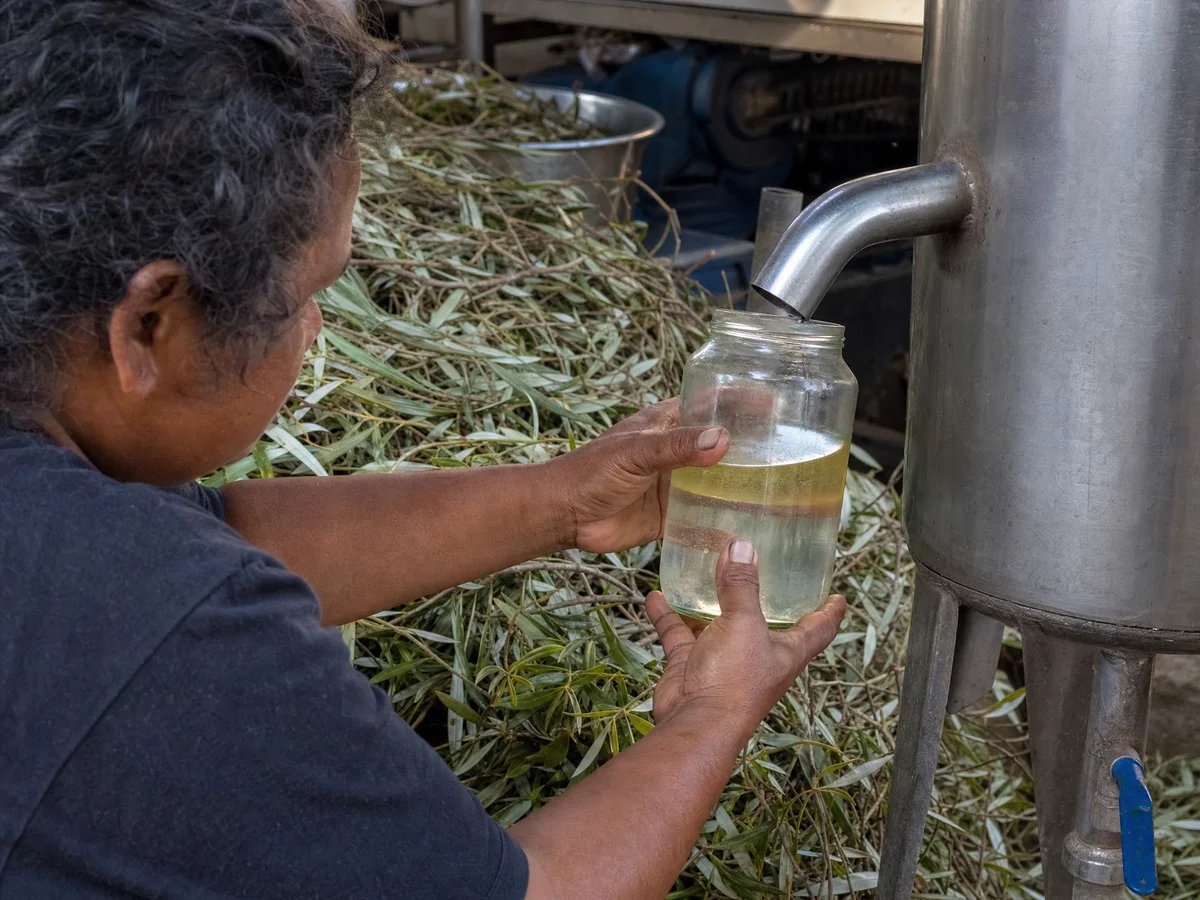
PROSEA gives the clearest picture of production as it stood in the 1990s. In the Moluccas, family groups of two to six people worked holdings of about 200 ha, cutting coppice one to two metres tall with a machete and stripping leaves into 20 kg baskets, then distilling in small family stills. The entry counts around 100 stills on Buru and 10 to 12 on Seram, with natural stands on Buru, Seram and Ambon giving an estimated 90 tonnes of oil a year.
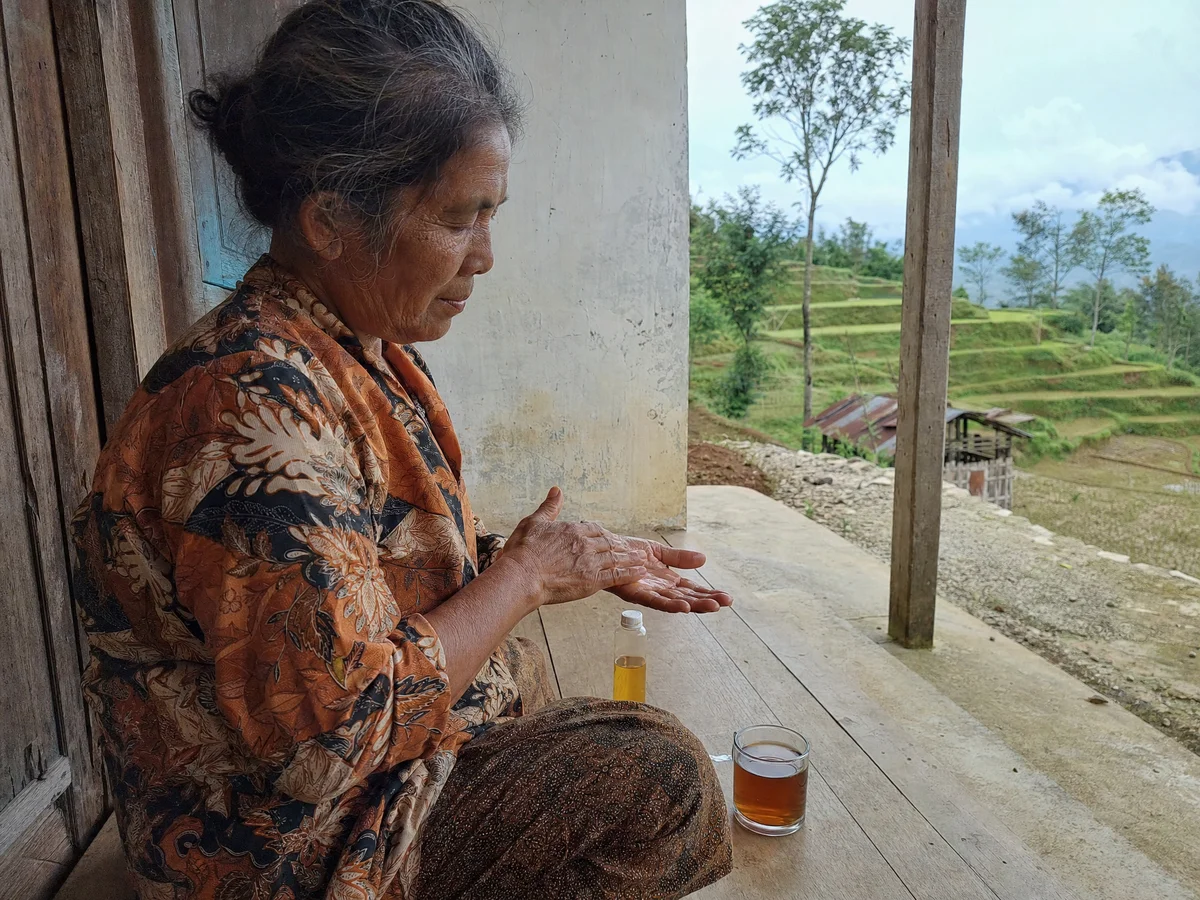
The second system is newer and deliberate. According to PROSEA, plantings in central Java began in 1926 using seed from Buru, and the Indonesian State Forest Corporation went on to run 12 distilleries there. Java's roughly 9,000 ha of plantations produced about 280 tonnes in 1993. In Vietnam, the entry says, natural forest in the south yielded about 100 tonnes a year, and the Mekong Delta forests had shrunk from about 1.5 million ha to about 120,000 ha. World output was put at more than 600 tonnes a year. These are figures from a 1990s handbook, so read them as a snapshot of a point in time rather than today's numbers.
The market today
A 2021 paper by Rimbawanto, Kartikawati and Latumahina reports that Indonesia produces about 650 tonnes of cajeput oil a year against domestic demand above 3,500 tonnes, and that intensive harvesting threatens the genetic diversity of the Moluccan stands. Their team collected more than 160 genotypes in 1995 and 1998 for breeding. PROSEA adds that oil is often exported as crude oil, mainly to Europe, and that substitution with other paperbark or eucalypt oils occurs. With demand outrunning supply, it pays to buy from a seller who can show lot documents, and our buying checklist shows what to ask for.
Following the story on a map
One of the pleasures of this history is that it can be traced with a finger on a map. Find Ambon, Buru and Seram in the Moluccas, then look south-west along the island chain to Java. Everything in the story is somewhere along that line: the Malay name, the botanist writing on Ambon, the stills on the hillsides and the plantations that came later. It makes the plain little leaf feel connected to a very large and old trading world.
Next time you open a bottle, try this. Hold it at arm's length, let the cool opening come up, and think of the family sitting at a small still with a basket of stripped leaf. The scent is the same kind of everyday pleasure it has always been, and it is nice to know a little of where it came from.
Our own chapter
The oil we sell is steam-distilled Melaleuca cajuputi, and the origin we name is Indonesia. We leave the island-by-island romance to the historians. If you want the place-name question handled with the numbers that exist, see Buru Island cajeput, and for how origins compare see buying by origin.
Cajeput's past is a story of a tree, a name, a handful of botanists and a lot of small stills, and that is plenty to hold in your hand when you open a bottle.
Cajeput Essential Oil
Cajeput Essential Oil from our own shop, in sizes from 0.5 oz to bulk.
From $10.99
Shop Now →Sources & Further Reading
- PROSEA (Plant Resources of South-East Asia). Melaleuca cajuputi. prosea.prota4u.org/view.aspx?id=666
- Rimbawanto A, Kartikawati NK, Latumahina F, 2021. Conservation and utilization of Melaleuca cajuputi subsp. cajuputi in Moluccas Island, Indonesia. IOP Conf Ser Earth Environ Sci 800:012040. doi 10.1088/1755-1315/800/1/012040
- Wikipedia contributors. Melaleuca cajuputi. en.wikipedia.org/wiki/Melaleuca_cajuputi
- Wikipedia contributors. Georg Eberhard Rumphius. en.wikipedia.org/wiki/Georg_Eberhard_Rumphius