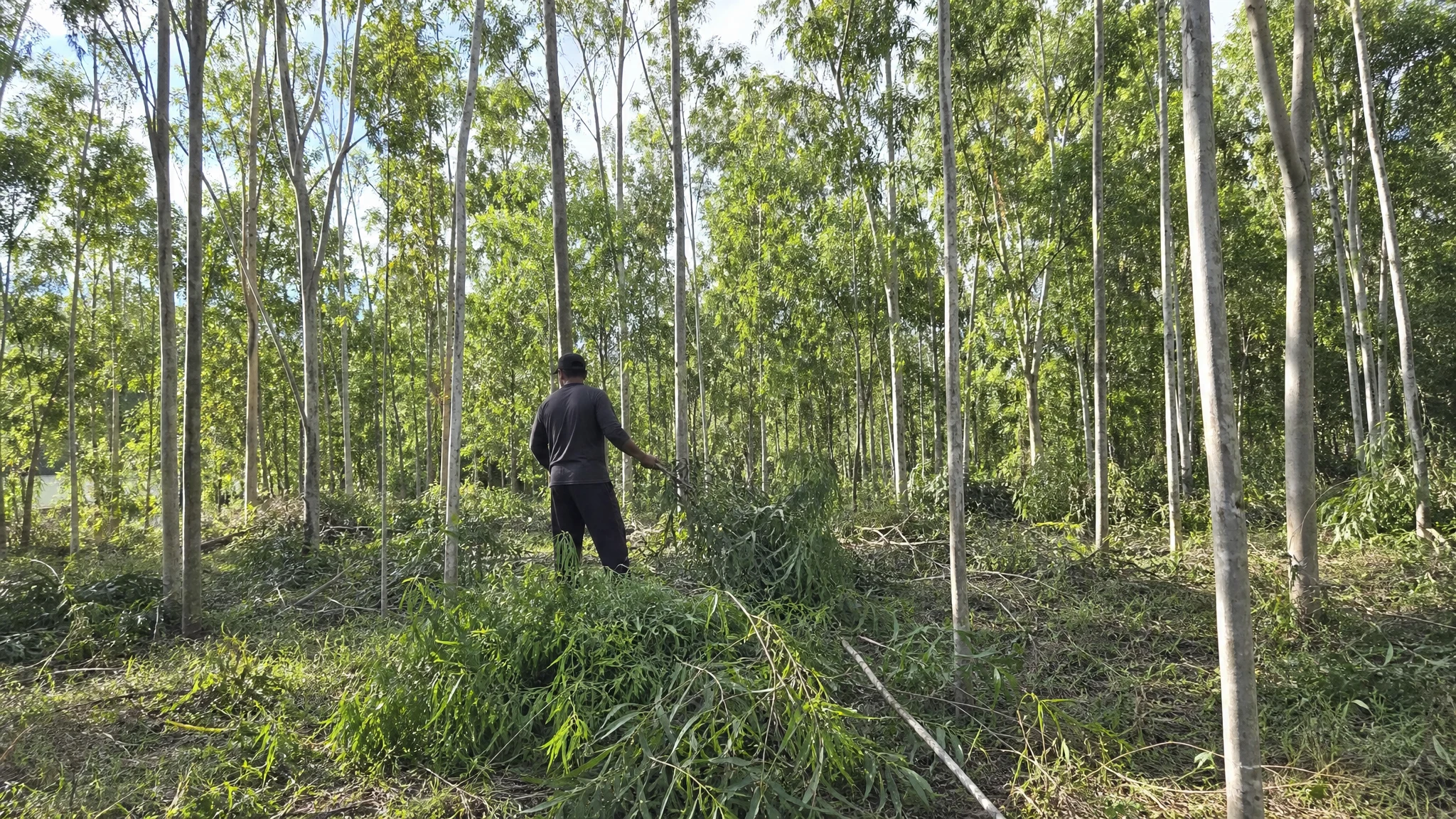
Where Cajeput Oil Comes From and Why Country Isn't Enough
"Indonesian" on a cajeput label sounds like a grade, the way "Italian" sounds like a promise on a bottle of olive oil. It is not one. A country name tells you roughly where the leaf grew, and almost nothing about what is in the bottle, which is the part that decides how the oil smells and behaves.
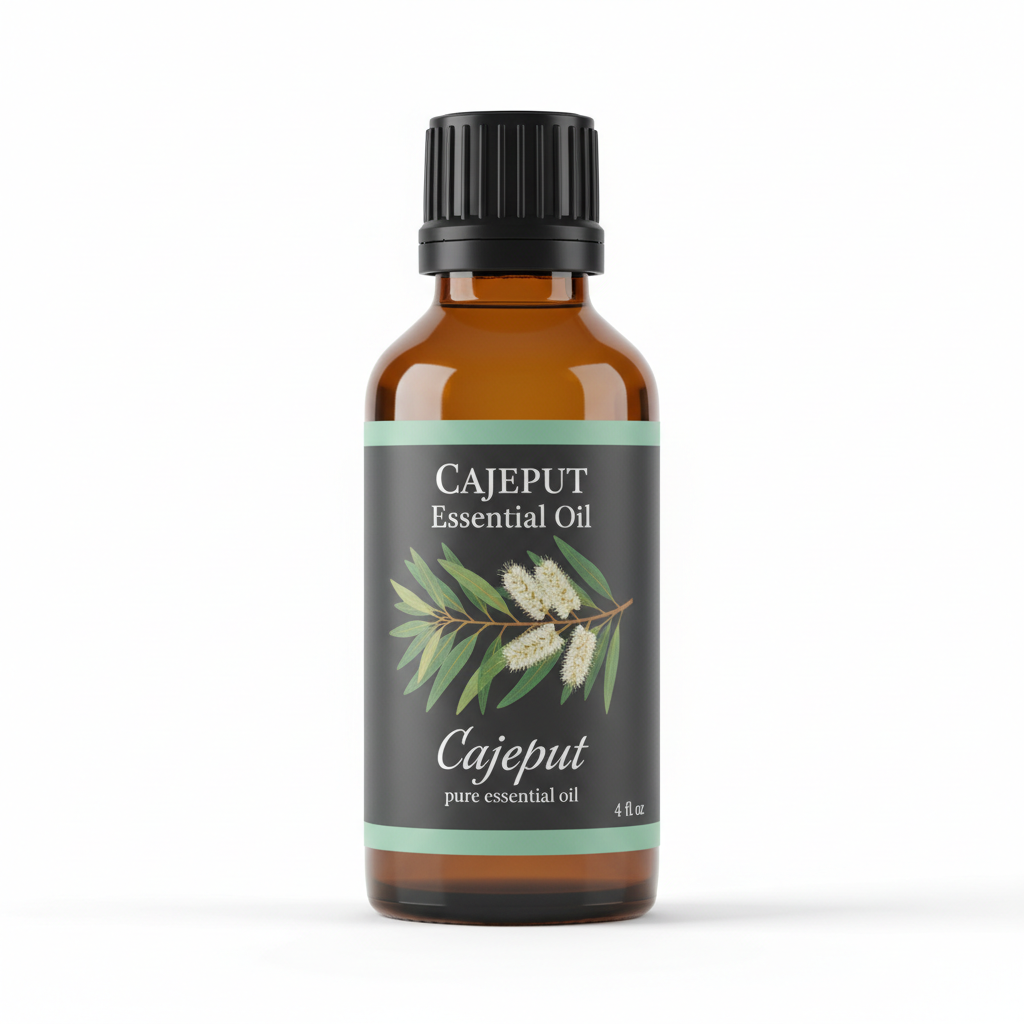
Cajeput Essential Oil
Our own Cajeput Essential Oil, in sizes from 0.5 oz to bulk.
From $10.99
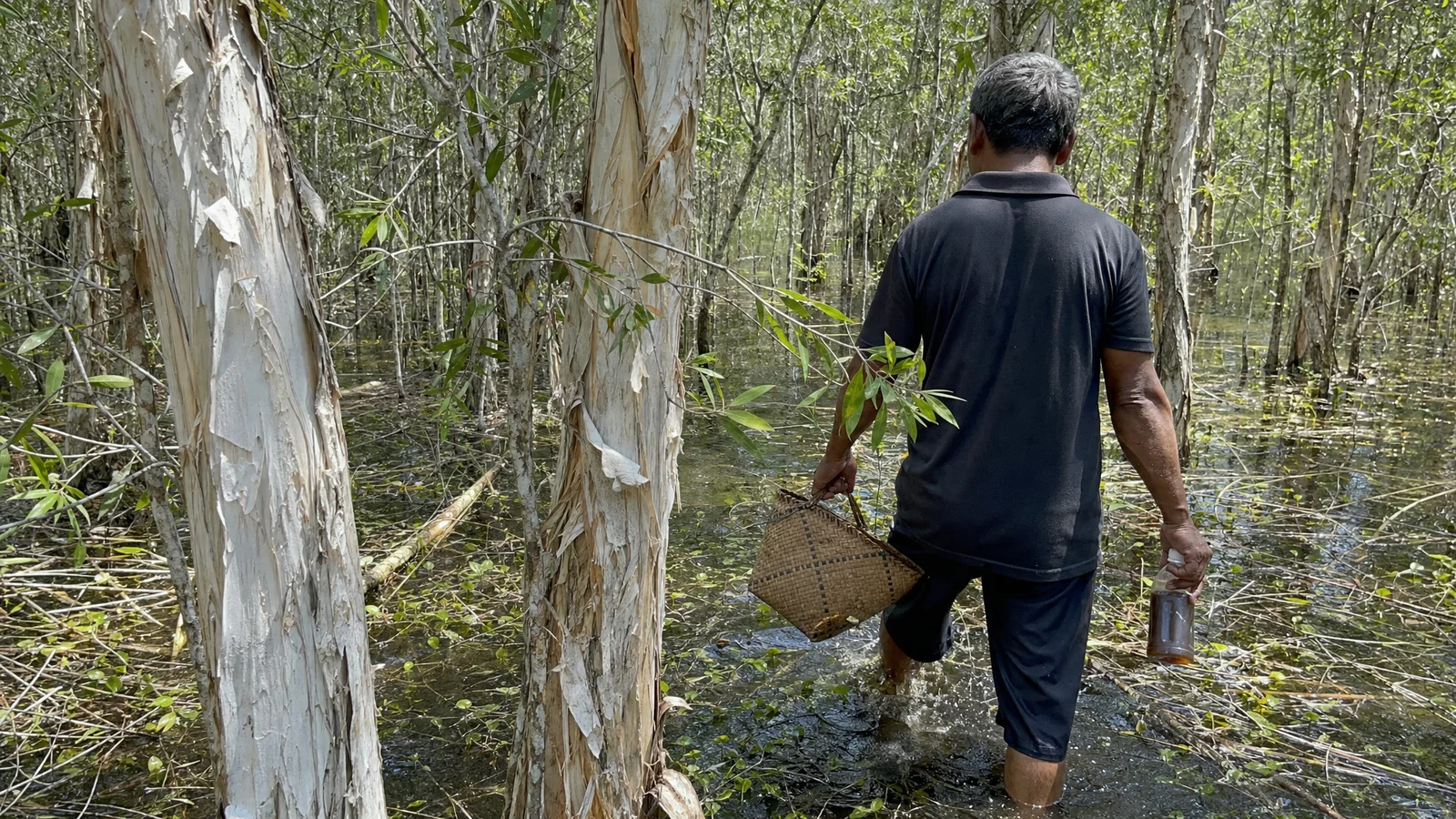
Shop Now →We understand the pull of a place name. A bottle that says it came from a tropical coast feels more romantic than one that does not, and we feel it too. Paperbark trees standing in wet ground behind the shoreline is a lovely image. But the picture in your head and the liquid in the bottle are two separate things, and the second is the one you will actually smell and use.
Why country and chemistry do not line up
Cajeput oil is built around 1,8-cineole, the cool, camphor-like molecule that gives the oil its sharp top note. How much of it you get varies with the species mix, the plant part, the still and the lot, and the published analyses do not sort themselves neatly by country. One oil bought from a US supplier measured about 65% cineole. Leaves collected in Tamil Nadu, India, and distilled in a laboratory came in around 53%. A study of Thai material reported its main constituents without giving a cineole figure at all. Different countries, different methods, one sample each: none of them is "the" profile for its homeland.
Even regulators work around the problem. In its 2024 opinion on cajuput oil, the European Food Safety Authority notes that the oil may come from plants of different geographical origins, that leaves of Melaleuca cajuputi and Melaleuca leucadendra are commonly mixed before distillation, and that the composition can differ accordingly. Its five commercial batches ran from roughly 59% to 63% cineole against a specification of 50% to 70%. A range like that is the ordinary shape of a natural oil.
What the still adds
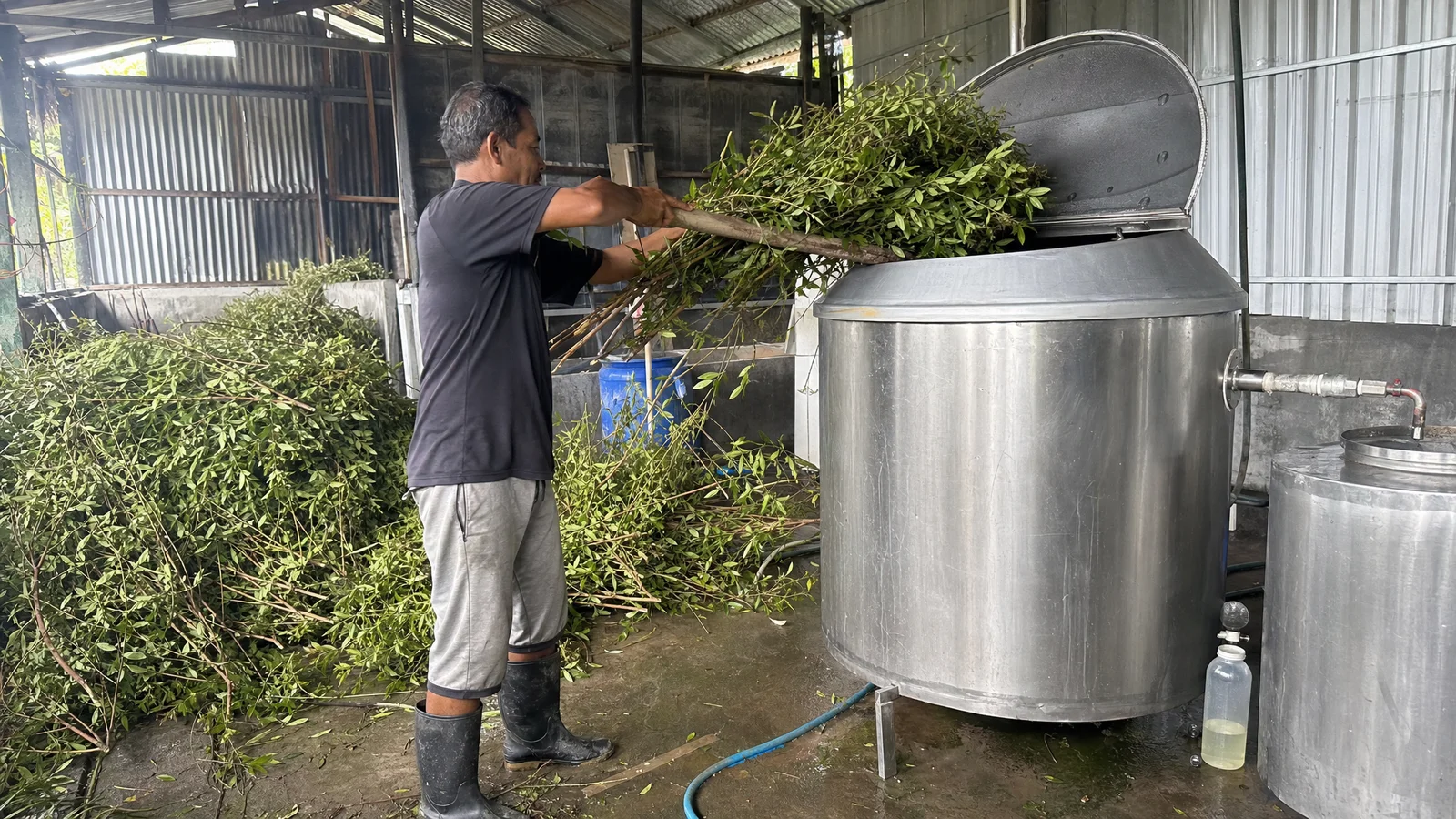
Method is the quieter variable. Two of the three analyses above were hydrodistilled by researchers, one for two to three days. A commercial run is steam-distilled, and cut points and run times change what ends up in the receiver. So a lab figure from a Thai or Indian sample tells you what that plant gave under those conditions, not what a bottle from any shop will hold. That is our own reasoning from the differences, and it is the main reason we would not trust a country-level ranking of cajeput oils. We could not find a peer-reviewed side-by-side of Indonesian, Vietnamese and Timorese oils, so we do not offer one.
What we say about ours
Indonesia is the origin we name for our cajeput, and we stop there: no province, no island, no claim of wild harvest. Our oil is steam-distilled from Melaleuca cajuputi. The Certificate of Analysis for our current batch gives appearance, aroma, relative density (0.906), refractive index (1.469) and optical rotation (+2.32 degrees), and the batch complies on each. Those are identity checks. If your project needs a cineole figure, ask us in writing through the contact page and we will tell you what we can provide for your lot.
If a particular named source appeals to you, our post on Buru Island cajeput looks at what the numbers do and do not show for that island, and minyak kayu putih versus cajeput essential oil untangles the Indonesian name.
How to get to know an oil yourself
The most reliable thing you can do with any oil is smell it with some care. Put a single drop on a paper strip, hold it a few centimetres away, and breathe normally. With cajeput you will meet a bright, cool opening first, then a softer, slightly fruity edge as it dries. Come back to the same strip after ten minutes and again after an hour, and write down what you notice. The point is to build your own reference, so that the next time you open a bottle of cajeput from anywhere, you have something to compare it with. Smell tells you what a country name never could.
Three better questions than "where is it from?"
- Which species and which part of the plant? A seller who writes Melaleuca cajuputi has committed to something checkable. "Cajeput" alone has not.
- Which lot is this? A figure only means something tied to a lot number, so a cineole percentage with no lot behind it is decoration.
- What can you not tell me? A good answer names the country and then volunteers the gaps, such as species mix or distillation details.
For everyday diffusing, the country matters far less than you would think. What matters more is how you use it, and our dilution and patch-test guide covers that. Treat the origin on a label as the start of a conversation, and ask for the numbers behind it.
Cajeput Essential Oil
Cajeput Essential Oil from our own shop, in sizes from 0.5 oz to bulk.
From $10.99
Shop Now →Sources & Further Reading
- EFSA FEEDAP Panel, 2024. Safety and efficacy of a feed additive consisting of an essential oil derived from fresh leaves of Melaleuca cajuputi and Melaleuca leucadendra (cajuput oil). EFSA Journal. PMC11004901
- Vivekanandhan P et al., 2024. Biocontrol efficacy of cajeput oil against Anopheles stephensi. Front Physiol. PMC10941012
- Keereedach P et al., 2020. Antifungal activity of Thai cajuput oil. Int J Microbiol. PMC7803126
- Vázquez A, Tabanca N, Kendra PE, 2023. HPTLC analysis and chemical composition of selected Melaleuca essential oils. Molecules. PMC10180325