Organic Oil Labels Explained: What They Really Promise
"Organic" is one of the most persuasive words on an oil label and one of the least understood. It can describe how the plant was grown, how the oil was made, or simply a mood, and only one of those meanings comes with a legal definition you can check. If organic matters to you, a few questions will sort real claims from soft ones in under a minute.
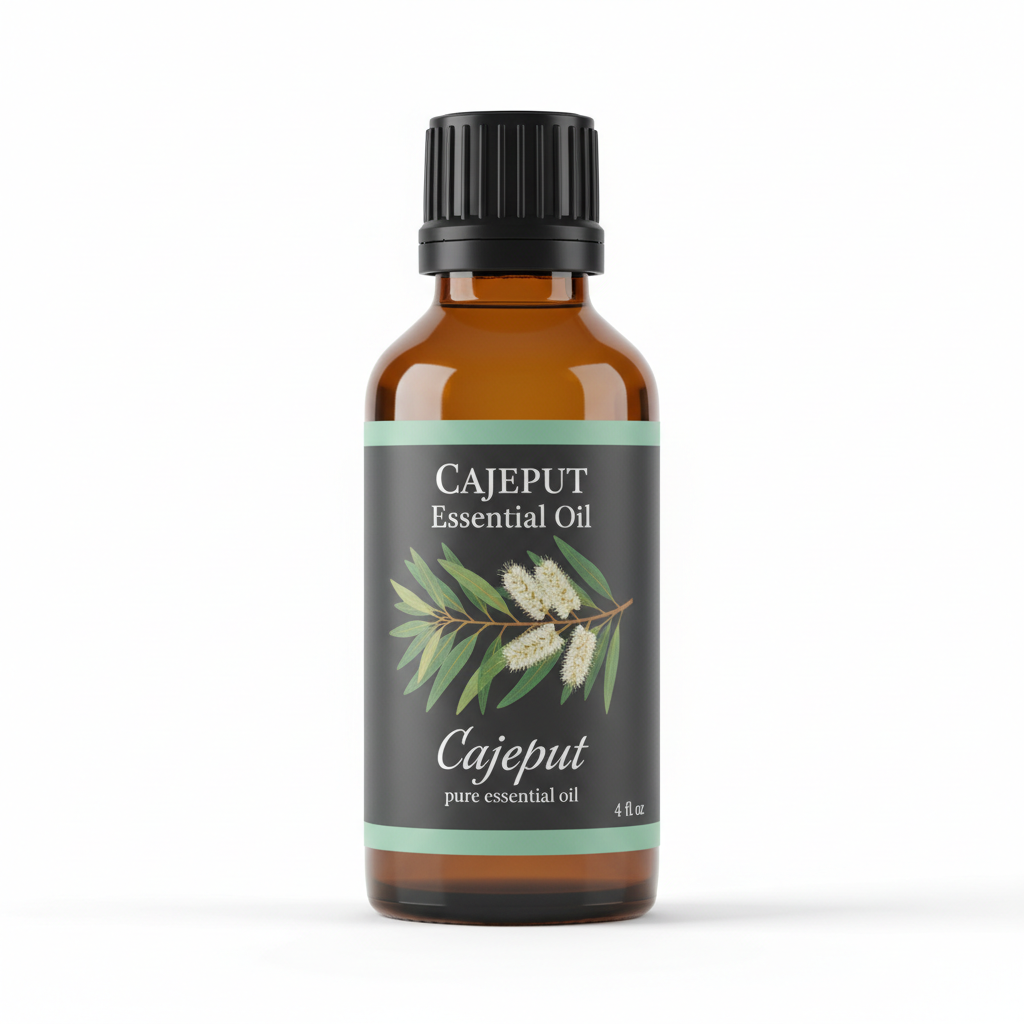
Cajeput Essential Oil
Our own Cajeput Essential Oil, in sizes from 0.5 oz to bulk.
From $10.99
Shop Now →First, where we stand: we do not label our cajeput oil organic and make no organic claim for it. We sell it neat and undiluted, with no additives or fillers, and we would rather say so plainly than let the word drift in by association.
Three phrasings that sound alike
Compare three things a label might say. "Organic oil" carrying the claim means every operation that produced or handled it was certified or legally exempt. "Made from organically grown leaf" is a statement about the plant material, in the seller's words. And "natural" is not defined for this purpose at all. They read as neighbours and prove very different things, which is why the exact wording is worth reading.
Why the distiller matters as much as the farm
US organic rules follow the whole chain. The regulation requires every operation, or part of an operation, that produces or handles agricultural products intended to be sold as organic to be certified, and its definitions count processing and handling as part of that. Reasoning from those definitions, turning leaf into oil is a processing step. A farm can hold a valid certificate for its leaf, and the finished oil still needs its own coverage for the steps after harvest. So the question to ask any seller is whose certificate covers the oil, not just the field.
What a certificate does and does not test
Certification is mostly an audit of how a system is run, with sampling added. Certifying agents must test residues periodically, and each year they must sample at least five percent of the operations they certify. That is a share of operations, not of bottles, so a certified oil has not necessarily been tested lot by lot. A certificate tells you the production system was audited. It is a production standard, and it says nothing about how an oil smells or how it performs, nor does it replace the safety guidance that comes with a concentrated essential oil.
Does organic mean residue-free?
The best comparison we could find is about orange oil, a different crop from cajeput, so take it as an illustration. A 2017 study measured 75 pesticides in 49 orange oils of known origin. A conventional oil contained on average 17 pesticides at about 5 mg per litre in total, while organic oils averaged 4 pesticides at under 0.1 mg per litre. So the organic label tracked a real difference, and "organic" still did not mean zero. We found no comparable survey for cajeput, so we do not guess how its residues behave.
Why we say it plainly
We would rather tell you exactly what is on the bottle than let a pleasant word do the work. Our cajeput is steam-distilled, sold neat and undiluted, with no additives or fillers. That is what we can say, so that is what we say. A label that stays close to what can be shown is easier to trust than one that leans on a mood.
A five-minute label exercise
Pick three bottles from your own shelf, of any kind, and read each label slowly. For every claim, write down what it actually says, who would have to stand behind it, and whether you could check it. You will find that some claims name a body or a document and some are simply descriptive words. Doing it once changes how you read every label afterwards.
And a question costs nothing. If a seller does not answer a polite, specific question about a claim, that tells you something too.
If organic is a requirement, how to shop
- Ask for the certificate itself, and check that it covers essential oils, names the product and is current.
- Ask which operation distilled and bottled the oil, since that step needs coverage too.
- Ask for a residue report for the lot, with the method and the list of pesticides screened.
- Decide what you are buying it for. For a scent in a diffuser, organic is a values choice and not a safety one.
If a USDA organic claim is a hard requirement for you, buy an oil that carries one. Our Certificate of Analysis covers appearance, aroma, relative density, refractive index and optical rotation for one batch, with no pesticide screen, so it is not the document to read for this question. For the other things a label can tell you, our buying checklist and origin guide are the place to start, and our sustainability post sets out what we can and cannot claim there.
These rules are US federal ones, and the EU and other countries run their own schemes, so a question about labelling for your own business belongs with a certifier or a lawyer. For everyone else, the useful habit is simple: read what the label says, then ask who stands behind it.
Cajeput Essential Oil
Cajeput Essential Oil from our own shop, in sizes from 0.5 oz to bulk.
From $10.99
Shop Now →Sources & Further Reading
- US eCFR. 7 CFR 205.100, What has to be certified. ecfr.gov
- US eCFR. 7 CFR 205.2, Terms defined. ecfr.gov
- US eCFR. 7 CFR 205.670, Inspection and testing of agricultural products to be sold or labeled as organic. ecfr.gov
- Fillatre Y, Gray FX, Roy C, 2017. Pesticides in essential oils: occurrence and concentration in organic and conventional orange essential oils from eleven geographical origins. Anal Chim Acta. PubMed 29054150