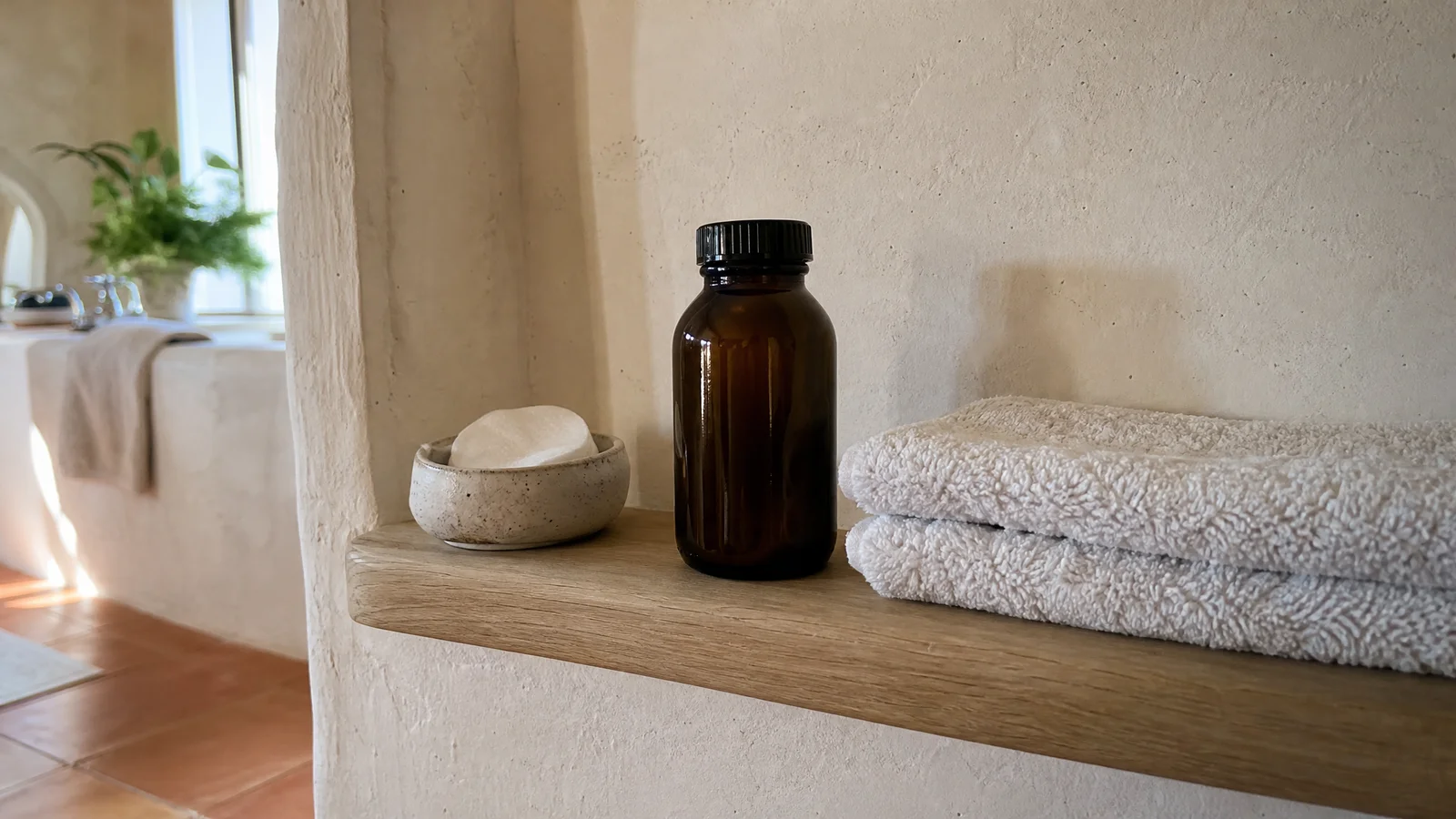
Cajeput Oil on Skin: Dilution, Patch Tests and Freshness
Cajeput is a concentrated oil, and the way to enjoy it on skin comes down to three habits: dilute it, patch test it properly, and keep the bottle fresh. None of them is complicated, and together they matter more than which carrier or recipe you pick.
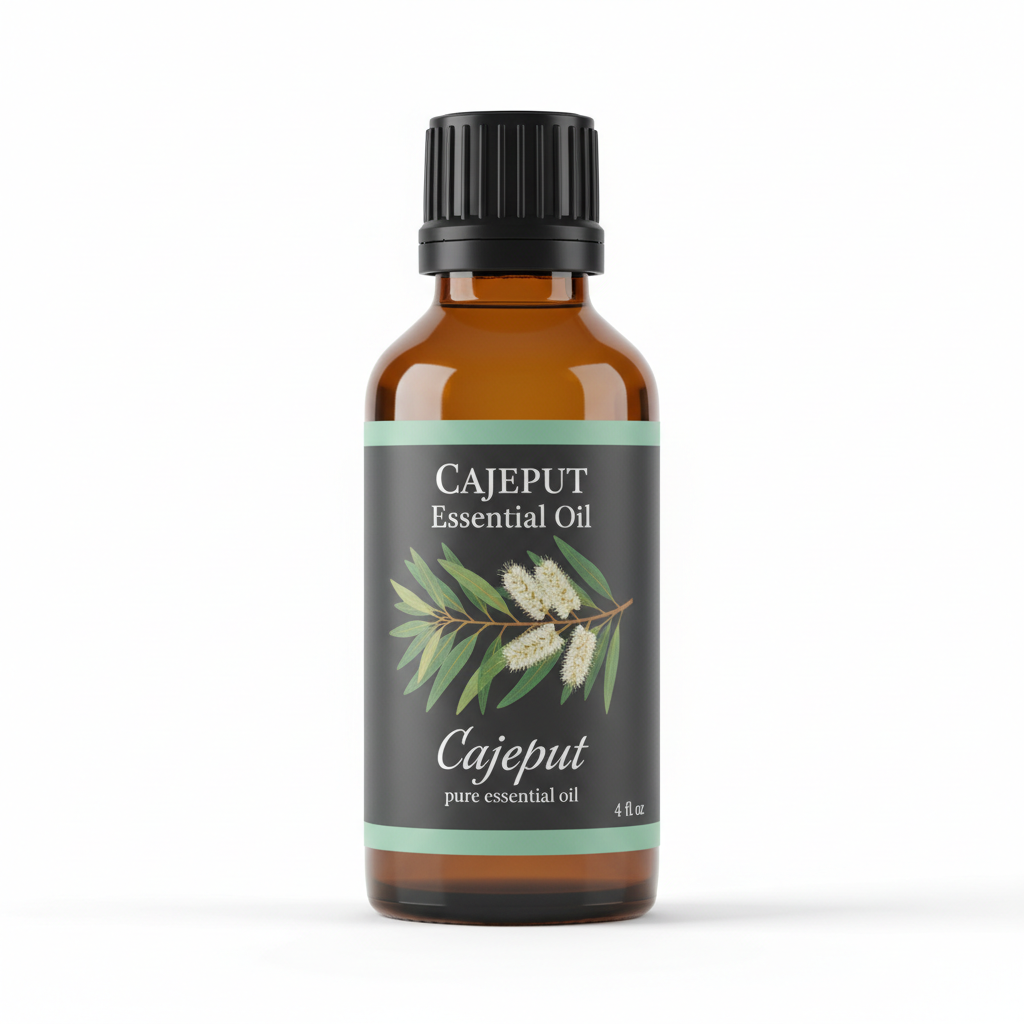
Cajeput Essential Oil
Our own Cajeput Essential Oil, in sizes from 0.5 oz to bulk.
From $10.99
Shop Now →Start with the dilution
We recommend 0.5% to 2% in a carrier oil such as jojoba or sweet almond, which works out to roughly 3 to 12 drops per ounce of carrier. For a face product we would stay at the low end; the Tisserand Institute gives 0.5% to 1.2% for facial use and 0.2% to 1% for sensitive or impaired skin (Tisserand Institute, dilution). The oil goes on skin only after it has been mixed into something, never neat. Our dilution guide has the arithmetic, and our carrier oil guide covers what to dilute into (we sell only the oil, so carriers come from a craft supplier or pharmacy).
If it helps, think of dilution as a small recipe you can write on the back of your hand. Pick the carrier first, measure out an ounce or less so you do not waste any, and add the drops slowly. Stir with a clean glass rod or a toothpick, then smell it. You should get a faint, cool brightness, not a sharp sting in the nose. If the scent jumps out at you, there is too much oil in it, and it is easy to start again.
A patch test takes two days, not two minutes
Irritation and allergy are different things. Irritation is the oil's direct effect on skin and shows up quickly. Allergic contact dermatitis is learned by the immune system and arrives later: DermNet NZ notes that allergic reactions usually take 48 to 96 hours to develop, and clinical patches stay on for 48 hours and are read around 96 hours (DermNet NZ). A quick dab on the wrist can tell you about the first and nothing about the second.
So the sensible routine is to put a little of the diluted oil on the inner forearm, leave it, and wait at least two days before using it more widely. If a rash appears, stop. A dermatologist can arrange formal patch testing, and that is better than testing yourself again.
Freshness matters more than most people expect
Here is the interesting part. EFSA's specification for cajuput oil includes limonene at 3 to 9% (EFSA FEEDAP Panel, 2024), and limonene is well studied on skin. When it is exposed to air it oxidises, and in a European study of 2,411 dermatitis patients, 2.6% reacted to oxidised limonene (Matura et al., 2006). A review of tea tree oil, a close relative, makes a similar point: allergic reactions can occur particularly if the oil is old (Nascimento et al., 2023).
No one has measured oxidation in cajeput itself, so this is reasoning from its makeup, but it points somewhere practical: a fresh, tightly capped bottle is a good bottle. We store ours the way we suggest you do, tightly capped in a cool, dark place, and our shop describes a typical shelf life of 2 to 3 years. Our label carries a lot number and dates so you can keep track. If an oil has changed smell or turned thick, keep it off your skin. Our storage guide has more.
Small habits that keep it pleasant
- Use clean, dry tools. Water in a bottle of oil is how things go off early.
- Make a small batch. A few weeks of a blend is plenty, and you can always make more.
- Label everything with the oil, the percentage and the date, so you never have to guess.
- Wash your hands after applying. Cajeput and eyes are not friends.
What EFSA's classification means for you
EFSA classes cajuput oil as an irritant to skin and eyes and as a skin and respiratory sensitiser, based on hazard data, with no dermal studies behind it. We read that as a good reason to treat the oil as a concentrated material and to dilute and patch test every time. Keep it away from eyes. People with eczema, a broken skin barrier, or a history of reacting to fragranced products should ask a dermatologist first, and cajeput is not for babies or young children (see our children article).
You will also see acne claims attached to cajeput online. The trials people cite were run on tea tree oil, a different Melaleuca with quite different chemistry, and we make no skin-condition claims for ours. For persistent or painful breakouts, a dermatologist is the right call. If you are choosing between the two for scent, our tea tree comparison is about aroma.
Dilute, wait, and keep the bottle in good shape, and cajeput is a pleasure to work with.
Cajeput Essential Oil
Cajeput Essential Oil from our own shop, in sizes from 0.5 oz to bulk.
From $10.99
Shop Now →Sources & Further Reading
- EFSA FEEDAP Panel, 2024. Safety and efficacy of cajuput oil for use in all animal species. EFSA Journal 22(4):e8732. PMC11004901
- DermNet NZ. Patch tests. dermnetnz.org/topics/patch-tests
- Tisserand Institute. Dilution guidelines. tisserandinstitute.org/safety/dilution
- Matura M et al., 2006. Not only oxidized R-(+)- but also S-(-)-limonene is a common cause of contact allergy in dermatitis patients in Europe. Contact Dermatitis 55(5):274-279. lup.lub.lu.se/record/685974
- Nascimento T et al., 2023. Review of tea tree oil properties and its use in acne. Antioxidants 12(6):1264. PMC10295805