Why Cajeput Oil Feels Cool on Skin in Massage Blends
Smooth a little diluted cajeput over your shoulders and you will feel a distinct coolness within seconds. It is one of the pleasures of the oil. It also invites a leap, from cool to relief, that the evidence does not make for us. Here is what is going on in the skin, what the research tested, and how to enjoy a scented rub sensibly.
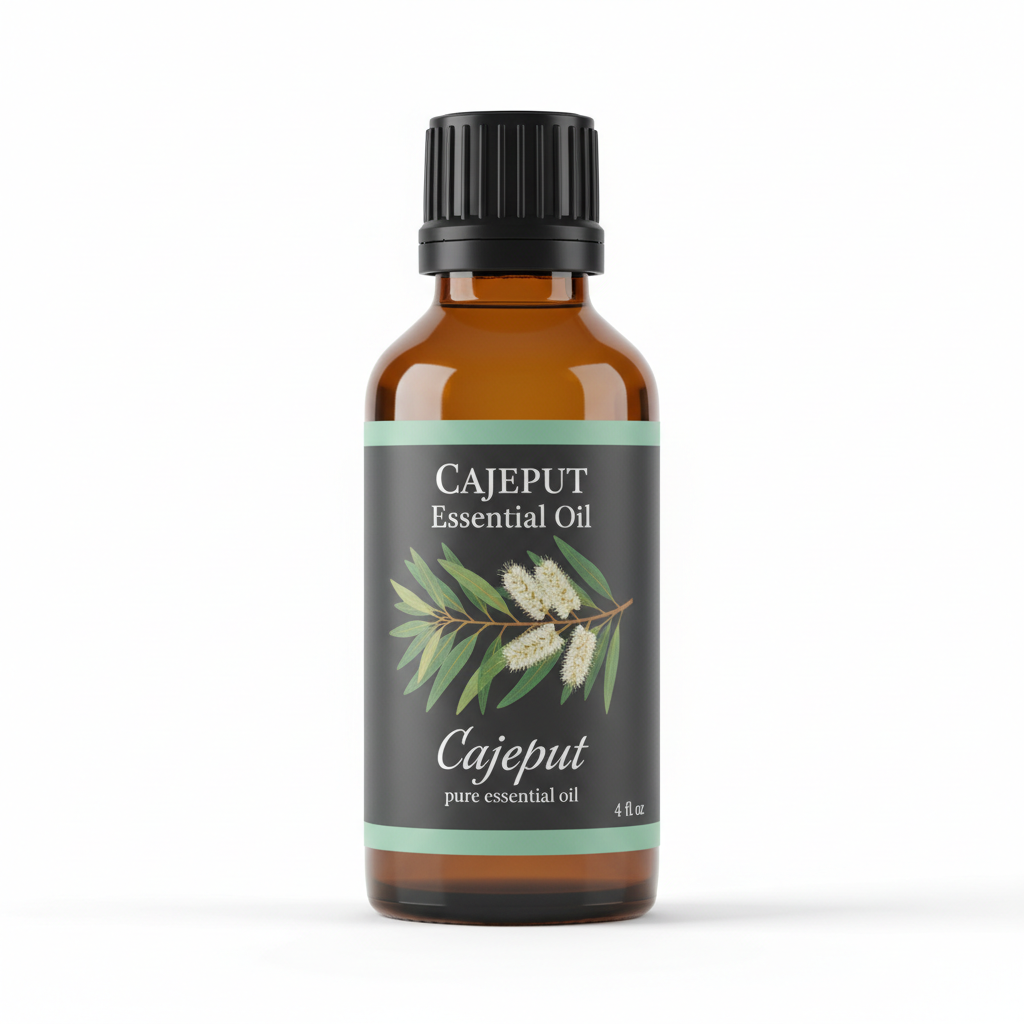
Cajeput Essential Oil
Our own Cajeput Essential Oil, in sizes from 0.5 oz to bulk.
From $10.99
Shop Now →Where the cool comes from
Your skin has temperature-sensing channels, and menthol famously switches on the one that detects cool. Research on 1,8-cineole, cajeput's main constituent, found that it also activates that cold-sensing channel, and that it dampens a second channel involved in irritation. Most of that work was done in cells grown in a dish. The human part was a small test on the necks of young men, where cineole took some of the sting out of other irritants (Takaishi et al., 2012). Nothing in that paper measured muscle soreness. So the coolness is a sensory event on the skin, a nice one, and it tells you little about what is happening in the muscle underneath.
If you have ever put menthol sweets in your mouth and felt the cool breath that follows, you already know the sensation. The nice thing about cajeput is that you can experience a gentler version of it on the skin without any promise attached. The first few seconds are the bright, camphor-edged part. Then it fades, and what remains is a faint, clean scent on your hands.
A little arithmetic
Our guidance for any skin use is 0.5% to 2% in a carrier oil. That figure is oil, not cineole. The oil assessed by the European Food Safety Authority in 2024 was specified at 50 to 70% cineole (EFSA FEEDAP Panel, 2024). Using that range purely as an illustration, a 2% blend would put roughly 1.0% to 1.4% cineole on the skin, and a 0.5% blend roughly a quarter of that. Batches differ, and the Certificate of Analysis we publish for one batch lists density, refractive index and optical rotation; if you want a GC-MS report for your lot, ask us in writing through the contact page before ordering.
The takeaway is that a diluted cajeput blend is a lightly scented massage oil. It is not a stronger or weaker version of the menthol rubs sold in pharmacies, and it would be a mistake to describe it as one.
What studies of rubs show
The closest well-studied class of products is the salicylate rub, which warms and reddens the skin. A Cochrane review pooled many trials and concluded that the evidence did not support topical rubefacients containing salicylates for acute injuries or chronic conditions (Derry et al., Cochrane). Salicylates are not cajeput, but the review is a useful reality check: a rub that feels strongly of something has not necessarily been shown to do something. We know of no trial of cajeput oil applied to muscles, so we make no claim about muscles or pain.
Practical habits for a scented rub
The European Food Safety Authority advises treating cajuput oil as an irritant to skin and eyes and as a skin and respiratory sensitiser, which shapes the habits we suggest. Stay within 0.5% to 2%, patch test first (the dilution and patch test guide walks through it), keep it off broken skin and well away from the eyes, and skip tight wraps or heat packs over a freshly oiled area, since they hold the oil against the skin. If you have reduced feeling in your skin, for example from diabetic neuropathy, a cool or warm sensation is an unreliable guide, so ask your physician first. If you are pregnant or breastfeeding, ask your OB-GYN or midwife. If pain follows an injury, comes with swelling, numbness or fever, or does not settle, see a physician or physical therapist. A pharmacist can tell you what is in any over-the-counter rub you already own.
Setting the mood for a scented massage oil
The pleasure of a massage oil is as much about the ritual as the ingredient. Warm the carrier bottle in your hands for a minute before you pour, so the oil feels comfortable on the skin. Smooth it on slowly and notice how the cool scent opens up and then settles. A small amount goes a long way, and the lightly scented oil is just as nice on a hand or a foot as on a shoulder. Wash your hands afterwards, before you touch your face or eyes, because cajeput is a sharp oil and a stray fingertip will tell you so very quickly.
Making one you enjoy
If you simply like a crisp scent in a massage oil, that is a cosmetic choice we are happy to support. Our massage oil recipe works through the percentage and how much to mix, and choosing a carrier oil helps with the base, which you will find at a craft or supply shop since we sell only the oil. We advise against use near the face of babies and young children because of the cineole content; see the children article for the reasoning.
Enjoy the cool tingle for what it is, a pleasant sign that the scent has arrived, and look to your pharmacist or physician for anything that actually aches.
Cajeput Essential Oil
Cajeput Essential Oil from our own shop, in sizes from 0.5 oz to bulk.
From $10.99
Shop Now →Sources & Further Reading
- Takaishi M et al., 2012. 1,8-cineole, a TRPM8 agonist, is a novel natural antagonist of human TRPA1. Mol Pain 8:86
- EFSA FEEDAP Panel, 2024. Cajuput oil as a feed additive. EFSA Journal 22(4):e8732
- Derry S et al. Topical rubefacients for acute and chronic musculoskeletal pain in adults. Cochrane Review