8 Cajeput Oil Myths, Sorted Out
One small word on a label can do a lot of quiet work. "Pure" sounds like a full answer about what is in a bottle, but it is really just a seller's word, and most of the myths about cajeput oil grow in the space between that word and the facts. Here are the ones we hear most, sorted out in a friendly way.
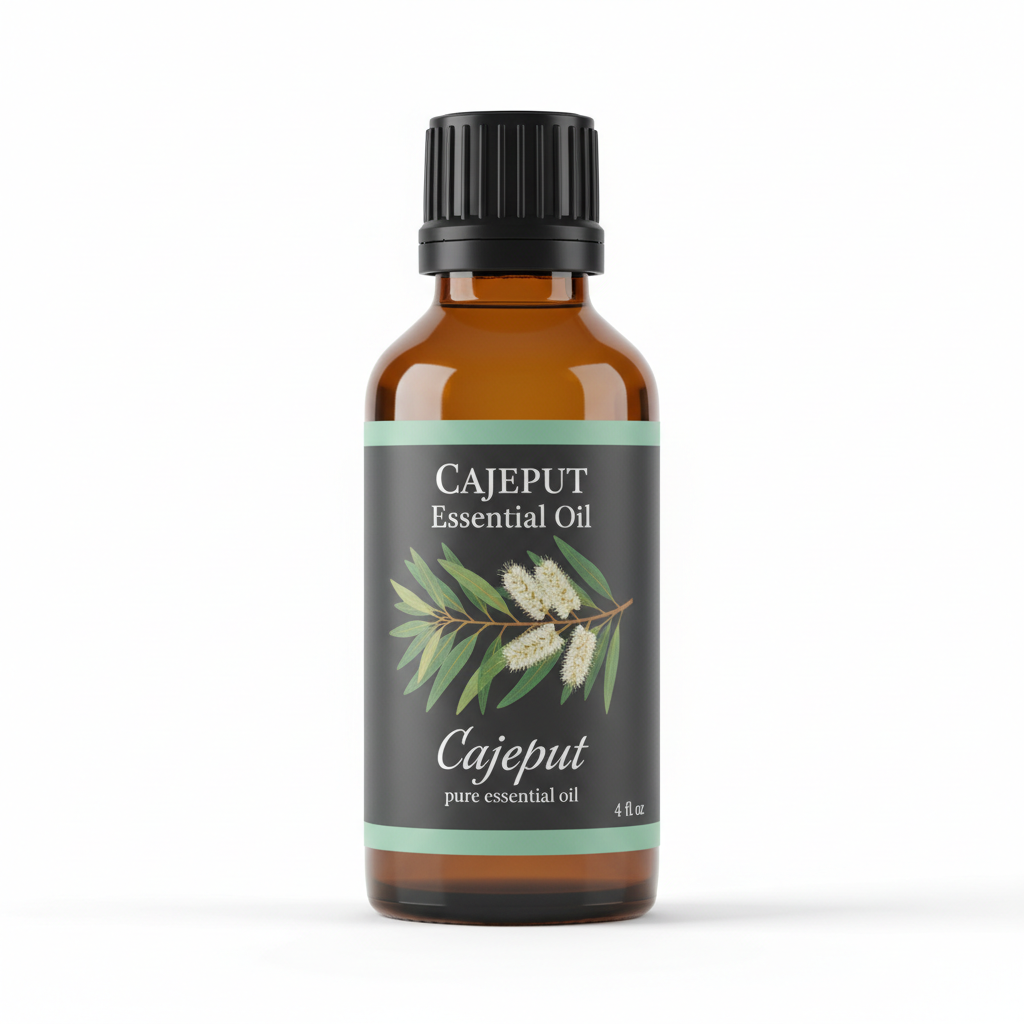
Cajeput Essential Oil
Our own Cajeput Essential Oil, in sizes from 0.5 oz to bulk.
From $10.99
Shop Now →Myth: a "pure cajeput" label tells you what is inside
A label tells you what a seller chose to write. A 2026 Indonesian study found that cajuput oil finished products on the local market did not meet the national standard (SNI 3954:2014) even when sold as 100% cajuput oil, and the products appeared to include other oils such as eucalyptus, anise and turpentine (Tjengal et al., 2026). It describes a market, not any one shop, but it makes a good buying rule: look for batch-level paperwork. The Certificate of Analysis we publish for one batch lists density, refractive index and optical rotation, and if you want a GC-MS report, you can ask us in writing through the contact page before you order. Our quality checklist works for comparing any seller.
Myth: the botanical name guarantees the chemistry
It does not. The European Food Safety Authority's 2024 opinion describes cajuput oil from two species together, with 1,8-cineole averaging about 61% across five batches (EFSA FEEDAP Panel, 2024). Yet leaf from two villages on Seram island gave a cineole-rich oil from Melaleuca leucadendra and a methyleugenol-rich oil from M. cajuputi (Kapelle et al., 2026). Two villages cannot speak for the whole trade, but they show why a Latin name is where the questions start.
Myth: cajeput and tea tree are the same thing
They are cousins in one genus, not twins. They smell different, and their chemistry differs too. Tea tree is the better studied of the two, and research on it does not carry over to cajeput. Our side-by-side covers it.
Myth: natural means gentle
Plants make strong molecules. EFSA's panel concluded that cajuput oil should be treated as an irritant to skin and eyes and as a dermal and respiratory sensitiser. That is why we recommend diluting to 0.5% to 2% in a carrier, and it is why a patch test matters.
Myth: a dab on the wrist tells you it is fine
A quick dab checks for immediate irritation. Allergic reactions usually take 48 to 96 hours to appear, which is why clinics leave patches on for 48 hours and read them at 96 (DermNet NZ). A better routine is a small, diluted patch on the forearm that you leave for a few days. The full method, with the arithmetic, is in our dilution guide.
Myth: a diffuser is harmless because nothing touches your skin
Cajeput is high in cineole, and we suggest light diffusion where children sleep and keeping the oil away from small children's faces. France's ANSES noted in 2020 that 1,8-cineole has been associated with neurological complications in children and that the data do not allow a safe dose to be set; that notice concerned oral food supplements, so it is a reason for care and not a limit on air. The bigger practical risk is access: Healthy WA reports that as little as 2 mL of eucalyptus oil, which shares the main component, can seriously poison an infant (Healthy WA). So keep bottles and diffusers out of reach. More in our children article.
Myth: wild is always better, and the trees are endless
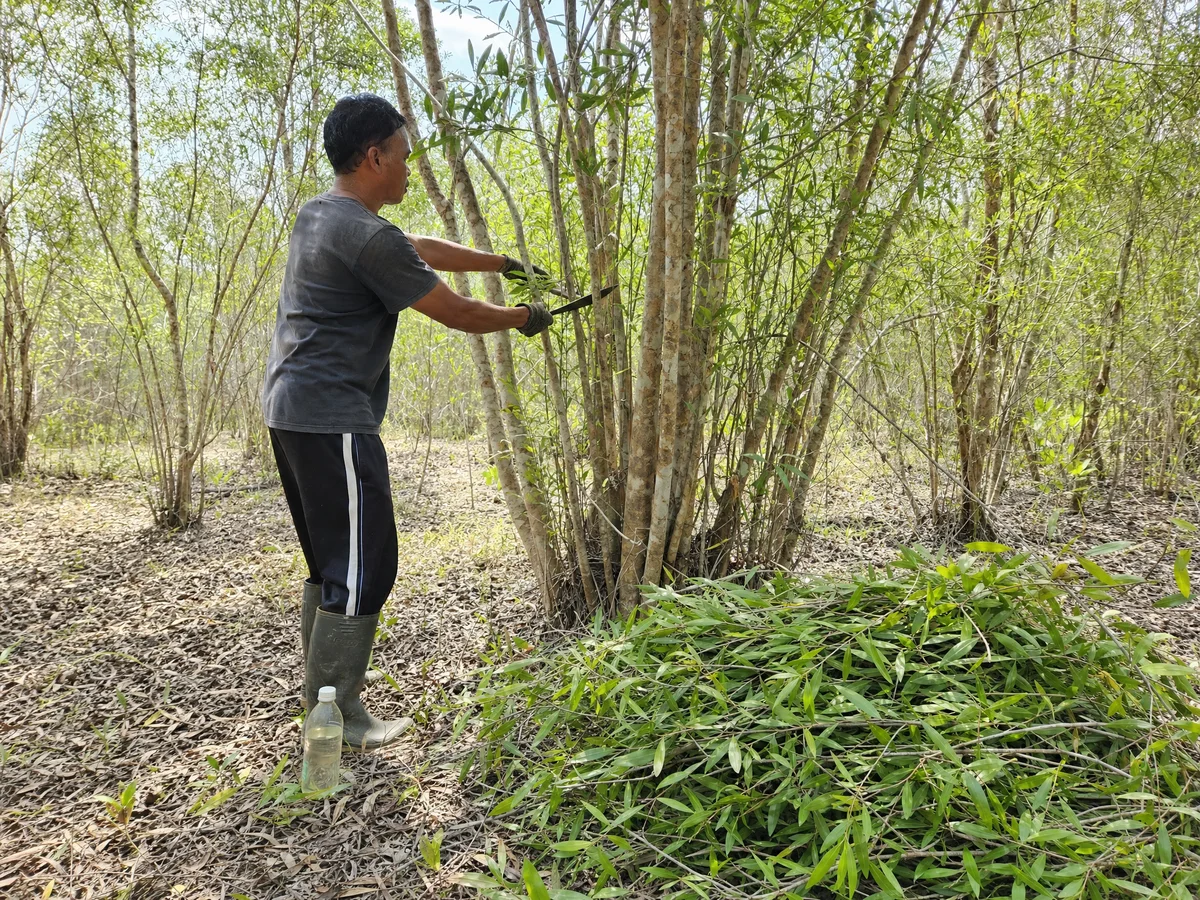
Researchers in Indonesia describe the main subspecies as occurring naturally on Buru, Seram and Ambon and cultivated in Java, with heavy use and poor management threatening genetic diversity in wild stands. They also call it a good example of successful domestication (Rimbawanto et al., 2021). So the story is more interesting than either extreme; our sustainability article has more.
Myth: it is a remedy
We sell cajeput as an aroma and cosmetic oil and make no health claims for it. Much of the research on cineole involves other species, other routes or the lab, and for anything about congestion, pain or skin trouble, a physician, pharmacist or dermatologist is the right person to ask.

How to tell a good source from a loud one
Myths spread because they are tidy. "Natural means gentle" fits on a bottle label, while "it depends on the species, the lot and the dilution" does not. When you read something about cajeput that sounds wonderful, look for the details that tidy claims leave out: the Latin name, the plant part, how the oil was used, and who actually studied it. If those are missing, treat the claim the way you would treat a recipe with no quantities, as an idea and not instructions.
A good habit is to enjoy the oil first and read about it second. Open the bottle, smell it on a paper strip, and notice what it does for you: the cool lift, the faint fruitiness, the way it fades quickly. That small, honest observation is the best antidote to a lot of the noise.
What holds up
Cajeput is a bright, camphor-edged aroma oil with a cool lift. It needs dilution and a proper patch test before skin use, it belongs away from small children and pets, and the thing worth checking on any seller's page is batch paperwork, not one adjective.
Cajeput Essential Oil
Cajeput Essential Oil from our own shop, in sizes from 0.5 oz to bulk.
From $10.99
Shop Now →Sources & Further Reading
- Tjengal B et al., 2026. Reverse engineering of cajuput oil finished product using the characteristics of various essential oil raw materials by principal component analysis. Indonesian Journal of Pharmacy (in press). journal.ugm.ac.id
- EFSA FEEDAP Panel, 2024. Safety and efficacy of cajuput oil as a feed additive. EFSA Journal 22(4):e8732. PMC11004901
- Kapelle IBD, Souhoka FA, Renur NM, 2026. Influence of species, growing site, and postharvest leaf handling on the yield and chemical composition of cajuput oil from Seram Island. EKSAKTA 27(3). eksakta.ppj.unp.ac.id
- DermNet NZ. Patch tests. dermnetnz.org
- ANSES, 2020. Food supplements containing tea tree, niaouli and cajeput essential oils: their misuse can be dangerous. anses.fr
- Healthy WA. Essential oils. healthywa.health.wa.gov.au
- Rimbawanto A, Kartikawati NK, Latumahina F, 2021. Conservation and utilization of Melaleuca cajuputi subsp. cajuputi in Moluccas Island, Indonesia. IOP Conf Ser Earth Environ Sci 800:012040. iopscience.iop.org