Solid Cologne With Cajeput: A Simple 1% Recipe
Cajeput smells like a cool, bright morning with something fruity underneath, and that is exactly the character a solid cologne bar does well: a small tin that you rub on a pulse point and carry anywhere. Most recipes say "20 drops in a few tablespoons" and never tell you the strength. Here the strength comes first, and the scale does the rest.
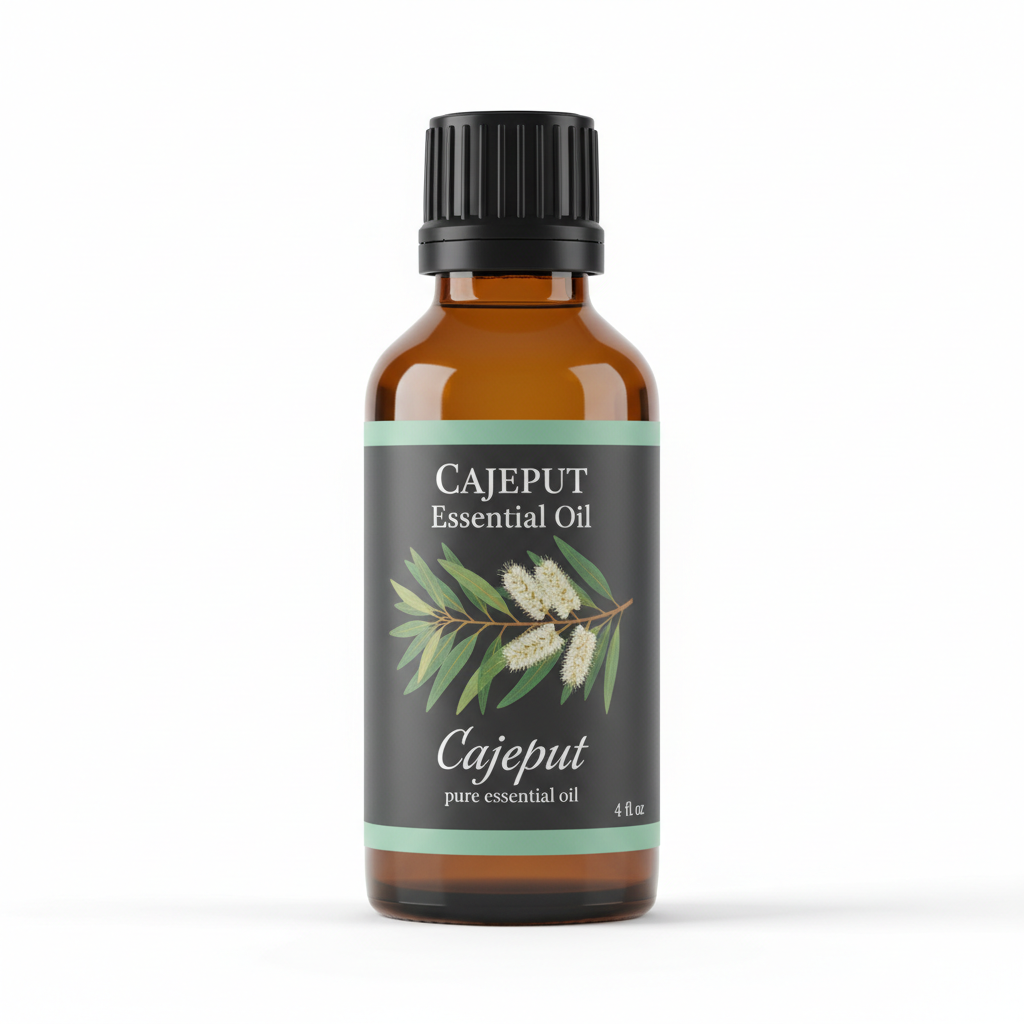
Cajeput Essential Oil
Our own Cajeput Essential Oil, in sizes from 0.5 oz to bulk.
From $10.99
Shop Now →Pick the strength before the dropper
We recommend diluting cajeput to between 0.5% and 2% in a carrier before it touches skin, and patch testing first. A solid cologne is a leave-on product worn all day, so we aim for the lower half of that range. The formulation below uses 1%, with 2% as the ceiling. The Tisserand Institute makes the general point that "dilution and risk are directly related", and advises against using any one oil above 5% for long stretches (Tisserand Institute). For something you may wear for years, a lower number is simply the kinder choice.
It is also a matter of taste. Cajeput is a sharp top note, and if you want it to read louder, a second scent underneath gives you more than a higher percentage will.
The formulation, by weight
For a 100 g batch:
| Ingredient | Grams | Share | Role |
|---|---|---|---|
| Beeswax pellets | 30.0 g | 30% | sets the firmness |
| Shea butter | 25.0 g | 25% | softens and spreads |
| Jojoba oil (or fractionated coconut oil) | 44.0 g | 44% | keeps the bar from going brittle |
| Cajeput essential oil | 1.0 g | 1% | the scent |
For a 2% bar, use 2.0 g of cajeput and take 1.0 g off the jojoba. The wax, shea and jojoba come from a cosmetic-ingredient or craft supplier. The proportions are a sensible starting point and not a fixed law: more beeswax gives a harder bar, more oil a softer one, so expect to nudge it after the first pour.
Turning grams into drops
One gram of cajeput is the dose, so weigh it if you can. The batch on our Certificate of Analysis has a relative density of 0.906, which makes 1 g about 1.1 ml. The Tisserand Institute's drop-size review puts drops per ml at roughly 20 to 40, so 1.1 ml could be anywhere from about 22 to 44 drops. That factor of two is why "20 drops" can never tell you its own strength. If you only have a dropper, 22 to 33 drops is a reasonable stand-in for the 1% bar, but do not count drops for the 2% version.
Making it
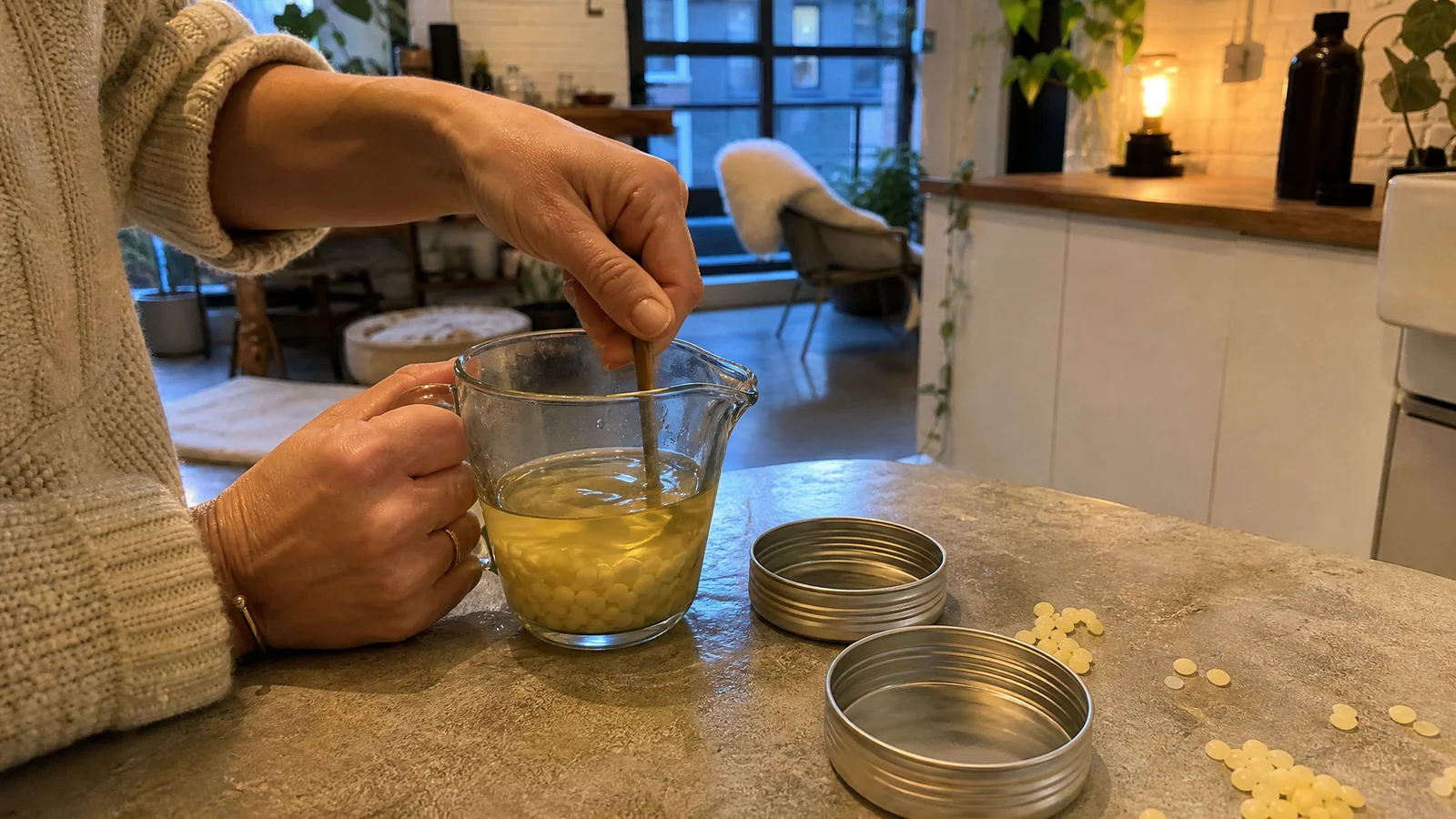
- Weigh the beeswax, shea and jojoba into a heatproof glass jar and warm it over, not in, simmering water until fully liquid. Keep flames and hot plates away from the open bottle of essential oil, which is flammable (Tisserand Institute safety guidelines).
- Take the jar off the heat and let it cool until it is pourable but no longer hot to handle. Because cajeput is a top note, and top notes are the first to drift off, stirring it in late keeps more of the scent.
- Add the cajeput, stir for a full minute and pour straight into tins.
- Let the tins set undisturbed, cap them and label them with the contents and the date.
Tins, texture and a first rub
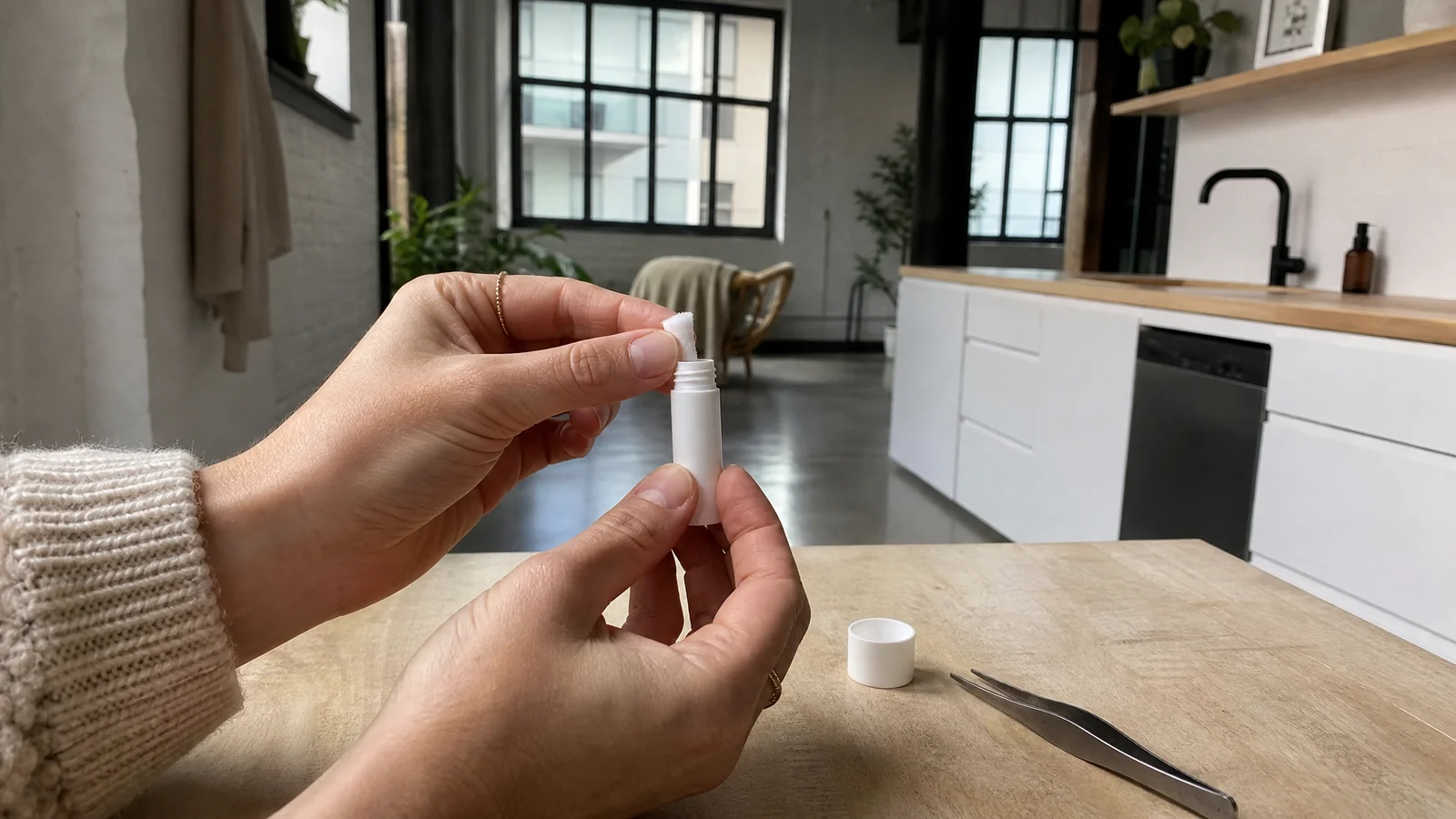
Small flat tins with a snug lid suit a solid cologne best, because the bar rides happily in a pocket or a bag. Once the bar has set, run a fingertip across it. It should glide with a little resistance, neither crumbling nor smearing. If it feels greasy, a touch more beeswax next time will firm it up; if it drags or flakes, a touch more jojoba will loosen it. Warm the surface with your fingertip first and dab, rather than dragging the bar across your skin.
Giving it company
A bar of cajeput alone is bright and brief. For a rounder scent, add one oil from a perfumery supplier to sit underneath it. We list eucalyptus, pine, lavender, citrus, rosemary and peppermint as good partners, and you will find those at a supplier of fragrance ingredients. Count the second oil into the total: 1% cajeput plus 1% of another oil makes a 2% bar. Check that oil's data sheet for its leave-on maximum and any light-exposure caution before you add it. Our cajeput and eucalyptus comparison and the blending guide show which accords suit it.
What to expect once it is on
Cajeput is a top note, so you will notice it brightest in the first few minutes: cool, a little fruity, very clean. After that it settles into a quieter, sweeter whisper close to the skin. That is the nature of the oil and not a fault in the bar. If you want more presence through the day, dab on a second time rather than reaching for a heavier hand with the dropper.
Before you wear it
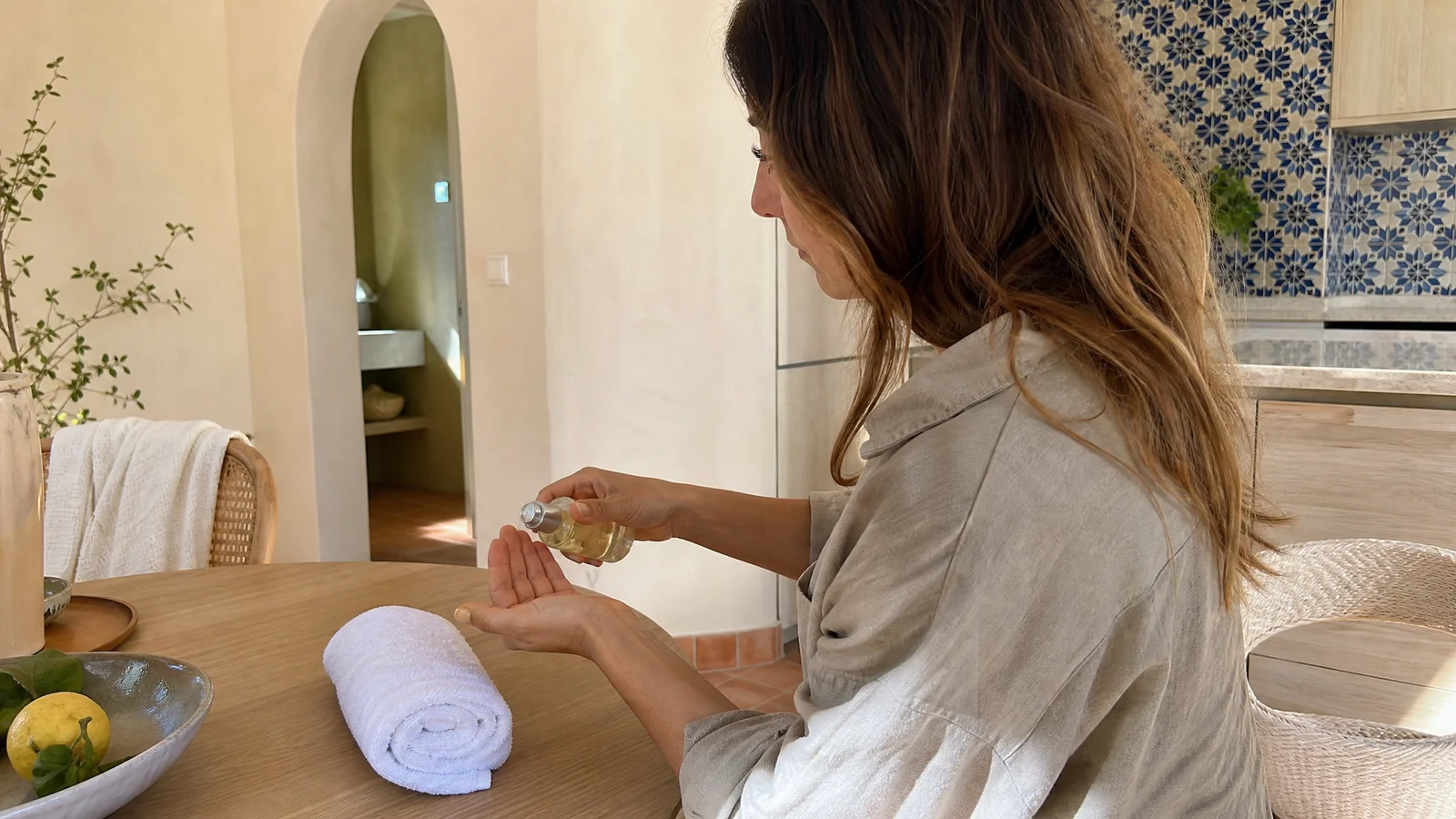
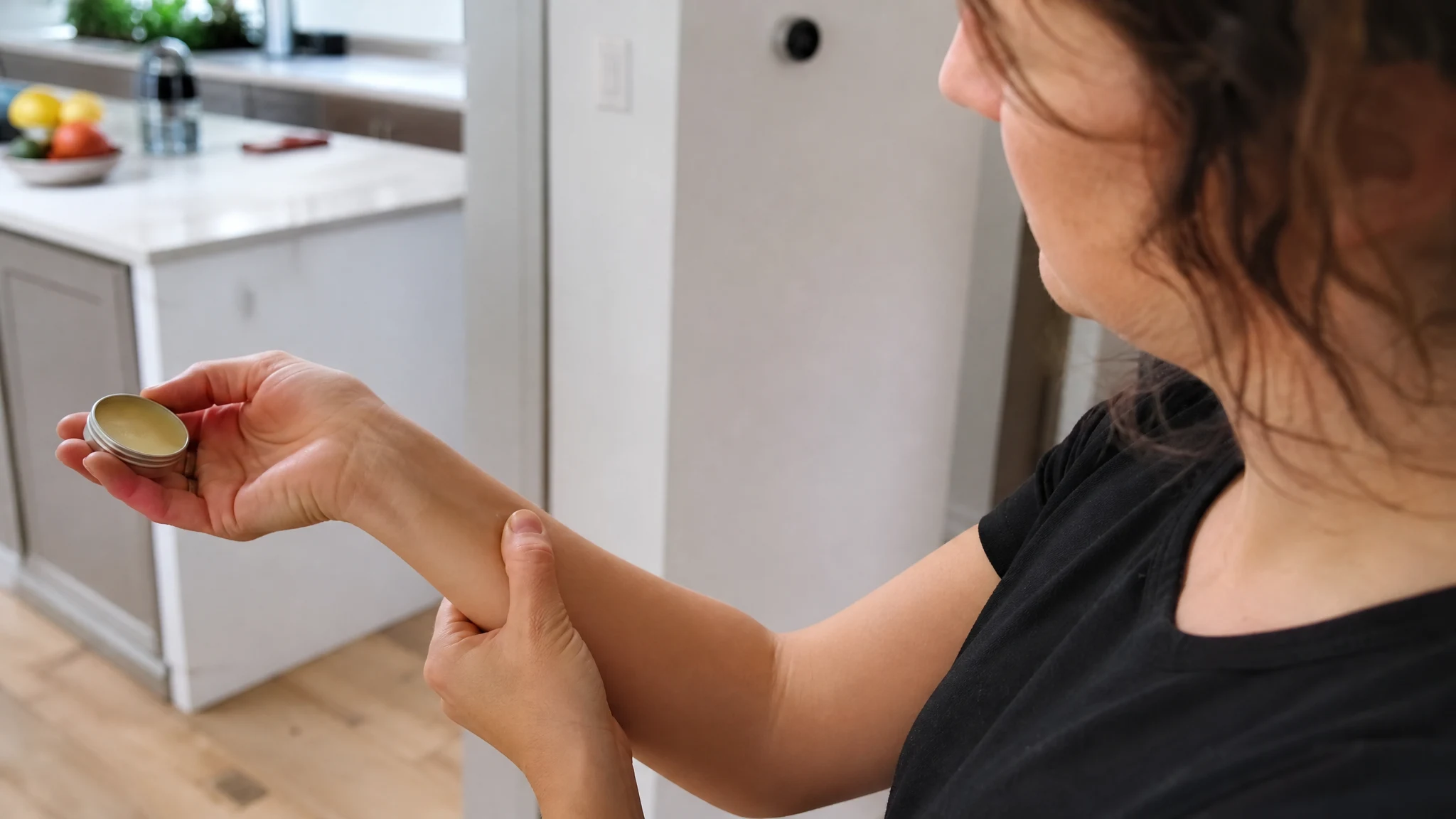
Smell a test strip of the set bar, because a melted mixture and a cooled bar smell different. Then rub a little on the inside of your forearm and wait a day or more. The Tisserand Institute notes that allergy often does not appear the first time an oil is used and that patch testing is not 100% reliable, so a clear patch is a reason to go ahead with care, not a guarantee. Stop if irritation develops, and keep the bar away from your eyes.
- If you have a tree-nut allergy, check the shea and any nut-derived carrier before you start; our carrier oil guide is a good place to start.
- If you are pregnant or breastfeeding, or have a skin condition, ask your physician, midwife or dermatologist first. What is actually known goes through it.
- We do not recommend cajeput for babies and young children, since it is high in cineole. France's ANSES advised against it for children and for pregnant and breastfeeding women in a 2020 notice on food supplements (ANSES). That notice was about oral products, so applying it to a skin bar is our caution rather than their finding.
- Keep the tin away from pets; our pets article explains why.
The simplest version is a plain 1% bar made once and worn for a week. If it feels thin, reach for a second oil instead of more cajeput.
Cajeput Essential Oil
Cajeput Essential Oil from our own shop, in sizes from 0.5 oz to bulk.
From $10.99
Shop Now →Sources & Further Reading
- Tisserand Institute. Irritation and allergic reactions. tisserandinstitute.org/safety/irritation-allergic-reactions
- Tisserand Institute. How big is a drop? tisserandinstitute.org/learn-more/drop-size
- Tisserand Institute. Safety guidelines. tisserandinstitute.org/safety-guidelines
- ANSES, 2020. Food supplements containing tea tree, niaouli and cajeput essential oils: their misuse can be dangerous. anses.fr