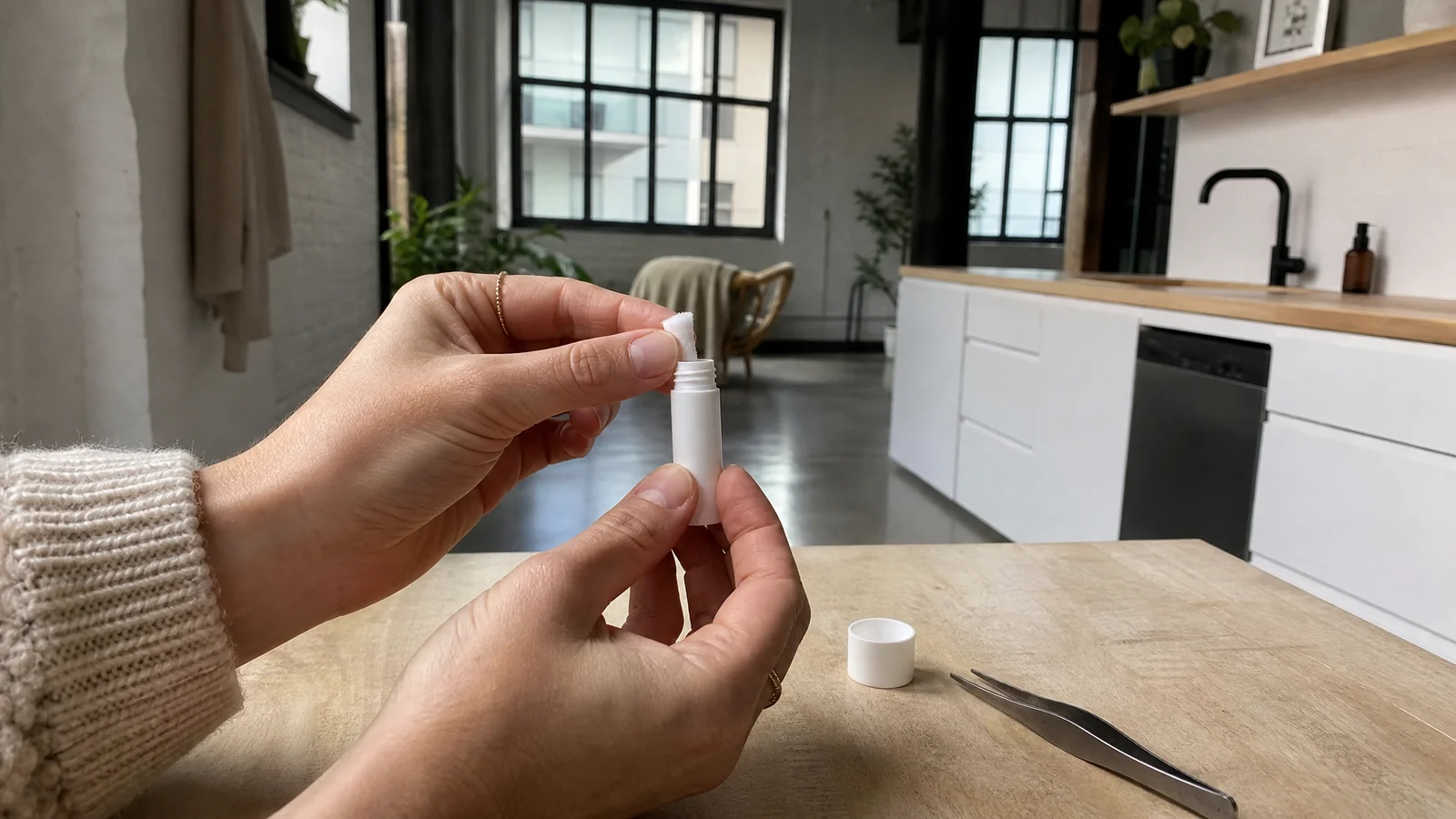
How to Make a Cajeput Scent Inhaler (Adults Only)
A scent inhaler is a small tube with an oil-soaked wick inside, and it is the easiest way to carry a sharp, clean cajeput aroma in a pocket. Every tutorial gives a confident drop count. The truth is that the wick decides it, and once you know that, you can make one in five minutes and get it right on the first try. This one is written for adults.
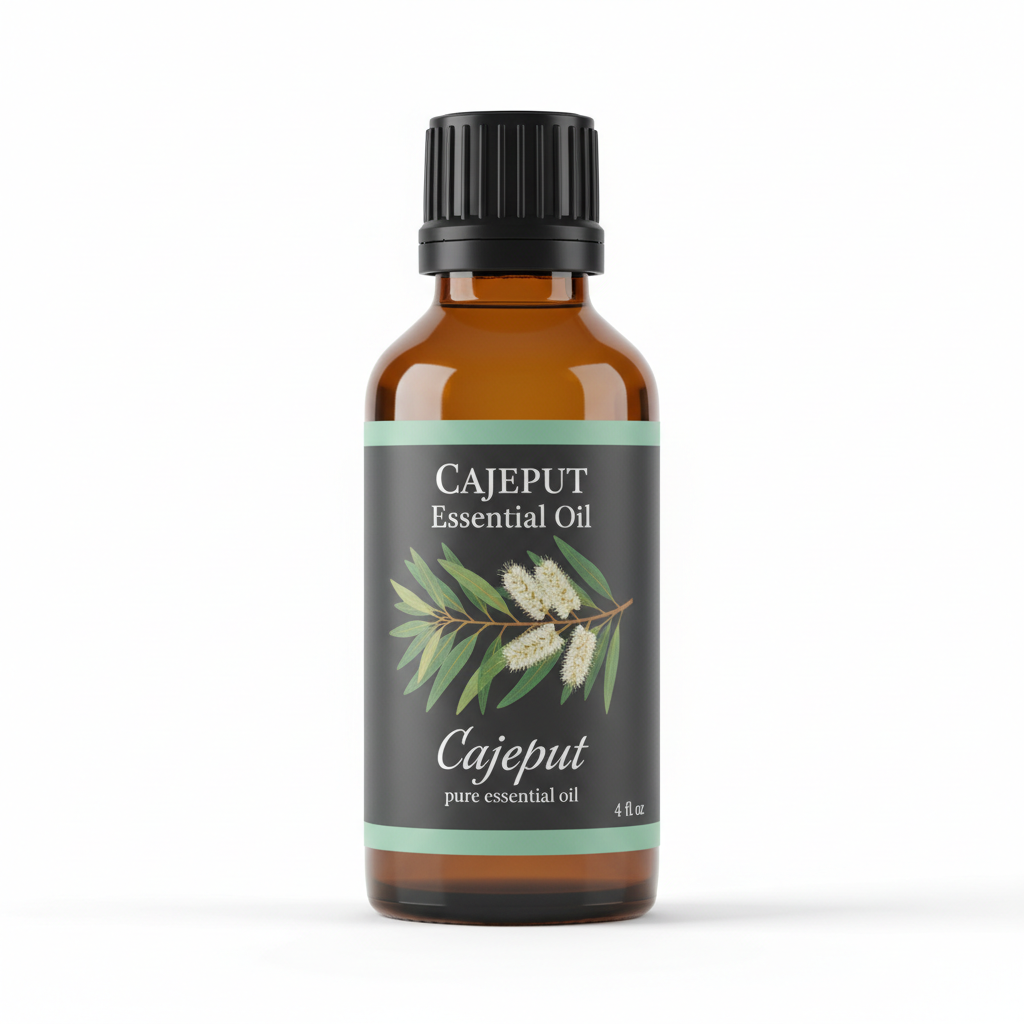
Cajeput Essential Oil
Our own Cajeput Essential Oil, in sizes from 0.5 oz to bulk.
From $10.99
Shop Now →Let the wick set the count
Drops are a loose measure. The Tisserand Institute reports that essential oil drops range from roughly 20 to 40 to the millilitre depending on the bottle and reducer, so ten drops from one bottle is not ten drops from another. A wick, on the other hand, is honest. Cotton or fibre takes up oil until it is full, and after that, extra drops pool at the bottom of the tube and run onto your fingers when you open it.
So treat the count as something you find. Drip the cajeput onto the wick one drop at a time and stop when it looks evenly dark with no bead sitting on the surface. Back off by a drop or two, and write the number on the label for next time. As a first guess on a standard wick, eight to ten drops is a sensible place to begin. Our own advice for skin is to dilute cajeput to 0.5% to 2% in a carrier, and a neat-oil wick is exactly why we say keep the oil on the wick and off your fingers and lips.
More oil is not a better inhaler
Cajeput's cool, sharp lift is partly a smell and partly a physical sensation in the nose. Its main constituent, 1,8-cineole (also called eucalyptol), is used in clinical nose testing as a stimulus for the trigeminal nerve, the one that carries cooling, tingling and burning sensations from the nasal passages (Garefis et al., 2024). That is a nice way to understand why the first sniff feels so fresh, and why a soaked wick pressed against the nostril drifts from fresh toward stinging rather than toward a richer aroma. So sniff from a few centimetres away.
It also explains why short and spaced sessions suit this kind of scent. In a study of people breathing cineole for a prolonged period, it was well absorbed, peaked in blood after about 18 minutes and took a couple of hours to clear (Jager et al., 1996). A few sniffs from a tube are a very different exposure, but a small pocket scent works best used lightly.
Building it
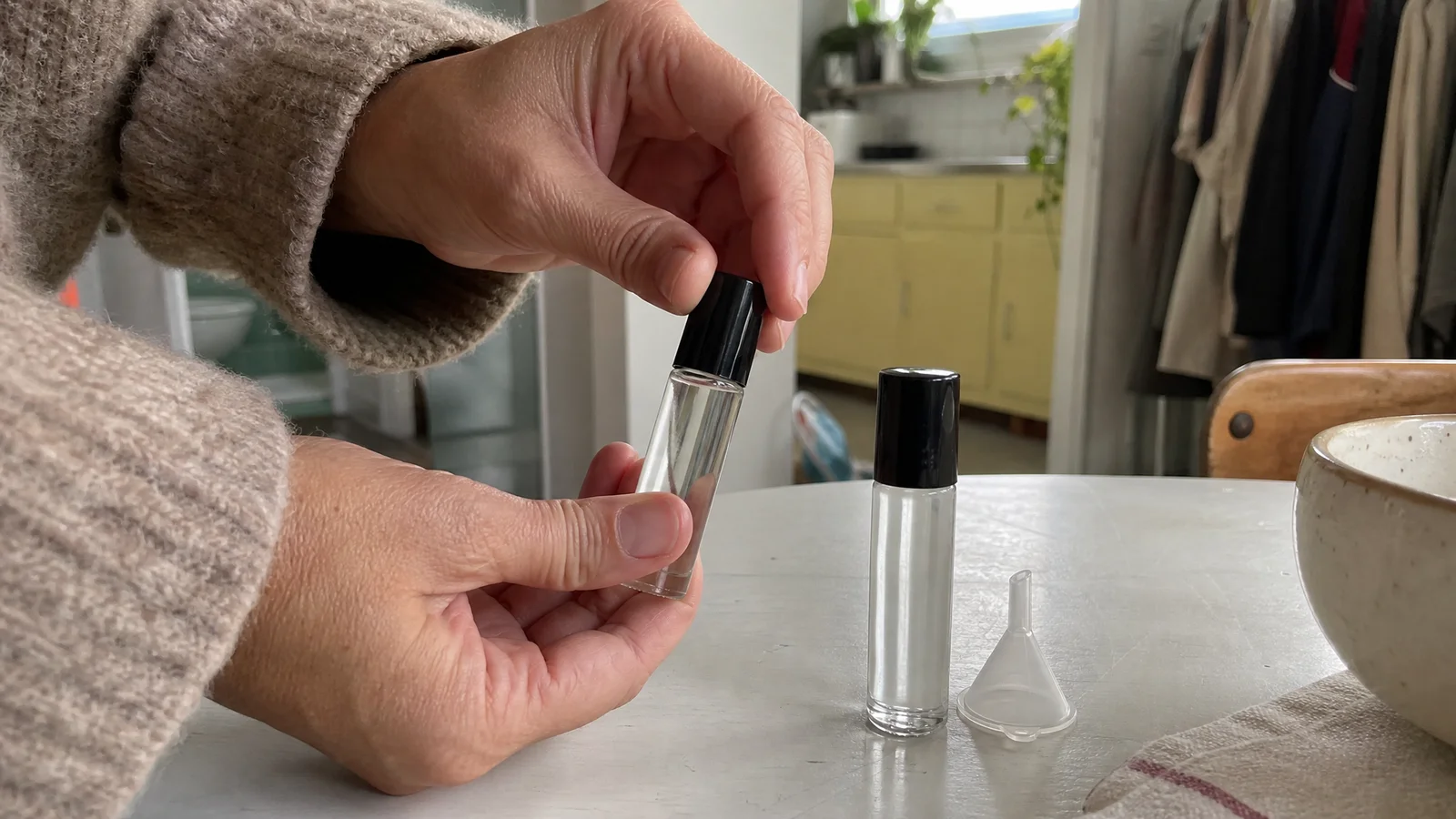
Inhaler tubes and blank wicks come from a craft or aromatherapy supplier. Look for a tube with an inner cap or wick holder that seals snugly, since a loose cap is the usual way the scent escapes.
- Set up on a glass dish or foil. Paper will pull the oil away from the wick.
- Drop the cajeput onto the wick, not into the tube, using the stop-when-dark method above, then cap the bottle.
- Slide the wick in with tweezers so your fingers stay clear, then close the inner cap and the outer cap.
- Label it straight away with the oil, the drop count, the date and "adults only, keep from children and pets".
- Test at arm's length. Bring it closer until the scent is clear. If your eyes water or your nose stings at normal sniffing distance, there is too much oil on that wick.
Our bottles carry the lot number, so noting it on the inhaler label means you always know which bottle it came from. An inhaler fades by evaporation, so when the scent gets faint, make a fresh one instead of adding more drops to an old wick. We say 2 to 3 years for the neat oil in a tightly capped bottle in a cool, dark place, and our storage article covers the bottle itself. Keep the tube out of a hot car and away from a pocket against warm skin, and if you are flying with one, our travel article has the rules.
Choosing a scent character
Part of the fun is deciding how you want the inhaler to feel. Cajeput on its own is cool, sharp and clean, and some people love it that way. If you prefer something softer, you can add a drop of a warm, sweet oil such as sweet orange to the wick, though we sell only the cajeput, so you would find the other oil elsewhere. Try each version on a separate wick and compare. It takes ten minutes, and you will know straight away which one you want in your bag.
Who it is not for
We do not recommend cajeput for babies and young children, or near a small child's face, because it is high in cineole; our children article has the background. Access matters as much as the oil: an Australian study of eucalyptus oil poisoning in under-fives found that about 74% of 109 cases got hold of it through a home vaporiser, often one sitting at floor level (Day et al., 1997). A different product, but the lesson carries: keep the inhaler capped and out of reach.
Keep it away from pets too, and ask a veterinarian about any animal in the home. If you are pregnant or breastfeeding, ask an OB-GYN or midwife first (our pregnancy article has the details). If you have asthma or reactive airways and a sniff makes you cough or wheeze, stop and ask your physician. We sell an external aroma oil, so for anything about congestion or breathing, a physician or pharmacist is the right person. Never chew, suck or mouth the wick, and if anyone swallows oil, call your poison center right away (in the US, 1-800-222-1222, per poison.org).
Used lightly, at a distance, and kept capped, a cajeput inhaler is a tiny, adult-only way to take that crisp paperbark scent with you.
Cajeput Essential Oil
Cajeput Essential Oil from our own shop, in sizes from 0.5 oz to bulk.
From $10.99
Shop Now →Sources & Further Reading
- Tisserand Institute. How big is a drop? tisserandinstitute.org/learn-more/drop-size
- Garefis K et al., 2024. Assessment of intranasal function of the trigeminal nerve in daily clinical practice. PubMed 38330928
- Jager W et al., 1996. Pharmacokinetic studies of the fragrance compound 1,8-cineol in humans during inhalation. PubMed 8866111
- Day LM et al., 1997. Eucalyptus oil poisoning among young children: mechanisms of access and the potential for prevention. PubMed 9270157
- National Capital Poison Center. Poison help line. poison.org