Cajeput Diffuser Blends: 3 Easy Ratios to Try
A well-mixed diffuser blend can still smell wrong if it runs for six hours in a closed room, and a plain cajeput session of forty minutes with a window ajar can smell wonderful. After enough of these, one lesson stands out: how you run it matters more than what is in the tank. So this post gives you three easy ratios and then spends its time on the habits that make them work.
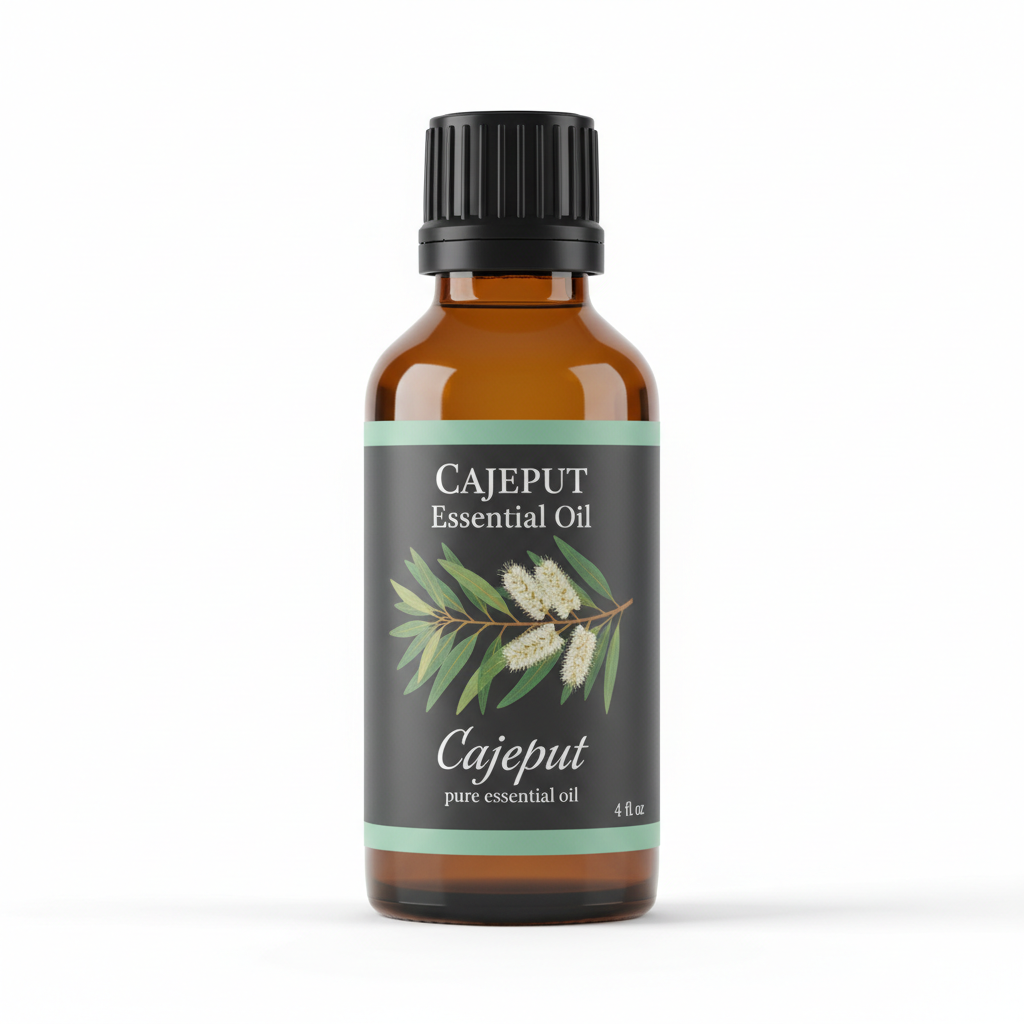
Cajeput Essential Oil
Our own Cajeput Essential Oil, in sizes from 0.5 oz to bulk.
From $10.99
Shop Now →Three ratios, written in parts
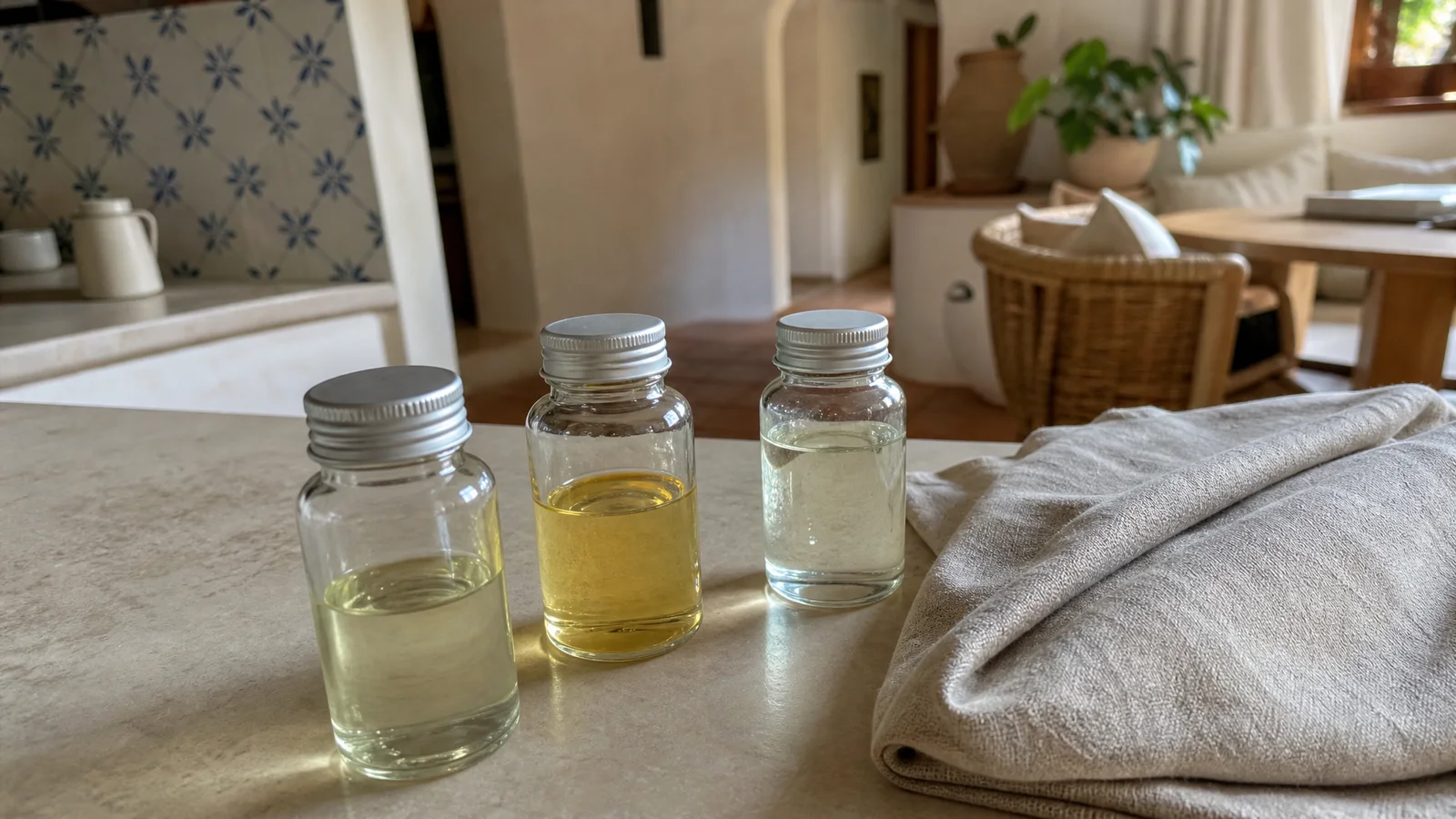
We sell one cajeput oil and no blends, so these are formulations built from how the scents behave, not recipes with a story behind them. Parts scale to whatever total your diffuser manual recommends, and they are steadier than drop counts, because drops run from roughly 20 to 40 per millilitre (Tisserand Institute drop size).
| Accord | Parts | What it aims for |
|---|---|---|
| Bright and cool | 1 cajeput : 3 citrus | Citrus leads, cajeput adds a cool top edge |
| Rounded and green | 1 cajeput : 2 lavender : 1 pine | Lavender softens, pine adds resin |
| Cold and clean | 1 cajeput : 1 peppermint : 2 lavender | Two cool oils held in place by a soft one |
Cajeput stays at one part because it is rich in 1,8-cineole, which averaged about 61 percent in five batches in the 2024 EFSA assessment. That is a general figure for cajuput oil, not a number for our bottle, but it explains why a little cajeput shapes a whole blend. When something smells sharp, the cure is nearly always less cajeput.
What each blend smells like
Bright and cool is the most cheerful of the three. Expect citrus first, juicy and sparkling, with cajeput slipping a cool edge underneath. Rounded and green is softer and slightly herbal: lavender settles in, pine adds a little woodland depth, and cajeput sits on top like light on water. Cold and clean is the sharpest, a crisp, minty, breezy accord that lavender keeps from tipping into harshness.
Those are descriptions of how the oils tend to smell, not promises, because your nose and your oils will decide. Smell all three on paper strips before you commit a diffuser to any of them.
Short sessions, with breaks
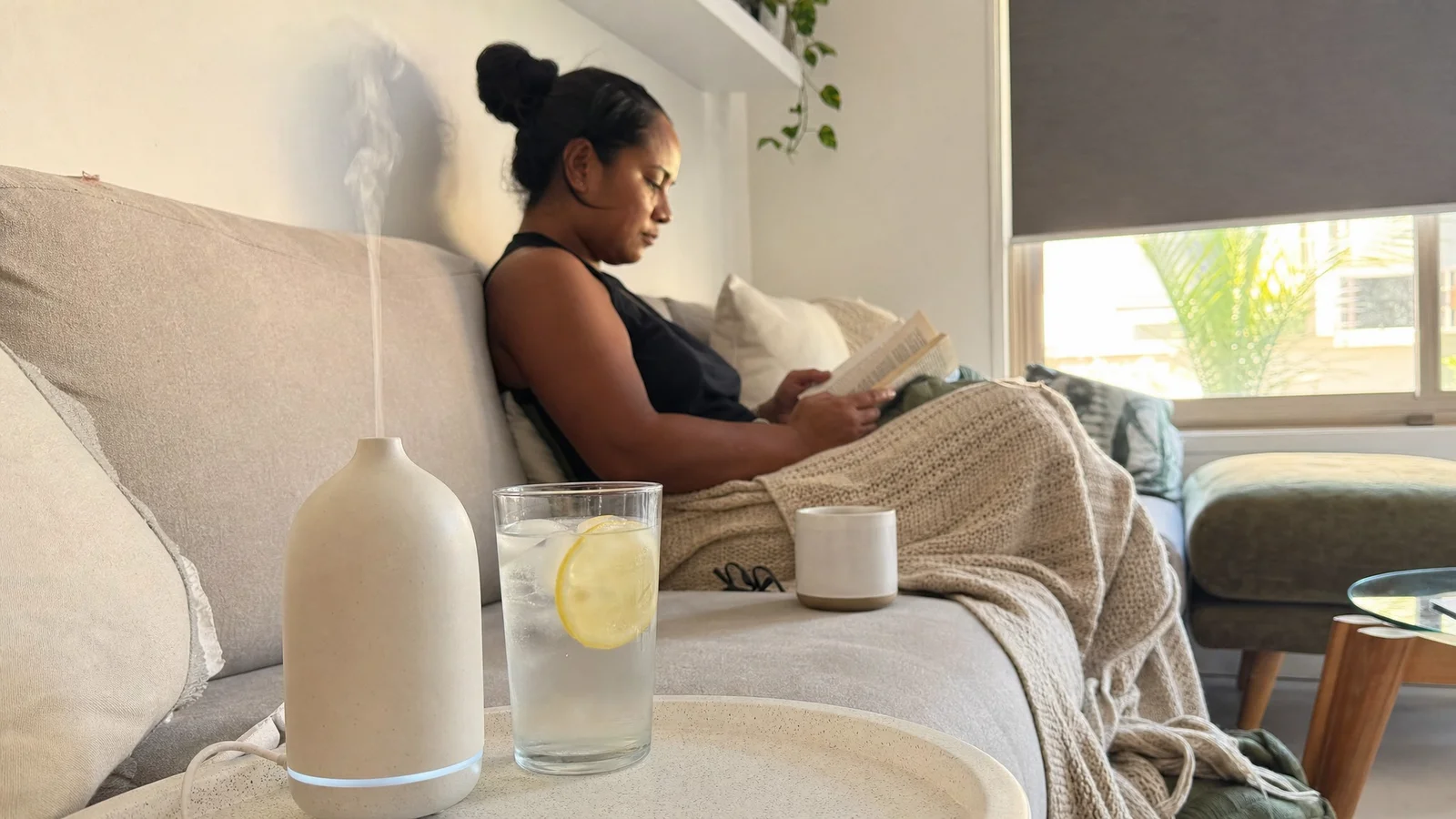
The Tisserand Institute's guidance is to diffuse for 30 to 60 minutes, then leave the diffuser off for 30 to 60 minutes, with fresh air coming in (Tisserand Institute safety guidelines). We would go further and pick the short end for a cool, strong oil like this one.
There is also a nose reason. After a while you stop noticing a scent, so it feels as though it has faded when it has not. The temptation is to add more, which is how rooms end up overscented. Step out of the room for a few minutes, then come back and judge it fresh.
Match the blend to the room
- Entry, kitchen, bathroom: rooms you walk through suit the bright and cool accord, run briefly.
- Home office: the rounded and green accord at the lowest setting, in intervals. We make no claims about focus; our look at the aroma studies explains what has and has not been tested.
- Bedrooms: we would leave the cold and clean accord out of a bedroom. That is a matter of scent taste, nothing more.
- Anywhere little ones sleep or play: skip it. Cajeput is high in cineole, which makes it unsuitable for babies and young children. Western Australia's health department notes that as little as 2 mL of eucalyptus oil, another cineole-rich oil, can seriously poison an infant (Healthy WA).
Fixing a blend that is not quite right
Say the rounded and green accord smells thin and sharp after twenty minutes, with the lavender hiding. Resist adding more of everything. Work in this order instead:
- Use fewer drops in total and run the diffuser for half the time. Weaker and shorter often cures "sharp" by itself.
- Smell again after twenty minutes. Top notes fade first, and the first minute is the least representative.
- If it is still sharp, drop cajeput to one part in six.
It also helps to watch the room as well as the device. A 2024 test-house study found that an essential oil diffuser, a terpene-rich cleaner and a citrus air freshener each raised indoor terpene levels to roughly 10 to 1,000 parts per billion (Patra et al., 2024). It did not test cajeput, but it is a reason to keep sessions modest and to open a window.
A little diffuser housekeeping
Tip out any water left in the tank when you finish and wipe it dry with a soft cloth. Old oil and stale water can leave a flat, off smell that no blend will fix, and your diffuser's manual will tell you how to clean it properly. A fresh start before each new accord means you smell the blend and not the leftovers from the last one.
Anyone with asthma, a history of reacting to fragrance, or who is pregnant or breastfeeding should check with a physician before diffusing, and a veterinarian is the right person for pet questions, which our pets post explains in more detail. Looking for other ideas? The blending guide goes wider.
Start small, smell again after twenty minutes and keep a note of what you used. Your own notes will teach you more than any recipe.
Cajeput Essential Oil
Cajeput Essential Oil from our own shop, in sizes from 0.5 oz to bulk.
From $10.99
Shop Now →Sources & Further Reading
- Tisserand Institute. Drop size: tisserandinstitute.org/learn-more/drop-size
- Tisserand Institute. Safety guidelines: tisserandinstitute.org/safety-guidelines
- EFSA FEEDAP Panel, 2024. Cajuput oil for use in all animal species. EFSA Journal 22(4):e8732: PMC11004901
- Government of Western Australia, Department of Health. Essential oils: healthywa.health.wa.gov.au
- Patra et al., 2024. Indoor nanocluster aerosol from scented volatile chemical products. ACS ES&T Air: pubmed.ncbi.nlm.nih.gov/39417158