Cajeput vs Rosemary Oil: Cool and Fruity or Herbal?
Hold a strip of cajeput under your nose, then one of rosemary, and you will understand why people lump them together: both are bright, cool and a little medicinal in the way a fresh herb bed is. They are not the same kind of oil, though, and the difference shows up the moment you try to buy a second bottle and get something that smells nothing like the first.
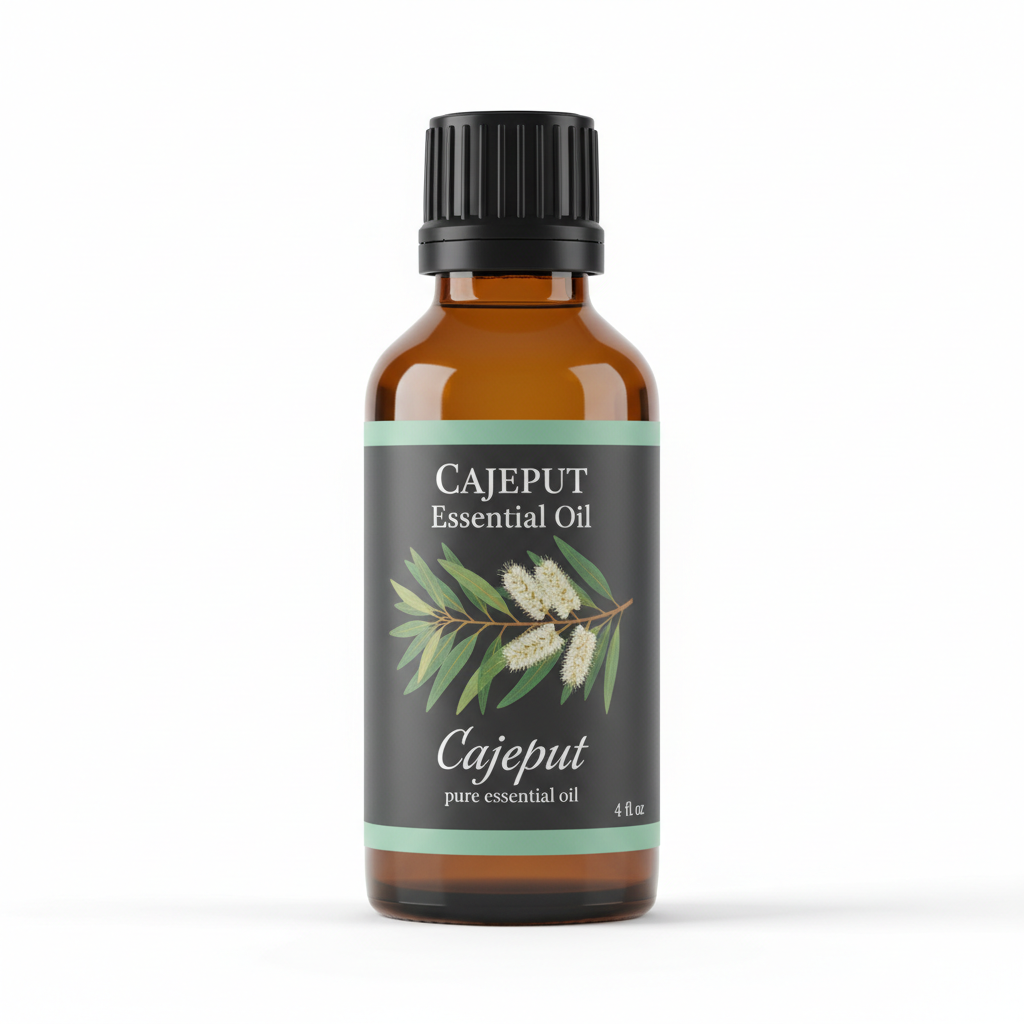
Cajeput Essential Oil
Our own Cajeput Essential Oil, in sizes from 0.5 oz to bulk.
From $10.99
Shop Now →One name, several rosemaries
Rosemary is the trickier of the two. The same plant, Salvia rosmarinus, produces oils with quite different profiles depending on where it grows and which selection is distilled. Growers and researchers talk about cineole, camphor and verbenone types, and a 2025 study of rosemary cultivars grown in northern India makes the point well: its accessions are labelled things like "1,8-cineole/camphor type" and "camphor type", and the oils inside those labels do not match each other (Khan et al., 2025). A bottle that just says "rosemary oil" could be any of them.
That is why a rosemary you loved last spring can smell noticeably different this year. If you buy it, look for a chemotype on the label, or ask the seller which one it is.
Cajeput is more predictable
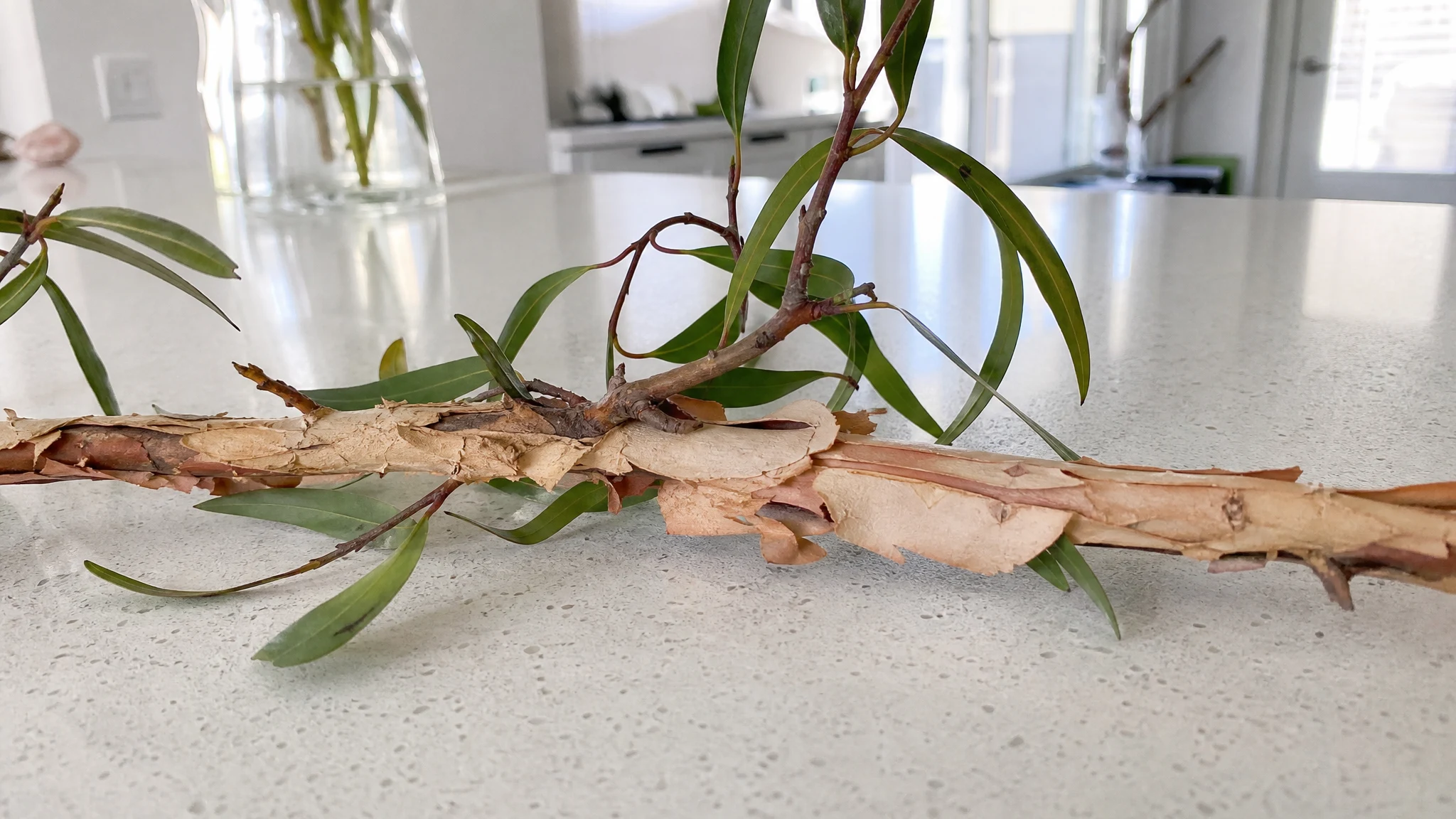
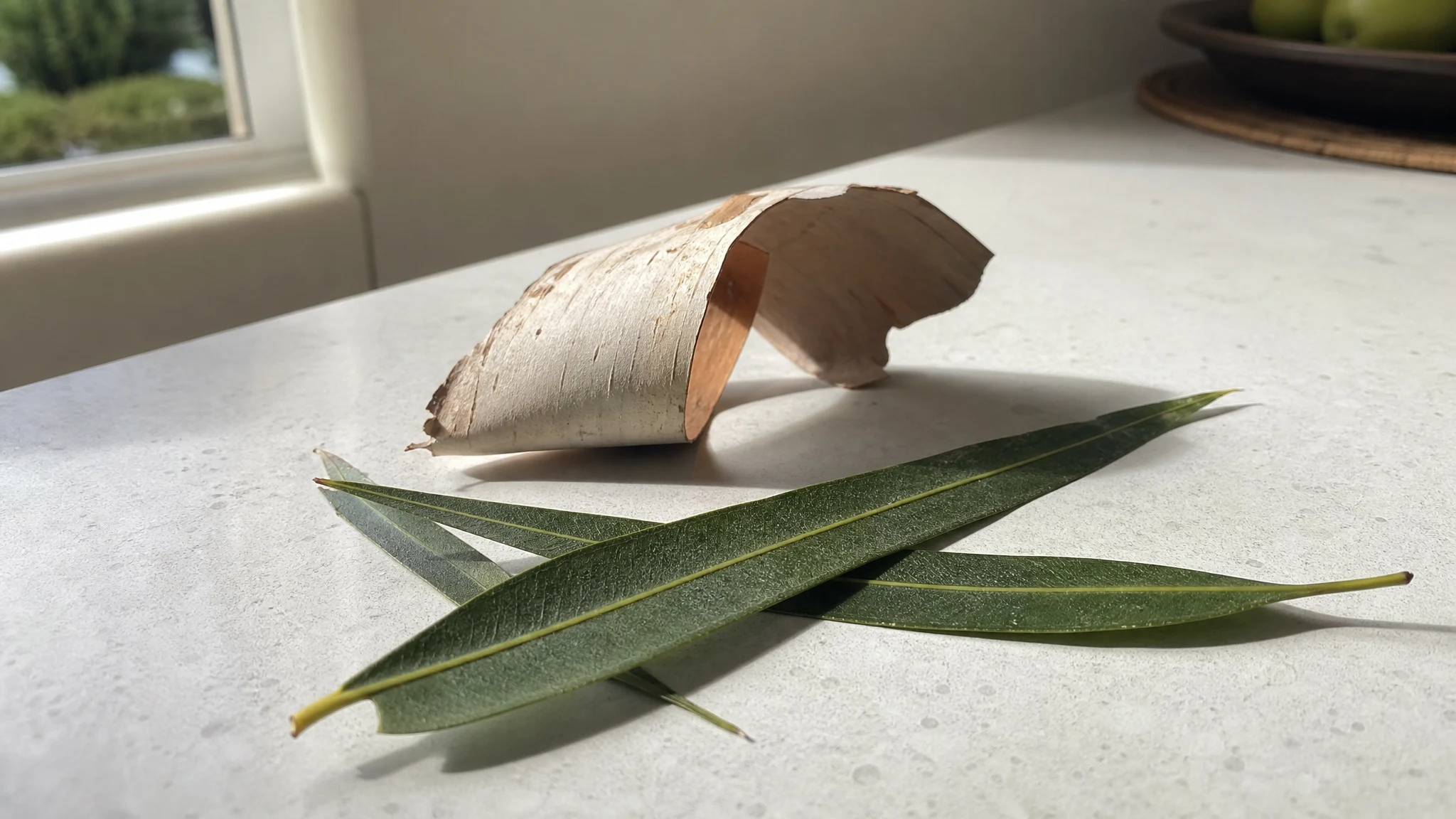
Cajeput (Melaleuca cajuputi) is a paperbark leaf oil, and the published analyses we have read describe it as led by one molecule, 1,8-cineole, the same compound that gives eucalyptus its cool, clearing smell. A bottle will still vary from lot to lot, as any distilled oil does, but you can reasonably predict the family of scent from the species name. In one analysed retail bottle it came to about 65% (Vazquez et al., 2023). We sell one cajeput, steam-distilled and sold neat, and we describe its aroma as fresh, cool and fruity-camphorous, a top note with a bit more brightness and sweetness than many leaf oils.
That fruity edge is the real dividing line. Rosemary leans herbal and sometimes woody; cajeput leans bright and slightly sweet. Where the two overlap is the cool, camphor-like opening. Reasoning from their chemistry, a cineole-type rosemary should sit closest to cajeput, and a camphor-type rosemary should feel drier and heavier beside it. That is an informed guess rather than a measured comparison, so trust your own nose.
A five-minute test worth doing
Put a drop of each oil on its own paper strip, label them, and smell them straight away, again after ten minutes, and again after an hour. The opening seconds are all top note; the hour-later smell shows what stays behind. Sniff a blank strip or the crook of your elbow between oils so one does not colour the next. Write down what you notice before you reread the label, and you will learn more about your own preferences than any description can tell you.
Kitchen-garden thinking
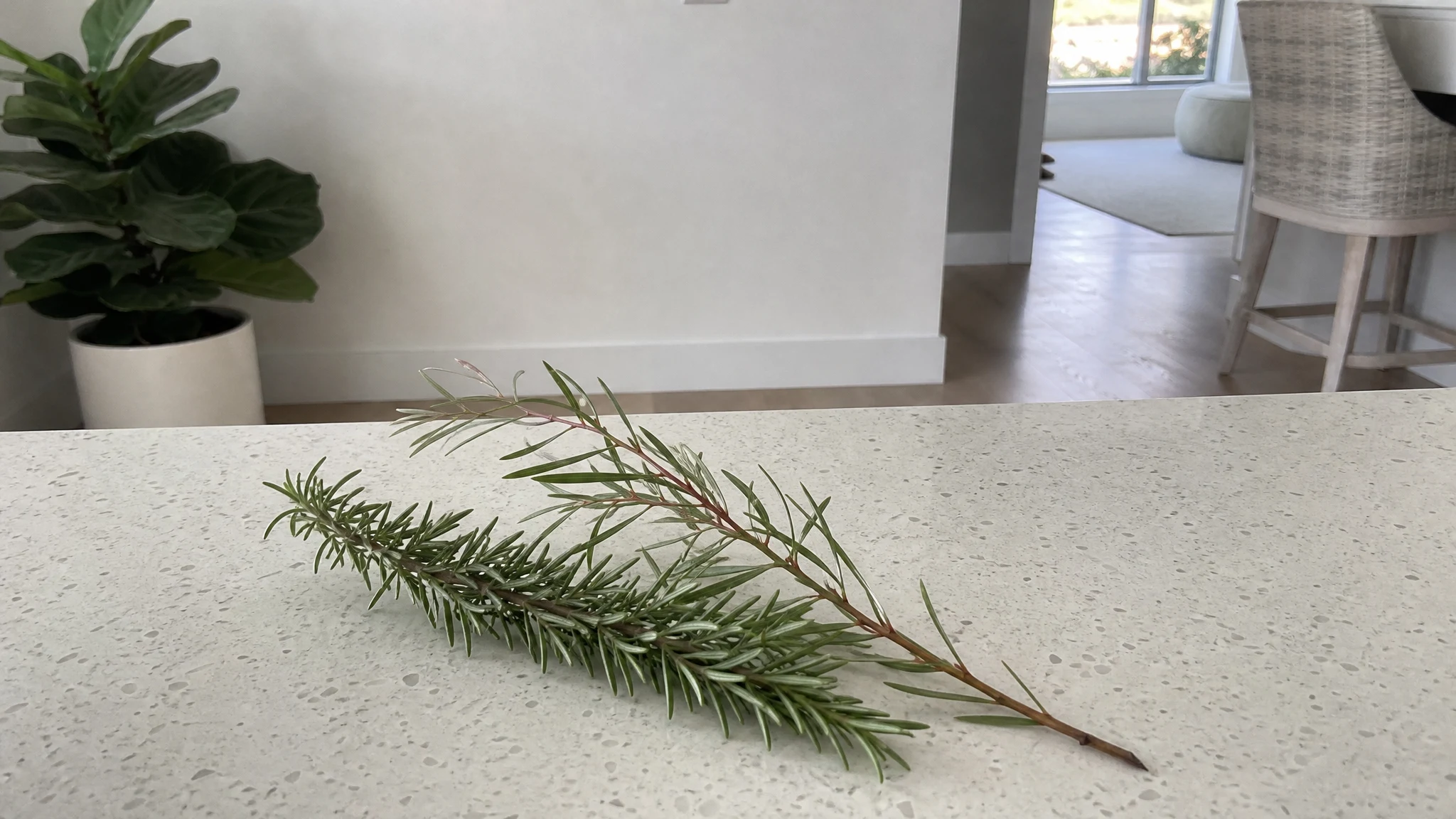
A good way to hold the difference in your head is to think of a kitchen garden. Rub a sprig of rosemary between your fingers and you get something green, resinous and warm, the smell of a roast or a sunny path. Cajeput is more like cold air after rinsing a glass: clean, bright, with a faint fruitiness at the back. Neither is better. They simply belong to different pictures, and the picture you have in mind usually settles the choice.
How we would choose
- You want a cool, bright opener for a diffuser blend or room spray: cajeput. It is one species, one profile family, and it plays well with citrus and lavender. Our blending guide shows how to build around it.
- You want an herbal, kitchen-garden note: rosemary, but ask for the chemotype and keep the lot number so you can reorder the same thing.
- You want both in one blend: the partners we list for cajeput include rosemary, so try small parts on a strip before you commit a whole bottle.
If you do blend them, go slowly. Begin with a small amount of cajeput against a larger amount of the herbal oil, smell, and adjust one drop at a time on a strip. Rosemary has plenty of character of its own, and the blend can tip from fresh to crowded quickly. Cajeput is a top note, so it is happiest when it has a little room at the front of the scent.
Handling them sensibly
Both are strong, concentrated oils meant for aromatic and cosmetic use, never for swallowing. Our dilution guidance for cajeput on skin is 0.5% to 2% in a carrier oil, with a patch test first; our dilution and patch-test guide turns that into millilitres and drops. We recommend keeping cajeput away from babies, young children and pets (see cajeput and pets), and the same common sense applies to rosemary. For any health question, a pharmacist or physician is the right person to ask, not an oil seller. We sell an external cosmetic oil and nothing else, so we will not point you to a rosemary source, only to the questions worth asking one.
If you end up with both on the shelf, you will probably find they do different jobs: one for the clean, bright lift, the other for something greener and more herbal.
Cajeput Essential Oil
Cajeput Essential Oil from our own shop, in sizes from 0.5 oz to bulk.
From $10.99
Shop Now →