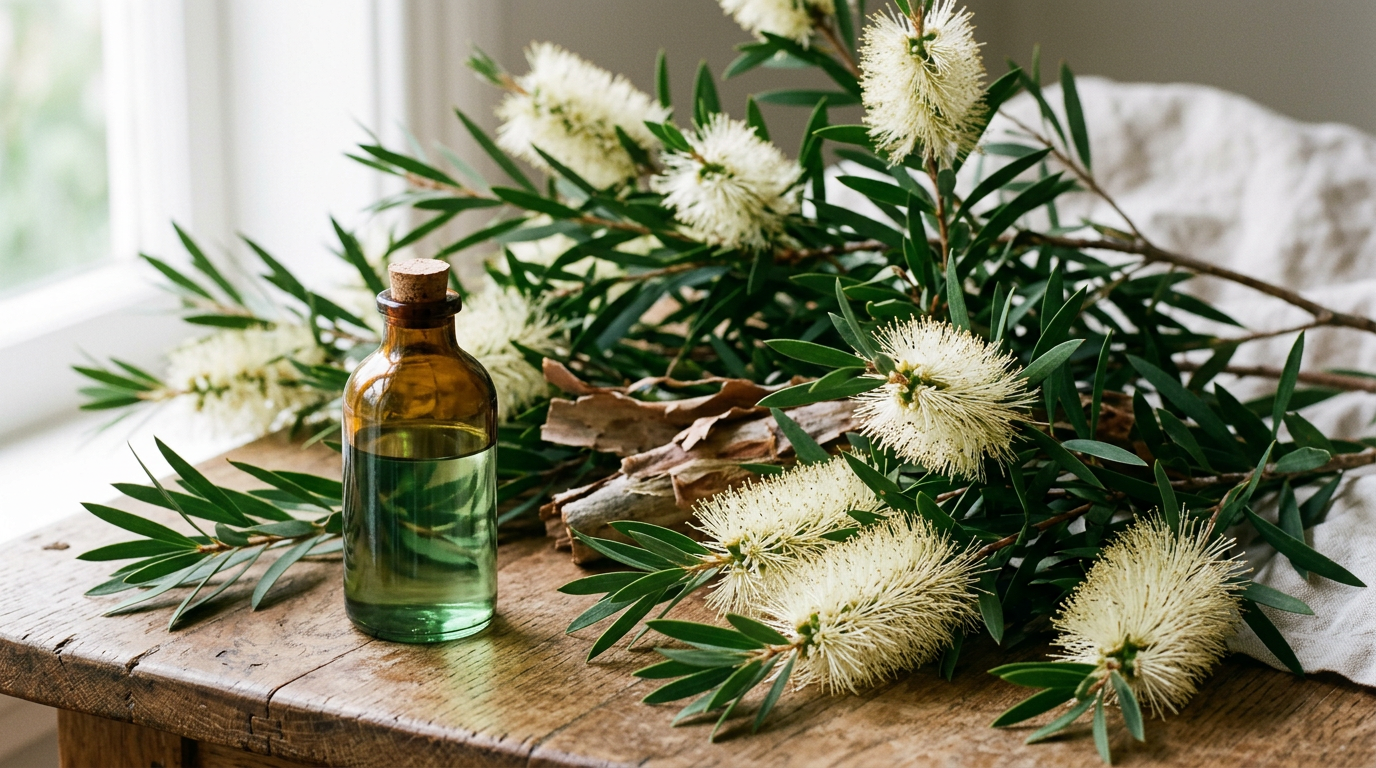
Cajeput Oil on Fabric, Wood and Leather: A Care and Testing FAQ
Cajeput essential oil is thin, pale yellow, and easy to splash farther than intended, whether you're topping off a diffuser, wiping down a counter, or carrying a bottle across the room. Because it's a concentrated plant oil, it behaves differently on a cotton cushion than it does on a sealed wood tabletop or a leather chair arm. This FAQ answers the questions we hear most about whether cajeput oil stains fabric, how it interacts with wood furniture finishes, whether cajeput oil is leather safe, and how to test essential oil on surfaces before committing to a spot you can't easily undo. None of this is medical guidance. It's practical household information for people who like their oils fragrant and their furniture intact.
Cajeput Essential Oil
Our own Cajeput Essential Oil, in sizes from 0.5 oz to bulk.
From $10.99
Shop Now →Fabric and Textiles
Does cajeput oil stain fabric?
Yes, cajeput oil can leave a mark on fabric, especially on light-colored or porous materials like cotton and linen. The mark isn't pigment in the way a wine or coffee stain is; it's typically an oil ring that forms as the oil spreads outward and evaporates unevenly. On synthetic blends or tightly woven fabric the ring can be more stubborn because the fibers absorb less and the oil sits closer to the surface longer.
What's the difference between a stain and an oil ring?
A true stain usually comes from a dye or pigment that bonds to the fibers, while an oil ring is the oil itself migrating outward as it spreads and slowly evaporates, leaving a darker edge. Cajeput oil is colorless to pale yellow, so what you're usually seeing on fabric is that ring, not a dye stain. That distinction matters for cleanup, because oil rings often respond to absorbent powders and mild dish soap rather than the stain removers made for pigment-based marks.
How do I get an oil ring out of fabric?
Blot, don't rub, the spot with a clean cloth first to lift excess oil before it spreads further. Sprinkle cornstarch or baking soda over the area, let it sit for a few hours to absorb the oil, then brush it off and wash the item with a small amount of dish soap worked directly into the fibers before laundering as usual. Check the spot is gone before putting the item in the dryer, since heat can set any oil that remains.
Is it safe to diffuse cajeput oil near curtains or upholstery?
Ultrasonic diffusers disperse a fine water and oil mist into the air rather than pooling liquid oil, so normal diffusing at a reasonable distance from soft furnishings is generally not a staining concern. The risk comes from overfilling the diffuser, placing it directly against a curtain, or knocking it over so undiluted oil runs onto fabric. For specific dilution ratios and placement tips, our guide to cajeput diffuser blends for crisp, clean air covers sensible setups room by room.
What about cajeput oil on carpet?
Carpet fibers and the padding underneath absorb oil readily, so a spill can spread wider and sit longer than it would on a flat woven fabric. Blot immediately with a dry cloth, then treat the same way as upholstery: an absorbent powder to draw the oil up, followed by a mild soap solution worked in with a soft brush and rinsed with a barely damp cloth. Wool and other natural-fiber rugs are more prone to visible ringing than synthetic carpet, so test any cleaning solution on a hidden corner first.
Should I wash the whole garment or just spot-treat it?
For a small, fresh spill, spot-treating with powder and soap before a normal wash cycle is usually enough. If the oil has been sitting for a while, has spread across a larger area, or the fabric is dry-clean only, it's worth taking the item to a professional cleaner and pointing out exactly where the oil landed so they can pretreat it correctly.
Wood Furniture and Surfaces
Is essential oil on wood furniture a problem?
It depends heavily on the finish. Sealed, varnished, or lacquered wood has a protective layer between the oil and the wood itself, so a quick wipe-up usually leaves no lasting mark. Unfinished, raw, or oil-finished wood absorbs liquid directly into the grain, and cajeput oil can leave a darker patch or interact with wax and oil finishes already on the surface.
Can cajeput oil damage a wood finish or varnish?
A brief contact and prompt wipe-up rarely harms a modern polyurethane or lacquer finish. Prolonged contact, repeated exposure to the same spot, or letting oil sit under a diffuser that drips can dull the sheen or soften some finishes over time, similar to what happens with other solvents left on a tabletop too long.
What's the difference between sealed and unfinished wood here?
Sealed wood has a barrier coating, wax, varnish, lacquer, or polyurethane, that keeps liquid from soaking into the grain, so cleanup is mostly about the surface layer. Unfinished or raw wood has no such barrier, meaning oil soaks straight into the fibers and a water ring or oil patch can become a permanent part of the piece. If you're unsure which type you have, an inconspicuous test spot is the only reliable way to check.
How do I clean an oil spill off a wood table?
Blot the spill right away with a paper towel or soft cloth rather than wiping, which can spread the oil across more surface area. Follow with a wood-safe cleaner appropriate to the finish, and dry the area completely afterward so no residue sits under a lamp or in direct sun, which can darken a spot over time. Avoid ammonia-based glass cleaners on wood, since they can cloud certain finishes.
Where should I place a diffuser to protect nearby wood furniture?
Set the diffuser on a coaster, tray, or trivet rather than directly on a wood surface, and leave a few inches of clearance from the mist outlet to any nearby finish. This also protects against condensation, which can leave its own ring separate from any oil residue. A stable, flat surface reduces the chance of a tip-over, which is the more common source of real wood damage.
Is cajeput oil safe to use around wood floors?
The same logic applies as with furniture: a sealed floor with polyurethane or a similar finish tolerates a quick wipe-up fine, while an oiled or waxed floor can show a mark if oil sits for long. Keep diffusers and bottles on a tray when using them at floor level, and clean up any drips promptly with a cloth rather than a wet mop, which can push the oil into seams between boards.
Leather
Is cajeput oil leather safe?
Cajeput oil is not inherently damaging to leather in small, brief contact, but leather is porous and can absorb oil into the surface, sometimes leaving a darker patch that doesn't fully fade. Whether it's noticeable depends on the leather's finish, color, and how long the oil sits before you clean it up, so a hidden-area test is the safest way to know before treating a favorite chair or bag.
Will cajeput oil change the color of dyed leather?
It can, particularly on lighter or unfinished leather where the dye sits closer to the surface. Darker, heavily finished leather is generally more forgiving because the protective topcoat limits absorption. If color shift is a concern, test on a seam allowance or the underside of a strap where any change won't be visible in daily use.
How do I spot test leather furniture before using oil nearby?
Choose a hidden spot, the underside of a cushion, the back of an armrest, or an inside seam, and apply a single small drop. Let it sit for the amount of time you'd realistically expect exposure (a few minutes for an accidental splash, longer if you're testing for diffuser proximity), then blot and check for darkening or texture change after it dries. If nothing has shifted after 24 hours, the rest of the piece is a reasonable bet, though sun exposure and repeated contact can still behave differently over time.
What about leather car seats or bags?
Car interiors get more heat and direct sun than most furniture, which can accelerate any reaction between oil and leather dye, so test in an inconspicuous spot like under a headrest or inside a bag's lining before using oil products near either. For scenting a car specifically, a clip or pad designed to hold diffused oil away from direct leather contact is a more predictable choice than an open dish or spray.
How do I clean leather after oil contact?
Blot excess oil immediately with a dry, soft cloth, working from the outside of the spot inward so you don't spread it further. Avoid water or soap on leather until you've blotted as much oil as possible, then follow up with a leather-specific cleaner if the piece still looks affected, applying it exactly per the product's own instructions.
Patch Testing and General Application
What's the right way to test essential oil on surfaces?
Pick a spot that's genuinely hidden in normal use: an inside seam, the underside of a table, a corner of carpet under furniture. Apply one small drop, let it sit for the duration you'd realistically expect (a quick wipe-up versus an overnight diffuser session are different tests), then blot and inspect once fully dry, ideally after 24 hours and again after a few days for slower reactions like color shift under light.
How long should I wait before judging a patch test as safe?
Check the spot right after it dries, then again the next day, since some reactions, especially color changes on leather or wood, take longer to become visible than an oil ring on fabric does. If the surface will also see sunlight or heat in daily use, it's worth leaving the test area under similar conditions for a few days before trusting the result.
Which materials deserve extra caution before testing?
Silk, suede, unsealed stone, painted surfaces, and certain plastics are more likely to show a visible reaction than sturdier materials like sealed wood or cotton twill. These materials are also harder to fully restore if a mark does set in, so test in the smallest, least visible spot possible and give the oil extra time to reveal any change before committing to a larger area.
Does diluting the oil reduce the risk of marking a surface?
A diluted mix, in a carrier oil or as part of a water-based spray, generally spreads less aggressively and leaves less concentrated residue than the undiluted oil straight from the bottle. It doesn't eliminate the risk entirely on porous materials, so the same spot-test approach still applies, just with the diluted version you actually plan to use. Our guide to cajeput oil dilution and patch tests walks through ratios in more detail.
What should I do if a surface already has a mark from spilled oil?
Start with the gentlest option for that material, blotting and an absorbent powder for fabric, a soft dry cloth for wood and leather, before reaching for any cleaning product. If a household approach doesn't fully clear it, a professional upholsterer, furniture restorer, or leather specialist can usually do more than a DIY fix, particularly on a piece you don't want to risk further.
Any general habits that reduce spill risk day to day?
Keep bottles capped and upright on a small tray, use a dropper or built-in orifice reducer rather than pouring freely, and set diffusers on a flat, stable coaster away from the very edge of furniture. Most surface marks come from a knocked-over bottle or an overfilled diffuser rather than the oil itself, so a little placement care goes a long way. If you're using cajeput oil in a cleaning spray around the house, our DIY cleaning spray guide covers dilution ratios that are gentler on finished surfaces.
Is it fine to keep an open bottle of cajeput oil on a wood dresser or leather trunk?
A capped bottle on a tray or coaster is low risk for either surface, since the concern is contact with the liquid oil itself, not the closed container. If you like the bottle out for easy access, a small dish or tray underneath catches the occasional drip and protects the finish underneath without changing how you use the oil day to day.