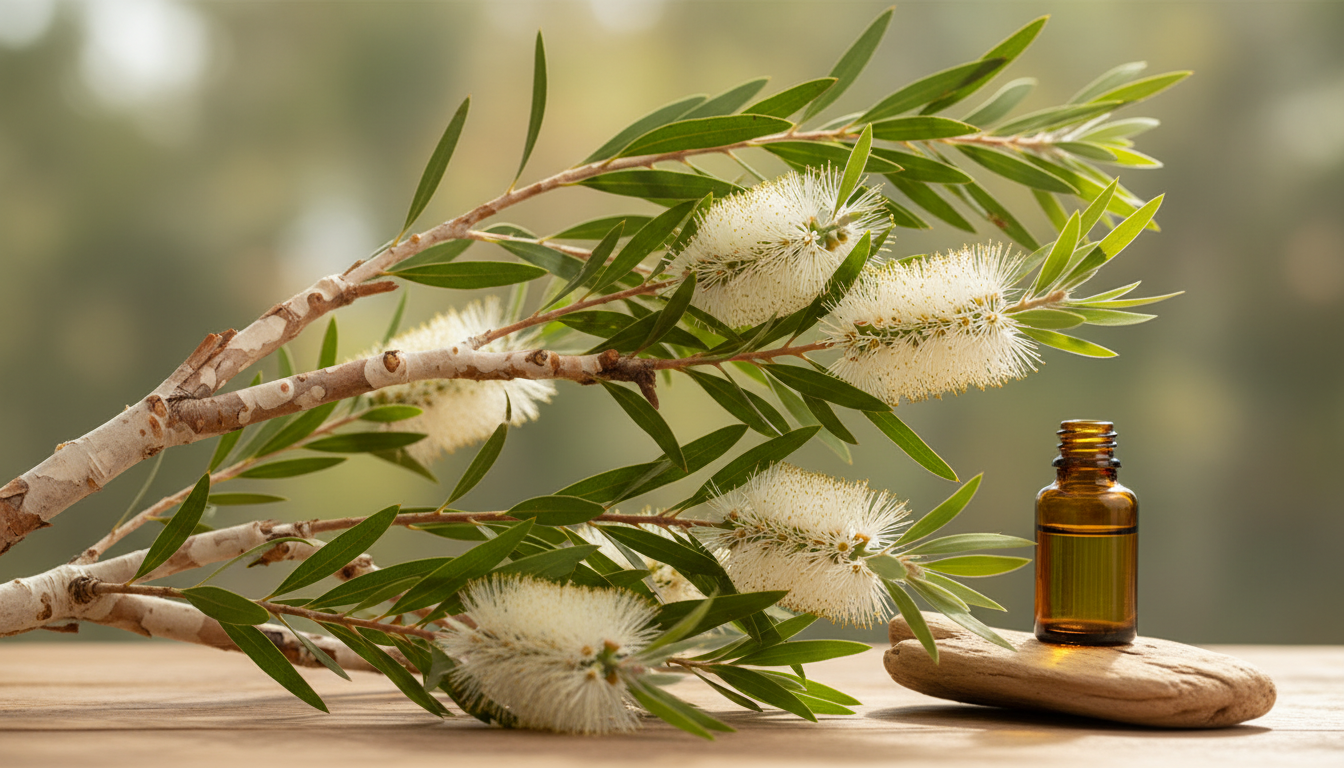
Cajeput Oil in Winter: A Crisp Counterpoint to Heavy Holiday Spice
By late November, most homes have gone all in on cinnamon, clove, and nutmeg. Candles, simmer pots, wax melts: the whole house smells like a bakery that never closes. It's cozy for about two weeks. Then it starts to feel heavy, especially with windows shut and the furnace running dry, recycled air through every room. That's the exact moment cajeput earns its keep. It's a clean, camphoraceous scent, closer to eucalyptus and tea tree than to anything from a spice rack, and it cuts through a saturated holiday air like a window cracked open on a cold, clear day.
Cajeput Essential Oil
Our own Cajeput Essential Oil, in sizes from 0.5 oz to bulk.
From $10.99
Shop Now →This is a good time of year to talk about it. Cajeput doesn't get much attention as a winter oil, largely because its brighter, sharper profile reads as spring cleaning to a lot of people. But that same clarity is exactly what a spice-heavy winter home is often missing. Think of it less as a replacement for your holiday blends and more as the palate cleanser between them.
Why Winter Air Calls for Something Different
Cold-weather homes are basically sealed boxes for four or five months. Windows stay shut, forced-air heat runs constantly, and whatever scent you introduce doesn't get much chance to cycle out. Layer a few different holiday candles, a simmer pot, and a bag of cinnamon-scented pinecones on top of that, and the result can turn from festive to cloying fast, especially by early January when the decorations are still up but the enthusiasm has worn off.
Cajeput oil, distilled from the leaves of Melaleuca cajuputi, brings a sharp, medicinal-adjacent brightness with a faint fruity edge underneath. It reads as fresh air rather than another layer of sweetness. Used in small amounts, it can cut a heavy scent load down to something more breathable without erasing the season entirely. If you want the full rundown on what that scent actually smells like on its own, our complete cajeput scent profile is a useful place to start before you build anything more complicated.
What Cajeput Brings to a Holiday Room
On its own, cajeput can feel a little clinical, more hospital hallway than holiday party. That's not a knock on the oil, it's just a reason to blend it rather than diffuse it neat. In winter essential oil blends, cajeput works best as a top note that opens a blend and then steps back, letting warmer, rounder oils carry the middle and base.
Paired with something like sweet orange or clementine, cajeput brightens without going sour. Paired with a small amount of clove or cinnamon leaf, it keeps a warm spice blend from turning into a fog. Paired with fir needle or spruce, it leans into a genuinely wintry, evergreen-adjacent direction that has nothing to do with dessert at all. If you're curious about the wider pairing map, our piece on what cajeput blends well with covers ten combinations in more depth, several of which translate directly into cold-weather use.
Building Winter Essential Oil Blends with Cajeput
A little cajeput goes a long way, so most winter blends use it as an accent rather than a base. Here are four starting points, all written for a standard ultrasonic diffuser (roughly 100 to 150 ml of water) unless noted otherwise. Adjust drop counts down for a smaller unit.
| Blend | Drops | Character |
|---|---|---|
| Clear Winter Air | 3 cajeput, 2 sweet orange, 1 fir needle | Crisp, evergreen, good for entryways |
| Cajeput Oil Christmas Blend | 2 cajeput, 3 clove, 2 orange, 1 cinnamon leaf | Warm spice with a clean edge instead of heaviness |
| Snowbound Study | 4 cajeput, 2 cedarwood, 1 peppermint | Focused, brisk, good for home offices |
| Post-Party Reset | 4 cajeput, 3 lemon, 2 rosemary | Meant to clear a room after guests leave |
The Cajeput Oil Christmas Blend combination above is deliberately spice-forward, since most people aren't looking to abandon holiday scent altogether, just to keep it from sitting stale in the air by day three. Cajeput's job in that recipe is to keep the clove and cinnamon from settling into a flat, syrupy note as the day goes on.
A Clean Scent for Winter Home, Room by Room
Different rooms carry scent differently in winter, mostly because heat sources and airflow vary so much room to room. A few practical notes worth keeping in mind:
- Entryway: This is the first impression and the room most exposed to cold drafts when the door opens. A brighter blend like Clear Winter Air holds up well here since the draft actually helps circulate it.
- Kitchen: Already carrying cooking smells during the holidays, so a light hand is worth it. One or two drops of cajeput on a cotton ball tucked near (not on) the stove hood can keep grease and roasting smells from lingering after a big meal.
- Living room: Where holiday candles usually live. Running a cajeput-forward diffuser blend an hour before guests arrive, then switching to a warmer spice blend once people are settled, keeps the room from feeling like one long simmer pot.
- Bedroom: Forced-air heat dries out bedrooms fast, and a heavy spice scent can feel overwhelming right before a wind-down routine. A very light cajeput and lavender combination, weighted more toward lavender, keeps things calm rather than bracing.
- Home office or craft room: Away from the main holiday traffic, this is a good spot for a sharper blend like Snowbound Study, since there's no need to coordinate with anyone else's scent preferences.
Simple DIY Recipes for the Season
Beyond the diffuser, cajeput works in a few low-effort DIY formats that suit the season. As with any essential oil project, dilute properly, do a patch test on a small area of skin before wider use, and keep oils away from eyes, broken skin, and out of reach of children and pets. If you're new to ratios, our dilution and skin basics guide walks through the numbers in more detail.
Winter Room Spray
In a 4 oz glass spray bottle, combine 2 tablespoons of high-proof vodka or witch hazel (as a dispersant) with 10 drops cajeput, 8 drops sweet orange, and 4 drops clove. Top with distilled water, shake before each use, and mist away from upholstery until you've confirmed it doesn't mark fabric.
Simmer Pot Alternative
Traditional stovetop simmer pots (orange slices, cinnamon sticks, cloves) are a holiday staple, but they mean an open flame or stovetop running for hours. A cooler-weather alternative: add 3 to 4 drops of cajeput along with your usual orange and clove drops to an unscented diffuser blend instead. Same seasonal character, less time near an open burner.
Doormat Refresh
Winter boots track in salt, slush, and general staleness. A few drops of cajeput diluted in water in a small spray bottle, misted lightly onto boot trays and doormats (never directly onto leather), can help the entryway smell less like a mudroom by the time guests arrive.
Seasonal Variations Through the Winter Months
Winter isn't one uniform stretch of weather, and a blend that suits early December doesn't always suit late February. It helps to think of the season in three loose stages.
Early winter (late November through mid-December): This is peak spice season. Lean into the Cajeput Oil Christmas Blend combination above, using cajeput mostly to keep things from turning syrupy as the holiday scent builds up across multiple sources in the house.
Deep winter (late December through January): After the holiday itself, many people want a scent reset. This is when cajeput can step forward on its own, paired with something crisp like rosemary or peppermint, moving the house's scent identity away from holiday party and toward clean start.
Late winter (February through early March): Heating systems have usually been running nonstop for months by now, and indoor air can feel genuinely stale. A brighter cajeput and citrus combination works well here as a stand-in for the fresh air that isn't coming through the windows yet.
None of this needs to be exact. Winter scenting is more about noticing when a room feels stuffy or over-spiced and reaching for something that corrects it, not following a strict calendar.
A Fresh Alternative for Holiday Gifting
A cajeput and citrus blend also travels well as a small hostess gift during the holidays, since a 10 ml bottle takes up almost no space and works in nearly any diffuser a host already owns. If you're shopping for someone who already burns a lot of spice candles, a bottle of cajeput paired with a note suggesting it as a palate cleanser for the room is a low-pressure way to introduce a scent they might not have picked for themselves. For anyone building out a full gift set rather than a single bottle, our buyer's guide on how to buy pure cajeput essential oil covers what separates a well-sourced bottle from a diluted one, which matters more than usual around the holidays when demand, and the number of lower-quality sellers, tends to spike.
Sourcing and Storage Notes for the Cold Months
Cold, dry air is generally kind to essential oils, more so than summer heat and humidity, which can speed up oxidation. Still, a few winter-specific habits help an oil hold its scent through the season:
- Keep bottles away from radiators, space heaters, and sunny windowsills, all common in winter arrangements but all sources of heat that shorten shelf life.
- Cap bottles tightly right after use. Cold air holds less moisture, but oxidation from an open cap doesn't care about the season.
- If you're buying in bulk for a season of heavy diffuser use, check that the bottle is dark glass, not clear, since holiday displays near windows get more incidental light than usual.
For a deeper look at keeping any bottle fresh through seasonal temperature swings, see our guide on how to store cajeput oil.
A quick gut check before buying: if a "pure cajeput" bottle smells sweet or waxy straight out of the box, it's likely cut with something else. Genuine cajeput should read sharp and clean, closer to eucalyptus than to a candle shop.
A Few Quick Questions
Can cajeput replace a holiday candle entirely? Not really, and it doesn't need to: the two do different jobs, with candles supplying warmth and cajeput supplying clarity. Does cajeput smell like Christmas on its own? Not exactly. Its natural character leans more toward a walk in cold, clean air than toward a specific holiday note, which is precisely why it pairs so well with spices that already carry that association. Is it fine to run a diffuser overnight during the holidays? Most diffuser manufacturers recommend intermittent cycles rather than continuous overnight operation regardless of which oil is used, so check the specific unit's instructions rather than assuming based on the oil itself.
Bringing It Together
Holiday scenting doesn't have to mean choosing between spice and freshness all season. A cajeput oil holiday scent, used sparingly alongside your usual cinnamon and clove, can keep a home smelling intentional instead of overloaded by the time the tree comes down. Start with a light hand, adjust to your own space, and treat the blends above as a starting point rather than a formula carved in stone.
For more on building blends beyond the winter season, our full cajeput blending guide and diffuser blend collection cover pairings for every time of year, and the 12 ways to use cajeput at home roundup has ideas that work well past the holidays too.