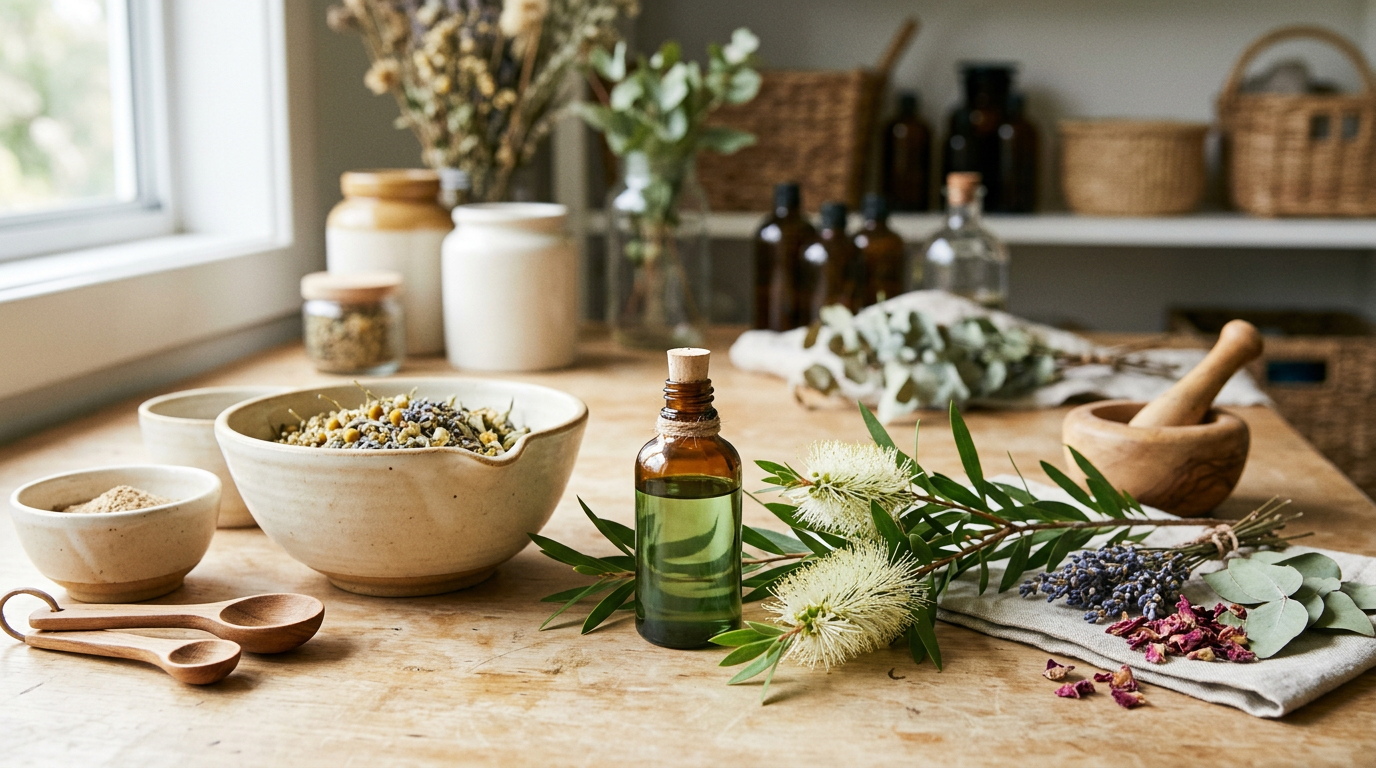
DIY Cajeput Solid Cologne Bar: A Pocket-Sized Paperbark Scent
A solid cologne bar is one of the friendliest ways to carry a scent with you: no spills, no glass to break in a gym bag, and no alcohol drying out your skin. This DIY solid cologne recipe uses cajeput oil, the clean, camphor-tinged oil steam distilled from the paperbark tree, as the aromatic backbone. It reads green and slightly medicinal in the best way: think eucalyptus crossed with tea tree, softened by a warm woody base. If you've been looking for a way to make your own cologne bar without a lab's worth of equipment, this is a good place to start.
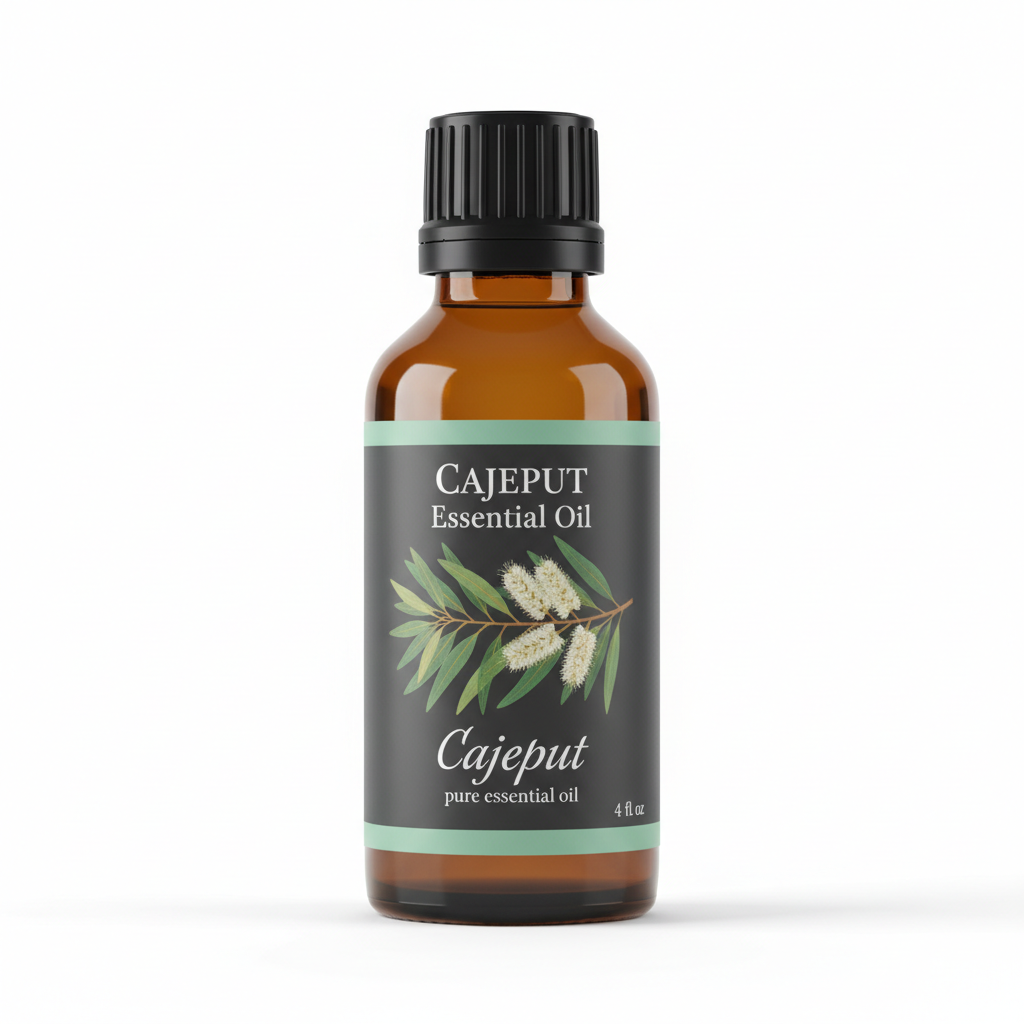
Cajeput Essential Oil
Our own Cajeput Essential Oil, in sizes from 0.5 oz to bulk.
From $10.99
Shop Now →
Difficulty and Time
- Difficulty: Beginner
- Prep time: 10 minutes
- Active/melt time: 10 to 15 minutes
- Cooling and set time: 1 to 2 hours (or 20 minutes in the fridge)
- Yield: Two 1-ounce tins
What You'll Need
Ingredients
- 2 tablespoons beeswax pellets (about 0.9 oz / 25 g)
- 2 tablespoons shea butter (about 0.9 oz / 25 g)
- 2 tablespoons jojoba oil or fractionated coconut oil (about 1 oz / 28 g)
- 20 drops cajeput essential oil
- 8 drops cedarwood essential oil (optional, for a warmer base note)
- 5 drops sweet orange or bergamot essential oil (optional, for brightness up top)
This ratio gives you roughly a 5 percent dilution across the finished bar, which is on the firmer end for a fragrance product meant to sit against skin. If you'd rather keep things gentler, see the dilution guidance in the safety section below before you start measuring.
Tools and Supplies
- Small heatproof glass measuring cup or a clean glass jar
- Saucepan for a makeshift double boiler
- Silicone spatula or a wooden coffee stirrer
- Kitchen scale (optional but more precise than tablespoons)
- Two 1-ounce metal cologne tins with lids, or a silicone mold with 1-ounce cavities
- Labels and a fine-point marker
Step-by-Step Instructions
- Set up a double boiler. Fill a saucepan with about an inch of water and bring it to a gentle simmer. Place your glass measuring cup or jar inside, resting above the waterline rather than sitting in the water.
- Melt the beeswax. Add the beeswax pellets to the glass container and let them melt fully, stirring occasionally. This takes about 5 minutes over low heat. Beeswax is what gives the bar its snap and firmness, so don't rush this step or swap in a smaller amount without adjusting elsewhere.
- Add the shea butter and carrier oil. Once the beeswax has fully liquefied, stir in the shea butter and jojoba oil. Keep stirring until everything is smooth and no streaks remain. Remove the container from the heat.
- Cool slightly before adding essential oils. Let the mixture sit for about 60 to 90 seconds off the heat. Essential oils are volatile, and pouring them into a mixture that's still near boiling temperature will burn off a portion of the scent before it ever reaches your skin.
- Add the cajeput oil and any blending oils. Stir in the cajeput essential oil along with the cedarwood and citrus oils if you're using them. Mix thoroughly for about 30 seconds so the scent distributes evenly rather than pooling in one spot.
- Pour into tins. Working quickly before the mixture starts to set, pour it into your prepared tins or mold cavities. Fill to just below the rim to leave room for the lid.
- Let it set. Leave the tins undisturbed at room temperature for 1 to 2 hours, or pop them in the refrigerator for about 20 minutes if you're impatient like the rest of us. The bar is ready when it's firm to the touch and no longer glossy on top.
- Label and cap. Once fully set, put the lids on and label each tin with the date you made it and the ingredient list, especially if you're gifting one.
Safety First
A solid cologne bar sits directly against skin for extended periods, often reapplied throughout the day, so it deserves the same care you'd give any leave-on skin product.
- Dilution ratio. The recipe above lands around 5 percent essential oil to total oil and wax content, which is standard for a pulse-point product used by adults. If you have sensitive skin, cut the essential oil amounts by half (10 drops cajeput, 4 drops cedarwood, 2 to 3 drops citrus) for a gentler 2 to 3 percent bar. Never increase the essential oil load beyond what's listed here; more is not more fragrant, it just raises the odds of skin reactivity.
- Patch test first. Before applying the finished bar to your neck or wrists, rub a small amount on the inside of your forearm and leave it uncovered for 24 to 48 hours. If you notice redness, itching, or irritation at any point, wash the area and don't use the product further.
- Where to apply. Stick to pulse points like the wrists, inside of the elbows, and the sides of the neck. Avoid the eye area, broken skin, and mucous membranes.
- Photosensitivity note. If you add citrus oils like bergamot, be aware that some citrus oils increase sun sensitivity on the skin where they're applied. Cajeput and cedarwood are not known to carry this property, but if you include bergamot, avoid direct sun exposure on treated skin for several hours after application, or choose a bergapten-free (FCF) bergamot.
- Who should be extra cautious. Pregnant or nursing individuals, young children, and anyone with a known sensitivity to camphoraceous oils should talk with a qualified healthcare provider before using this or any essential oil product. If you're currently using other skin products under a healthcare provider's guidance, check with them before layering in a new fragrance item.
- Keep it out of reach. Store away from children and pets. Essential oils in concentrated form are not meant for ingestion.
This recipe is intended for cosmetic and aromatic use only. It has not been evaluated for any medical purpose, and nothing here should be read as guidance for a health condition. Always consult a qualified healthcare provider with questions about how essential oils might interact with your individual circumstances.
Storage and Shelf Life
Keep your solid cologne bar in its tin, lid closed, somewhere cool and out of direct sunlight. A bathroom cabinet or a bedside drawer both work well. Avoid leaving it in a hot car or on a sunny windowsill, since the beeswax and shea butter base will soften or melt above roughly 90°F.
Made with fresh ingredients and stored properly, a bar like this should hold its scent and texture for about 6 to 12 months. The carrier oil and shea butter are the limiting factor, since they can slowly turn rancid over time, most noticeably as a faint waxy-crayon smell replacing the cajeput scent up top. If that happens, it's time to make a fresh batch rather than keep using the old one.
Variations and Substitutions
Swap the carrier oil
Jojoba oil is a good default because it's stable and lightweight, but sweet almond oil, fractionated coconut oil, or apricot kernel oil all work in the same ratio. Avoid heavier oils like castor oil on their own, as they can make the finished bar feel greasy rather than silky.
Adjust the firmness
If your finished bar feels too soft for a warm climate, increase the beeswax to 2.5 tablespoons and reduce the jojoba oil slightly to compensate. If it feels too hard to glide on smoothly, do the reverse: a touch less beeswax and a touch more carrier oil.
Build your own cajeput oil cologne blend
The cedarwood and citrus additions above are just a starting point. Cajeput pairs well with lavender for a softer, more rounded profile, or with a pinch of clove bud oil (used sparingly, no more than 1 to 2 drops total) for a spicier edge. If you'd like a deeper dive into building balanced blends, our guide to essential oil layering basics covers how top, middle, and base notes work together in a single formula.
Vegan version
Replace the beeswax with candelilla wax, using about two-thirds the amount called for since candelilla is firmer than beeswax at the same volume. Start with 1.5 tablespoons and adjust from there.
Travel tin sizing
This recipe fills two 1-ounce tins comfortably. To make a single pocket-sized 0.5-ounce tin as a trial batch before committing to a full round, simply halve every measurement.
Troubleshooting
If your bar turns out grainy or streaky, the shea butter likely seized from being cooled too quickly or stirred too vigorously while still hot. Remelt everything gently and stir slowly this time. If the scent feels faint once the bar has set, that's normal: solid formats mute fragrance more than liquid alcohol-based colognes, since there's no evaporating carrier to help project the scent. A firmer press against the skin when applying, or a slightly higher essential oil percentage within the safety range above, will help.
A Simple, Repeatable Ritual
Once you've made a batch, the process goes quickly the second time around. Keep a small stash of tins on hand and this becomes an easy homemade gift for anyone who prefers a green, woody scent over something sweet or floral. The paperbark character of cajeput oil gives the finished bar a distinct identity, clean and a little sharp up front, settling into something warmer as it wears through the day.