
Cajeput Oil vs Rosemary Oil: Two Sharp, Clean Scents Compared
Stand two bottles side by side, cajeput and rosemary, and you'll notice something right away: both smell sharp, both smell clean, and both are frequently reached for by the same kind of shopper. Someone who wants a bright, no-nonsense scent that doesn't lean sweet or floral. But past that first impression, cajeput and rosemary essential oil part ways in botany, sourcing, and the mood they bring to a blend. This guide walks through a fair cajeput vs rosemary oil comparison so you can decide which bottle earns a spot on your shelf, or whether you end up wanting both.
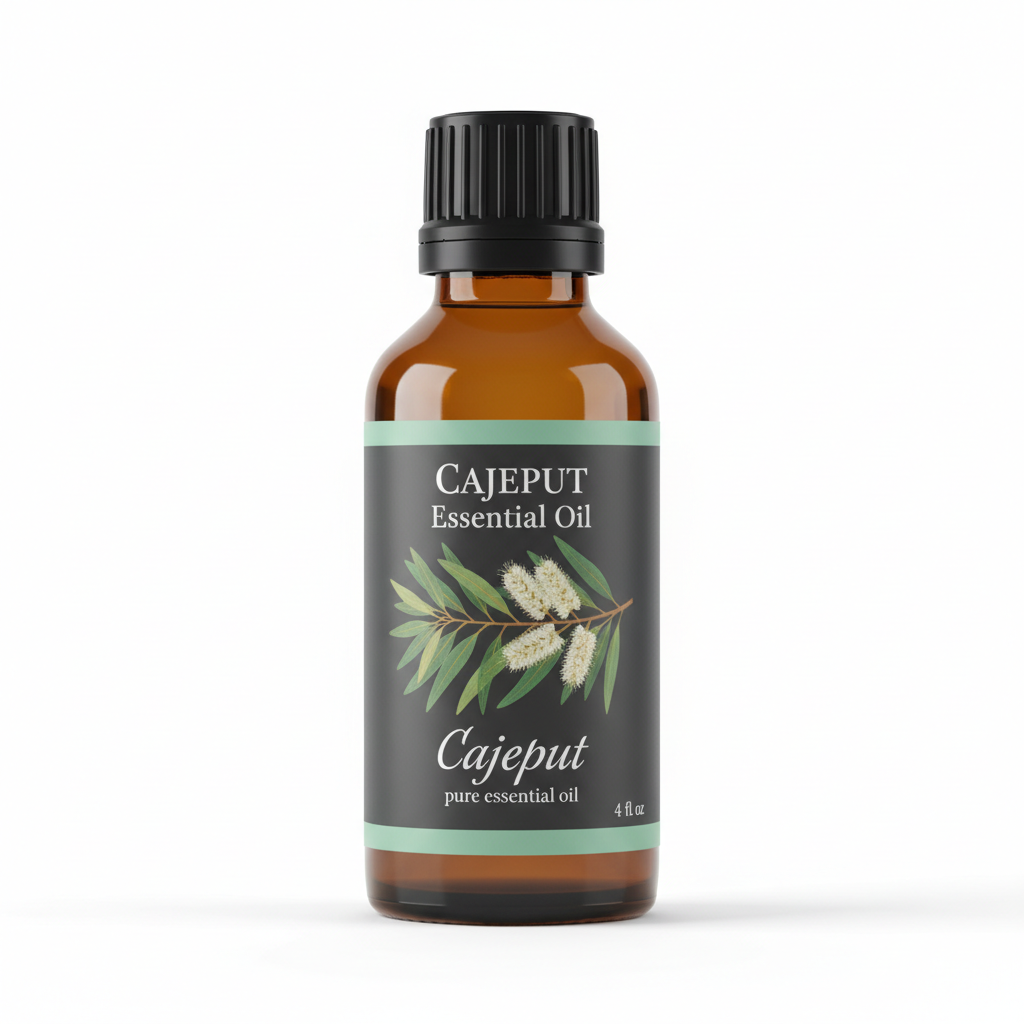
Cajeput Essential Oil
Our own Cajeput Essential Oil, in sizes from 0.5 oz to bulk.
From $10.99
Shop Now →What Each Oil Actually Smells Like
Cajeput oil comes from the leaves and twigs of Melaleuca cajuputi, a tree in the same broad family as tea tree and eucalyptus, native to parts of Southeast Asia and northern Australia. Steam-distilled and pale yellow to almost colorless, it opens with a brisk, medicinal-green top note, camphoraceous and slightly sweet underneath, not unlike a cross between eucalyptus and tea tree with a softer edge. It reads as clean in the literal sense: the kind of scent that makes a room feel aired out.
Rosemary essential oil, distilled from the flowering tops of Salvia rosmarinus (formerly classified as Rosmarinus officinalis), is herbaceous and woody-camphoraceous, with a bright, almost piney sharpness up front that settles into something more herbal and slightly resinous. Depending on the chemotype, a bottle labeled simply "rosemary" can lean more toward eucalyptus-like freshness (cineole chemotype) or a deeper, drier camphor note. That variability is worth knowing before you buy, since two rosemary oils from different suppliers can smell noticeably different.
Put side by side in a cajeput rosemary scent comparison, cajeput tends to read softer and slightly sweeter, while rosemary reads drier, greener, and more herbal. Neither is what most people would call cozy. Both are wake-up-and-pay-attention scents.
Cajeput vs Rosemary Oil: Side-by-Side Comparison
| Attribute | Cajeput Essential Oil | Rosemary Essential Oil |
|---|---|---|
| Botanical source | Melaleuca cajuputi (leaf and twig) | Salvia rosmarinus (flowering top) |
| Typical origin | Vietnam, Indonesia, parts of Australia | Morocco, Tunisia, Spain, France |
| Extraction method | Steam distillation | Steam distillation |
| Color and viscosity | Pale yellow, thin, watery | Colorless to pale yellow, thin |
| Scent character | Camphoraceous, medicinal-green, slightly sweet | Herbaceous, piney, woody-camphoraceous |
| Perfumery note | Top to mid note, short-lived | Top to mid note, moderately persistent |
| Common cosmetic uses | Room and linen sprays, clarifying skincare blends, DIY cleaning sprays | Hair care rinses, scalp-focused blends, invigorating room diffusion |
| Chemotype variability | Relatively consistent across suppliers | Can vary widely (cineole, camphor, or verbenone dominant) |
| Typical price (10ml) | Moderate, often less than rosemary | Moderate to slightly higher, especially organic |
| Shelf life (properly stored) | Around 2 to 3 years | Around 3 to 4 years |
| Skin sensitivity notes | Generally well tolerated when diluted; patch test recommended | Generally well tolerated when diluted; patch test recommended |
Cajeput Essential Oil: Pros and Cons
Cajeput has a smaller following than rosemary, but the people who use it tend to be loyal to it, often because it fills a specific gap: a tea-tree-adjacent scent that's a touch gentler and less sharp.
Pros
- Softer, slightly sweeter profile than tea tree, easier to layer into blends without dominating.
- Blends well with citrus, eucalyptus, and other camphoraceous oils for a bright, airy atmosphere.
- Reasonably priced compared to some other camphoraceous oils.
- Consistent scent from batch to batch, since chemotype variation is less pronounced than in rosemary.
Cons
- Less widely available than rosemary; fewer brands carry it, which can limit sourcing options.
- Scent fades relatively quickly as a top note, so it needs supporting oils to hold in a blend.
- Less name recognition, so first-time buyers sometimes hesitate without knowing what to expect.
- Not a good fit for anyone who wants a softer, sweeter, or floral aromatic profile.
Rosemary Essential Oil: Pros and Cons
Rosemary is the more familiar of the two, with a long history in cosmetic and culinary use and a scent most people can place immediately.
Pros
- Widely available across nearly every essential oil brand, with organic and wild-harvested options common.
- Long-standing popularity in hair and scalp care rituals, with many DIY recipes built around it.
- Herbaceous, grounded scent that reads as both fresh and a little earthy, useful in a wide range of blends.
- Multiple chemotypes give buyers some choice in scent intensity and character.
Cons
- Chemotype inconsistency means a bottle labeled "rosemary" from one brand can smell quite different from another.
- Scent can skew more medicinal and less versatile in sweeter or floral blends.
- Pregnant individuals and people with certain health conditions are commonly advised to avoid rosemary oil; always confirm with a qualified healthcare provider before use.
- Some batches, especially camphor-dominant chemotypes, carry a heavier, more assertive scent that not everyone enjoys.
Best For: Matching the Oil to the Use Case
Neither oil is a universal answer, and the right pick usually comes down to what you're actually making or diffusing.
Choose cajeput if:
- You want a fresh, clean scent for room sprays or linen mists that isn't as sharp as straight eucalyptus.
- You're building a DIY cleaning spray and want a bright, camphoraceous note without reaching for tea tree.
- You already like tea tree's scent profile but find it a bit harsh and want something gentler layered underneath.
- You're formulating a clarifying skincare blend and want a light, non-greasy botanical note.
Choose rosemary if:
- You're building a hair or scalp care routine and want an oil with a long tradition of cosmetic use in that space.
- You want an herbaceous, grounded scent for a morning diffuser blend to set an alert, focused atmosphere in a workspace.
- You're formulating a woodsy or herbal perfume accord and want a note with more depth and staying power than cajeput offers.
- You prefer buying from mainstream suppliers with easy access to organic or specialty chemotypes.
Consider using both if:
You're building a layered blend for an entryway diffuser or a DIY cleaning line. Cajeput brings brightness up top, rosemary brings body and staying power underneath. The combination reads as more complex than either oil alone, and a small test batch is the easiest way to see whether the pairing works for your nose before committing to a larger blend.
Sourcing and Quality Notes
Origin matters more than most labels let on. Cajeput sold under generic "pure essential oil" labeling is often distilled in Vietnam or Indonesia from wild or semi-cultivated trees, and quality can vary depending on how the leaves were handled before distillation. Look for a supplier who lists the country of origin and, ideally, a batch-specific GC/MS report. A cajeput oil that smells harshly solvent-like or oddly sweet may be cut with a carrier or blended with cheaper oils to stretch volume.
Rosemary is easier to source from reputable growers in Morocco, Tunisia, Spain, and France, and organic certification is more common. The bigger sourcing question with rosemary is chemotype. If a listing doesn't specify cineole, camphor, or verbenone, ask before buying, especially if you're formulating for a specific scent profile or a hair care recipe where the gentler cineole chemotype is often preferred over the sharper camphor-heavy version.
For either oil, a lower price than the market average is a signal to slow down and check the source. Steam-distilled botanicals at this scale simply cost what they cost, and a bottle priced well below comparable listings is more likely to be diluted, adulterated, or mislabeled than it is to be a genuine bargain.
Blending and DIY Use: A Few Notes
Both cajeput and rosemary essential oil are potent and should be diluted before any skin contact. A common starting dilution for a body oil or lotion blend is 1 to 2 percent, which works out to roughly 6 to 12 drops of essential oil per ounce of carrier oil such as jojoba, sweet almond, or fractionated coconut oil. For a room or linen spray, a higher concentration in a water and dispersant base is fine, since it isn't going on skin.
Before using either oil in a skin-contact blend for the first time, do a patch test: dilute a small amount according to the ratio above, apply to a small area of skin such as the inner forearm, and wait 24 to 48 hours to check for any redness or irritation. If you notice a reaction, discontinue use.
Rosemary essential oil is one that people with certain health conditions, including those who are pregnant or nursing, are commonly advised to avoid, along with anyone managing a seizure disorder, since some chemotypes are higher in camphor. Cajeput, like other camphoraceous oils, should be kept away from the face of young children and used cautiously around pets. This article is educational and not a substitute for professional guidance. If you have any health condition or are pregnant or nursing, talk to a qualified healthcare provider before adding either oil to your routine.
A good rule for either oil: start with less than you think you need. You can always add another drop. You can't take one back out of a blend that's already too strong.
Cajeput or Rosemary Essential Oil: The Verdict
In a straight rosemary versus cajeput matchup, there isn't a single winner, because the two oils are solving slightly different problems. Rosemary is the more versatile, more available, more thoroughly documented option, with an established place in hair care and herbal perfumery. It's the safer first buy if you only want one bottle and want to be sure you can find it again from multiple suppliers.
Cajeput is the pick for anyone who wants a gentler, brighter alternative to tea tree, particularly for cleaning blends and airy room sprays where a softer camphoraceous note is more pleasant to live with day to day. It's a smaller category with fewer suppliers, but the quality among reputable sellers tends to be consistent.
If scent character is your deciding factor: pick rosemary for something herbal, grounded, and a little resinous. Pick cajeput for something brighter, cleaner, and softer around the edges. And if you're not sure, a small bottle of each costs less than you'd think, and testing them side by side in your own space will tell you more than any comparison chart can.