
Buying Cajeput Oil by Origin: Indonesia, Vietnam and Timor-Leste
Cajeput oil shows up on ingredient lists and apothecary shelves under one name, but the bottle in front of you could have started as leaves on three very different sides of the world. Origin shapes almost everything about the oil: its color, its scent profile, the chemistry a lab report will show, and honestly, the price tag. If you have ever compared two cajeput listings side by side and wondered why one costs twice as much as the other despite an identical-looking label, the answer is usually origin, harvest practice, and how much distillation care went into the batch.
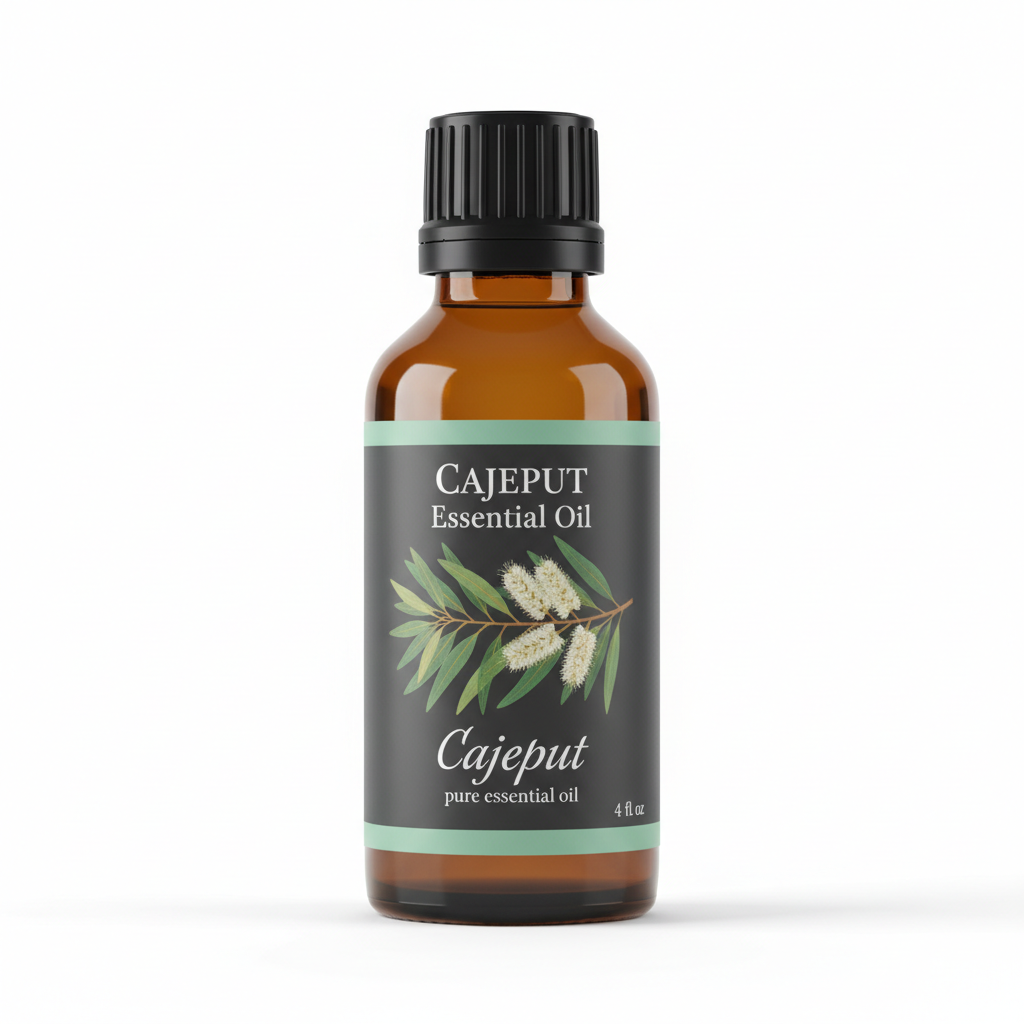
Cajeput Essential Oil
Our own Cajeput Essential Oil, in sizes from 0.5 oz to bulk.
From $10.99
Shop Now →This guide walks through what a cajeput oil origin actually tells you, how Indonesian cajeput oil, Vietnamese cajeput oil, and the smaller Timor-Leste crop compare on quality and value, and how to shop for cajeput oil like someone who has read a few GC-MS reports rather than a few marketing pages. We'll stay focused on sourcing, quality, and buying decisions, not on what the oil might do for you once it's home.

Why Origin Matters for Cajeput Oil
Melaleuca cajuputi, the paperbark tree behind cajeput oil, grows across a wide arc of Southeast Asia and into parts of Australia and the Pacific. Wild stands and cultivated groves in Indonesia, Vietnam, and Timor-Leste each face different soil, rainfall, and harvest timing, and paperbark leaf oil is notably responsive to all three. Two farms a few hundred miles apart can produce oils with noticeably different 1,8-cineole percentages, different secondary terpene profiles, and different clarity.
None of this is about one country making a "better" tree. It's about consistency of practice: how leaves are dried before distillation, how long the still runs, whether the distiller separates the early and late fractions of the run, and how the finished oil is stored before it reaches a bottler. A skilled small distiller in any of the three regions can outproduce a rushed large-scale operation in the same region. That said, each origin has developed its own general reputation in the trade, and knowing those reputations gives you a starting point before you dig into a specific supplier's paperwork.
Indonesian Cajeput Oil: The Traditional Benchmark
Indonesia, particularly the island of Buru in Maluku province, is where most of the world's cajeput oil supply has historically come from, and it's still the name most buyers reach for first. Buru's cajeput trade goes back generations, with small household stills and cooperative distilleries processing wild-harvested paperbark leaves in batches.
What this looks like on the shelf: Indonesian cajeput oil is often priced at the accessible end of the market, since supply is relatively abundant and the distillation infrastructure is well established. Quality varies more here than with the other two origins, though, precisely because so much of the supply comes from many small, independently run stills rather than a handful of larger, quality-controlled operations. A bottle from an established cooperative with batch testing can be excellent. A bottle from an unverified bulk importer riding on Buru's reputation without documentation is a coin flip.
Look for: a supplier who names Buru or another specific Indonesian region rather than just "Indonesia," and who can produce a current batch-specific GC-MS report, not a generic reference document.
Vietnamese Cajeput Oil: Cultivated Consistency
Vietnamese cajeput oil, most of it distilled in the Mekong Delta region, tends to come from more deliberately cultivated paperbark stands rather than purely wild harvest. That cultivation shows up as batch-to-batch consistency: buyers who source Vietnamese cajeput repeatedly often report a steadier scent and color from shipment to shipment compared to some Indonesian supply.
Vietnam has also invested more visibly in export-grade distillation infrastructure over the past decade, and a number of Vietnamese producers now offer third-party lab documentation as a matter of course rather than on request. That infrastructure comes at a modest premium over the cheapest Indonesian bulk oil, but it buys predictability, which matters if you're a formulator or reseller who needs a scent profile that won't shift wildly between purchase orders.
Vietnamese cajeput oil tends to sit in the mid-range of the market: not the cheapest option, not the rarest, but a dependable middle choice for buyers who want documentation without paying a scarcity premium.

Timor-Leste Cajeput Oil: The Small-Batch Origin
Timor-Leste is the least commercially developed of the three origins, and that scarcity is the whole story. Production volumes are small, distillation is mostly done by independent smallholders, and export channels are far less established than in Indonesia or Vietnam. If you find a genuine Timor-Leste cajeput oil for sale, you're likely looking at a niche or single-origin specialty supplier rather than a bulk aromatics wholesaler.
The upside for buyers who care about traceability: small-batch Timor-Leste lots are easier for a dedicated importer to track back to a specific cooperative or even a specific hillside, and some specialty sellers lean into that story with harvest-season labeling. The downside is availability and price. Expect to pay a premium, expect occasional stock-outs, and be skeptical of any listing claiming high-volume, always-in-stock Timor-Leste oil at a bargain price. That combination doesn't match how this origin's supply chain actually works right now.
What to Look For: Quality Indicators That Actually Matter
Origin is a useful filter, but it's not a substitute for checking the bottle itself. Here's what separates a well-sourced cajeput oil from a mediocre one, regardless of which country it came from.
Botanical Name on the Label
The label should say Melaleuca cajuputi, not just "cajeput" or a vague "tea tree family" description. Some sellers blur cajeput with related Melaleuca species because the oils smell somewhat similar; the botanical name is your first checkpoint.
Country and Region of Origin
A supplier confident in their sourcing will tell you where the leaves were grown, ideally down to the region (Buru, Mekong Delta, etc.), not just the country. Vague or missing origin information is one of the more reliable early warning signs in this category.
GC-MS Testing and Batch Numbers
A gas chromatography-mass spectrometry report tied to the specific batch number on your bottle is the single most useful document a seller can hand you. It shows the actual chemical makeup of that lot, most notably the 1,8-cineole percentage, which is the compound most associated with cajeput's characteristic sharp, camphoraceous scent. Reputable cajeput oil typically shows 1,8-cineole somewhere in a broad mid-to-high range; exact numbers vary by origin and harvest, which is exactly why you want the report rather than a marketing claim.
Be wary of "results available on request" language that never actually produces a document when you ask. A results-provided-by line naming the actual testing lab is a stronger signal than a bare percentage typed into a product description.
Color and Clarity
Fresh, well-distilled cajeput oil is typically a pale yellow to light green, and clear rather than cloudy. Oil that's gone significantly darker or has visible sediment has likely oxidized or been stored poorly, sometimes for a long time before it ever reached the seller's shelf.
Packaging and Storage Cues
Cajeput oil should ship in dark glass, amber or cobalt, never clear glass or plastic. Light exposure degrades the terpene content over time. If a seller ships in clear bottles or stores stock visibly in direct sunlight (check their product photography), that's a quiet red flag about how the rest of their inventory is handled.
Key Features to Compare Across Listings
Once you've narrowed down origin and confirmed the basics, compare listings on these five features side by side.
| Feature | What to Check | Why It Matters |
|---|---|---|
| Extraction method | Steam distillation should be specified | Solvent extraction changes the chemical profile and is not typical for cajeput |
| Purity claim | "100% pure" and undiluted, with no carrier oil unless labeled as a blend | Diluted oil sold as pure is a common category-wide complaint |
| Batch-specific documentation | GC-MS report matched to lot number, not a generic PDF | Generic reports can be years old and unrelated to the bottle you're buying |
| Bottle size and price per ounce | Compare cost per ounce, not just sticker price | Larger bottles often have a much lower effective unit price |
| Seller transparency | Named origin region, named lab, clear contact information | Vagueness in any one of these tends to predict vagueness in the others |
Top Picks at Different Price Points
Rather than naming specific brands, here's how to think about shopping at each tier, since availability and pricing shift often in this category.
Budget Tier
At the lower end of the market, you'll mostly find Indonesian cajeput oil sold in larger bulk sizes, often 4 ounces or more, from suppliers who work in volume aromatics. This tier can be a perfectly reasonable choice for general household use if the seller still provides batch documentation. Skip anything in this tier that has no testing information at all; that's where quality control gaps tend to concentrate.
Mid-Range Tier
This is where most Vietnamese cajeput oil sits, along with better-documented Indonesian offerings from cooperatives rather than anonymous bulk importers. Expect a modest premium over the cheapest bulk options in exchange for consistent batch testing, clearer origin labeling, and generally better packaging. For most buyers, especially formulators who need predictability, this tier offers the best balance of cost and reliability.
Premium Tier
Small-batch Timor-Leste oil, along with limited-harvest lots from specific Indonesian or Vietnamese cooperatives, occupies the premium end. You're paying for scarcity and traceability here, not necessarily a dramatically different chemical profile. This tier makes the most sense for collectors, specialty formulators, or buyers who specifically want a single-origin story behind their oil.
Red Flags to Avoid
- No botanical name listed. If a listing never mentions Melaleuca cajuputi, move on.
- Vague or missing origin information. "Sourced from Asia" is not an origin; it's an evasion.
- Testing available "on request" that never materializes. Ask before buying, and if the seller stalls, take that as your answer.
- Unusually low prices with high-volume, always-in-stock claims for a rare origin. A supplier claiming steady bulk supply of an origin known for small, irregular harvests is misrepresenting something.
- Clear glass or plastic packaging. A quiet but reliable sign of inattentive handling.
- Copy-pasted product descriptions across multiple unrelated brands. A quick search of a distinctive phrase from the listing can reveal a seller who has never actually verified what's in the bottle.
- Strong, medicine-cabinet marketing language with no sourcing detail behind it. Sellers who lean hard on bold claims and light on batch data are usually compensating for the second thing, not the first.
Where to Buy
Cajeput oil sourcing generally falls into three channels, each with tradeoffs worth knowing before you commit.
Direct from Specialty Distillers or Importers
Smaller companies that focus specifically on Southeast Asian aromatics, sometimes importing directly from named cooperatives in Buru or the Mekong Delta, tend to offer the most detailed origin and testing information. This is also usually where genuine Timor-Leste lots surface, when they're available at all. Expect to pay slightly more than marketplace pricing in exchange for that transparency.
Established Marketplace Sellers
Larger online marketplaces carry cajeput oil from dozens of sellers, and quality across that pool varies enormously. Filter aggressively using the quality indicators above rather than relying on star ratings alone, since review volume often reflects price and shipping speed more than it reflects oil quality. Check listing photos closely for bottle color and label detail, and read the actual product description rather than just the title.
Health Food and Wellness Retailers
Brick-and-mortar wellness shops and their online storefronts often carry a curated selection of essential oils, cajeput included, though the origin is not always specified beyond "sourced responsibly." This can be a fine option for a first purchase if you want to smell the oil in person or return it easily, but it's worth asking staff directly whether batch testing documentation is available, since shelf labels rarely include it.
A Practical Sourcing Checklist
Before you check out, run through this short list:
- Botanical name confirmed as Melaleuca cajuputi
- Specific country and, ideally, region named
- Batch-matched GC-MS report available, with the testing lab named
- Dark glass packaging
- Price per ounce compared against at least two other listings in the same tier
- Seller has clear contact information and a track record of reviews mentioning the oil's scent and clarity, not just shipping speed
Cajeput oil sourcing rewards a little patience. The difference between a forgettable bottle and a genuinely good one usually comes down to whether the seller can answer a few specific questions: where the leaves grew, how the oil was tested, and how recently that batch was distilled. Ask those questions before you buy, and origin becomes a useful piece of context rather than the only thing you're guessing about.
As with any essential oil, use cajeput oil as directed for aromatic or topical cosmetic purposes only, dilute appropriately before skin contact, patch test first, and consult a qualified healthcare provider with any questions about use.