1,8-Cineole in Cajeput Oil: The Chemistry Behind Its Crisp Scent
Uncap a bottle of cajeput oil and the first thing you notice is not floral or woody. It is sharp, cool, almost medicinal in the way it opens up your sinuses on first sniff. That sensation has a name and a molecule behind it: 1,8-cineole, also called eucalyptol. Understanding this one compound explains most of what cajeput oil smells like, how it behaves in a diffuser blend, and why quality varies so much from bottle to bottle. This is a chemistry-first look at what is actually in cajeput oil, what researchers have observed about 1,8-cineole so far, and how to read a lab report before you buy.
Cajeput Essential Oil
Our own Cajeput Essential Oil, in sizes from 0.5 oz to bulk.
From $10.99
Shop Now →
What Is 1,8-Cineole, Chemically Speaking?
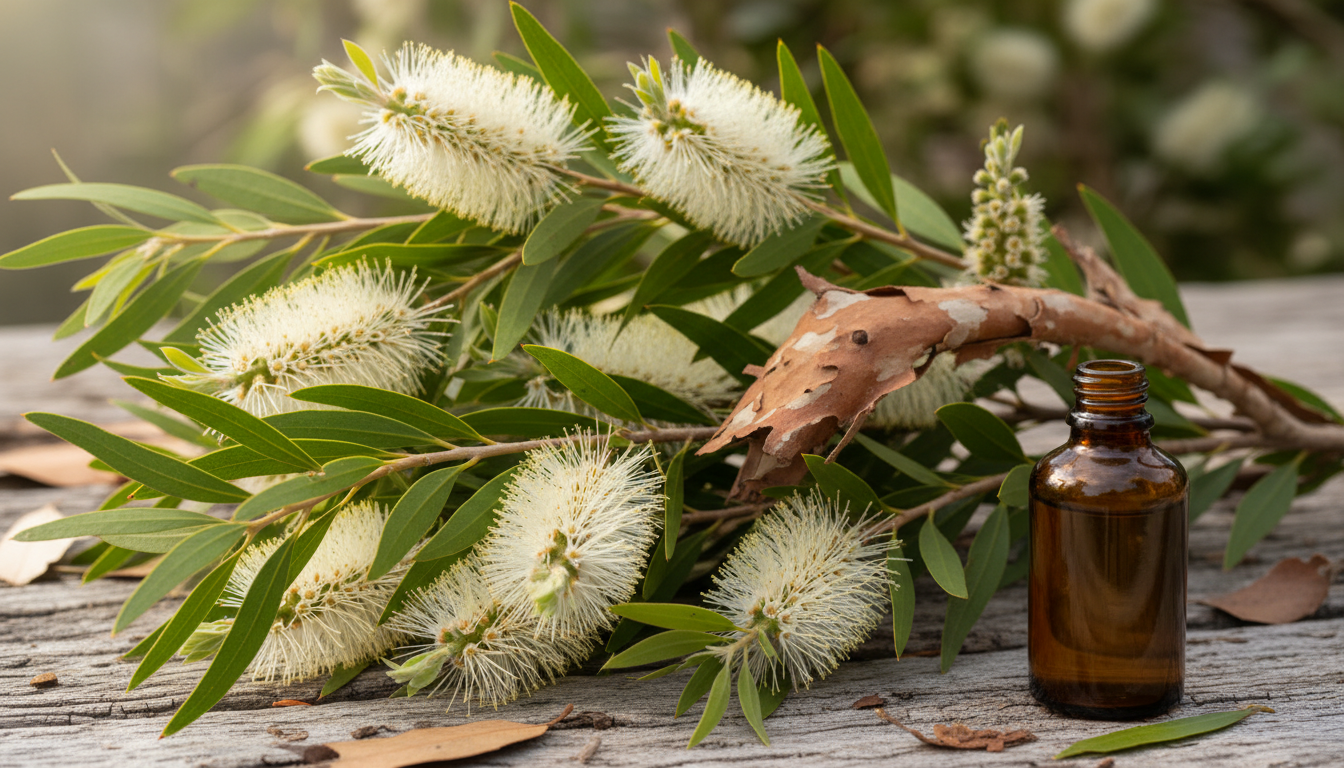
1,8-cineole belongs to a family of aromatic molecules called monoterpenoids, specifically a cyclic ether classified as an oxide. Its structure is a bicyclic ring with an oxygen bridge, which is part of why it is so volatile and why it reads as "cool" to the nose in the same way menthol does, even though the two molecules are unrelated. Chemists sometimes call it eucalyptol because it was first isolated and studied extensively in eucalyptus oil, but it shows up across a wide range of aromatic plants: rosemary, bay laurel, tea tree, and of course the paperbark tree, Melaleuca cajuputi, from which cajeput oil is steam-distilled.
When people ask what is in cajeput oil, cineole is almost always the first answer, because it is typically the largest single compound by volume. But it rarely appears alone. Cajeput oil is a complex mixture of dozens of trace compounds working alongside cineole, and that supporting cast is what gives a given batch its individual character: a little more resinous, a touch sweeter, slightly more medicinal depending on the mix.
Breaking Down Cajeput Oil's Chemical Composition
Gas chromatography-mass spectrometry (GC-MS) is the standard method labs use to identify and quantify every compound in a batch of essential oil, and it is the tool that lets us talk about cajeput oil chemical composition with any precision. Across published reference ranges and supplier lab reports, a typical steam-distilled cajeput oil breaks down roughly like this:
| Compound | Typical Range | Contribution to the Oil |
|---|---|---|
| 1,8-cineole (eucalyptol) | 45% to 65%+ | Dominant sharp, cool, camphoraceous top note |
| Alpha-terpineol | 2% to 10% | Softer, slightly floral undertone that rounds out the sharpness |
| Limonene | 1% to 8% | Light citrus brightness |
| Alpha-pinene / beta-pinene | 1% to 6% combined | Piney, resinous facets |
| Viridiflorol and related sesquiterpenes | trace to 5% | Woody depth in the base of the scent |
| Caryophyllene and minor terpenes | trace amounts | Subtle complexity, batch-to-batch variation |
Those percentages shift with the tree's growing region, the season of harvest, the age of the leaves at distillation, and even the distillation pressure and duration. This is normal and expected for a natural, agricultural product rather than a manufactured one. A cineole essential oil profile this concentrated is actually one of the more consistent aromatic signatures in the plant world, which is part of why cajeput has stayed useful as a blending oil for so long: you generally know what aromatic role it will play.
The Science of Scent: Why Cineole Smells the Way It Does
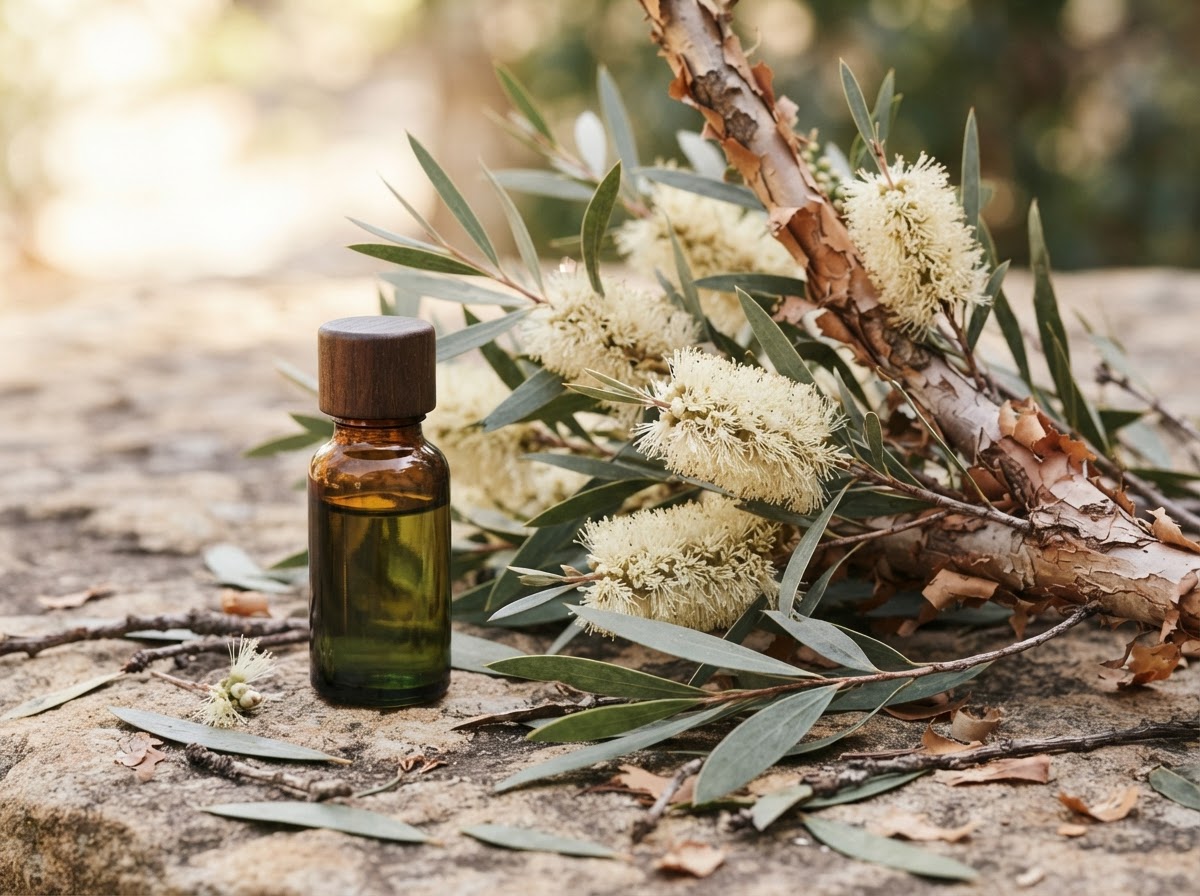
Scent chemistry comes down to volatility and how a molecule interacts with olfactory receptors. 1,8-cineole is a relatively small, light molecule, which means it evaporates quickly and reaches your nose fast. That is why cajeput oil hits you immediately when you open the bottle, rather than building slowly the way a heavier, woodier oil might. In perfumery terms, cineole reads as a top note: the first impression, the part that fades fastest, and the part most responsible for that instant cool, clearing sensation.
The oxygen bridge in cineole's ring structure is thought to be responsible for its distinctive cooling perception. Structurally unrelated to menthol, it nonetheless triggers a similar sensory response in many people, which is why cineole-rich oils get described with words like "crisp," "clean," and "invigorating" across cultures and languages. Blenders often lean on cajeput specifically when they want that clearing quality without the heavier camphor note found in oils like rosemary or the sweeter edge found in eucalyptus varieties higher in other compounds.
The supporting compounds matter here too. Alpha-terpineol softens cineole's sharp edges, which is part of why cajeput oil is often described as slightly gentler on the nose than pure eucalyptus oil, even though the cineole percentages can be similar. Limonene adds brightness at the very top of the scent, fading within the first several minutes. What is left after the initial burst settles are the trace sesquiterpenes, which give cajeput a faint woody floor beneath all that brightness.
What Research Has Observed So Far
A growing body of laboratory research has looked at 1,8-cineole's chemical behavior, largely because it is easy to isolate in high purity and because it shows up in so many aromatic plants worldwide. It is worth being precise about what this research actually shows, because it is almost entirely in vitro (in a lab dish) or in early-stage animal models, not large human trials, and it should be read as a starting point for scientific curiosity rather than a basis for any health decision.
Some laboratory studies have examined how 1,8-cineole interacts with cultured cell lines and with common environmental microorganisms in petri dish settings, observing measurable changes in growth patterns under controlled conditions. Other research has looked at cineole's volatility and absorption rate through skin models, which is useful data for formulators thinking about dilution and blending but again does not translate directly into real-world outcomes. Sensory researchers have also studied how inhaling low concentrations of cineole-rich aromatics affects self-reported alertness and mood in small study groups, with results that are interesting but preliminary and not consistent enough across studies to draw firm conclusions.
The honest summary: research suggests 1,8-cineole is a chemically active, well-studied molecule with interesting properties worth continued investigation. It does not amount to proof of any specific outcome for a person using cajeput oil at home, and no responsible source should present it that way. If you are drawn to cajeput oil for its aromatic qualities as part of a personal care or diffusing routine, that is reason enough. Anecdotal reports from long-time users describe it as a favorite for a bracing, clean scent in a diffuser blend or a diluted body oil, and that lived experience is valid on its own terms, separate from the laboratory data.
Safety Considerations and Who Should Use Extra Caution
Cajeput oil is potent precisely because of its high cineole content, and potency means it deserves respect in how it is handled. A few practical guidelines:
- Always dilute before skin contact. A common starting ratio for adults is 1% to 2% dilution in a carrier oil such as jojoba, sweet almond, or fractionated coconut oil, which works out to roughly 6 to 12 drops of essential oil per ounce of carrier. Undiluted ("neat") application is not recommended.
- Patch test first. Apply a small diluted amount to the inner forearm and wait 24 to 48 hours before wider use, checking for redness, itching, or irritation.
- Keep it away from the eyes, inner ears, and mucous membranes. Cineole is a strong volatile compound and can be uncomfortable on sensitive tissue even when diluted.
- Use extra caution around infants, young children, and pets. Many aromatherapy safety guides recommend against diffusing cineole-rich oils like cajeput in nurseries, small closed rooms with babies, or spaces shared with cats, and suggest shorter diffusion windows with good ventilation for everyone else.
- Check with a qualified healthcare provider if you are pregnant, nursing, managing a chronic condition, or taking prescription drugs of any kind, before adding a new essential oil to your routine. This is general good practice for any concentrated botanical, not specific to cajeput.
- Store it properly. Cineole-rich oils oxidize with light and air exposure over time, so keep the bottle capped, in a dark glass container, and away from direct sunlight and heat to preserve both scent quality and skin-safety.
None of this is meant to be alarming. Cajeput oil has a long history of everyday household and personal care use across Southeast Asia, and used sensibly in appropriate dilutions, it is a well-tolerated aromatic oil for most healthy adults. The point of a safety list like this is simply informed handling, not fear.
Sourcing and Quality: Reading a Cajeput GC-MS Report
Because cineole content drives so much of cajeput oil's aroma and character, it is also the single best number to check when evaluating quality. A reputable supplier should provide a batch-specific GC-MS report, sometimes alongside a certificate of analysis, showing the actual chemical breakdown of the bottle you are buying rather than a generic industry average.
A few things worth looking for:
- Cineole percentage in the expected range. Authentic steam-distilled cajeput typically falls between 45% and 65% cineole. A number far outside that range, especially one suspiciously close to 90% or higher, can indicate the oil has been cut or spiked with isolated synthetic eucalyptol to mimic a stronger scent cheaply.
- A full compound list, not just a single number. Genuine cajeput oil shows dozens of trace compounds. A report listing only cineole and one or two other peaks, with nothing else detected, is a red flag for an adulterated or overly processed product.
- Botanical name and plant part. The label should specify Melaleuca cajuputi, leaf and twig, steam distilled. This distinguishes it clearly from related but chemically distinct Melaleuca species used for other oils.
- Growing region and harvest information. Vietnam and Indonesia are the traditional sourcing regions for cajeput, and oils from established paperbark growing areas tend to show more consistent, well-documented composition over time.
- Clear, pale color and a genuinely sharp, clean aroma. Cajeput oil is typically colorless to pale yellow. A batch that looks unusually dark, cloudy, or smells flat and dull compared to a fresh, bright cineole scent may be old, poorly stored, or of lower distillation quality.
Price is a rough but useful signal too. Genuine, well-documented cajeput oil from a transparent supplier costs more to produce than a synthetic-eucalyptol blend dressed up in similar packaging. If a bottle is priced dramatically below the market average with no lab documentation offered, that gap is usually explained by something in the composition, not by an unusually efficient supply chain.
Bringing the Chemistry Back to the Bottle
None of this chemistry is really about memorizing percentages. It is about understanding why cajeput oil smells the way it does, why quality varies as much as it does between suppliers, and how to make an informed choice when you are standing in front of two bottles that look nearly identical. 1,8-cineole is the backbone of that crisp, clearing scent people reach for cajeput to get in the first place, and the compounds riding alongside it are what separate an ordinary bottle from a genuinely well-made one.
The next time you open a bottle of cajeput and get that immediate cool, sharp hit at the top of your nose, you are experiencing a small bicyclic ether molecule doing exactly what its chemistry predicts it will do. Understanding that does not change the experience, but it does make it easier to shop with confidence, blend with intention, and appreciate what a genuinely well-distilled bottle of cajeput oil actually is.